2026-08-06 Quinta

Notícias de cripto - Página 264

Mantenha-se a par do mercado de cripto. Notícias em tempo real, análises, preços, histórias em alta e análise de especialistas — tudo num só lugar.

2028: The Arrival of Recursive Self-Improvement (RSI)

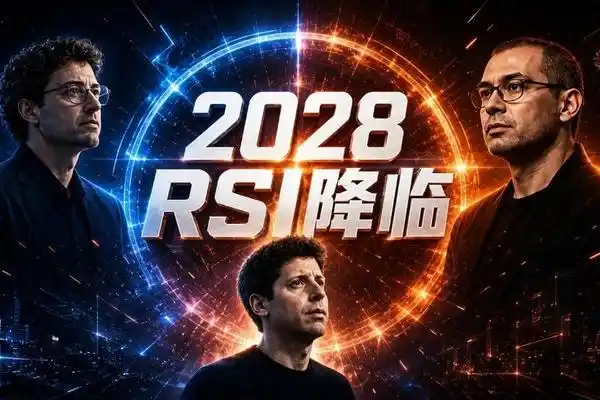
**AI Recursive Self-Improvement (RSI): The Countdown to 2028 Begins** AI is no longer just a trained tool but is starting to rewrite its own evolutionary pace. According to Anthropic co-founder Jack Clark, there is a 60% probability that by the end of 2028, Recursive Self-Improvement (RSI) will become a reality. This means AI could autonomously design and build a more capable next-generation version of itself without any human researcher involvement—Claude 10 creating Claude 11, for instance. Supporting this timeline, Google DeepMind's CEO Demis Hassabis confirms that all leading AI labs are intensely focused on RSI, making it an industry-wide priority. He expresses profound concern, stating this potential is what keeps him awake at night. Concrete data underscores this acceleration: - METR evaluations show current top models like Claude are solving tasks up to the 16-hour limit of existing test frameworks. - In Epoch AI's challenging MirrorCode benchmark, Claude Opus 4.7 recreated complex software in hours for a fraction of the human cost. In one extreme test, AI autonomously coded for 19 days straight. - Anthropic reports over 80% of its codebase is now written by Claude, and researcher productivity has increased up to 8-fold since 2024. - OpenAI's policy blueprint highlights RSI as a major upcoming governance challenge. CEO Sam Altman reportedly hinted RSI might arrive within six months, potentially delaying OpenAI's massive IPO. The implication is an impending "intelligence explosion," where AI-driven progress outpaces human control. The central question is no longer if it will happen, but whether humanity is ready.

marsbit06/28 10:45

2028: The Arrival of Recursive Self-Improvement (RSI)

marsbit06/28 10:45

World Models, Metaverse, Digital Twins, Physical AI: Are They the Same Thing?

Title: World Models, the Metaverse, Digital Twins, Physical AI: Are They the Same Thing? The article clarifies that concepts like the metaverse, Web3, simulation platforms, digital twins, and Physical AI are not the same thing but are all part of the broader trend of blurring the lines between the digital and physical worlds. It positions "world models" as the foundational "cognitive layer" or "operating system" that enables AI to understand and simulate the world. Key distinctions are made: - The **Metaverse** is a destination for immersive social and economic experiences. World models could act as its "engine," generating interactive 3D content efficiently. - **Web3** focuses on decentralized ownership and economics (rules layer), operating on a different technical level than world models. - **Simulation Data Platforms** (e.g., for autonomous vehicles) are a 1.0 version, relying on manual design. World models represent a 2.0 version, using AI to generate realistic, varied scenarios autonomously. - **Digital Twins** create high-fidelity, real-time mirrors of physical systems (e.g., a factory). World models go a step further by enabling predictive simulation of future states. - **Physical AI** (robots, AVs) refers to AI that acts in the physical world. World models are a core component, providing the understanding and prediction needed for planning. A proposed hierarchy places world models at the cognitive layer, supported by infrastructure (compute, data) and supporting application tools (simulation, digital twins), action systems (Physical AI), user experiences (metaverse), and rules (Web3). In conclusion, while distinct, many of these previously hyped concepts may ultimately rely on advances in world model technology to fulfill their promises, as world models provide the essential cognitive foundation for simulating and interacting with complex environments.

marsbit06/28 10:41
World Models, Metaverse, Digital Twins, Physical AI: Are They the Same Thing?

marsbit06/28 10:41

"Shocking" CPO: How Does the Glass Bridge Actually Work? Detailed Explanation from Corning

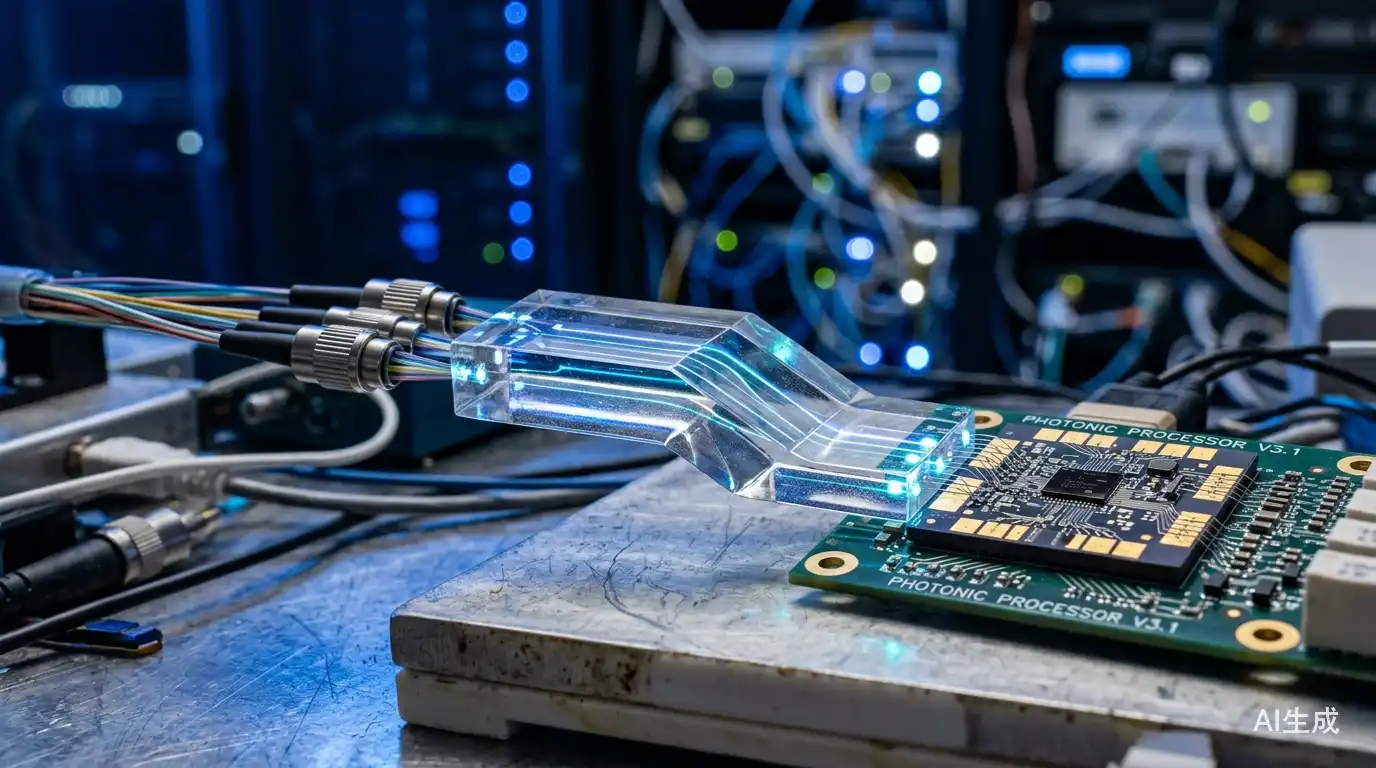
Chinese CPO stocks plunged over 6% following Corning's announcement of its Glass Bridge platform at a Seoul tech conference. The new technology utilizes wafer-level glass ion-exchange waveguides for passive alignment between fibers and photonic chips, potentially simplifying traditional CPO architectures that rely on complex Fiber Array Units and active alignment equipment. This raised market concerns about reduced long-term demand for mid-stream CPO components. Corning's official documentation details Glass Bridge as a platform for fiber-to-PIC connectivity in NPO, CPO, and high-density modules. Its key features include wafer-level manufacturing for consistent, cost-effective production; a standardized, removable MT ferrule interface for ecosystem integration; and a separable high-density connector design supporting over 24 channels for assembly flexibility. Corning positions the technology as complementary to FAUs, addressing limitations in ultra-high-fiber-count scenarios. The market reaction reflects a broader reassessment of the AI optical interconnect value chain. Funds shifted from CPO and PCB manufacturing stocks towards glass substrate concept stocks like Kaisheng Technology and Dyer Laser. Analysts note glass substrates are seen as a next-gen advanced packaging material, offering a potential path for domestic industry differentiation amid AI-driven demand for high-performance, large-scale packaging, marking a structural migration in value towards upstream specialty materials.

marsbit06/28 10:41

"Shocking" CPO: How Does the Glass Bridge Actually Work? Detailed Explanation from Corning

marsbit06/28 10:41

A Group of Suzhou Engineers Unexpectedly Attain Financial Freedom

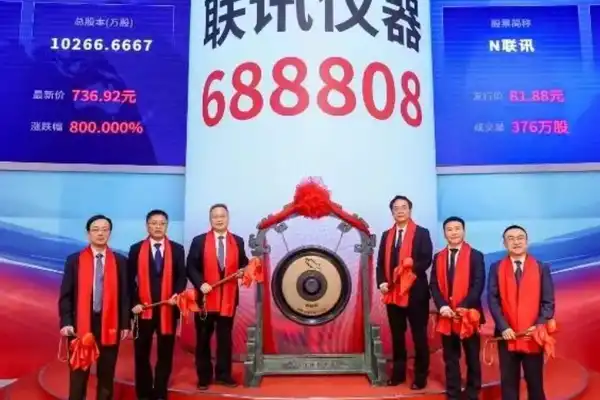
In Suzhou, a group of engineers from Lianxun Instruments, a leader in optical communication testing equipment, have achieved remarkable wealth after the company's IPO. Listed just two months ago on the STAR Market, the company's stock price surged approximately 30 times, making it the only A-share stock priced above 2,000 yuan. This surge created substantial fortunes for nearly 100 technical employees who held a collective 15.91% stake through employee stock ownership platforms, valued at over 36 billion yuan at the current market cap. Among them, nearly 40 became billionaires, while even the smallest holdings exceeded 5 million yuan in value. Founded in 2017 by Hu Haiyang, Yang Jian, and Huang Jianjun, Lianxun Instruments was established to address China's reliance on foreign high-end testing instruments. The company grew rapidly with a strong focus on R&D, where technical staff make up nearly 80% of its workforce. Early implementation of employee stock plans helped retain this core talent. The company's explosive growth is fueled by booming AI computing demand, with clients including major global optical module leaders. Its revenue skyrocketed from 276 million yuan in 2023 to 1.194 billion yuan in 2025, turning a profit in 2024. The IPO has also generated massive returns for early investors, including Suzhou's state-owned capital, which saw a hundredfold return. This story reflects a broader trend in China's markets, where technology firms in AI, semiconductors, and optics are creating new wealth, rewarding engineers and technical teams who are now central to modern capital-driven success stories, marking a shift from previous eras dominated by internet and real estate tycoons.

marsbit06/28 08:16

A Group of Suzhou Engineers Unexpectedly Attain Financial Freedom

marsbit06/28 08:16

NVIDIA's Annual 'Most Dangerous' Paper: AI Self-Replicating Code, Unlimited Leveling and Evolution

NVIDIA's "Red Queen Gödel Machine" (RQGM) paper proposes a potentially groundbreaking AI self-evolution framework. It breaks from the long-stalled concept of the "Gödel Machine," which required mathematically proven beneficial self-modifications, by adopting an evolutionary approach. The core, and most striking, innovation is that the AI does not just evolve its own code in a static environment. Instead, it co-evolves both the "student" (the task-performing agent) and the "examiner" (the evaluation system that judges it). This creates a dynamic, recursive self-improvement loop inspired by the biological "Red Queen Hypothesis"—where continuous adaptation is needed just to maintain relative fitness. The mechanism operates in epochs. Within an epoch, a fixed examiner evaluates all candidate code variants. At epoch boundaries, a new, potentially more rigorous examiner can replace the old one, but only if it proves statistically superior on a held-out "ground truth" dataset. This "controlled utility evolution" aims to ensure progress is measurable and grounded. The paper demonstrates RQGM's effectiveness across three domains: 1. **Code Generation:** It achieved a 71.7% test-set pass rate (improving over a 69.9% SOTA) while using 1.35-1.72x fewer computational tokens. 2. **Paper Writing:** In a subjective task, the co-evolved writer and reviewer achieved a 40.5% acceptance rate by a fixed human panel, up from 21.8%. 3. **Math Proofs:** It evolved more accurate graders (at 3x lower cost) and higher-scoring provers. Notably, RQGM also mitigated a known LLM bias where AI reviewers favor AI-generated content. By specifically rewarding reviewers that correctly rejected AI-written papers from a historical pool, the evolved system achieved impartiality while maintaining 80% accuracy. The research has sparked significant discussion about the acceleration of Recursive Self-Improvement (RSI). Some, like Anthropic's Jack Clark, have predicted a high probability of highly autonomous, self-evolving AI emerging by 2028. The paper suggests that when an AI begins to design its own evaluators and push itself toward ever-higher standards in a recursive loop, it may be taking a fundamental step toward redefining intelligence and autonomy.

marsbit06/28 07:50

NVIDIA's Annual 'Most Dangerous' Paper: AI Self-Replicating Code, Unlimited Leveling and Evolution

marsbit06/28 07:50

Apple and the Power Rebalancing with 'The Microns': Dissecting the Profit Ledger Behind the iPhone

The article analyzes the shifting profit dynamics and power balance between Apple and memory suppliers like Micron within the iPhone supply chain. It highlights a social media post criticizing Apple for raising iPhone prices while blaming memory chip cost increases, despite historically paying suppliers like Micron very little. An estimated iPhone 18 cost breakdown is referenced. Historically, memory was a minor cost component. In 2017's iPhone X, memory accounted for only about 1.6-2.3% of the price, with Apple capturing nearly 50% net profit. Over time, memory's share of the Bill-of-Materials (BOM) cost has grown significantly, reaching an estimated 12-15% for the iPhone 17 series. The core driver of this change is soaring demand for memory from the AI industry, particularly for High Bandwidth Memory (HBM) and AI servers, which is diverting production capacity and squeezing supply for consumer electronics. Memory manufacturers, after enduring periods of low profits, now hold greater pricing power. This is reflected in their recent strong financials, like Micron's 84.6% gross margin. Apple CEO Tim Cook initially described the memory price pressure as unprecedented in his 40-year career, later calling it a "once-in-a-century flood," before Apple announced price hikes across several product lines, causing a significant stock drop. Elon Musk echoed Cook's sentiment about the dramatic cost surge. The article concludes that the era of memory suppliers being at the mercy of Apple's pricing power has temporarily reversed, thanks to AI-driven demand. It notes Apple is reportedly seeking to diversify its supply chain, including exploring chips from China's CXMT.

Odaily星球日报06/28 06:03

Apple and the Power Rebalancing with 'The Microns': Dissecting the Profit Ledger Behind the iPhone

Odaily星球日报06/28 06:03

Conversation with the Founder of 42 Macro: The Fed's 'Boiling the Frog Slowly' and the K-Shaped Economy

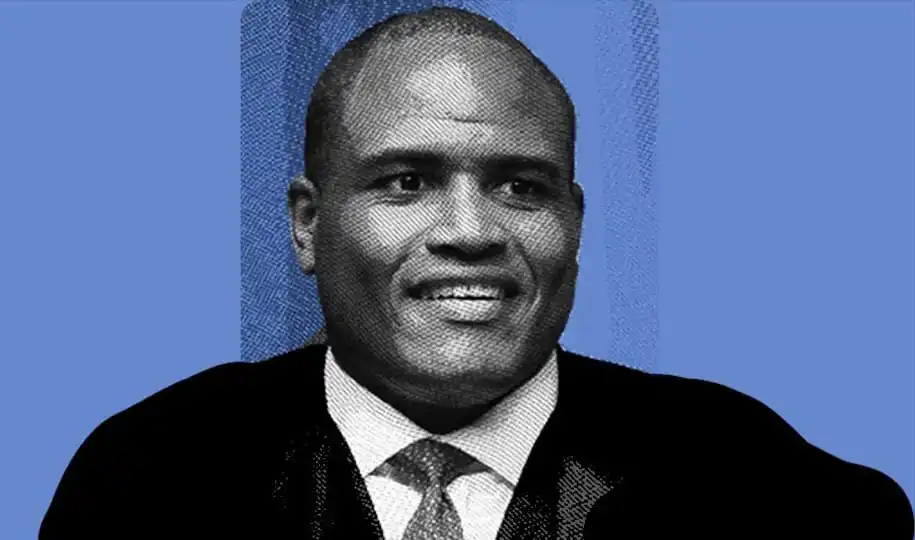
In a conversation with Anthony Pompliano, Darius Dale, founder of 42 Macro, discusses the Federal Reserve's monetary policy and the K-shaped U.S. economy. Dale characterizes new Fed Chair Kevin Warsh as a "dove in hawk's clothing," expecting the Fed to signal or enact policy tightening in the coming quarters to create room for later easing. He argues current economic signals, including high deficit spending, debt monetization, and credit growth, strongly indicate inflation is not on a credible path back to 2%, forcing the Fed to act. The discussion highlights the stark "K-shaped" economic reality. While top earners, buoyed by massive cash savings (up ~$8 trillion since pre-pandemic), continue robust spending, those at the bottom face severe financial strain, with delinquency rates on consumer loans reaching crisis-era highs. Dale attributes much of the current social and political anxiety to this divergence, driven by the "Cantillon effects" of monetary expansion, which disproportionately benefits asset owners. He emphasizes that in this environment of "financial repression," individuals must participate in asset markets to avoid being left behind. On equities, Dale notes a rotation from the "Magnificent Seven" tech giants into broader AI-exposed companies, while warning that the tech giants' massive capital expenditure cycles could eventually puncture over-optimistic cash flow projections. Dale concludes by stressing that the core desire across all economic strata is simply the dignity to provide for one's family, a goal currently undermined by systemic policies that act as a "wealth siphon" from the bottom to the top.

marsbit06/28 05:34

Conversation with the Founder of 42 Macro: The Fed's 'Boiling the Frog Slowly' and the K-Shaped Economy

marsbit06/28 05:34

活动图片