2026-08-06 Quinta

Notícias de cripto - Página 259

Mantenha-se a par do mercado de cripto. Notícias em tempo real, análises, preços, histórias em alta e análise de especialistas — tudo num só lugar.

Trading Moments: Bitcoin's 200-week moving average has turned into a resistance level, can the July rise still be realized?

**Market Recap: Key Global Developments and Outlook** Global markets are navigating shifting dynamics. Geopolitical tensions eased as the US and Iran agreed to halt further military actions, planning talks for June 30. This pushed oil prices down, with WTI crude dropping below $70. Meanwhile, gold saw a "death cross" (50-day moving average crossing below the 200-day), pressured by a strong dollar and rising real yields. A methodological revision to the US PCE inflation index, set for September, is expected to artificially lower reported core inflation, drawing criticism for lack of transparency. In US equities, major indices extended losses, with the S&P 500 and Nasdaq recording their longest losing streaks since last year. Hedge funds aggressively sold tech stocks, particularly in semiconductors, leading to a sharp rotation into defensive sectors like healthcare and utilities. SpaceX is set for rapid inclusion in the Nasdaq 100, potentially triggering significant passive fund inflows, while its valuation faces scrutiny. Bitcoin is on track for its worst monthly performance since 2022, down over 18% in June. It has failed to reclaim its 200-week moving average (now acting as resistance near $62.6k), raising the risk of a drop toward $55k. Historically, July is a strong month for BTC, with an average gain of 7.6%. Analysts suggest the current sell-off could present a buying opportunity, with a key test being whether Bitcoin can stabilize above $61k to confirm a reversal. In Asia, South Korean stocks initially fell on semiconductor selling but recovered after the government announced a massive investment plan for chips and AI. Japanese retail sales showed strength, supporting consumer recovery. Chinese markets saw a rebalancing, with healthcare stocks surging on policy catalysts and consumption shares rebounding. Hong Kong tech stocks also rallied. **Key upcoming events:** * June 30: US-Iran technical talks; MiCA transition deadline in Spain; NetEase's dual-primary listing in Hong Kong. * July 1: ECB's Sintra Forum featuring key central bankers. * July 6-7: SpaceX's inclusion in Nasdaq 100 triggering passive fund flows. * September 30: New US PCE methodology takes effect.

marsbit06/29 08:42

Trading Moments: Bitcoin's 200-week moving average has turned into a resistance level, can the July rise still be realized?

marsbit06/29 08:42

Lao Huang: Prompt is Dead, the Entire AI Community is Frenziedly Chasing Loops

The article "Prompt is Dead: The AI Industry is Obsessively Chasing Loops" discusses a major shift in AI development, where "Loop Engineering" is replacing traditional prompt engineering. Industry leaders like NVIDIA's Jensen Huang, Andrew Ng, and engineers from Anthropic and OpenAI argue that manually crafting prompts is becoming obsolete. Instead, the new focus is on designing autonomous, self-improving AI systems (loops) that can operate 24/7. A loop system typically involves five key phases: Discovery (finding tasks), Handoff (assigning to agents), Validation (critical independent review), Persistence (saving progress), and Scheduling (automated operation). The core idea is to move humans from being the operational "engine" to being the system "architects" who design the loop, define goals, and set up verification mechanisms. A major challenge and necessity is implementing robust, independent validation to prevent AI from uncritically approving its own work. The trend is seen as part of a move towards "inference-time compute," where allocating computational budget effectively becomes a key engineering skill. While loops can produce higher-quality outputs, they are more expensive and time-consuming than simple prompting. The article warns of risks like "verification debt," "comprehension corrosion," and "cognitive surrender," where engineers might stop understanding the code their systems generate. Ultimately, the article concludes that in an era of automated loops, human judgment and oversight remain the most critical and scarce resources.

marsbit06/29 08:37

Lao Huang: Prompt is Dead, the Entire AI Community is Frenziedly Chasing Loops

marsbit06/29 08:37

Anthropic's Latest Report Reveals Global Workers' Patterns: Seeking Sleep at 5 AM, Asking for Recipes at 6 PM

A new report from Anthropic analyzes millions of hourly user interactions with Claude AI, revealing detailed patterns in daily life and work. The data shows distinct rhythms: people most frequently ask about sleep help around 5 AM, seek news at 7 AM, and search for dinner recipes at 6 PM—the day's single largest query spike. Usage sharply diverges between weekdays and weekends. Workdays are dominated by professional tasks like business emails and coding (backend, APIs). Weekends see a surge in personal use—nearly 50% of conversations—focused on emotional support, creative writing (especially fan fiction), medical advice, and side projects like AI agent design or game development. Weekend "entrepreneurial" queries peak globally, while job-hunting activity drops. The report introduces "artifact" analysis, finding 93% of conversations produce a tangible output (explanation, document, code, etc.). Blog posts are 81% work-related, while creative writing is over 80% personal. High-wage professionals (e.g., marketing managers, programmers) use Claude more intensively outside work hours, with longer conversations, more tokens consumed, and greater use of deep thinking features compared to lower-wage roles. Interestingly, Claude's responses typically register at a higher reading level than user prompts (by about one educational year on average), except for audience-focused writing like emails or blogs where the gap nearly disappears. The data also captures specific cultural moments, like an 8x spike in tax-related queries on the U.S. filing deadline. Precise hourly data transforms fragmented queries into a collective diary of modern life—mapping not just economic activity, but also cycles of anxiety, creativity, and daily rhythm, with AI acting as both a productivity tool and an intimate, always-available confidant.

marsbit06/29 08:20

Anthropic's Latest Report Reveals Global Workers' Patterns: Seeking Sleep at 5 AM, Asking for Recipes at 6 PM

marsbit06/29 08:20

Margin Exhausted, "Brother Huang Li Cheng" Begins Selling Monkeys at a Loss

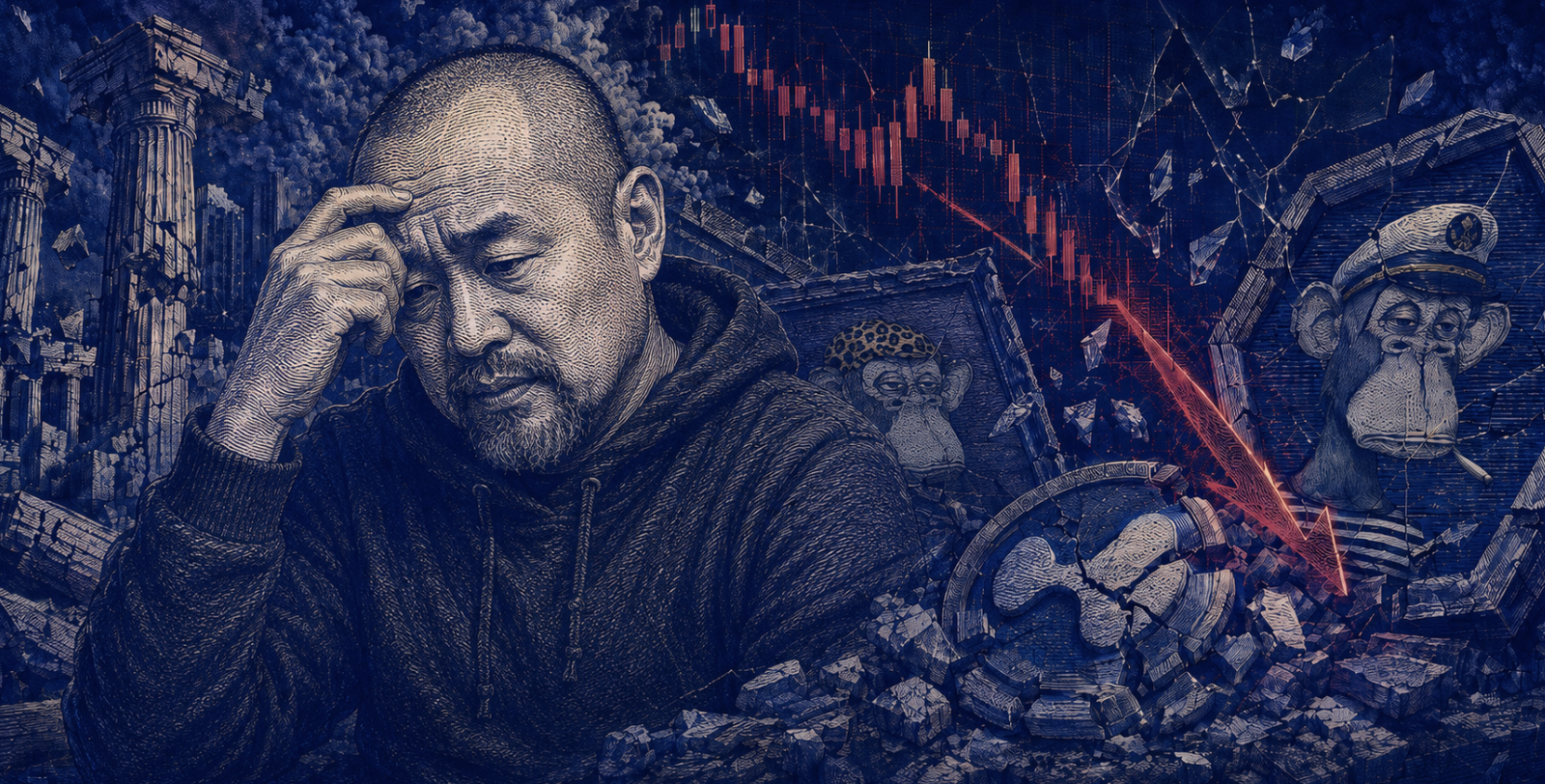
Taiwanese crypto whale "Machi Big Brother" Jeffrey Huang has been forced to sell his prized Bored Ape Yacht Club (BAYC) NFTs at significant losses to cover mounting losses from a highly leveraged ETH long position on Hyperliquid. Over the past month, Huang sold 34 BAYC NFTs for 326 ETH (approx. $514,000), realizing a loss of 399 ETH (approx. $631,000). The proceeds were transferred to Hyperliquid to replenish margin for his perpetual contract trades. One ape, BAYC #6057, bought for 76.84 ETH four years ago, was sold for just 7.65 ETH, a 90% loss in ETH terms. Huang began his high-leverage (25-40x) ETH long strategy in September 2025 when ETH was around $4,700. While his account once showed over $45 million in unrealized profit, the subsequent crash of ETH to the $1,600 range erased all gains. As of June 26, his cumulative losses on Hyperliquid reached $33.85 million, with over 335 liquidations earning him the community nickname "King of Liquidations." With conventional funds depleted, Huang's once-valuable NFT collection, which at its peak included around 200 BAYCs and was worth tens of millions, has become a lifeline. His remaining ~150 BAYCs, valued at roughly $1.6 million at current floor prices, provide only limited runway for his persistent high-stakes trading. Huang rose to prominence in crypto as a key figure in popularizing BAYC NFTs in Asia during the 2021 bull market. His pivot to perpetual contracts has now led to a cycle where his iconic "monkeys" are being sold to fund a failing trading strategy.

Foresight News06/29 07:37

Margin Exhausted, "Brother Huang Li Cheng" Begins Selling Monkeys at a Loss

Foresight News06/29 07:37

Quantum Computing Approaches "Q-Day": How Encryption Policy, Investment Logic, and Risk Management Are Reshaping the Landscape

Quantum Computing Nears 'Q-Day': Shaping Encryption Policy, Investment Logic, and Risk Management Quantum technology is increasingly intersecting with cryptocurrency policy and cybersecurity discussions as the potential 'Q-Day'—when quantum computers could break current encryption—approaches. While summer brings fast-paced crypto market dynamics, new U.S. legislation, and AI debates, the emerging dimension is how quantum advancements will reshape the digital asset landscape. The next phase of crypto investment is being shaped by two converging forces: clearer regulatory frameworks and cryptographic evolution driven by quantum computing. Investors stand to benefit from reduced uncertainty, but must also recognize that quantum readiness is becoming a core risk factor. Public blockchains rely on cryptography for security, and sufficiently advanced quantum machines could undermine these foundations. This does not mean imminent network collapse, but investors can no longer dismiss the timeline as irrelevant. Key questions now include whether projects have identified their cryptographic dependencies, formulated migration plans to post-quantum cryptography, and established governance for upgrades. For policymakers, the link is clear. Effective crypto policy must look beyond token classification and disclosure to address the underlying infrastructure. As stablecoins, tokenized assets, and blockchain payments integrate deeper into finance, cryptographic resilience becomes a systemic issue. Failure to prepare could lead to investor losses, operational failures, and legal disputes. Policy should encourage risk disclosure, require major intermediaries to maintain upgrade and response plans, and foster coordination across the ecosystem—rather than impose a single technical fix. The sustainability of cryptocurrencies will increasingly depend on their security infrastructure's ability to adapt to these accelerating technological pressures.

Foresight News06/29 07:12

Quantum Computing Approaches "Q-Day": How Encryption Policy, Investment Logic, and Risk Management Are Reshaping the Landscape

Foresight News06/29 07:12

Bitcoin's Five-Wave Adjustment Nears End, Opportunities Emerge in HYPE Support Zone | Invited Analysis

**Bitcoin's Five-Wave Adjustment Nears End, HYPE Support Zone Presents Opportunity | Guest Analysis** This week, Bitcoin (BTC) is in the final stage of a five-wave corrective structure. The formation of 'Endpoint 44' is key: a level above $58,110 suggests a high probability of a technical rebound, leading likely to wide-range consolidation. A break below $58,110 without bullish divergence warrants caution for further downside. Mid-term bearish positions are maintained at 20%, with 30% of capital reserved for short-term scalping opportunities based on predefined support/resistance levels and three scenario-based plans (A/B/C). Simultaneously, HYPE has entered the 55-56 segment of its own five-wave correction from its $76.94 high. If 'Endpoint 56' forms above the prior low (Endpoint 54), creating a double-bottom pattern, a rebound is significantly likely. A light long position (under 30% allocation) can be considered upon stabilization in the support zone. Last week's BTC short-term strategy, guided by proprietary quantitative models, successfully executed two short trades (1x leverage), yielding a total return of approximately 6.21%. The market move validated the prior weekly forecast of a retest towards the $59,100 support. **Core Trading Views Summary:** * **BTC:** Focus on the formation of 'Endpoint 44'. A scenario above $58,110 allows for tentative longs. Key resistances: $60,900-$62,300, ~$65,500, $67,300-$69,500. Key supports: ~$58,100, ~$55,000. * **HYPE:** Monitor the final position of 'Endpoint 56'. Key resistances: ~$65.5, ~$71.5. Key supports: ~$58.5, $52-$54 zone. Strategy favors buying on dips upon stabilization in support areas with confirmed model signals, with strict position control. **Risk Disclaimer:** Financial markets are volatile. All analysis, models, and strategies herein are based on personal technical analysis for journaling purposes only, not investment advice. Trade at your own risk.

Odaily星球日报06/29 06:57

Bitcoin's Five-Wave Adjustment Nears End, Opportunities Emerge in HYPE Support Zone | Invited Analysis

Odaily星球日报06/29 06:57

AI Sweeps the Globe, So Why Is Crypto + AI Facing Gloom?

The article "AI Sweeps the Globe, But Why Is Crypto + AI So Bleak?" analyzes the disconnect between the booming AI industry and the struggling crypto+AI sector. It argues the issue is not flawed logic but severe demand-supply mismatch across four key sub-sectors. Decentralized compute and storage projects offer theoretical benefits like cost savings and data sovereignty but lack a decisive technical edge over entrenched cloud providers (AWS, GCP). Enterprises are unwilling to risk migration for unproven infrastructure that can't guarantee the performance and reliability needed for critical AI workloads. ZKML and privacy solutions address important issues like model verification but solve non-urgent, long-term concerns for most businesses currently focused on core performance and ROI. Demand here is likely to be regulation-driven (e.g., EU AI Act) rather than organic. AI agent infrastructure is developing foundational tech for a future multi-agent economy. However, the current market phase is dominated by internal process automation within single companies, making this technology premature. AI agent payments is highlighted as the only sub-sector where blockchain competes on a level playing field with traditional finance, as neither has adequately solved the challenges of machine-to-machine micropayments and real-time settlement. Overall, crypto+AI projects are building for future needs (data ownership, decentralization, transparency) that don't align with the industry's immediate priorities (performance, cost, stability). The absence of a flagship, large-scale use case further hinders mainstream adoption and capital inflow. The path forward requires either adapting to current market demands or patiently building the foundational infrastructure for the next phase of AI.

marsbit06/29 06:45

AI Sweeps the Globe, So Why Is Crypto + AI Facing Gloom?

marsbit06/29 06:45

活动图片