“卷上加卷”:Rollup时代的账户抽象解决方案

PanewsPublicado em 2022-10-21Última atualização em 2022-10-21

Resumo

随着越来越多的Rollup兼容账户抽象方案,我们也许在不远的未来就可以丢掉助记词,真正实现Web 2级别的使用体验,和Web 3的安全、隐私体验。

随着越来越多的Rollup兼容账户抽象方案,我们也许在不远的未来就可以丢掉助记词,真正实现Web 2级别的使用体验,和Web 3的安全、隐私体验。

在L2技术动态呈现“短期OP,长期ZK”之后,Vitalik的心思开始向账户抽象(Account Abstraction)技术倾斜,在本次以太坊波哥大开发者大会上,他也为支持账户抽象技术的钱包Soul wallet点赞,引得关注。

账户抽象可从源头减少交易的数据,再结合Rollup方案,可作为一体化的“数据瘦身”方案,大幅减少Gas Fee的消耗和使用,一个易用且便宜的以太坊网络将出现在世间。

10月3日,Vitalik补充EIP-4337账户抽象提案内容,增加了BLS签名算法的数据聚合部分,可以让构建者和批验证者聚合签名,以减少所广播至主网的数据。

并且,StarkNet也在新版本更新中提出有关账户抽象的详细设计。而困扰账户抽象的DoS危机,也随着更多的Zk系Rollup投入使用得到解决,ZK方案的安全性并未得到如同数据压缩特性相同的重视,这是以往长期被忽视的特点,有望在账户抽象路线之争上得到全方位展示。

由此,基本上拉开了ZK+AA的链上数据解决方案序幕,一个迥异于任何现存公链的分层解决方案雏形就此诞生,这将会为以太坊带来深远的影响。

思路转变:非共识层账户抽象
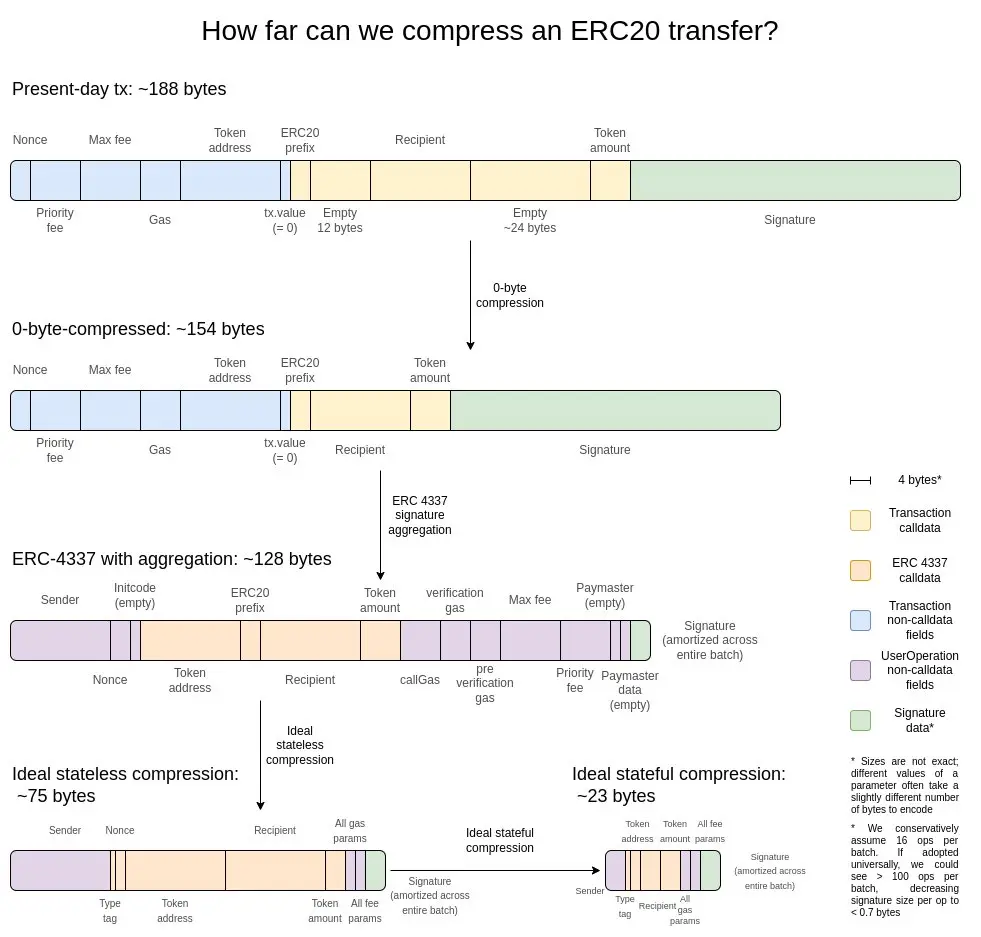
在本次的更新中,是通过EIP提案的方式来设计账户抽象模型,而在最初的设想中,本来是希望改变以太坊本身的账户地址设计,一统EOA账户和智能合约地址,这也是最初的以太坊账户地址设计方案。

在4337之前的提案中,如EIP-86/208、EIP-859以及EIP-2938等提案,这些提案有一些共同特点,基本上都是在基于以太坊主网进行改造,在以太坊L2方案未广泛得到采用的环境下,贸然对主网进行“伤筋动骨”般的操作风险过大,实际上将账户抽象的优先级置于L2之后。

这在工程上并不是最优解,但是秉持“又不是不能用”的原则,账户抽象真正落到实处需要等待L2解决方案,尤其是ZK路线的实用化。

本质上,账户抽象想要实现的功能,目前都可以通过EOA账户+智能合约的方式实现,并非影响到以太坊主网,社区只想要一种“改进”,而非推倒重来。

最终,ERC-4337得到了较为普遍的认同,不再对将作为共识层的L1主网进行改动,而是在其上赋能智能合约,以一种渐进的方式实现账户抽象。

智能合约:ERC-4337标准一统天下

如前文所述,以太坊上存在EOA外部账户地址与智能合约地址这两种地址类型,其中EOA控制着“人类”与以太坊的交互,比如说需要私钥、助记词、ETH(Gas Fee)等前提条件;而智能合约地址是预先写好的函数,在特定条件下执行特定任务。

两者互相配合,打造出最为丰富的以太坊生态,而助记词、钱包、私钥、智能合约等概念也深入人心,但其实这并非以太坊的最优解,维护两套地址类型会降低主网运行效率,比如需要额外开销去判断一个地址究竟属于何种地址类型,更不要说复杂的操作会需要昂贵的Gas Fee。

因此,从2015年开始便不断在寻求将二者合并,目前的4337提案是最为接近成功的一种方案设计,本质上而言,是用智能合约方案,或者赋予账户抽象更为高阶的“智能”来一统两者,而非在共识层层面修改主网,以在安全和效率之间求取平衡。
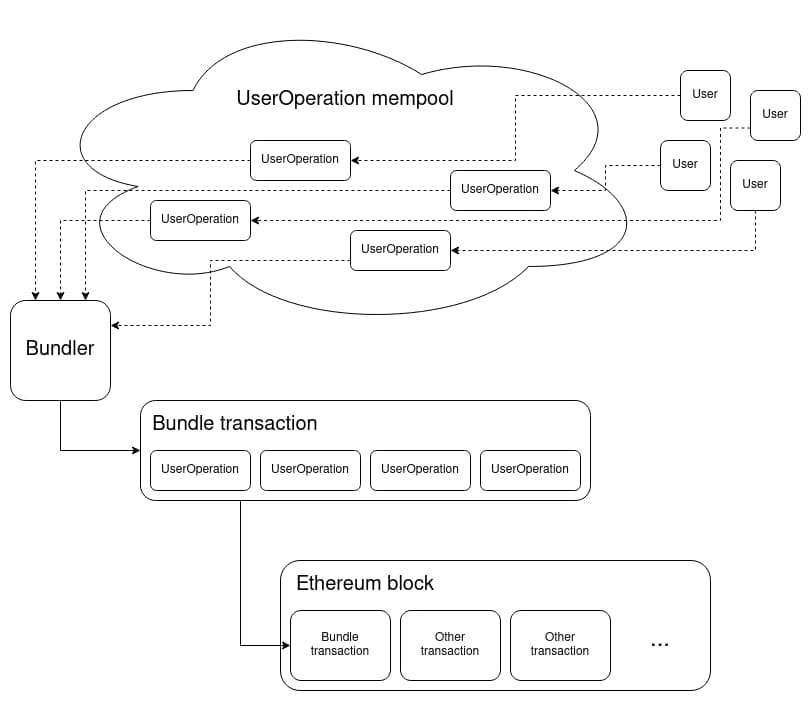
用户被期望发送称为用户操作(User Operations)的链外信息,这些操作被区块构建者收集并批量打包成一个批交易。构建者负责过滤这些操作,以确保他们只接受支付费用的操作。并有一个单独的Mempool用于用户操作,连接到这个Mempool的节点进行ERC-4337特定的验证,以确保用户操作在转发之前保证支付费用。

这样做的好处有如下几点:

•更为智能。智能合约的逻辑特性将为更复杂的操作提供可能性;

•更加安全。钱包可内置多签功能以及社交恢复功能,摆脱助记词。

•更加灵活。比如可以实现他人赞助交易,避免自身无ETH可支付Gas的窘境。

本质上,ERC-4337设计的账户抽象是将智能合约“下放”到普通账户上,将一些复杂的逻辑功能化,用户在前端只感受到更为便捷,而无需深刻了解内在逻辑。

但是,智能合约的逻辑复杂性也会带来额外的账户开销,因此才需要技术上持续优化,并配合Rollup方案达到整体提速降费的效果,两者一起构成后PoS时代的主力改进方向,优先度仅次于终极解决方案DankSharding。

天生一对:账户抽象和Rollup的契合点

在账户抽象投入使用之前,先总结下当下账户抽象和Rollup的特点,寻找到二者可以结合的契合之处:

账户抽象:保密、智能、通用,但是Gas Fee贵,贵是因为步骤多导致的数据多,刚好Zk-Rollup擅长减少数据;

功能丰富:钱包多签确保安全、权限分割便于治理,但是导致的逻辑也会更为复杂,安全漏洞会相应扩大;

还未爆发:Rollup还在前ZK时代,目前的账户抽象解决方案是以大规模L2实用化为设想前提,仍是一个预研的技术;

未来一致:L2逐步成型后,共识层将不再改动,智能合约会有更多用武之地,账户抽象的安全性也可得到保障。

账户抽象虽然可以提高地址的智能性,但是在目前并不适合直接推向用户,其高度的复杂性会直接推高Gas Fee以及降低安全性,以他人赞助交易为例,一旦机制出问题,会直接导致主网的运行危机。

而推高Gas Fee在提案中也有详细说明,这也是Vitalik本次补充ERC-4337的直接动因,理论上而言,一个账户抽象地址每一步都需要计算,无人工干预下需要更多计算资源来保证安全,交易需要包含以下一次性设置合约地址和设置代理地址成本。

传统的EOA外部账户地址则无需如此”复杂“的交易逻辑,其本身已经经由人工验证和以太坊主网设置完毕,可直接投入使用,账户交易Gas Fee约是账户抽象的1/2。

因此在更为廉价的解决方案投入使用之前,账户抽象的复杂性反而会拖累以太坊的运行速度,而这正是ZK-Rollup的机会,其更擅长以压缩后的数据呈现全局验证结果。

本次Vitalik更新的提案内容,其实是打通账户抽象和Rollup的数据接口,让L2解决方案也可以处理账户抽象产生的数据,其改进点在于,将只能分步骤实现的功能打包成批交易,高度接近于Rollup的思路,而依旧通过SNARK技术来确保交易的有效性。

可以设想一下,Rollup和账户抽象结合后,以太坊将呈现出数据通用,验证便捷,高度安全的特性,而无需对共识层进行改进的特性,会依赖于更为精细化的解决方案。

类似于多种Rollup解决方案,账户抽象也有机会产生生态爆发的可能,比如说目前EVM生态最大的智能合约多签钱包Gnosis-Safe,其技术护城河便不复存在,新一轮的叙事模型会促进更新的解决方案的出现。
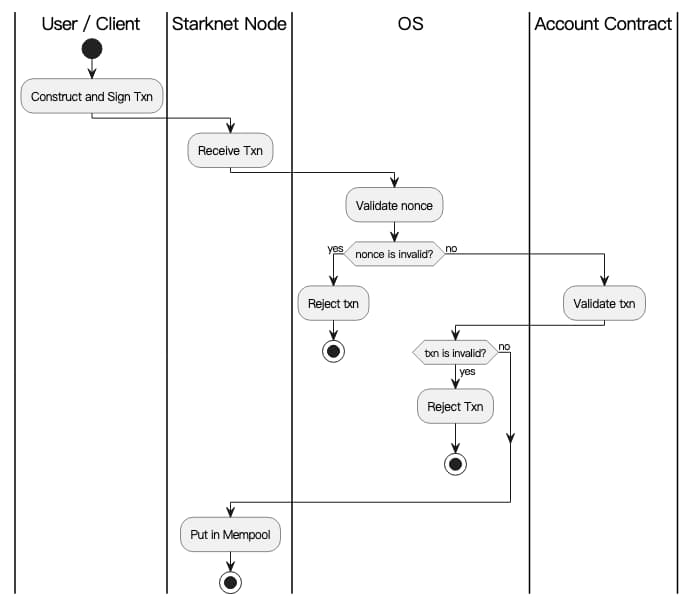
而在Layer 2解决方案中,StarkNet也在尝试结合账户抽象功能,从设计之初就将其纳入其中,包括通过Entry Point合约规范的账户抽象模块,包括验证和执行分离、添加Nonce字段以在协议级别强制执行事务唯一性等。

并且,StarkNet会构造L2和L1直接的通信件,以更好的协调两者之间的状态通传机制,在压缩数据成本的前提下,账户抽象的优势才可能被发挥出来,更加智能和便宜。

结语

从2015年第一份实际上的账户抽象方案提出至今,已经过去7年有余,而在ZK-Rollup缓步推进的大背景下,真正实现账户抽象功能仍旧需要很长时间,但是正如同PoW到PoS的转型依然实现,以太坊正在按照自己的既定路线去发展。账户抽象作为和PoS、Layer 2、DankSharding等长期谋划的重大基础性功能,将会在PoS和Zk-rollup版Layer 2实现后得到更广泛的使用。

而随着越来越多的Rollup兼容账户抽象方案,我们也许在不远的未来就可以丢掉助记词,真正实现Web 2级别的使用体验,和Web 3的安全、隐私体验。

Criptomoedas em alta

Leituras Relacionadas

Giants Wage the Context War, Reconstructing AI Moats

The article "Giants Launch the Context War, Reconstructing AI's Moat" discusses how leading AI companies—OpenAI, Anthropic, and Google—are shifting their competitive focus from model size to acquiring, managing, and utilizing user context (Context). Initially, Context referred to the length of text a model could process, leading to a "arms race" for longer context windows. However, the competition has evolved through three key phases: expanding text capacity (long context windows), enabling memory across sessions, and finally, integrating AI into real user environments like browsers and desktops to capture dynamic task states. Each company is pursuing a distinct strategy. OpenAI is building Context around the ChatGPT account, turning it into a central hub that accumulates user understanding across various integrated applications and tools. Anthropic, lacking a major user base, focuses on high-value verticals like coding, empowering its Claude model to actively gather Context through GUI interaction (Computer Use) and system connections (MCP protocol). Google, with vast existing user data from products like Search and Gmail, faces the challenge of restructuring this data into actionable, AI-understandable Context for its Gemini model within its ecosystem. The core argument is that the nature of competitive advantage in AI is changing. The internet era prized network effects—connecting more users. The AI era values "individual depth": the ability to build deep, task-specific understanding of a user. This creates a new moat through 1) the compounding value of accumulated Context, 2) deep integration with user tools and permissions, and 3) the establishment of trust for complex tasks. Therefore, the battle for Context is fundamentally about capturing "task entry points" and converting existing digital ecosystems into environments where AI can effectively understand and act, rather than merely scaling user numbers.

marsbitHá 13m

Giants Wage the Context War, Reconstructing AI Moats

marsbitHá 13m

Foundation Steps Back, Ethlabs Steps Forward: Ethereum Undergoes Its Largest Restructuring in History

On June 23rd, the Ethereum ecosystem witnessed two major shifts, signaling a significant governance realignment. First, former Ethereum Foundation researchers established Ethlabs, a new independent non-profit. Backed by major ETH holders like Bitmine and SharpLink, Ethlabs aims to address practical needs for institutional adoption, including faster settlement, native asset issuance, cross-chain transactions, and mainnet scaling. Secondly, the Ethereum Foundation announced a major restructuring, laying off 54 employees (20% of its staff) to become a leaner entity focused on protocol governance and maintenance rather than being the primary builder. This move represents a pivotal correction. Criticisms had mounted over the Foundation's perceived slowness, lack of clear strategy, and over-reliance on Vitalik Buterin's influence. Ethlabs emerges as a more execution-oriented, "industrialized" layer focused on market adoption—bridging the gap between research and real-world use. Notably, Vitalik Buterin is absent from its list of supporters, interpreted as an intentional step to avoid excessive personal endorsement and allow the organization to build independent credibility. The Ethereum Foundation's downsizing and redefinition mark a retreat from its former central coordinating role. It now aims to share the "privilege of stewarding Ethereum" with other emerging groups like Ethlabs, the Ethereum Applications Guild, and The Ethereum Economic Zone. Analysts frame this dual shift as the Foundation ensuring Ethereum remains "correct" (credibly neutral), while Ethlabs must prove it remains "effective" (competitive and attractive for capital and adoption). This addresses community "shareholder-like anxiety" about ETH's market performance. While risks exist—such as concerns over shifting from Foundation centrality to large-holder influence—the consensus is that the greater risk for Ethereum was inaction, caught between technical idealism and organizational inertia. These steps aim to create a more multi-stakeholder, execution-driven future for the network.

链捕手Há 7h

Foundation Steps Back, Ethlabs Steps Forward: Ethereum Undergoes Its Largest Restructuring in History

链捕手Há 7h

Second Half of U.S. Crypto Policy: The Clarity Act Aims for 60 Votes, CFTC's "One-Person Commission" Becomes Biggest Variable

In a pivotal year for US crypto policy, the "CLARITY Act" is advancing in the Senate but faces a high hurdle, needing 60 votes to pass. Key challenges include bridging partisan divides on ethics and swaying undecided Republican senators within a tight legislative calendar of only about 40 working days. The policy "second half" involves intense negotiations on a broader framework for Web3 and DeFi, including crypto tax reforms and the Blockchain Regulatory Certainty Act. A significant uncertainty is the understaffed CFTC, operating with four commissioner vacancies, which complicates regulatory clarity. Meanwhile, the departure of key "crypto champions"—SEC Commissioner Hester Peirce and Senator Cynthia Lummis—will impact ongoing policy efforts. Industry experts are cautiously optimistic but realistic. Sara K. Weed notes that while progress is being made, CLARITY is unlikely to pass this Congress, pushing agencies like the SEC and CFTC to provide more guidance. Sulolit Mukherjee suggests meaningful crypto tax legislation is more likely to be attached to larger must-pass bills. Rashan Colbert discusses the jurisdictional debate over prediction markets, emphasizing the need for a regulatory framework that fosters their development as financial tools rather than treating them broadly as gambling. The clock is ticking, but opportunities remain for substantive progress through continued bipartisan dialogue and pragmatic efforts.

marsbitHá 10h

Second Half of U.S. Crypto Policy: The Clarity Act Aims for 60 Votes, CFTC's "One-Person Commission" Becomes Biggest Variable

marsbitHá 10h

Dan Koe's New Essay: Escaping the Fate of the Wage Slave, How to Survive the AI Replacement Wave?

Dan Koe argues that the true threat in the AI era isn't technology itself, but a reliance on others for one's livelihood and happiness. The core problem is "wage slavery"—spending life on unfulfilling work. To survive and thrive, one must escape this by building their own enterprise. The key is developing five elements: Agency (initiative), Taste (discernment), Persuasion, Persistence, and Iteration. These boil down to problem-solving skills and experiential knowledge, which cannot be learned passively but only through doing your own projects. The solution is to become "unemployable" by shifting your identity. This requires: 1) Radically changing your environment to force growth, 2) Choosing a medium (like content creation) that provides real feedback through trial and error, and 3) Mastering either code or, preferably, media (content). Content creation is more valuable because its subjective nature and need for human perspective create a durable advantage over generic AI output. To start, define your life's work by answering foundational questions about your innate knowledge, unique abilities, and contrarian beliefs. Then, immediately act by publishing your first piece of content. The cycle of creating, receiving feedback, and iterating is the essential path to developing the skills needed for an independent, meaningful career and financial resilience.

marsbitHá 11h

Dan Koe's New Essay: Escaping the Fate of the Wage Slave, How to Survive the AI Replacement Wave?

marsbitHá 11h

Trading

Spot
Futuros

Artigos em Destaque

Como comprar GAS

Bem-vindo à HTX.com!Tornámos a compra de GAS (GAS) simples e conveniente.Segue o nosso guia passo a passo para iniciar a tua jornada no mundo das criptos.Passo 1: cria a tua conta HTXUtiliza o teu e-mail ou número de telefone para te inscreveres numa conta gratuita na HTX.Desfruta de um processo de inscrição sem complicações e desbloqueia todas as funcionalidades.Obter a minha contaPasso 2: vai para Comprar Cripto e escolhe o teu método de pagamentoCartão de crédito/débito: usa o teu visa ou mastercard para comprar GAS (GAS) instantaneamente.Saldo: usa os fundos da tua conta HTX para transacionar sem problemas.Terceiros: adicionamos métodos de pagamento populares, como Google Pay e Apple Pay, para aumentar a conveniência.P2P: transaciona diretamente com outros utilizadores na HTX.Mercado de balcão (OTC): oferecemos serviços personalizados e taxas de câmbio competitivas para os traders.Passo 3: armazena teu GAS (GAS)Depois de comprar o teu GAS (GAS), armazena-o na tua conta HTX.Alternativamente, podes enviá-lo para outro lugar através de transferência blockchain ou usá-lo para transacionar outras criptomoedas.Passo 4: transaciona GAS (GAS)Transaciona facilmente GAS (GAS) no mercado à vista da HTX.Acede simplesmente à tua conta, seleciona o teu par de trading, executa as tuas transações e monitoriza em tempo real.Oferecemos uma experiência de fácil utilização tanto para principiantes como para traders experientes.

222 Visualizações TotaisPublicado em {updateTime}Atualizado em 2026.06.02

Como comprar GAS

Discussões

Bem-vindo à Comunidade HTX. Aqui, pode manter-se informado sobre os mais recentes desenvolvimentos da plataforma e obter acesso a análises profissionais de mercado. As opiniões dos utilizadores sobre o preço de GAS (GAS) são apresentadas abaixo.

活动图片