Hong Kong mempersiapkan bank untuk ancaman kuantum di tengah dorongan tokenisasi

cointelegraphPublicado em 2026-07-28Última atualização em 2026-07-28

Resumo

Otoritas Moneter Hong Kong (HKMA) telah meluncurkan kerangka kerja dan Indeks Kesiapan Kuantum (QPI) pertama untuk sektor perbankan, guna menilai kesiapan menghadapi ancaman komputasi kuantum. Indeks awal menunjukkan skor kesiapan sektor hanya 2,3 dari 10, dengan sekitar setengah lembaga yang disurvei belum memiliki perencanaan formal pasca-kuantum. HKMA menargetkan skor penuh 10 pada tahun 2030. Langkah ini mendesak karena Hong Kong semakin mengadopsi teknologi ledger terdistribusi dan tokenisasi, seperti penerbitan obligasi hijau tokenisasi senilai HK$16,8 miliar sejak 2023, serta proyek deposit tokenisasi dan aset digital. HKMA memperingatkan bahwa aplikasi ledger terdistribusi sangat bergantung pada kriptografi, yang dapat diretas oleh komputer kuantum di masa depan, sehingga berpotensi mengganggu fungsi inti sistem keuangan. Inisiatif ini merupakan bagian dari strategi Fintech 2030 HKMA, yang menempatkan tokenisasi sebagai pilar utama. Otoritas mendorong bank untuk segera memulai persiapan, mengingat proses migrasi ke kriptografi pasca-kuantum membutuhkan waktu bertahun-tahun. Data menunjukkan aset digital dalam kustodian bank Hong Kong tumbuh 180% pada akhir 2025, mencapai lebih dari HK$14 miliar.

Otoritas Moneter Hong Kong (HKMA) telah meluncurkan kerangka kerja untuk menilai kesiapan bank dalam menghadapi ancaman komputasi kuantum, seiring dengan perluasan penggunaan deposito ter-tokenisasi, aset digital, dan penyelesaian berbasis blockchain di kota tersebut.

Pada hari Senin, HKMA memperkenalkan buku putih tentang kesiapan kuantum dan Indeks Kesiapan Kuantum (Quantum Preparedness Index/QPI) pertama untuk sektor perbankan. Indeks ini memberikan skor kesiapan keseluruhan sektor sebesar 2,3 dari 10, sementara buku putih menemukan bahwa sekitar setengah dari lembaga yang disurvei tidak memiliki perencanaan formal pasca-kuantum. HKMA mengatakan bertujuan untuk mencapai kesiapan penuh sektor, yang direpresentasikan dengan skor QPI 10, pada tahun 2030.

Perkembangan ini terjadi seiring Hong Kong memindahkan lebih banyak aktivitas keuangan tradisional ke dalam buku besar terdistribusi. Data pemerintah menunjukkan bahwa Hong Kong telah menerbitkan tiga kelompok obligasi hijau ter-tokenisasi senilai total sekitar HK$16,8 miliar (sekitar US$2,1 miliar) sejak 2023, sementara HKMA memajukan deposito ter-tokenisasi dan penyelesaian aset digital melalui Proyek Ensemble.

Buku putih HKMA menyatakan bahwa aplikasi buku besar terdistribusi dan jaringan pembayaran bergantung pada kriptografi untuk fungsi inti dan dapat menghadapi gangguan parah jika perlindungan tersebut dibobol.

Disebutkan juga bahwa satu lembaga yang disurvei menyelesaikan proof of concept yang menerapkan kriptografi pasca-kuantum untuk konektivitas buku besar terdistribusi, dan mengutip penggunaan teknologi quantum-safe oleh HSBC pada 2024 untuk memindahkan emas ter-tokenisasi melintasi buku besar terdistribusi.

Dorongan tokenisasi Hong Kong meningkatkan taruhan kuantum

Inisiatif kuantum ini menyusul peluncuran strategi Fintech 2030 HKMA pada tahun 2025, yang menjadikan tokenisasi sebagai salah satu dari empat pilar strategis dalam rencana yang terdiri dari lebih dari 40 inisiatif.

Regulator tersebut mengatakan akan mempercepat tokenisasi aset riil (real-world asset/RWA), merutinkan penerbitan obligasi pemerintah ter-tokenisasi, dan mengeksplorasi surat berharga Dana Tukar ter-tokenisasi, dengan penyelesaian blockchain yang didukung oleh e-HKD, deposito ter-tokenisasi, dan stablecoin yang diatur.

Terkait: Hong Kong luncurkan inisiatif untuk bantu bank adopsi DLT

Dalam pidato tanggal 11 Februari 2026, Menteri Keuangan Hong Kong Paul Chan mengatakan bank-bank di Hong Kong memegang lebih dari HK$14 miliar (sekitar US$1,785 miliar) aset digital dalam penitipan pada akhir 2025, meningkat sekitar 180% dari tahun sebelumnya, sementara deposito ter-tokenisasi telah mencapai HK$29 miliar (US$3,7 miliar).

Menurut buku putih HKMA, komputer kuantum yang mampu menjalankan algoritma Shor dalam skala besar pada akhirnya dapat memecah kriptografi RSA dan kurva eliptik yang banyak digunakan. Hal ini dapat memungkinkan penyerang untuk mendekripsi data yang dilindungi atau memalsukan tanda tangan digital yang digunakan untuk mengotorisasi transaksi, memverifikasi identitas, dan membangun kepercayaan dalam sistem keuangan.

Karena mengganti sistem kriptografi yang tertanam dapat memakan waktu bertahun-tahun, HKMA mendesak bank untuk mulai melakukan inventarisasi, penilaian risiko, dan perencanaan migrasi sebelum mesin-mesin seperti itu tersedia.

Majalah: EEZ Ethereum bisa tarik blockchain lain ke orbitnya

Criptomoedas em alta

Perguntas relacionadas

QApa itu Indeks Kesiapan Kuantum (QPI) dan apa skor yang dicapai sektor perbankan Hong Kong?

AIndeks Kesiapan Kuantum (QPI) adalah alat yang diperkenalkan oleh Otoritas Moneter Hong Kong (HKMA) untuk menilai kesiapan perbankan menghadapi ancaman komputasi kuantum. Sektor perbankan Hong Kong saat ini mendapat skor keseluruhan 2,3 dari 10.

QMengapa peralihan Hong Kong ke teknologi buku besar terdistribusi (distributed ledger) meningkatkan urgensi untuk mengatasi ancaman kuantum?

AAplikasi buku besar terdistribusi dan jaringan pembayaran bergantung pada kriptografi untuk fungsi intinya. Jika perlindungan kriptografi ini dapat dibobol oleh komputer kuantum, sistem keuangan yang mengandalkannya akan menghadapi gangguan parah.

QApa tujuan HKMA terkait kesiapan kuantum untuk sektor perbankan dan kapan targetnya?

AHKMA bertujuan untuk mencapai kesiapan penuh sektor perbankan, yang direpresentasikan oleh skor QPI 10, pada tahun 2030.

QApa saja inisiatif yang disebutkan terkait tokenisasi aset dalam artikel ini?

AInisiatif tokenisasi termasuk penerbitan tiga kelompok obligasi hijau tokenisasi senilai HK$16,8 miliar, pengembangan deposito tokenisasi dan penyelesaian aset digital melalui Proyek Ensemble, serta rencana untuk mempercepat tokenisasi aset dunia nyata (RWA) dan menerbitkan tokenized Exchange Fund papers.

QBagaimana ancaman dari komputer kuantum dapat mempengaruhi sistem keuangan menurut makalah putih HKMA?

AKomputer kuantum yang mampu menjalankan algoritma Shor dalam skala besar pada akhirnya dapat memecah kriptografi RSA dan kurva eliptik yang banyak digunakan. Hal ini memungkinkan penyerang mendekripsi data terlindungi atau memalsukan tanda tangan digital yang digunakan untuk mengotorisasi transaksi, memverifikasi identitas, dan membangun kepercayaan dalam sistem keuangan.

Leituras Relacionadas

Breaking: Google Earth Urgently Pulls Back Nano Banana 2 Image Generation Feature!

Google Earth's newly launched "Create image" feature, powered by the Nano Banana 2 AI image generation model, was abruptly withdrawn shortly after its release due to being "played" by users. The feature allowed users to generate and overlay AI-created visuals directly onto real-world satellite and 3D maps in Google Earth. The tool enabled creative applications like historical recreations (e.g., visualizing ancient Pompeii), generating informational graphics for landmarks, and envisioning architectural projects or futuristic cityscapes on real terrain. It operated under "geospatial grounding," meaning the AI respected the underlying geography, topography, and perspective of the chosen map view. The model also integrated with Gemini to retrieve relevant factual information. However, upon release, users quickly tested its limits. A prominent example involved reimagining Philadelphia's historic Independence Hall as a post-apocalyptic ruin overrun by "happy" zombies, evil clowns, and giant alien mechs. This highlighted both the feature's playful potential and its risks regarding the generation of inappropriate or misleading content on realistic maps, leading to its swift temporary removal. Google stated it would re-release the feature after implementing "enhanced guardrails." Analysts note this move strategically leverages Google's vast proprietary geospatial data, positioning its AI not just for artistic generation but for spatially accurate world visualization—a unique advantage in the competitive AI image generation landscape.

marsbitHá 1h

Breaking: Google Earth Urgently Pulls Back Nano Banana 2 Image Generation Feature!

marsbitHá 1h

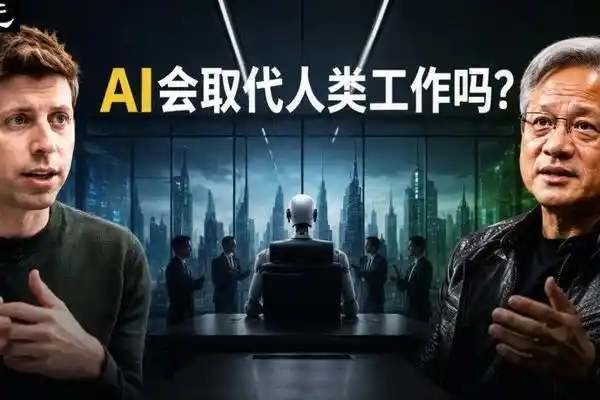
Altman Admits: Overestimated AI Snatching Jobs! Huang Renxun: The Unemployment Narrative Is Completely Backwards

Sam Altman has revised his earlier predictions about AI rapidly replacing jobs, admitting he overestimated the speed at which AI would eliminate entry-level white-collar roles. Speaking on the "Invest Like the Best" podcast, he stated that people do not truly want an AI CEO, as accountability and human connection remain critical. He found that individuals prefer interacting with people who can be held responsible for decisions. Similarly, NVIDIA's Jensen Huang argued that the narrative of AI destroying jobs is misguided. He distinguishes between tasks and jobs, noting that while AI can automate specific tasks, entire jobs—encompassing communication, judgment, coordination, and accountability—are not eliminated. He cited examples like radiologists and software engineers, where demand for these roles has increased as AI handles repetitive tasks, allowing for business expansion and the creation of more positions. Data from a University of Maryland and LinkUp study supports this, showing that U.S. job postings for new graduates have actually risen, countering the fear of vanishing entry-level roles. However, a significant shift is occurring: the traditional entry-level tasks that help newcomers gain experience are being automated, making initial career access more challenging. The key insight is that as AI takes over standardized tasks, the enduring value of human work shifts toward areas of responsibility, trust-building, and final decision-making—aspects that AI cannot replicate. The real "moat" for professionals lies in these irreplaceable human elements.

marsbitHá 1h

Altman Admits: Overestimated AI Snatching Jobs! Huang Renxun: The Unemployment Narrative Is Completely Backwards

marsbitHá 1h

Weekly Editor's Picks (0725-0731)

Weekly Editor's Picks (0725-0731) provides a curated selection of deep analysis, filtering out market noise. Key themes from this week include: **Macro & Policy:** The Federal Reserve's upcoming meeting is marked by high uncertainty, balancing cooling inflation data against persistent price pressures. Meanwhile, the U.S. crypto regulatory Clarity Act faces critical political hurdles, with its 2026 passage probability seen as low. **Investing & Crypto:** Analysis suggests long-term crypto success depends on conviction through volatile cycles, focusing on assets like Bitcoin and core smart contract platforms. A trend noted is the increasing similarity between global equity markets (especially tech) and crypto, driven by narrative and leverage. Several major crypto protocols show strong revenue growth, but this isn't always translating to token price appreciation due to sell pressure and structural factors. **AI & Semiconductors:** Nvidia's rising credit default swap rates signal market concern over AI infrastructure financing risks. The storage sector experienced volatility as markets began pricing in potential 2027 oversupply. Despite a record profitable quarter, SK Hynix's results were deemed "below expectations," reflecting heightened investor demands for future growth visibility. **Markets & DeFi:** TradeXYZ demonstrated remarkable accuracy in pre-market pricing for a major A股 listing. The token ONDO saw gains, linked to its growing role in the on-chain tokenized stock ecosystem. **Ethereum:** Post-Pectra upgrade, a major structural shift is underway as Lido begins migrating millions of ETH to new validator architectures designed for capital efficiency. **Also Highlighted:** Butian's bullish stock market move; OpenAI's Altman promising major advances; Samsung and SK Hynix securing large AI chip deals; Apple reaching a $5T market cap; and ongoing discussions around exchange security following Poolin's bankruptcy case.

marsbitHá 1h

Weekly Editor's Picks (0725-0731)

marsbitHá 1h

Low Investment Isn't Apple's Immunity Pass

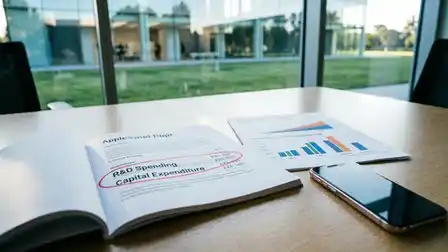
While Meta and Google face investor scrutiny over ballooning AI capital expenditures, Apple's minimal AI investment has paradoxically become a strength. Its market cap recently reclaimed the global top spot, surpassing $5 trillion. The irony is deep: Apple's own AI efforts have lagged, with "Apple Intelligence" delayed and core talent lost, forcing reliance on partners like Google Gemini and Alibaba's Qianwen. Its Q3 FY2026 (Q2 CY) earnings initially seemed stellar. Revenue hit $109.4B (up 16% YoY), with iPhone and Mac sales, growing 22% and 29% respectively, driving most of the growth. However, the stock fell over 8% post-earnings. The primary concern was a weaker Q4 revenue growth forecast of 9-11%, below expectations, due to looming supply chain constraints. Apple is feeling the indirect cost of the AI boom. Soaring memory and chip prices, fueled by massive data center investments from Microsoft, Amazon, and others, are forcing Apple to raise Mac and iPad prices significantly. The upcoming iPhone launch is also expected to see substantial price hikes. Despite avoiding heavy AI infrastructure spending—its capital expenditures are actually down 28%—Apple cannot escape the industry-wide supply and cost pressures. While Apple's operating cash flow remains robust, its substantial R&D spending (up 32% YoY) has yet to yield major AI breakthroughs. As Tim Cook prepares to step down as CEO, Apple faces a challenging transition: balancing its premium hardware success against the strategic and cost pressures of the AI era it has so far cautiously navigated.

marsbitHá 2h

Low Investment Isn't Apple's Immunity Pass

marsbitHá 2h

Trading

Spot

Artigos em Destaque

Como comprar PUSH

Bem-vindo à HTX.com!Tornámos a compra de Push Protocol (PUSH) simples e conveniente.Segue o nosso guia passo a passo para iniciar a tua jornada no mundo das criptos.Passo 1: cria a tua conta HTXUtiliza o teu e-mail ou número de telefone para te inscreveres numa conta gratuita na HTX.Desfruta de um processo de inscrição sem complicações e desbloqueia todas as funcionalidades.Obter a minha contaPasso 2: vai para Comprar Cripto e escolhe o teu método de pagamentoCartão de crédito/débito: usa o teu visa ou mastercard para comprar Push Protocol (PUSH) instantaneamente.Saldo: usa os fundos da tua conta HTX para transacionar sem problemas.Terceiros: adicionamos métodos de pagamento populares, como Google Pay e Apple Pay, para aumentar a conveniência.P2P: transaciona diretamente com outros utilizadores na HTX.Mercado de balcão (OTC): oferecemos serviços personalizados e taxas de câmbio competitivas para os traders.Passo 3: armazena teu Push Protocol (PUSH)Depois de comprar o teu Push Protocol (PUSH), armazena-o na tua conta HTX.Alternativamente, podes enviá-lo para outro lugar através de transferência blockchain ou usá-lo para transacionar outras criptomoedas.Passo 4: transaciona Push Protocol (PUSH)Transaciona facilmente Push Protocol (PUSH) no mercado à vista da HTX.Acede simplesmente à tua conta, seleciona o teu par de trading, executa as tuas transações e monitoriza em tempo real.Oferecemos uma experiência de fácil utilização tanto para principiantes como para traders experientes.

577 Visualizações TotaisPublicado em {updateTime}Atualizado em 2026.06.02

Como comprar PUSH

Discussões

Bem-vindo à Comunidade HTX. Aqui, pode manter-se informado sobre os mais recentes desenvolvimentos da plataforma e obter acesso a análises profissionais de mercado. As opiniões dos utilizadores sobre o preço de PUSH (PUSH) são apresentadas abaixo.

活动图片