摩根士丹利为何将代币化证券视为2026年下半年起的‘自然发展路径’

ambcryptoPublicado em 2026-03-25Última atualização em 2026-03-25

Resumo

摩根士丹利计划在2026年下半年推出代币化证券交易支持,将其暗池交易平台Trajectory Cross扩展至支持代币化股票。该平台目前已支持传统股票、ETF和ADR,此次升级被视为自然演进。作为美国四大经纪商之一,摩根士丹利管理着8.2万亿美元客户资产,此前已率先向财富管理客户开放比特币和以太坊ETF交易,并申请了自有比特币ETF。代币化证券市场正快速增长,总价值达10亿美元,月转账量25亿美元,年增长率达245%。纳斯达克和纽交所也在布局代币化证券交易,传统金融机构通过代币化提升运营效率并拓展全球24/7交易市场。

机构间对代币化证券的竞争正在升温。纽约证券交易所(NYSE)和纳斯达克等传统证券交易所正与科技公司合作,构建代币化证券系统。

投资银行也在为此做准备。据摩根士丹利加密部门负责人Amy Oldenburg表示,这家全球财富管理与投资银行将于2026年下半年推出对代币化证券的支持。

在Blockworks数字资产峰会的间隙,Oldenburg表示:

我们计划在2026年下半年将我们的暗池交易系统Trajectory Cross升级,以支持代币化证券。

她补充道:

该系统已支持传统股票、ETF和ADR。因此,向代币化证券开放我们的系统是自然的发展路径。

解读摩根士丹利的加密与代币化布局

摩根士丹利是与美林证券(美国银行)、瑞银集团和富国银行并列的四大金融巨头之一,这些机构均允许高净值客户投资加密货币。这些公司共同管理着约15-17万亿美元的客户资产,其中摩根士丹利以8.2万亿美元领先。

因此,它们被视为比特币ETF‘第二波’ adoption的关键推动者。有趣的是,这一路线图已在逐步实现。

2025年底,摩根士丹利成为首家允许投资顾问向所有财富管理客户(包括管理退休账户的客户)主动推荐现货比特币和以太坊ETF的金融巨头。这较其2024年8月仅限高净值人士的加密ETF准入政策有了显著扩展。

此外,现货加密货币交易已被纳入摩根士丹利的E·TRADE平台,该平台同时支持股票、债券、ETF等交易。通过其资产管理子公司,该机构已申请推出自有现货比特币ETF,市场观察人士认为其可能超越贝莱德的IBIT需求。如今,它正押注下一个热门市场叙事:代币化。

如前所述,纳斯达克与纽交所均在为代币化证券交易奠定基础。对传统金融机构而言,代币化能提升运营效率,并拓展至24/7交易的全球市场。

该领域总价值已飙升至10亿美元,月转移量增长45%达25亿美元,凸显出细分市场的巨大 adoption 潜力。事实上,今年三月,AI与代币化资产成为表现最佳的板块,也是 adoption 增速最快的领域之一。
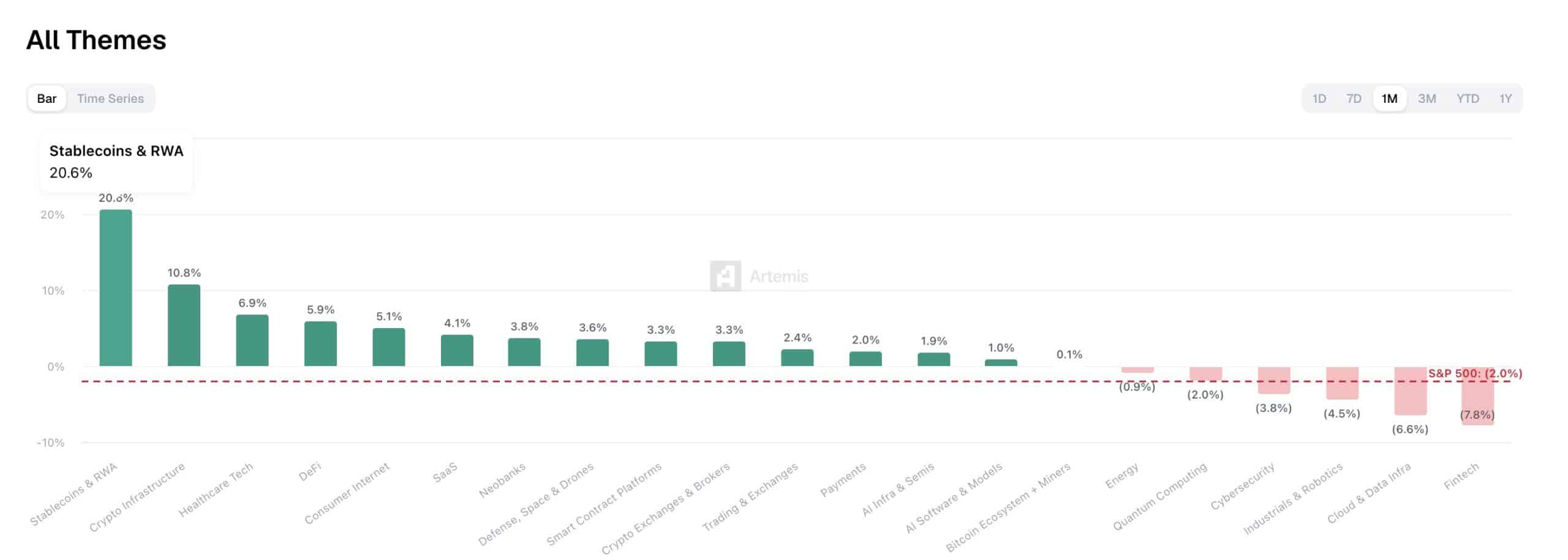
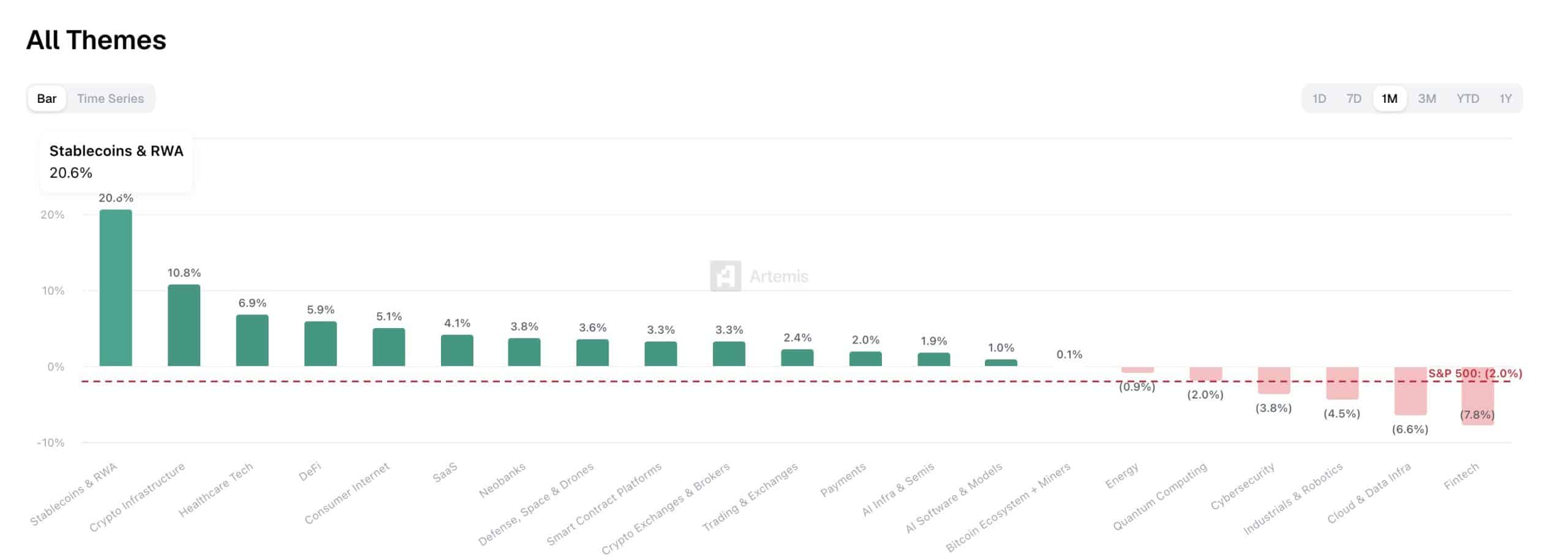
来源:Artemis

灰度公司强调这一增长趋势时指出:

代币化活动持续强劲增长。代币化资产规模创历史新高,同比增长245%。稳定币增长35%。


最终总结

  • 摩根士丹利正布局代币化证券,预计今年下半年推出交易支持。
  • 代币化资产是加密货币市场增长最快的领域之一,年增长率达245%。

Criptomoedas em alta

Perguntas relacionadas

Q摩根士丹利计划在何时推出对代币化证券的支持?

A摩根士丹利计划在2026年下半年(H2 2026)推出对代币化证券的支持。

Q摩根士丹利计划通过哪个平台来支持代币化证券交易?

A摩根士丹利计划通过其暗池交易平台Trajectory Cross来支持代币化证券交易。

Q根据文章,代币化资产市场在增长方面表现如何?

A代币化资产市场增长迅猛,年同比增长率达到245%,月转移量增长45%至25亿美元,总价值已达到10亿美元。

Q除了摩根士丹利,还有哪些传统金融机构在布局代币化证券?

A除了摩根士丹利,纽约证券交易所(NYSE)和纳斯达克(Nasdaq)等传统证券交易所也在与科技公司合作,构建代币化证券交易系统。

Q摩根士丹利在加密货币领域还有哪些其他重要举措?

A摩根士丹利在2025年底成为首家允许理财顾问向所有财富管理客户(包括管理退休账户的客户)积极推销现货比特币和以太坊ETF的 wirehouse,并且其资产管理部门已申请了内部现货比特币ETF。

Leituras Relacionadas

Breaking: Google Earth Urgently Pulls Back Nano Banana 2 Image Generation Feature!

Google Earth's newly launched "Create image" feature, powered by the Nano Banana 2 AI image generation model, was abruptly withdrawn shortly after its release due to being "played" by users. The feature allowed users to generate and overlay AI-created visuals directly onto real-world satellite and 3D maps in Google Earth. The tool enabled creative applications like historical recreations (e.g., visualizing ancient Pompeii), generating informational graphics for landmarks, and envisioning architectural projects or futuristic cityscapes on real terrain. It operated under "geospatial grounding," meaning the AI respected the underlying geography, topography, and perspective of the chosen map view. The model also integrated with Gemini to retrieve relevant factual information. However, upon release, users quickly tested its limits. A prominent example involved reimagining Philadelphia's historic Independence Hall as a post-apocalyptic ruin overrun by "happy" zombies, evil clowns, and giant alien mechs. This highlighted both the feature's playful potential and its risks regarding the generation of inappropriate or misleading content on realistic maps, leading to its swift temporary removal. Google stated it would re-release the feature after implementing "enhanced guardrails." Analysts note this move strategically leverages Google's vast proprietary geospatial data, positioning its AI not just for artistic generation but for spatially accurate world visualization—a unique advantage in the competitive AI image generation landscape.

marsbitHá 38m

Breaking: Google Earth Urgently Pulls Back Nano Banana 2 Image Generation Feature!

marsbitHá 38m

Altman Admits: Overestimated AI Snatching Jobs! Huang Renxun: The Unemployment Narrative Is Completely Backwards

Sam Altman has revised his earlier predictions about AI rapidly replacing jobs, admitting he overestimated the speed at which AI would eliminate entry-level white-collar roles. Speaking on the "Invest Like the Best" podcast, he stated that people do not truly want an AI CEO, as accountability and human connection remain critical. He found that individuals prefer interacting with people who can be held responsible for decisions. Similarly, NVIDIA's Jensen Huang argued that the narrative of AI destroying jobs is misguided. He distinguishes between tasks and jobs, noting that while AI can automate specific tasks, entire jobs—encompassing communication, judgment, coordination, and accountability—are not eliminated. He cited examples like radiologists and software engineers, where demand for these roles has increased as AI handles repetitive tasks, allowing for business expansion and the creation of more positions. Data from a University of Maryland and LinkUp study supports this, showing that U.S. job postings for new graduates have actually risen, countering the fear of vanishing entry-level roles. However, a significant shift is occurring: the traditional entry-level tasks that help newcomers gain experience are being automated, making initial career access more challenging. The key insight is that as AI takes over standardized tasks, the enduring value of human work shifts toward areas of responsibility, trust-building, and final decision-making—aspects that AI cannot replicate. The real "moat" for professionals lies in these irreplaceable human elements.

marsbitHá 44m

Altman Admits: Overestimated AI Snatching Jobs! Huang Renxun: The Unemployment Narrative Is Completely Backwards

marsbitHá 44m

Weekly Editor's Picks (0725-0731)

Weekly Editor's Picks (0725-0731) provides a curated selection of deep analysis, filtering out market noise. Key themes from this week include: **Macro & Policy:** The Federal Reserve's upcoming meeting is marked by high uncertainty, balancing cooling inflation data against persistent price pressures. Meanwhile, the U.S. crypto regulatory Clarity Act faces critical political hurdles, with its 2026 passage probability seen as low. **Investing & Crypto:** Analysis suggests long-term crypto success depends on conviction through volatile cycles, focusing on assets like Bitcoin and core smart contract platforms. A trend noted is the increasing similarity between global equity markets (especially tech) and crypto, driven by narrative and leverage. Several major crypto protocols show strong revenue growth, but this isn't always translating to token price appreciation due to sell pressure and structural factors. **AI & Semiconductors:** Nvidia's rising credit default swap rates signal market concern over AI infrastructure financing risks. The storage sector experienced volatility as markets began pricing in potential 2027 oversupply. Despite a record profitable quarter, SK Hynix's results were deemed "below expectations," reflecting heightened investor demands for future growth visibility. **Markets & DeFi:** TradeXYZ demonstrated remarkable accuracy in pre-market pricing for a major A股 listing. The token ONDO saw gains, linked to its growing role in the on-chain tokenized stock ecosystem. **Ethereum:** Post-Pectra upgrade, a major structural shift is underway as Lido begins migrating millions of ETH to new validator architectures designed for capital efficiency. **Also Highlighted:** Butian's bullish stock market move; OpenAI's Altman promising major advances; Samsung and SK Hynix securing large AI chip deals; Apple reaching a $5T market cap; and ongoing discussions around exchange security following Poolin's bankruptcy case.

marsbitHá 1h

Weekly Editor's Picks (0725-0731)

marsbitHá 1h

Low Investment Isn't Apple's Immunity Pass

While Meta and Google face investor scrutiny over ballooning AI capital expenditures, Apple's minimal AI investment has paradoxically become a strength. Its market cap recently reclaimed the global top spot, surpassing $5 trillion. The irony is deep: Apple's own AI efforts have lagged, with "Apple Intelligence" delayed and core talent lost, forcing reliance on partners like Google Gemini and Alibaba's Qianwen. Its Q3 FY2026 (Q2 CY) earnings initially seemed stellar. Revenue hit $109.4B (up 16% YoY), with iPhone and Mac sales, growing 22% and 29% respectively, driving most of the growth. However, the stock fell over 8% post-earnings. The primary concern was a weaker Q4 revenue growth forecast of 9-11%, below expectations, due to looming supply chain constraints. Apple is feeling the indirect cost of the AI boom. Soaring memory and chip prices, fueled by massive data center investments from Microsoft, Amazon, and others, are forcing Apple to raise Mac and iPad prices significantly. The upcoming iPhone launch is also expected to see substantial price hikes. Despite avoiding heavy AI infrastructure spending—its capital expenditures are actually down 28%—Apple cannot escape the industry-wide supply and cost pressures. While Apple's operating cash flow remains robust, its substantial R&D spending (up 32% YoY) has yet to yield major AI breakthroughs. As Tim Cook prepares to step down as CEO, Apple faces a challenging transition: balancing its premium hardware success against the strategic and cost pressures of the AI era it has so far cautiously navigated.

marsbitHá 2h

Low Investment Isn't Apple's Immunity Pass

marsbitHá 2h

Trading

Spot

Artigos em Destaque

Como comprar STO

Bem-vindo à HTX.com!Tornámos a compra de StakeStone (STO) simples e conveniente.Segue o nosso guia passo a passo para iniciar a tua jornada no mundo das criptos.Passo 1: cria a tua conta HTXUtiliza o teu e-mail ou número de telefone para te inscreveres numa conta gratuita na HTX.Desfruta de um processo de inscrição sem complicações e desbloqueia todas as funcionalidades.Obter a minha contaPasso 2: vai para Comprar Cripto e escolhe o teu método de pagamentoCartão de crédito/débito: usa o teu visa ou mastercard para comprar StakeStone (STO) instantaneamente.Saldo: usa os fundos da tua conta HTX para transacionar sem problemas.Terceiros: adicionamos métodos de pagamento populares, como Google Pay e Apple Pay, para aumentar a conveniência.P2P: transaciona diretamente com outros utilizadores na HTX.Mercado de balcão (OTC): oferecemos serviços personalizados e taxas de câmbio competitivas para os traders.Passo 3: armazena teu StakeStone (STO)Depois de comprar o teu StakeStone (STO), armazena-o na tua conta HTX.Alternativamente, podes enviá-lo para outro lugar através de transferência blockchain ou usá-lo para transacionar outras criptomoedas.Passo 4: transaciona StakeStone (STO)Transaciona facilmente StakeStone (STO) no mercado à vista da HTX.Acede simplesmente à tua conta, seleciona o teu par de trading, executa as tuas transações e monitoriza em tempo real.Oferecemos uma experiência de fácil utilização tanto para principiantes como para traders experientes.

335 Visualizações TotaisPublicado em {updateTime}Atualizado em 2026.06.02

Como comprar STO

Discussões

Bem-vindo à Comunidade HTX. Aqui, pode manter-se informado sobre os mais recentes desenvolvimentos da plataforma e obter acesso a análises profissionais de mercado. As opiniões dos utilizadores sobre o preço de STO (STO) são apresentadas abaixo.

活动图片