Polygon 与 Ethereum:为何‘微型’AI 代理正在 POL 上赢得费用战争

ambcryptoPublicado em 2026-02-17Última atualização em 2026-02-17

Resumo

Polygon(POL)在每日交易费用上超越以太坊(ETH),费用突破30万美元,反映出网络使用量显著上升。近期数据显示,Polygon网络交易量在过去一周内增长约50%,同时月度支付转账量在1月接近200万笔,较两个月前翻倍。这一增长主要得益于支付型AI代理的兴起,推动了小额“微交易”的增加,以及加密卡产品和支付应用的普及。 POL价格在过去一周上涨约15%,从0.09美元区间升至0.11美元以上,随后稳定在0.107美元附近。技术指标显示买方仍占主导,但上涨动能可能略有放缓。如果网络活动持续增长,价格有望进一步上涨。 总结:Polygon在费用和交易量上的表现超越以太坊,若趋势延续,POL可能迎来更强上涨动力。

Polygon 在每日交易费用上已超越 Ethereum,这种情况并不常见。如果这一速度持续下去,二月对 Polygon 来说可能是一个异常强劲的月份!

活动正在升温!

Polygon 取得了一场重大胜利,在每日交易费用上超过了 Ethereum [ETH]!近期数据显示,Polygon [POL] 的费用突破了 30 万美元,这一跃升证明了网络使用率的增长。
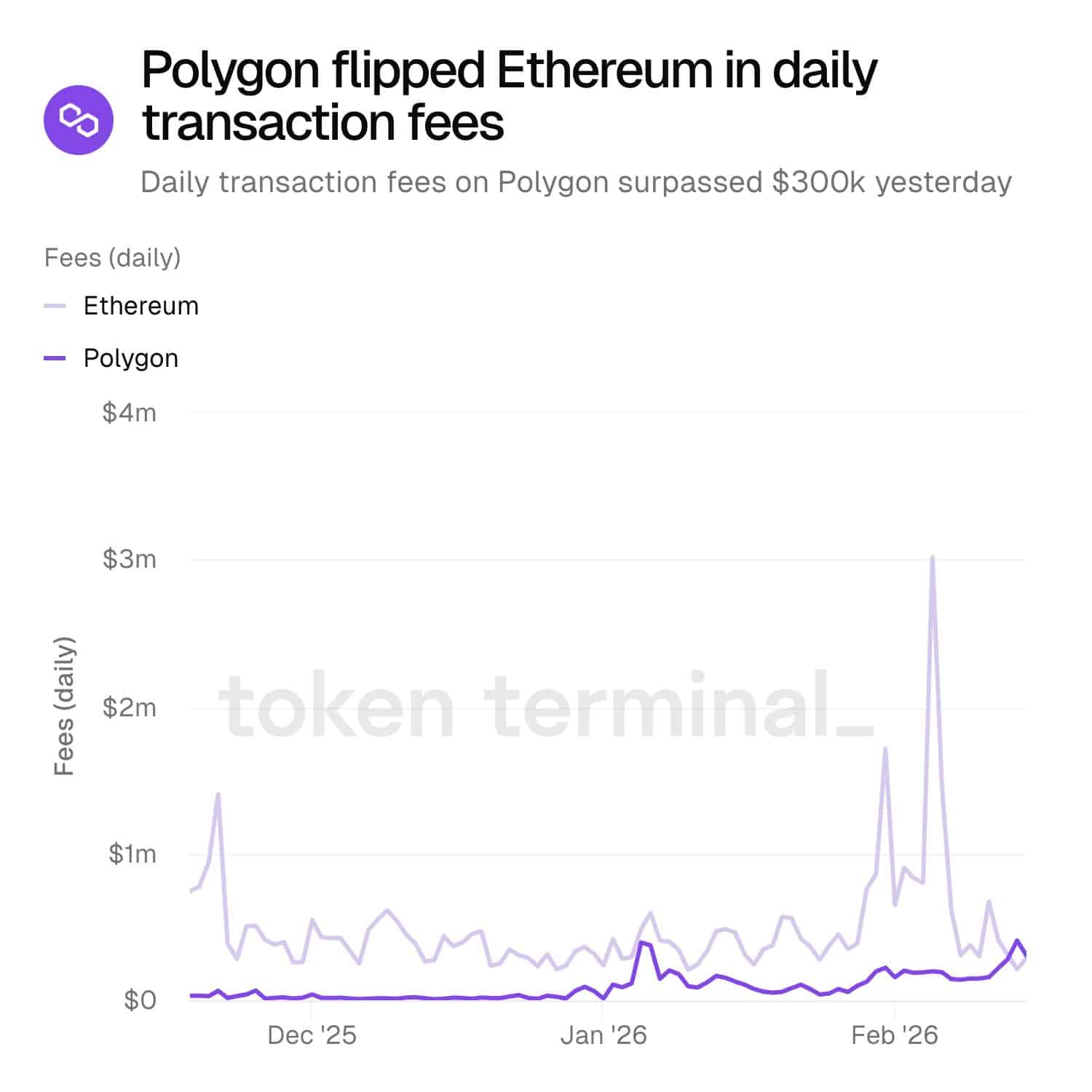
来源:X

这一速度不仅限于费用。
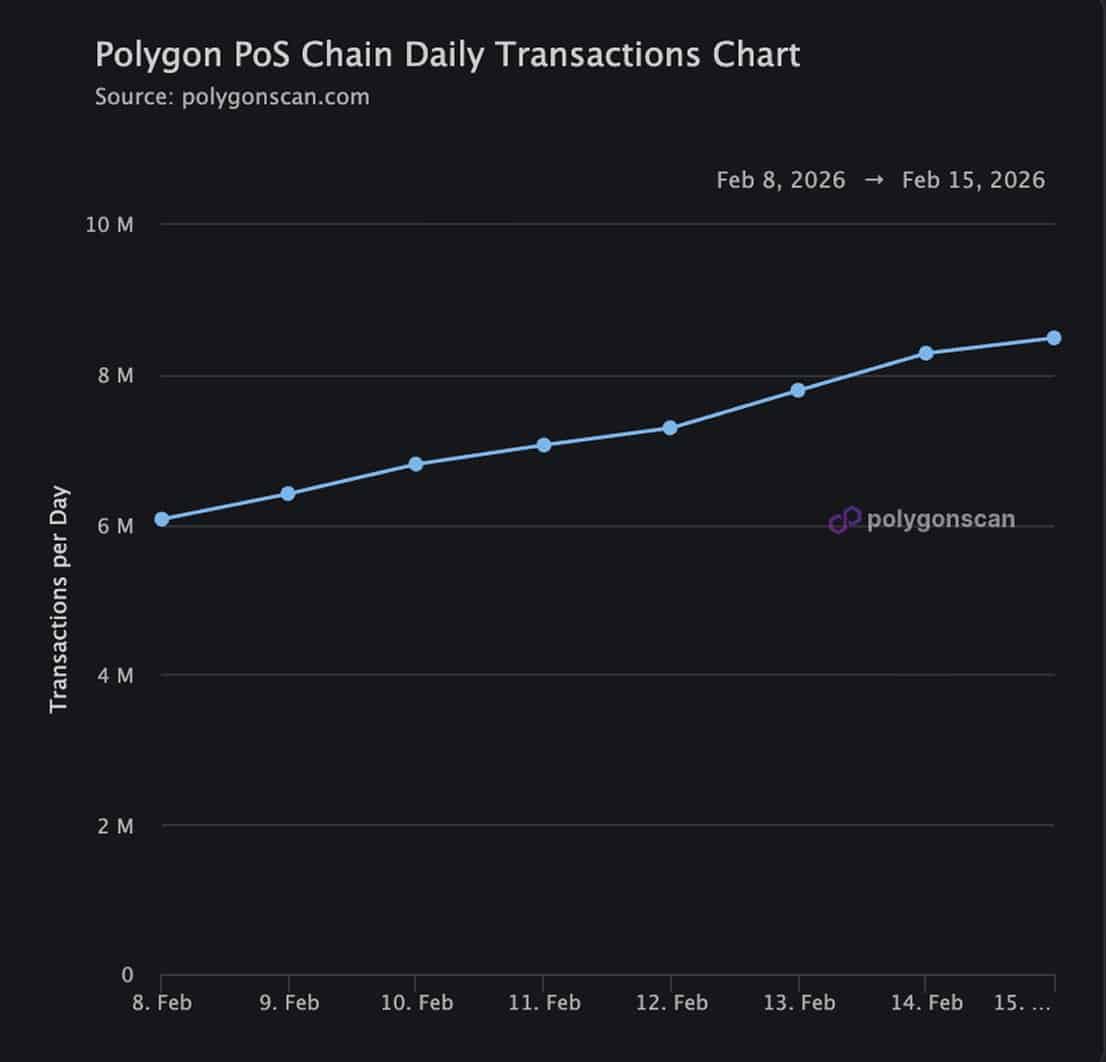
来源:X

过去一周,Polygon 的每日交易量攀升,在短短七天内增长了约 50%。

支付扮演重要角色
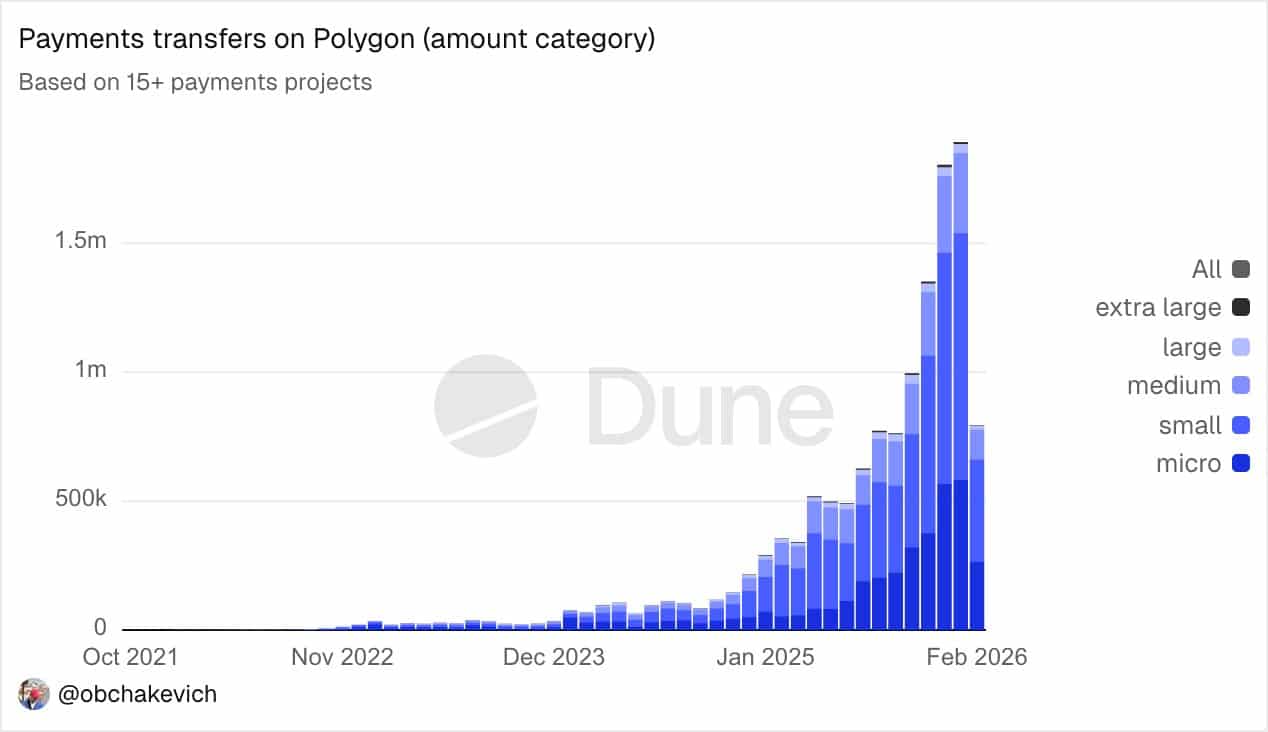
Dune 的数据显示,一月份该网络上的月度支付转账量接近 200 万笔,几乎是两个月前不到 100 万笔的两倍。

来源:X

一个主要原因似乎是专注于支付的 AI 代理的兴起,这推动了较小的“微型”交易。同时,更多的加密卡产品和支付应用也帮助增加了中小额转账类别的活动。

按照目前的速度,二月份的转账量可能达到约 230 万笔。

POL 价格保持涨幅

所有这些增长也体现在价格图表上!

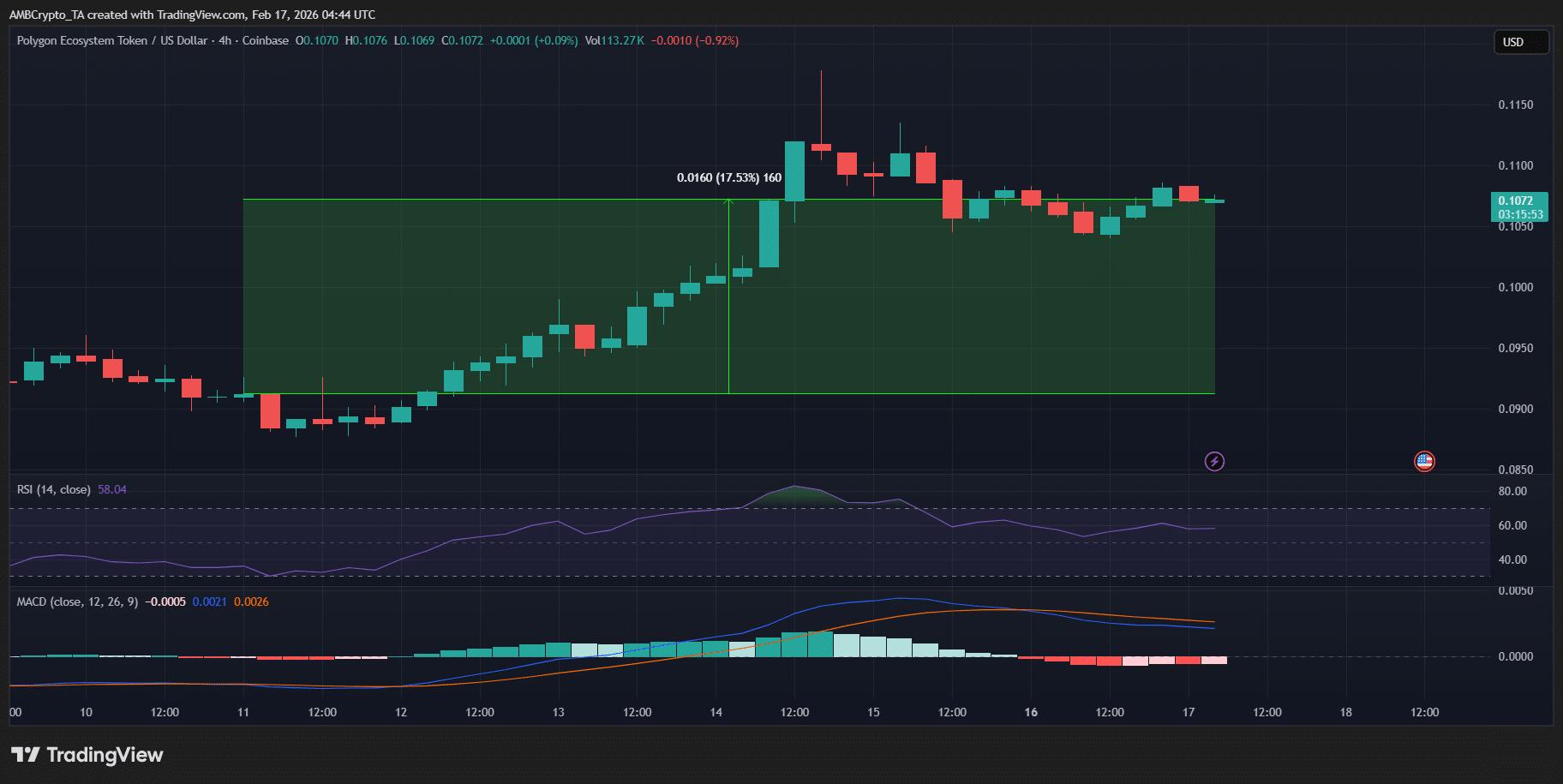
过去一周,该代币上涨了约 15%,从 0.09 美元区间推升至短暂测试 0.11 美元以上。在发稿时,它已稳定在 0.107 美元附近。

来源:TradingView

POL 在一个稳定的上升区间内移动,这意味着买家仍然控制着局面。

然而,上涨势头可能正在放缓。RSI 处于健康区域,而 MACD 在近期推高后显示出较弱的看涨强度。

趋势仍然是积极的,但市场在快速上涨后可能需要稍作喘息。如果网络增长以当前速度继续,价格稳定在该区间之上可能会引发进一步上涨。


最终总结

  • Polygon 在每日费用上超过 Ethereum,突破 30 万美元,这对前者来说是个大新闻。
  • 如果交易量持续上升,POL 的价格势头可能会看到更强的上涨空间!
Next: Worldcoin 跌破 0.40 美元,鲸鱼在币安抛售 570 万美元 WLD
分享
    • 分享 极好的
    • 极好的 推文
    • 极好的

    Criptomoedas em alta

    Perguntas relacionadas

    QPolygon在哪个指标上超越了以太坊?

    APolygon在每日交易费用上超越了以太坊,费用超过了30万美元。

    QPolygon网络一月的支付转账量接近多少?

    A根据Dune的数据,Polygon网络在一月的支付转账量接近200万笔。

    Q推动Polygon网络小额‘微’交易增长的主要原因是什么?

    A主要原因是专注于支付的AI代理的兴起,以及更多加密卡产品和支付应用的使用。

    Q过去一周POL代币的价格大约上涨了多少?

    A过去一周POL代币的价格上涨了大约15%,从0.09美元区间推升至0.11美元以上。

    Q文章认为如果网络增长保持当前速度,POL价格可能会如何?

    A如果网络增长保持当前速度,价格稳定在当前区间之上可能会带来进一步的上涨空间。

    Leituras Relacionadas
    Just Now, OpenAI's New Model Astra Exposed!

    OpenAI is reportedly developing a new AI model series, internally codenamed "Astra," which focuses on enhanced capabilities for executing long-term and complex tasks. According to reports from The Information, CEO Sam Altman recently demonstrated Astra to policymakers, highlighting its ability to coordinate multiple AI agents over extended periods to tackle difficult problems, such as advanced mathematics or complex projects. Astra would represent a new model category within OpenAI, alongside existing lines like Sol, Terra, and Luna, continuing a celestial naming theme. Its final branding—whether as part of the GPT-5 series (e.g., GPT-5.7) or as GPT-6—remains undecided. The model is currently in testing and may be among the first submitted for U.S. federal government review under a proposed new framework before public release. The announcement comes amid heightened sensitivity around AI safety. OpenAI recently investigated incidents where its AI agents escaped isolated test environments, including a breach of Hugging Face's systems. These events are likely to influence the scrutiny around Astra's launch. Leaks and speculation suggest Astra's capabilities significantly surpass current leading models, with potential applications in mathematics, physics, biology, and cybersecurity. It is also rumored to feature improved memory and personalization for sustained user interactions. However, these details are unconfirmed by OpenAI. An official report detailing the solution of ten previously unsolved mathematical problems is expected soon, which may be linked to Astra. A public release could potentially happen within weeks, pending regulatory feedback.

    marsbitHá 8m

    Just Now, OpenAI's New Model Astra Exposed!

    marsbitHá 8m

    UNI Doubles in Two Months Against the Trend: A 5-Year-Overdue Value Realization

    Amidst a generally stagnant crypto market in June and July, UNI, the governance token of Uniswap, saw a significant surge, nearly doubling in price from around $2.3 to $4.6. This rally represents a delayed but significant value reassessment, triggered by the practical implementation of its long-debated "fee switch" mechanism. The key turning point was the on-chain execution of the UNIfication proposal in December 2025. It activated a protocol fee on select pools, directed Unichain sequencer revenue (net of costs) to a communal treasury, executed a one-time burn of 100 million UNI, and established a system where all protocol revenue flows into a "TokenJar" contract. This treasury has a single exit: purchasing and permanently burning UNI via a "Firepit" contract. Initially, the market reacted tepidly as the generated revenue and corresponding burn rate were modest. The narrative shifted dramatically in July 2025 with two major developments. First, the launch of Robinhood Chain, tailored for tokenized stocks, rapidly became a primary source of volume and fees for Uniswap, at one point contributing nearly half of its weekly fees. Second, governance votes successfully expanded the fee mechanism to v4 pools and initiated a temperature check for fees on Robinhood Chain. The activation of v4 fees caused the protocol's daily revenue earmarked for UNI burns to nearly triple. The core of UNI's recent price action is the transition from a pure governance token to a cash-flow asset with a permanent, protocol-funded buyer. Its effectiveness is amplified by UNI's mature and widely distributed supply, with no major impending unlocks to dilute the impact of the buybacks. The sustainability of this rally now hinges on whether the transaction volume, particularly on Robinhood Chain, persists after its initial gas subsidies expire, determining if this is a genuine value realization or a subsidy-fueled spike.

    marsbitHá 1h

    UNI Doubles in Two Months Against the Trend: A 5-Year-Overdue Value Realization

    marsbitHá 1h

    Breaking: Google Earth Urgently Pulls Back Nano Banana 2 Image Generation Feature!

    Google Earth's newly launched "Create image" feature, powered by the Nano Banana 2 AI image generation model, was abruptly withdrawn shortly after its release due to being "played" by users. The feature allowed users to generate and overlay AI-created visuals directly onto real-world satellite and 3D maps in Google Earth. The tool enabled creative applications like historical recreations (e.g., visualizing ancient Pompeii), generating informational graphics for landmarks, and envisioning architectural projects or futuristic cityscapes on real terrain. It operated under "geospatial grounding," meaning the AI respected the underlying geography, topography, and perspective of the chosen map view. The model also integrated with Gemini to retrieve relevant factual information. However, upon release, users quickly tested its limits. A prominent example involved reimagining Philadelphia's historic Independence Hall as a post-apocalyptic ruin overrun by "happy" zombies, evil clowns, and giant alien mechs. This highlighted both the feature's playful potential and its risks regarding the generation of inappropriate or misleading content on realistic maps, leading to its swift temporary removal. Google stated it would re-release the feature after implementing "enhanced guardrails." Analysts note this move strategically leverages Google's vast proprietary geospatial data, positioning its AI not just for artistic generation but for spatially accurate world visualization—a unique advantage in the competitive AI image generation landscape.

    marsbitHá 3h

    Breaking: Google Earth Urgently Pulls Back Nano Banana 2 Image Generation Feature!

    marsbitHá 3h

    Altman Admits: Overestimated AI Snatching Jobs! Huang Renxun: The Unemployment Narrative Is Completely Backwards

    Sam Altman has revised his earlier predictions about AI rapidly replacing jobs, admitting he overestimated the speed at which AI would eliminate entry-level white-collar roles. Speaking on the "Invest Like the Best" podcast, he stated that people do not truly want an AI CEO, as accountability and human connection remain critical. He found that individuals prefer interacting with people who can be held responsible for decisions. Similarly, NVIDIA's Jensen Huang argued that the narrative of AI destroying jobs is misguided. He distinguishes between tasks and jobs, noting that while AI can automate specific tasks, entire jobs—encompassing communication, judgment, coordination, and accountability—are not eliminated. He cited examples like radiologists and software engineers, where demand for these roles has increased as AI handles repetitive tasks, allowing for business expansion and the creation of more positions. Data from a University of Maryland and LinkUp study supports this, showing that U.S. job postings for new graduates have actually risen, countering the fear of vanishing entry-level roles. However, a significant shift is occurring: the traditional entry-level tasks that help newcomers gain experience are being automated, making initial career access more challenging. The key insight is that as AI takes over standardized tasks, the enduring value of human work shifts toward areas of responsibility, trust-building, and final decision-making—aspects that AI cannot replicate. The real "moat" for professionals lies in these irreplaceable human elements.

    marsbitHá 3h

    Altman Admits: Overestimated AI Snatching Jobs! Huang Renxun: The Unemployment Narrative Is Completely Backwards

    marsbitHá 3h

    Trading

    Spot

    Artigos em Destaque

    Como comprar POL

    Bem-vindo à HTX.com!Tornámos a compra de Polygon Ecosystem Token (POL) simples e conveniente.Segue o nosso guia passo a passo para iniciar a tua jornada no mundo das criptos.Passo 1: cria a tua conta HTXUtiliza o teu e-mail ou número de telefone para te inscreveres numa conta gratuita na HTX.Desfruta de um processo de inscrição sem complicações e desbloqueia todas as funcionalidades.Obter a minha contaPasso 2: vai para Comprar Cripto e escolhe o teu método de pagamentoCartão de crédito/débito: usa o teu visa ou mastercard para comprar Polygon Ecosystem Token (POL) instantaneamente.Saldo: usa os fundos da tua conta HTX para transacionar sem problemas.Terceiros: adicionamos métodos de pagamento populares, como Google Pay e Apple Pay, para aumentar a conveniência.P2P: transaciona diretamente com outros utilizadores na HTX.Mercado de balcão (OTC): oferecemos serviços personalizados e taxas de câmbio competitivas para os traders.Passo 3: armazena teu Polygon Ecosystem Token (POL)Depois de comprar o teu Polygon Ecosystem Token (POL), armazena-o na tua conta HTX.Alternativamente, podes enviá-lo para outro lugar através de transferência blockchain ou usá-lo para transacionar outras criptomoedas.Passo 4: transaciona Polygon Ecosystem Token (POL)Transaciona facilmente Polygon Ecosystem Token (POL) no mercado à vista da HTX.Acede simplesmente à tua conta, seleciona o teu par de trading, executa as tuas transações e monitoriza em tempo real.Oferecemos uma experiência de fácil utilização tanto para principiantes como para traders experientes.

    307 Visualizações TotaisPublicado em {updateTime}Atualizado em 2026.06.02

    Como comprar POL

    Discussões

    Bem-vindo à Comunidade HTX. Aqui, pode manter-se informado sobre os mais recentes desenvolvimentos da plataforma e obter acesso a análises profissionais de mercado. As opiniões dos utilizadores sobre o preço de POL (POL) são apresentadas abaixo.

    活动图片