'Pemborosan Sumber Daya'? – CTO Jupiter Jelaskan Mengapa Pembelian Kembali JUP Mungkin Dihentikan

ambcryptoPublicado em 2026-01-04Última atualização em 2026-01-04

Resumo

Berdasarkan postingan media sosial pada 2 Januari, CTO Jupiter Siong Ong menyatakan bahwa program buyback token JUP senilai$70 juta tidak berdampak signifikan terhadap harga token dan dianggap "pemborosan sumber daya". Harga JUP turun88% dari puncaknya meskipun buyback agresif dilakukan sejak Februari2025. Komunitas terpecah mengenai keputusan ini. Sebagian anggota mengusulkan alokasi dana untuk meningkatkan imbal hasil staking, yang dapat mencapai25% APY dan berpotensi mendorong kenaikan harga. Namun Ong mempertanyakan dampaknya terhadap pengembangan produk. Analis seperti Fabiano mencatat bahwa token saat ini tidak terkait dengan kesuksesan protokol, dan redistribusi pendapatan kepada staker dapat mengurangi tekanan jual. Sementara program buyback berhasil untuk proyek seperti Hyperliquid dan Aave, performa Jupiter tetap lemah. Dengan pendapatan kumulatif$369 juta, tim masih mengevaluasi masukan komunitas untuk menentukan langkah selanjutnya terkait insentif pertumbuhan versus stabilitas harga token.

Super-app DeFi berbasis Solana, Jupiter, sedang mempertimbangkan untuk menghentikan program pembelian kembali token JUP.

Dalam sebuah postingan media sosial pada tanggal 2 Januari, Siong Ong, Co-Founder dan CTO Jupiter, mengatakan mereka tidak melihat banyak dampak dari program tersebut dan merasa itu adalah "pemborosan" sumber daya.

"Kami menghabiskan lebih dari $70 juta untuk pembelian kembali tahun lalu, dan harganya jelas tidak banyak bergerak. Kami dapat menggunakan $70 juta itu untuk memberikan insentif pertumbuhan bagi pengguna yang sudah ada dan pengguna baru."

Ong mengikuti jejak Pendiri Helium Amir Haleem, yang mengatakan mereka akan "berhenti membuang-buang uang untuk pembelian kembali HNT", karena pasar tidak peduli dengan upaya tersebut.

Komunitas JUP Terbelah

Jupiter memulai program pembelian kembali JUP pada pertengahan Februari 2025 dan dilaporkan telah menghabiskan sekitar $70 juta. Selain itu, Jupiter [JUP] meroket sekitar 300% dalam bulan pertama setelah peluncuran pembelian kembali.

Namun, token tersebut telah mencetak posisi terendah baru sepanjang tahun pada 2025, meskipun pembelian kembali agresif yang sebelumnya dilihat sebagai sinyal bullish. Pada saat berita ini ditulis, token diperdagangkan pada $0,2, turun dari puncaknya di $1,8 – Penurunan harga sebesar 88%.

Namun, komunitas terbelah mengenai apakah akan menghentikan program pembelian kembali. Seorang pengguna mengusulkan untuk membagikan pendapatan dengan staker untuk meningkatkan hasil staking dan mendorong harga.

"Dengan 753 juta JUP yang di-stake, itu hampir $0,09 per JUP. Bagi saya pribadi, itu akan menjadi pendapatan pasif yang sangat bagus. Itu adalah hasil dividen 43%. Tentu saja harganya akan naik dengan berita seperti itu."

Tetapi Ong bertanya-tanya bagaimana produk akan tumbuh jika semuanya dialokasikan untuk imbalan staking.

Di sisi lain, analis Fabiano menyatakan saat ini tidak ada alasan untuk memegang token karena tidak terkait dengan kesuksesan protokol (bukan ekuitas).

Menurutnya, solusi jangka pendek adalah berbagi pendapatan dengan staker untuk mengurangi tekanan jual triwulanan mereka.

"Bagaimana jika kita mengalihkan $10M itu ke arah imbalan staking, alih-alih membeli JUP untuk Litterbox? Dengan harga saat ini, ini dapat menghasilkan APY sekitar 25%? -yang sangat menarik."

Apa Selanjutnya untuk JUP?

Kritikus lain menunjuk pada kinerja Pump.fun [PUMP] yang redup meskipun ada pembelian kembali besar-besaran, menambahkan bahwa tidak semua protokol harus mengikuti tren tersebut.

Namun, program pembelian kembali telah berhasil untuk Hyperliquid [HYPE] dan Aave [AAVE], terutama selama periode sentimen pasar yang positif.

Pada saat penulisan, belum jelas proposal mana dan arah mana yang akan dipilih tim mengikuti beberapa umpan balik pada proposal tersebut.

Jupiter telah berevolusi dari agregator DEX menjadi super-app yang mencakup lending, pasar prediksi, dan bahkan perdagangan perpetual. Pengembangan yang sedang berlangsung juga telah membuatnya meningkatkan pendapatan kumulatif menjadi $369 juta.


Pemikiran Akhir

  • Tim Jupiter tampak kecewa dengan dampak terbatas dari program pembelian kembalinya meskipun telah mengkomitmen $70 juta.
  • Tetapi komunitas terbelah mengenai rencana untuk menghentikan program pembelian kembali token.

Criptomoedas em alta

Perguntas relacionadas

QMengapa Jupiter mempertimbangkan untuk menghentikan program buyback token JUP?

AKarena CTO Jupiter, Siong Ong, menyatakan bahwa program buyback yang menghabiskan $70 juta tahun lalu tidak memberikan dampak signifikan terhadap harga token dan dianggap sebagai 'pemborosan' sumber daya yang bisa dialokasikan untuk insentif pertumbuhan pengguna.

QBerapa jumlah yang telah dihabiskan Jupiter untuk program buyback JUP hingga saat ini?

AJupiter telah menghabiskan sekitar $70 juta untuk program buyback token JUP yang dimulai pada pertengahan Februari 2025.

QBagaimana performa harga JUP setelah program buyback diluncurkan?

AMeski sempat mengalami kenaikan 300% dalam bulan pertama setelah peluncuran buyback, harga JUP kemudian turun 88% dari puncaknya di $1.8 menjadi $0.2 dan mencetak titik terendah tahunan di 2025.

QApa alternatif usulan komunitas selain program buyback?

ABeberapa anggota komunitas mengusulkan untuk mengalokasikan dana tersebut ke staking rewards, yang dapat memberikan yield hingga 25-43% dan mengurangi tekanan jual kuartalan dari staker.

QAplikasi apa saja yang telah dikembangkan Jupiter selain sebagai DEX aggregator?

AJupiter telah berkembang menjadi super-app yang mencakup layanan lending, prediction markets, perdagangan perpetual, dan telah menghasilkan cumulative revenue sebesar $369 juta.

Leituras Relacionadas

Low Investment Isn't Apple's Immunity Pass

While Meta and Google face investor scrutiny over ballooning AI capital expenditures, Apple's minimal AI investment has paradoxically become a strength. Its market cap recently reclaimed the global top spot, surpassing $5 trillion. The irony is deep: Apple's own AI efforts have lagged, with "Apple Intelligence" delayed and core talent lost, forcing reliance on partners like Google Gemini and Alibaba's Qianwen. Its Q3 FY2026 (Q2 CY) earnings initially seemed stellar. Revenue hit $109.4B (up 16% YoY), with iPhone and Mac sales, growing 22% and 29% respectively, driving most of the growth. However, the stock fell over 8% post-earnings. The primary concern was a weaker Q4 revenue growth forecast of 9-11%, below expectations, due to looming supply chain constraints. Apple is feeling the indirect cost of the AI boom. Soaring memory and chip prices, fueled by massive data center investments from Microsoft, Amazon, and others, are forcing Apple to raise Mac and iPad prices significantly. The upcoming iPhone launch is also expected to see substantial price hikes. Despite avoiding heavy AI infrastructure spending—its capital expenditures are actually down 28%—Apple cannot escape the industry-wide supply and cost pressures. While Apple's operating cash flow remains robust, its substantial R&D spending (up 32% YoY) has yet to yield major AI breakthroughs. As Tim Cook prepares to step down as CEO, Apple faces a challenging transition: balancing its premium hardware success against the strategic and cost pressures of the AI era it has so far cautiously navigated.

marsbitHá 30m

Low Investment Isn't Apple's Immunity Pass

marsbitHá 30m

PA Graphics Explanation | One Chart to Understand the Major Web3 Events in August 2026

**PANews Crypto Calendar: Key Web3 Events in August 2026** PANews introduces its revamped crypto calendar, featuring comprehensive coverage, flexible filtering, and easy export options. The market in August will be shaped by multiple key events across macroeconomics, regulation, tokenomics, and project developments: * **Macro & Policy:** Key US economic data releases (July Non-Farm Payrolls, CPI), the Federal Reserve meeting minutes, and the Jackson Hole Economic Symposium will be in focus. On the regulatory front, the US Senate plans to release a new draft of the *CLARITY Act*, while the EU's expanded crypto ban against Belarus comes into effect. * **Token Unlocks:** Significant token unlocks are scheduled for assets including ENA, AVAX, CONX, ZRO, and KAITO, which may influence market volatility. * **Project Updates & Shutdowns:** Several services, including Exchange Art, Ctrl Wallet, Zapper, NFTfi, and Summer.fi, are set to cease operations or undergo major adjustments. Users are advised to manage their assets accordingly. * **Corporate Activity:** Q2 earnings reports from companies like SpaceX, Circle, and Nvidia are due. Unitree Robotics will initiate its IPO subscription on the STAR Market, and Moonshot AI plans to begin a Pre-IPO financing round. * **Industry Events:** Major conferences such as Bitcoin Asia 2026 and the 2026 Digital Expo will take place. The overarching market narrative for August will revolve around macroeconomic expectations, regulatory developments, token unlock schedules, and ongoing industry consolidation.

marsbitHá 40m

PA Graphics Explanation | One Chart to Understand the Major Web3 Events in August 2026

marsbitHá 40m

Wall Street's Most Famous 'Cassandra' Now Has His Sights Set on Nvidia

Michael Burry, the famed "Big Short" investor, has once again captured Wall Street's attention with a series of short positions against major tech and semiconductor stocks, most notably Nvidia. In late June and July, through his "Cassandra Unchained" newsletter, Burry disclosed short bets against Nvidia, Tesla, Applied Materials, Caterpillar, the SOXX semiconductor ETF, and later, Micron Technology. His core thesis revolves around potential distortions in the AI infrastructure boom, specifically questioning whether extended depreciation schedules (e.g., 6 years vs. a realistic 2-3 years for AI chips) by cloud giants like Microsoft and Google artificially inflate profits. He also raises concerns about possible "off-balance-sheet circular financing," where chip demand might be propped up by vendor-backed funding to clients. Nvidia's stock experienced volatility following these disclosures, briefly dipping but largely holding near Burry's reported entry points, leaving his positions roughly flat or slightly underwater as of late July. This move is part of a pattern for Burry, whose track record since his legendary 2008 bet is mixed. He has faced notable losses, such as on Tesla in 2021, while scoring on broader market turns like the 2020 pandemic crash. His methodology focuses intensely on free cash flow and scrutinizing original financial documents to spot overvaluation and structural risks, but it often struggles with timing the market. The article contrasts Burry's stance with other prominent investors. Steve Eisman, another "Big Short" figure, is not shorting Nvidia, citing strong fundamentals but expressing nervousness about sustainability. Jim Chanos agrees with the broad "accounting mismatch" concern—comparing it to the dot-com bubble—but targets financial leverage in private equity firms rather than the chip stocks themselves. While Nvidia's short interest remains relatively low at 1.3-1.4% of float, the massive stock size means absolute short losses have been significant, exceeding $5 billion earlier this year. The piece concludes that for ordinary investors, the key takeaway is not replicating specific short bets but learning from the critical frameworks these investors use: questioning rosy accounting, identifying structural vulnerabilities, and maintaining skepticism during market euphoria, even if pinpointing the exact catalyst for a downturn remains elusive.

marsbitHá 1h

Wall Street's Most Famous 'Cassandra' Now Has His Sights Set on Nvidia

marsbitHá 1h

Weekly Selection丨Epic Stock Market Volatility, Changxin Tech's IPO Reshapes Storage Landscape, Saylor Aims to Re-Anchor STRC Around September 8th

PANews Weekly Digest: Market Turmoil, Tech Breakthroughs, and Crypto Developments. The week saw significant volatility across global markets. South Korea's KOSPI index experienced extreme turbulence, including multiple trading halts, largely driven by sharp declines in AI hardware stocks like SK Hynix. In contrast, China's Changxin Xinqiao (CXC) achieved a landmark IPO with a market cap surpassing 4 trillion yuan, marking a major success for the domestic DRAM industry after a decade of losses. In the crypto and Web3 space, several key narratives emerged. AI is driving demand for new infrastructure, with projects like AI agent wallets and programmable payments gaining traction, attracting interest from firms like Coinbase. The Bitcoin mining sector is pivoting, with companies like MARA focusing on energy management as electricity becomes a core AI-era asset. Meanwhile, the RWA (Real World Assets) sector faces a "utilization puzzle," with hundreds of billions in on-chain assets remaining dormant. Notable market movements included a historic single-day surge of over 17% for the KOSPI index and a significant migration of $16.5 billion in staked ETH within the Lido ecosystem. Michael Saylor announced a target to re-peg the STRC stablecoin around September 8th. Other highlights include discussions on Ethereum's ambitious 2030 roadmap for scaling and privacy, analysis showing high protocol revenues not always translating to token price gains, and warnings from Citi about potential extreme commodity price shocks by late 2026.

marsbitHá 1h

Weekly Selection丨Epic Stock Market Volatility, Changxin Tech's IPO Reshapes Storage Landscape, Saylor Aims to Re-Anchor STRC Around September 8th

marsbitHá 1h

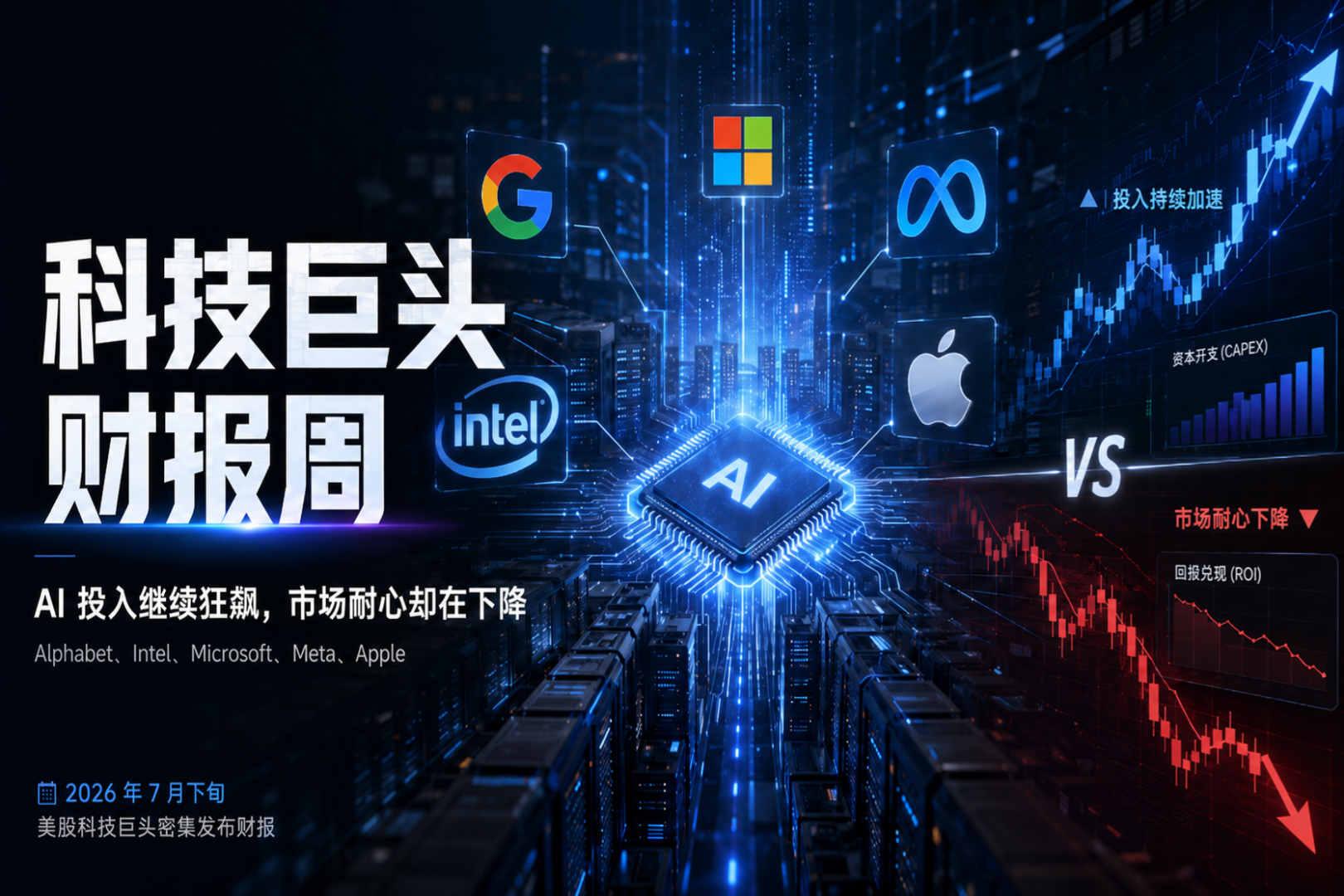
When the Market Begins to Question AI Capex: A Full Analysis of Q2 Earnings Reports from Five Tech Giants

In late July 2026, five major US tech giants—Alphabet, Intel, Microsoft, Meta, and Apple—released their Q2 earnings reports. While all companies exceeded revenue and profit expectations, driven by strong AI-related business growth, investor reactions diverged sharply due to concerns over escalating AI capital expenditures (capex) and their impact on free cash flow. Alphabet reported strong revenue growth and a surging cloud business, but its stock fell after announcing a doubled year-on-year capex and negative quarterly free cash flow for the first time. Intel posted its strongest revenue growth in over 15 years, but its stock experienced volatile trading after significantly raising its full-year capex guidance. Microsoft saw its stock surge after beating estimates and, crucially, lowering its capex forecast while projecting positive free cash flow. Meta faced the most severe sell-off as its profits declined despite revenue beats, with free cash flow plunging over 90% and its capex guidance raised. Apple reported record June-quarter results, but its stock plummeted after providing Q4 revenue guidance that fell short of expectations, citing supply chain constraints and forex headwinds. The overall takeaway is that the market's focus has shifted from validating AI demand to scrutinizing the timeline for returns on massive AI investments. Companies demonstrating a clearer path to managing capex and preserving free cash flow, like Microsoft, were rewarded, while those signaling continued aggressive spending faced investor skepticism.

Odaily星球日报Há 1h

When the Market Begins to Question AI Capex: A Full Analysis of Q2 Earnings Reports from Five Tech Giants

Odaily星球日报Há 1h

Trading

Spot

Artigos em Destaque

Como comprar JUP

Bem-vindo à HTX.com!Tornámos a compra de Jupiter (JUP) simples e conveniente.Segue o nosso guia passo a passo para iniciar a tua jornada no mundo das criptos.Passo 1: cria a tua conta HTXUtiliza o teu e-mail ou número de telefone para te inscreveres numa conta gratuita na HTX.Desfruta de um processo de inscrição sem complicações e desbloqueia todas as funcionalidades.Obter a minha contaPasso 2: vai para Comprar Cripto e escolhe o teu método de pagamentoCartão de crédito/débito: usa o teu visa ou mastercard para comprar Jupiter (JUP) instantaneamente.Saldo: usa os fundos da tua conta HTX para transacionar sem problemas.Terceiros: adicionamos métodos de pagamento populares, como Google Pay e Apple Pay, para aumentar a conveniência.P2P: transaciona diretamente com outros utilizadores na HTX.Mercado de balcão (OTC): oferecemos serviços personalizados e taxas de câmbio competitivas para os traders.Passo 3: armazena teu Jupiter (JUP)Depois de comprar o teu Jupiter (JUP), armazena-o na tua conta HTX.Alternativamente, podes enviá-lo para outro lugar através de transferência blockchain ou usá-lo para transacionar outras criptomoedas.Passo 4: transaciona Jupiter (JUP)Transaciona facilmente Jupiter (JUP) no mercado à vista da HTX.Acede simplesmente à tua conta, seleciona o teu par de trading, executa as tuas transações e monitoriza em tempo real.Oferecemos uma experiência de fácil utilização tanto para principiantes como para traders experientes.

215 Visualizações TotaisPublicado em {updateTime}Atualizado em 2026.06.02

Como comprar JUP

Discussões

Bem-vindo à Comunidade HTX. Aqui, pode manter-se informado sobre os mais recentes desenvolvimentos da plataforma e obter acesso a análises profissionais de mercado. As opiniões dos utilizadores sobre o preço de JUP (JUP) são apresentadas abaixo.

活动图片