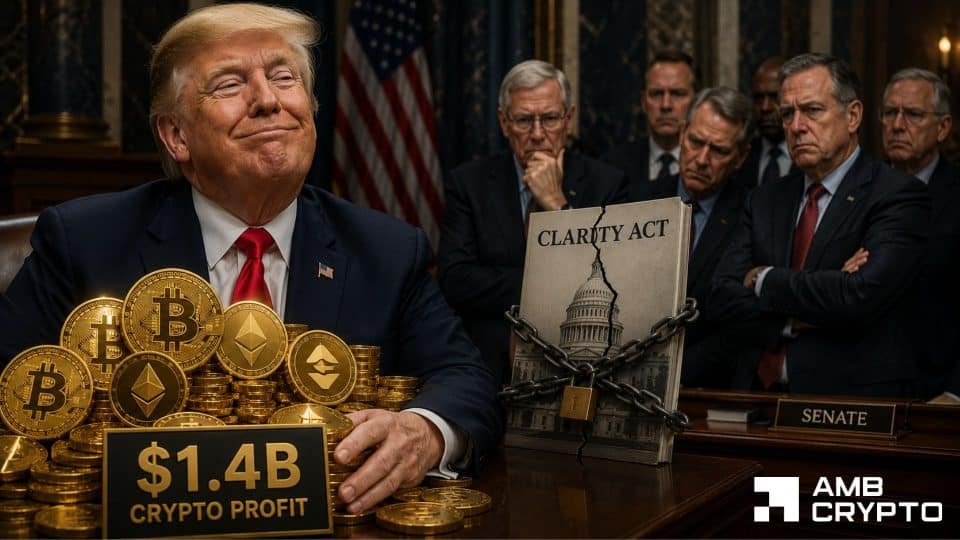
PELOSI Act Advances with Narrow Senate Committee Vote

TheCryptoTimesPublicado em 2025-07-31Última atualização em 2025-07-31

The U.S. Senate committee approved the Preventing Elected Leaders from Owning Securities and Investments (PELOSI) Act. This legislation is designed to prohibit lawmakers and their family members from engaging in trading individual stocks and digital assets, such as cryptocurrencies, during their tenure in office.

The bill was passed by a narrow 8-7 vote, as U.S. Senator Josh Hawley (R-Mo.) joined Democrats to support the measure. Though a majority of Republicans voiced concerns that the bill could disproportionately penalize affluent individuals and deter qualified candidates from pursuing careers in congressional service.

Legislative Background and Transparency

Originally introduced by Senator Hawley, the PELOSI Act is named after former House Speaker Nancy Pelosi. She and her husband, Paul Pelosi, were accused of profiting off insider information during her tenure. However, Pelosi denied the accusations and no evidence was found to prove insider trading. Further, she also supported the act.

During her tenure, lawmakers were accused of leveraging privileged information for personal financial gain through stock transactions. Despite initial support from Sen. Bernie Moreno, who had co-sponsored the bill, he had been criticized by the Republican committee members for the expedited legislative process. 

The committee members labeled it a “publicity stunt” and questioned the thoroughness. To get enough support from both parties, Democrats agreed to make an exception for President Donald Trump. This compromise helped the bill move forward through the committee. 

86% of Americans Back Congressional Stock Trading Ban

The advancement of this legislation reflects a more comprehensive demand by the public for ethical and moral governance. According to Senator Hawley, a total of 86% of Americans favor restrictions on congressional stock trading. This action highlights the ongoing tension between maintaining legislative integrity and addressing the financial implications for elected officials.

He also stated that, “Americans have watched politicians earn a fortune using information not available to the general public while the average family struggles to get by. It’s just wrong.” He further added, “Members of Congress should be focused on delivering results for their constituents, not returns on investments. It’s time to find out where members stand. It’s time we restore trust in Congress and ban all members from trading and holding stocks.” 

The Act has successfully passed a Senate committee and is now set for consideration by the full Senate and the House of Representatives. If the act is passed, it could improve oversight of politicians’ financial activities and would reduce the risks of market manipulation, especially in growing sectors like cryptocurrencies.

However, the bill’s progress had raised concerns about the potential for stricter future regulations that could suppress innovation within the markets. This legislative milestone emphasizes the growing demand for accountability in public office, with the overwhelming public backing highlighting a national appetite for transparency.

Yet the bill’s journey through Congress reveals persistent tension regarding how to best reconcile this transparency with the practical realities of legislation. This involves safeguarding public trust by ensuring that elected officials’ financial freedoms are not unduly restricted.

Also Read: Algeria Criminalizes All Cryptocurrency Activities Under New Law


Leituras Relacionadas

Valuation of $8 Billion, Up 200% in 8 Months! What's Behind Crypto-Friendly Bank Erebor Bank's Rise?

Erebor Bank, a digital bank founded by Palmer Luckey and backed by Peter Thiel, is in talks for new funding at a target valuation of $8 billion, double its $4.35 billion valuation from December. This surge is driven by explosive deposit growth, which soared from $1.1 billion in March to approximately $4.05 billion within a quarter, alongside adding nearly 400 new clients. The bank, launched in February 2026, holds a full national bank charter from the OCC, a strategic choice to avoid reliance on partner banks. It aims to serve tech startups, defense contractors, and crypto-native businesses, addressing gaps left by Silicon Valley Bank's collapse. Core promises include lending against non-traditional assets like hardware, offering 24/7 settlement, and integrating stablecoin services with traditional banking. It has already enabled stablecoin deposits and withdrawals on the Sui network. However, its current financials show minimal lending activity and a net loss, with high liquidity in cash and securities. The valuation hinges on future potential to monetize deposits through lending and crypto services. The bank's experienced management team includes veterans from Wells Fargo and crypto compliance firms. Risks are significant. Its concentrated customer base and exposure to volatile sectors like crypto and venture capital echo SVB's vulnerabilities. Its entire model depends on continued regulatory favor towards digital assets, which could shift. Erebor represents a high-profile experiment at the intersection of banking, crypto, and industrial policy, with its execution and market demand yet to be fully proven.

marsbitHá 1h

Valuation of $8 Billion, Up 200% in 8 Months! What's Behind Crypto-Friendly Bank Erebor Bank's Rise?

marsbitHá 1h

$8 Billion Valuation, 2x Growth in 8 Months! What Makes Crypto-Friendly Bank Erebor Bank So Special?

Erebor Bank, a crypto-friendly U.S. bank founded by Palmer Luckey, is reportedly in talks for a new funding round targeting a valuation of at least $8 billion, double its $4.35 billion valuation from December. Despite being operational for only a few months, its rapid growth—deposits surged from $1.1 billion in March to approximately $4.05 billion within a quarter, adding nearly 400 clients—has attracted investor interest. The bank aims to fill the void left by Silicon Valley Bank's collapse, targeting startups and businesses with non-traditional assets like defense contracts and digital tokens. Its strategy involves holding its own banking license to offer services like stablecoin deposits, payments, and 24/7 on-chain settlement. While digital assets are a core long-term focus, recent growth has been driven more by financing for U.S. manufacturing and defense sectors. Erebor's leadership combines Luckey's tech/defense background with a seasoned financial team. It received a national bank charter from the OCC in early 2026, benefiting from a favorable regulatory climate for digital assets. However, the bank faces significant risks, including reliance on a concentrated client base, exposure to crypto market volatility, potential regulatory shifts, and the unproven demand for its integrated banking model. Investors are betting on its future potential to monetize deposits through lending and crypto services, despite current losses typical for a new bank.

链捕手Há 1h

$8 Billion Valuation, 2x Growth in 8 Months! What Makes Crypto-Friendly Bank Erebor Bank So Special?

链捕手Há 1h

Trading

Spot
活动图片