SOL可能先跌95美元再冲200美元、原因何在?ADA受利好猛涨、小市值山寨币有望 1000 倍暴涨

金色财经Publicado em 2025-07-21Última atualização em 2025-07-21

Solana:短期或跌 40% 到 95 美元,长期有望反弹到 200 美元以上

Solana(SOL)之前涨到过近 300 美元,现在跌了不少,比最高价低 45% 以上,目前在 150 美元上方。

有分析师说,它的价格图表出现了一种特殊的看涨模式,但短期可能先跌一波 —— 可能会跌到 95 美元,比现在跌 40%。
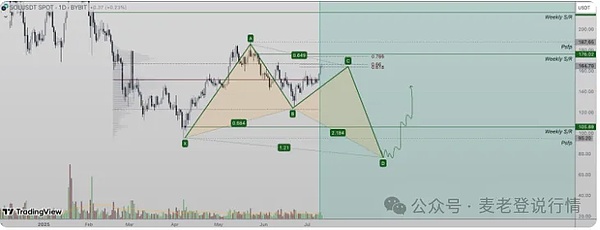
图片

不过这只是短期情况,长期来看,跌到位后可能反弹,甚至涨到 200 美元以上。
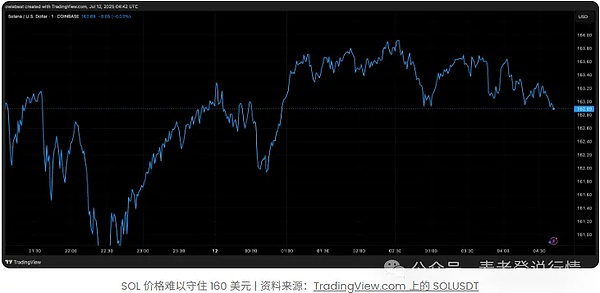
图片

现在关键看能不能突破阻力位,如果突破不了,回调的可能性就大;要是能带着成交量冲过去,可能就不会跌那么多了。

卡尔达诺(ADA):涨了 25%,有望冲到 1.2 美元

最近加密市场回暖,ADA 也跟着涨,最近涨到 0.6320 美元,创了 6 月中旬以来的新高,比之前涨了 25%。

有个叫 Snek 的 meme 币带火了卡尔达诺生态,吸引了不少投资者。

专家觉得,如果 ADA 能稳住现在的势头,突破 0.63 美元的阻力位,可能会接着涨,甚至接近今年 5 月的高点,目标看到 1.2 美元。

不过市场波动大,投资还得小心,得多留意行情变化。

这些小山寨币被说有千倍潜力,价格都在 1 美元以下

比起比特币、以太坊,有些小市值山寨币虽然名气不大,但有人说它们在牛市里可能涨 1000 倍。这里挑几个说说:

    XYZ(XYZVerse):价格不到 0.01 美元,既是模因币,又计划做链上功能和体育博彩,有人气,还被大 V 看好,说可能涨很多。

图片

    Hedera(HBAR):约 0.07 美元,是企业级的区块链,有谷歌、IBM 这些大公司支持,做可持续的分布式账本,要是企业用得多了,可能有大机会。

    AIOZ 网络(AIOZ):约 0.55 美元,做去中心化的内容分发和 AI 计算,蹭上了 AI 和 Web3 的热点。

    Bonk(BONK):约 0.000024 美元,被称为 Solana 上的狗狗币,融入了 Solana 的 DeFi 生态,模因币热度起来的话可能爆发。

    Kaspa(KAS):约 0.08 美元,是速度很快的工作量证明区块链,解决了比特币的扩容问题,喜欢这种技术的人可能会关注。

这些小币风险高,但上涨空间也可能很大。不过千倍涨幅不是一定的,得看时机、故事能不能传开。投资前一定要自己多研究,别盲目跟风。

Criptomoedas em alta

Leituras Relacionadas

Farewell to Speculation: The Graham Moment of the Crypto Industry

"Farewell to Speculation: The Graham Moment for the Crypto Industry" The article draws a parallel between today's cryptocurrency market and the speculative, unregulated US stock market of the 1920s. That era lacked mandatory corporate disclosure, enabling rampant manipulation and turning stocks into gambling tools. The 1929 crash led to foundational reforms: the Securities Acts of 1933/34 mandated transparent, audited financial reporting, and Benjamin Graham's "Security Analysis" provided a framework for fundamental valuation. Together, they created modern investing, requiring both reliable data and a methodology to value assets. Similarly, the crypto market is currently driven by narratives and speculation. However, it possesses a key advantage: unlike 1920s corporations, blockchain protocols have inherently transparent, on-chain data for revenue, treasury, and activity. The core obstacle is not transparency, but the lack of legal claim to that value. Due to regulatory uncertainty (primarily the Howey Test), most tokens are deliberately stripped of economic rights like profit-sharing to avoid being classified as securities. This creates a paradox where protocols generate revenue, but token holders have no right to it. The turning point, argues the author, is imminent US legislation. The already-passed GENIUS Act provides a framework for stablecoins. The crucial CLARITY Act, currently in advanced legislative stages, aims to clearly categorize digital assets and define their regulatory treatment (SEC vs. CFTC). This would allow developers to legally design tokens with enforceable economic rights, such as profit distribution. If passed, this would enable a shift from speculation to fundamental investment. Analysis would focus on protocol revenue sustainability, network effects, valuation multiples, and the specific rights encoded in a token's contract—mirroring traditional equity analysis. The article notes significant legislative hurdles and timelines (1-3 years for rulemaking post-passage), but emphasizes the direction is set. A deeper challenge remains: building decentralized, legally enforceable governance and ownership structures to protect token holder rights, akin to corporate law. This will be a core development focus. The transformation applies mainly to revenue-generating protocol tokens, not to assets like Bitcoin (digital gold). The article concludes that the industry's question has evolved from "can tokens create value?" to "who gets to allocate that value?". Solving the latter, as in the 1920s, will mark crypto's transition to a legitimate asset class for fundamental investment.

Foresight NewsHá 4m

Farewell to Speculation: The Graham Moment of the Crypto Industry

Foresight NewsHá 4m

Quantum Computing "Manhattan Project" Unveiled: Is the Encryption Industry at a Critical Turning Point?

"Quantum Computing 'Manhattan Project' Launched: Is the Crypto Industry at a Critical Juncture?" On June 22, former U.S. President Donald Trump signed two executive orders. The first mandates all federal agencies upgrade their cryptographic systems to new, quantum-resistant standards by 2030. The second orders the Department of Energy to lead the development of a national quantum computer, signaling a shift from laboratory research to a state-enforced national agenda. This creates a hard deadline. A powerful quantum computer could break current encryption. The threat is compounded by "harvest now, decrypt later" attacks, where encrypted data is stored today for future decryption. Federal agencies must appoint migration officers and complete post-quantum cryptography (PQC) upgrades for key establishment by 2030 and digital signatures by 2031. Procurement rules will also be changed, forcing government contractors to comply. The crypto industry faces a direct threat. Bitcoin's ECDSA signatures are theoretically vulnerable. Research indicates millions of Bitcoin with exposed public keys are at risk if quantum computers advance. While projects like Bitcoin Quantum testnets and efforts by Ethereum, Solana, NEAR, and Zcash are exploring quantum-resistant solutions, achieving consensus in decentralized networks remains a major challenge. The centralized U.S. government has started a 5-year countdown. For decentralized crypto networks, the real test is whether they can complete this anti-quantum upgrade before the theoretical threat becomes a practical reality.

Foresight NewsHá 25m

Quantum Computing "Manhattan Project" Unveiled: Is the Encryption Industry at a Critical Turning Point?

Foresight NewsHá 25m

Coin Stock Barometer丨BitMine's Total Assets and Investment Reach $10.7 Billion, Exceeding ~$9.3 Billion Floating Loss; Strategy Buys Only 520 BTC, Strive Adds Positions Against the Trend (June 23)

This article provides a weekly market update on "coin-equity" trends, focusing on listed companies holding major cryptocurrencies. Key highlights include: **General Market Trends:** Global equities, particularly in the US, Japan, and South Korea, faced significant sell-offs, led by large tech and AI-related stocks. Analysts cite profit-taking and a shift from hype-driven to performance-driven valuation for AI companies. Market focus is on upcoming Micron Technology's earnings. **Cryptocurrency Treasury Updates:** * **Bitcoin (BTC):** Net weekly BTC purchases by listed companies (excluding miners) totaled approximately $86 million, down 13.97% from the prior week. Strategy (formerly MicroStrategy) purchased only 520 BTC for ~$34.9 million, while Strive Asset Management increased its holdings by 759 BTC for ~$50 million. Other notable actions include Mara Holdings adding 1,000 BTC and Capital B shareholders approving a massive financing plan (up to ~$1.2 trillion) to potentially expand its Bitcoin reserves. * **Ethereum (ETH):** BitMine emerged as the largest corporate ETH treasury, holding 5.67 million ETH (4.7% of supply). It purchased an additional 52,203 ETH ($92 million) in the past week. Sharplink completed a $75 million private placement to fund further ETH accumulation and stock buybacks. * **Solana (SOL):** The top five listed companies hold over 15.7 million SOL combined. However, Solmate Infrastructure, a SOL treasury firm, faces a lawsuit from its largest external shareholder alleging board misconduct and self-dealing. * **Other:** Updates include Canton Strategic's $50 million stock buyback plan and Lite Strategy's $1 million strategic investment in LitVM, a Layer-2 network for Litecoin. The article notes that while crypto treasury firms continue fundraising and accumulation, their stocks may struggle to rise against the broader market downturn until Q4.

marsbitHá 40m

Coin Stock Barometer丨BitMine's Total Assets and Investment Reach $10.7 Billion, Exceeding ~$9.3 Billion Floating Loss; Strategy Buys Only 520 BTC, Strive Adds Positions Against the Trend (June 23)

marsbitHá 40m

Trading

Spot
Futuros

Artigos em Destaque

Como comprar ADA

Bem-vindo à HTX.com!Tornámos a compra de Cardano (ADA) simples e conveniente.Segue o nosso guia passo a passo para iniciar a tua jornada no mundo das criptos.Passo 1: cria a tua conta HTXUtiliza o teu e-mail ou número de telefone para te inscreveres numa conta gratuita na HTX.Desfruta de um processo de inscrição sem complicações e desbloqueia todas as funcionalidades.Obter a minha contaPasso 2: vai para Comprar Cripto e escolhe o teu método de pagamentoCartão de crédito/débito: usa o teu visa ou mastercard para comprar Cardano (ADA) instantaneamente.Saldo: usa os fundos da tua conta HTX para transacionar sem problemas.Terceiros: adicionamos métodos de pagamento populares, como Google Pay e Apple Pay, para aumentar a conveniência.P2P: transaciona diretamente com outros utilizadores na HTX.Mercado de balcão (OTC): oferecemos serviços personalizados e taxas de câmbio competitivas para os traders.Passo 3: armazena teu Cardano (ADA)Depois de comprar o teu Cardano (ADA), armazena-o na tua conta HTX.Alternativamente, podes enviá-lo para outro lugar através de transferência blockchain ou usá-lo para transacionar outras criptomoedas.Passo 4: transaciona Cardano (ADA)Transaciona facilmente Cardano (ADA) no mercado à vista da HTX.Acede simplesmente à tua conta, seleciona o teu par de trading, executa as tuas transações e monitoriza em tempo real.Oferecemos uma experiência de fácil utilização tanto para principiantes como para traders experientes.

1.3k Visualizações TotaisPublicado em {updateTime}Atualizado em 2026.06.02

Como comprar ADA

Discussões

Bem-vindo à Comunidade HTX. Aqui, pode manter-se informado sobre os mais recentes desenvolvimentos da plataforma e obter acesso a análises profissionais de mercado. As opiniões dos utilizadores sobre o preço de ADA (ADA) são apresentadas abaixo.

活动图片