# Derivatives Related Articles

HTX News Center provides the latest articles and in-depth analysis on "Derivatives", covering market trends, project updates, tech developments, and regulatory policies in the crypto industry.

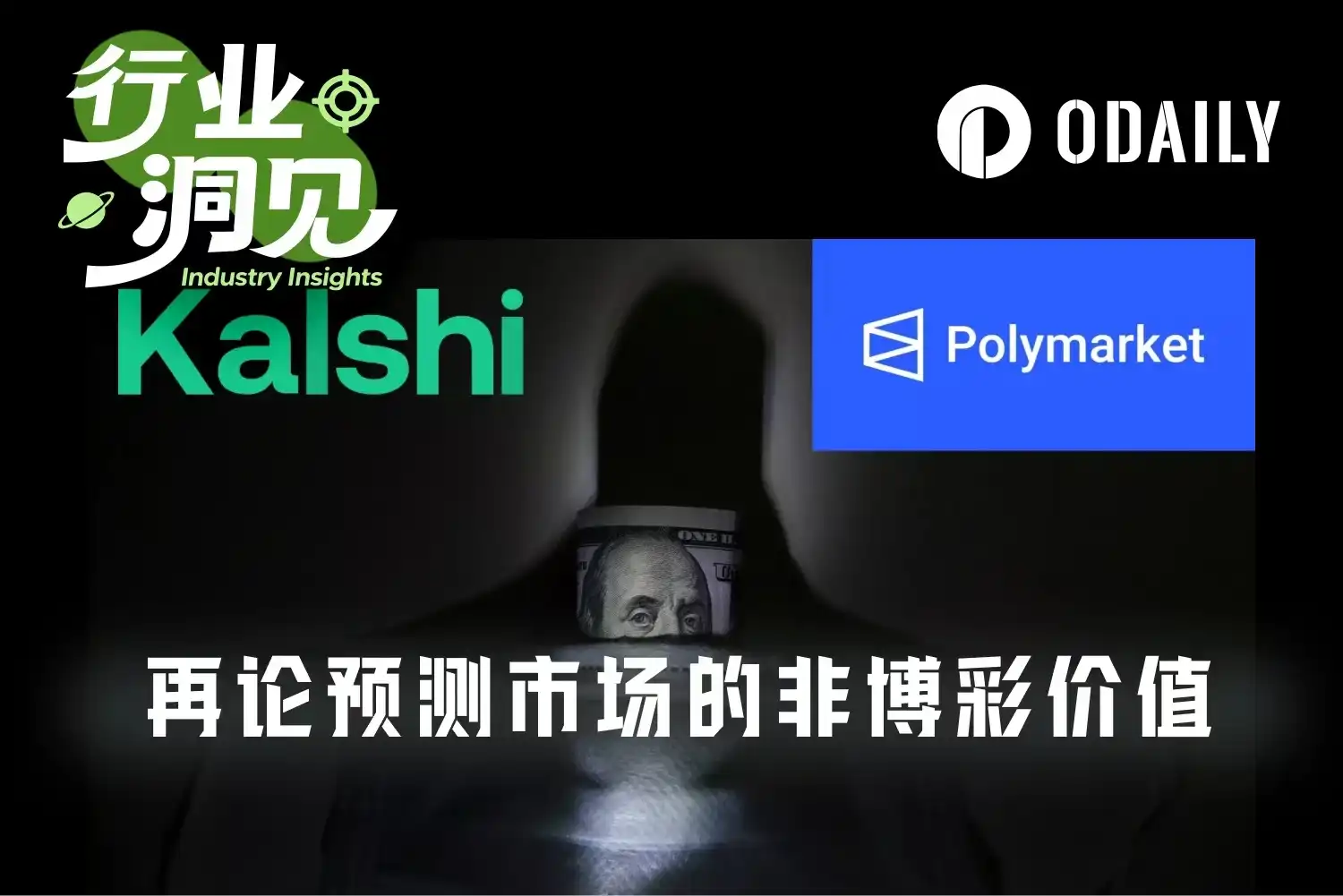
Not Speculation but a Necessity: The 4 Unique Values of Prediction Markets

Polymarket's recent $4 billion funding round and soaring valuation of $15 billion highlight the explosive growth of prediction markets, with trading volume reaching $25.7 billion in March 2026—a 10.6% monthly increase. This analysis argues that prediction markets serve critical non-speculative functions, positioning them as essential tools rather than mere gambling platforms. Prediction markets offer four unique values: entertainment consumption, insurance-like protection, risk hedging, and truth discovery. Firstly, they stimulate economic activity by engaging users in event-based betting, similar to the broader sports industry. Secondly, they act as a form of decentralized insurance, allowing users to hedge against specific, well-defined risks (e.g., weather events) transparently and without traditional overhead costs. Thirdly, institutions and individuals use these markets to hedge against geopolitical and commodity price risks, as demonstrated during the U.S.-Iran conflict and the launch of 24/7 commodity markets on platforms like Kalshi. Finally, prediction markets counter media bias by aggregating crowd-sourced information, often achieving 30% higher accuracy than surveys due to users' vested interests. Experts like Bitwise’s Jeff Park and SIG’s Jeff Yass emphasize the markets' role in risk transfer and financial innovation. As these platforms evolve, they are poised to become trillion-dollar markets, offering more reliable, decentralized mechanisms for information pricing and risk management.

marsbit04/21 12:41

Not Speculation but a Necessity: The 4 Unique Values of Prediction Markets

marsbit04/21 12:41

Podcast Notes: Hyperliquid Has Become the Top Interest Point for Traditional Hedge Funds

Empire Podcast hosts Jason Yanowitz and Santiago Santos discuss the surging institutional interest in Hyperliquid, a decentralized perpetual exchange, marking the highest level of engagement from traditional hedge fund managers since Paul Tudor Jones endorsed Bitcoin in 2020. The primary driver is the demand for weekend trading of commodities like oil, especially during geopolitical tensions such as the Iran conflict, as Hyperliquid provides the only active price discovery venue when traditional markets are closed. Trade XYZ, a front-end on Hyperliquid, has seen significant growth, with weekend oil price predictions having a median error of only 50 basis points. Santos predicts commodity trading volume on Hyperliquid will surpass Bitcoin within the year and that its market cap could rise from $25 billion to $100 billion. Other key points include Kraken raising $200 million at a reduced valuation of $13.3 billion, and the SEC clarifying that self-custodied DeFi frontends like MetaMask are not subject to broker-dealer rules, resolving a major regulatory uncertainty. The hosts also note the strong correlation between crypto and macro markets, with the S&P 500 posting one of its best 10-day rallies since 1950. They highlight MicroStrategy's continued Bitcoin acquisitions and the potential of real-world asset (RWA) tokenization as a key trend. The discussion concludes with skepticism towards many L2 projects, predicting a wave of protocols truly going to zero as capital concentrates in proven assets like Bitcoin and Hyperliquid.

marsbit04/18 07:23

Podcast Notes: Hyperliquid Has Become the Top Interest Point for Traditional Hedge Funds

marsbit04/18 07:23

Ondo Perps: Bringing Wall Street Prime Brokerage On-Chain?

Ondo Perps aims to bring traditional prime brokerage services on-chain by addressing key limitations in existing DeFi and tokenized stock markets. While crypto-native assets like BTC and ETH have mature derivatives markets, real-world assets (RWA), such as stocks, struggle due to structural flaws: over-reliance on stablecoin collateral, isolated liquidity pools, and inefficient capital utilization. Ondo introduces three innovations: allowing tokenized stocks as direct collateral, implementing cross-asset margin systems similar to traditional portfolio margining, and leveraging off-chain liquidity from traditional exchanges like Nasdaq/NYSE instead of building fragmented on-chain markets. This transforms stocks from static assets into active collateral, improves capital efficiency, and enables unified risk management across asset classes. The platform essentially functions as a multi-asset financial account system, blending decentralized and traditional finance. If successful, it could redefine asset boundaries, enhance institutional participation, and create a more integrated financial ecosystem. However, risks remain around liquidity reliability, complex cross-asset清算, and regulatory uncertainty for tokenized securities. The core question Ondo raises is whether traditional distinctions between "money" and "assets" remain relevant when diverse assets can mutually collateralize and interact in a unified market.

marsbit04/10 06:38

Ondo Perps: Bringing Wall Street Prime Brokerage On-Chain?

marsbit04/10 06:38

活动图片