OpenAI新任CEO敲定,Emmett Shear曾投过哪些Web3项目?

Odaily星球日报Published on 2023-11-20Last updated on 2023-11-20

Abstract

最后一次出手,投给了《开心农场》制作人的链游项目。

原创 | Odaily星球日报

作者 | Azuma

OpenAI新任CEO敲定,Emmett Shear曾投过哪些Web3项目?

11 月 20 日,多家信源纷纷披露 OpenAI 董事会已决定聘请 Twitch 联合创始人 Emmett Shear 接任 CEO 一职。这也意味着,日前以类似乔布斯的形式突遭董事会解雇的 OpenAI 创始人 Sam Altman 已确认将不再回归。

Sam 的未来去向暂且不提,让我们把目光聚焦于最新入主 OpenAI 的 Emmett 身上。

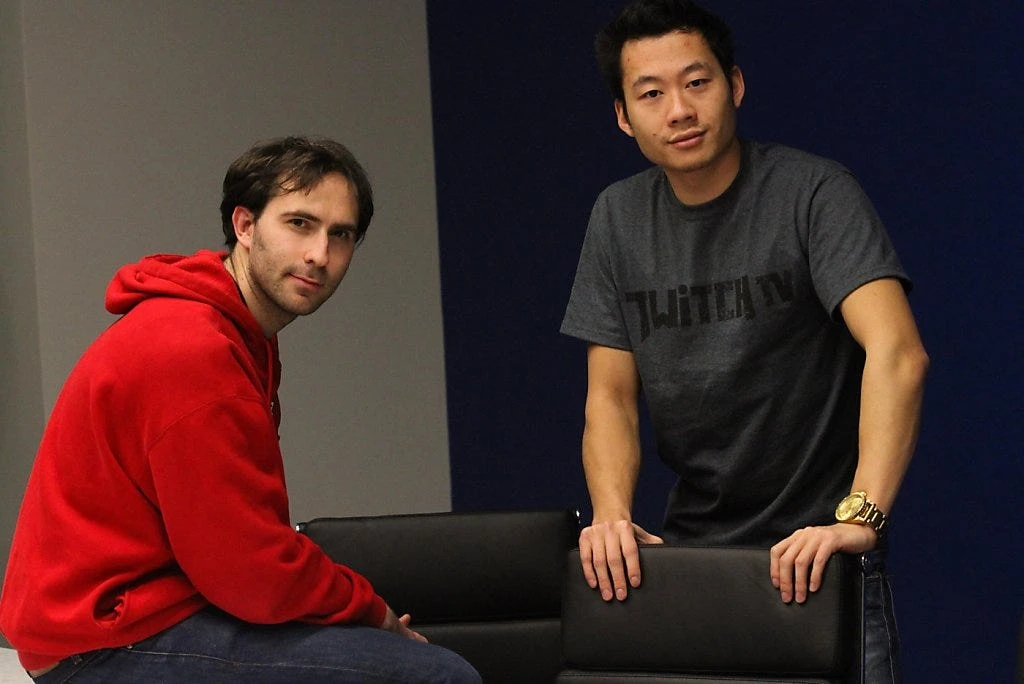
Emmett 此前更为人所熟知的身份是 Twitch 的联合创始人。2011 年 6 月,Emmett 和大学同学 Justin Kan 联合创立了直播平台 Twitch, 2014 年时亚马逊曾以 9.7 亿美元击败了谷歌,成功收购 Twitch,而 Emmett 本人直到今年 3 月为止一直在担任该平台 CEO 一职。 
OpenAI新任CEO敲定,Emmett Shear曾投过哪些Web3项目?

Emmett 和 Justin

值得一提的是,Emmett 除了 Twitch CEO 之外的另一个身份是知名风投机构 Y Combinator 的兼职合伙人,而 Sam 则曾在 2014 年至 2019 年期间担任 Y Combinator 的总裁,由此推测二人过往应该也有过一些工作交集。

作为头部 VC 的高层,Emmett 也热衷于风险投资,公开资料显示,其本人过往还曾亲手投过一些 Web3 概念的项目。

据 Venture Beats 报道,Emmett 和 Justin 曾在 2018 年参投过一家名为 Rare Bits 的 NFT 交易市场。Rare Bits 是一家零费用、点对点的 NFT 交易市场,可帮助早期链上用户交易 CryptoKitties 等 OG 级 NFT。在 Emmett 所参与的那轮融资中,Rare Bits 共获得了来自 Spark CapitalFirst Round CapitalCraft Ventures 等机构及投资人的 600 万美元资金,但可惜的是,该平台似乎未能赶上 NFT 起飞的浪潮 —— Rare Bits 的社交媒体在 2018 年时曾相当活跃,但最后一条贴子却停留在了 2019 年 2 月。

OpenAI新任CEO敲定,Emmett Shear曾投过哪些Web3项目?

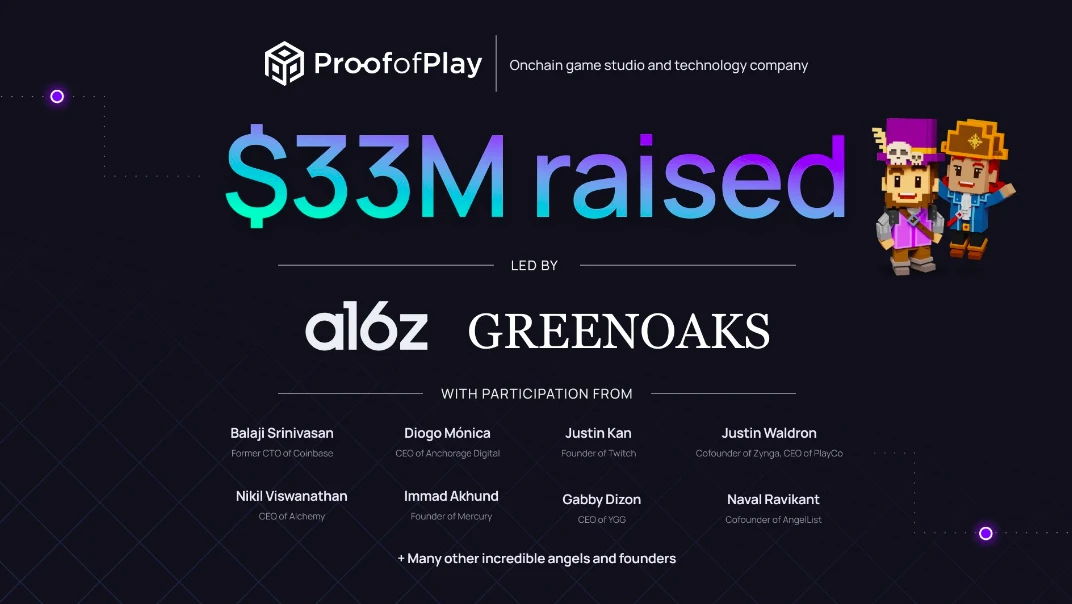
今年 6 月,Emmett 和 Justin 再次共同参投了链游公司 Proof of Play 的 3300 万美元种子轮融资,本轮融资由头部 VC a16z 以及 Greenoaks 共同领投,除 Emmett 和 Justin 外还有 Balaji SrinivasanMercury、Firebase、Zynga 和 Alchemy 等参投。

Proof of Play 旨在打造既有趣又易于上手的链上游戏,该公司的创始人为 Amitt Mahajan,a16z 将其称为“创业鬼才”。你或许没听过 Amitt 的名字,但想必肯定知道他在就职 Zynga 期间所做的一款游戏 Farmville,中文名叫《开心农场》……
OpenAI新任CEO敲定,Emmett Shear曾投过哪些Web3项目?

有意思的是,Proof of Play 的巨额种子轮融资曾震惊了整个行业。Synthetix 创始人 Kain.eth 就曾直呼种子轮拿这么多钱简直扯淡,这事“注定好不了”。

OpenAI新任CEO敲定,Emmett Shear曾投过哪些Web3项目?

除了直接下场投资之外,Emmett 也很热衷于参与一些关于 Crypto 的讨论,其对 Crypto 最确切的态度可以追溯至今年 5 月。

当时,Emmett 曾回复另一位圈内老熟人 Nassim Nicholas Taleb(Crypto 反对派代表人士,《黑天鹅》作者)表示:“比特币不能当作对冲工具,它是一种用于汇款和储值的技术,适用于那些用比市场更低的汇率和腐败来欺骗其公民的国家。当然,比特币也有缺点……但是市面上并没有其他替代方案。”

OpenAI新任CEO敲定,Emmett Shear曾投过哪些Web3项目?

Emmett 最后强调:“我想要澄清的是,这(汇款等实际效用)并不一定会让比特币成为一项伟大的投资,但却意味着比特币确实有着真正的用途,尤其是在非发达国家。”

Related Reads

Podcast Notes: Hyperliquid Has Become the Top Interest Point for Traditional Hedge Funds

Empire Podcast hosts Jason Yanowitz and Santiago Santos discuss the surging institutional interest in Hyperliquid, a decentralized perpetual exchange, marking the highest level of engagement from traditional hedge fund managers since Paul Tudor Jones endorsed Bitcoin in 2020. The primary driver is the demand for weekend trading of commodities like oil, especially during geopolitical tensions such as the Iran conflict, as Hyperliquid provides the only active price discovery venue when traditional markets are closed. Trade XYZ, a front-end on Hyperliquid, has seen significant growth, with weekend oil price predictions having a median error of only 50 basis points. Santos predicts commodity trading volume on Hyperliquid will surpass Bitcoin within the year and that its market cap could rise from $25 billion to $100 billion. Other key points include Kraken raising $200 million at a reduced valuation of $13.3 billion, and the SEC clarifying that self-custodied DeFi frontends like MetaMask are not subject to broker-dealer rules, resolving a major regulatory uncertainty. The hosts also note the strong correlation between crypto and macro markets, with the S&P 500 posting one of its best 10-day rallies since 1950. They highlight MicroStrategy's continued Bitcoin acquisitions and the potential of real-world asset (RWA) tokenization as a key trend. The discussion concludes with skepticism towards many L2 projects, predicting a wave of protocols truly going to zero as capital concentrates in proven assets like Bitcoin and Hyperliquid.

marsbit5h ago

Podcast Notes: Hyperliquid Has Become the Top Interest Point for Traditional Hedge Funds

marsbit5h ago

a16z: The Next Frontier of AI, The Triple Flywheel of Robotics, Autonomous Science, and Brain-Computer Interfaces

a16z presents a comprehensive investment thesis for the next frontier of AI: Physical AI, centered on a synergistic flywheel of robotics, autonomous science, and novel human-computer interfaces (HCIs) like brain-computers. While the current AI paradigm scales on language and code, the most disruptive future capabilities will emerge from three adjacent fields leveraging five core technical primitives: 1) learned representations of physical dynamics (via models like VLA, WAM, and native embodied models), 2) embodied action architectures (e.g., dual-system designs, diffusion-based motion generation, and RL fine-tuning like RECAP), 3) simulation and synthetic data as scaling infrastructure, 4) expanded sensory channels (touch, neural signals, silent speech, olfaction), and 5) closed-loop agent systems for long-horizon tasks. These primitives converge to power three key domains: * **Robotics:** The literal embodiment of AI, requiring all primitives for real-world physical interaction and manipulation. * **Autonomous Science:** Self-driving labs that conduct hypothesis-experiment-analysis loops, generating structured, causally-grounded data to improve physical AI models. * **Novel HCIs:** Devices (AR glasses, EMG wearables, BCIs) that expand human-AI bandwidth and act as massive data-collection networks for real-world human experience. These domains form a mutually reinforcing flywheel: Robotics enable autonomous labs, which in turn generate valuable data for robotics and materials science. New interfaces provide rich human-physical interaction data to train better robots and scientists. Together, they represent a new scaling axis for AI, moving beyond the digital realm to interact with and learn from physical reality, promising significant emergent capabilities and value.

marsbit5h ago

a16z: The Next Frontier of AI, The Triple Flywheel of Robotics, Autonomous Science, and Brain-Computer Interfaces

marsbit5h ago

Trading

Spot
Futures
活动图片