XRP volume surges to $3.6B as Ripple expands Asia strategy

ambcryptoPublished on 2026-03-26Last updated on 2026-03-26

Abstract

Ripple's expansion in Singapore, including broader regulatory approval from the Monetary Authority of Singapore (MAS) and participation in the BLOOM initiative, has brought XRP back into focus. The company is piloting programmable trade settlement using the XRP Ledger and RLUSD to improve cross-border trade efficiency. Market reaction was swift, with XRP's trading volume surging to $3.6 billion and its price rising to $1.42. While this signals strong bullish interest, the long-term impact depends on whether these regulated initiatives translate into sustained real-world utility and transaction demand.

Ripple [XRP] is back in the spotlight, and this time the narrative centers on utility. Ripple’s Singapore expansion, its MAS-linked pilot, and the market’s fast reaction pushed XRP into the market’s discourse. Therefore, the question is simple: is this just another headline pop or the start of something more enduring?

Ripple expands its regulated footprint in Singapore

Ripple had already secured broader approval from the Monetary Authority of Singapore to expand payment activities under its Major Payment Institution license. That gave the firm more room to offer token-based settlement services and related payment rails in a market that had become central to its Asia-Pacific strategy.

This mattered because Singapore was not handing out credibility for free. Ripple’s local entity gained wider permissions to serve banks, fintechs, and crypto firms using XRP, RLUSD, and similar rails. However, that was more than a licensing update. It pushed Ripple further into a market that still took rules seriously.

Ripple has been in Singapore since 2017, and no other region has grown as quickly for the firm. Singapore wasn’t just a backdrop; it became one of Ripple’s most important proving grounds, a place where the company could advance real utility.

XRP Ledger and RLUSD in cross-border trade flows

The bigger shift came through MAS’s BLOOM initiative. Ripple joined the program with Unloq to pilot programmable trade settlement using Unloq’s SC+ infrastructure, Ripple’s technology, the XRP Ledger, and RLUSD.

The pilot targeted one of finance’s toughest challenges: cross‐border trade settlement, which for years has remained slow, fragmented, and painfully inefficient. Under this model, payments were released only after pre-agreed commercial conditions were met, such as shipment verification.

Therefore, this was not another vague blockchain promise. It tested whether digital settlement assets could actually reduce friction and improve trade finance access, especially for SMEs. In particular, that gave XRP’s utility case something it often lacked: a real-world framework with rules attached.

Could Singapore become a real utility catalyst?

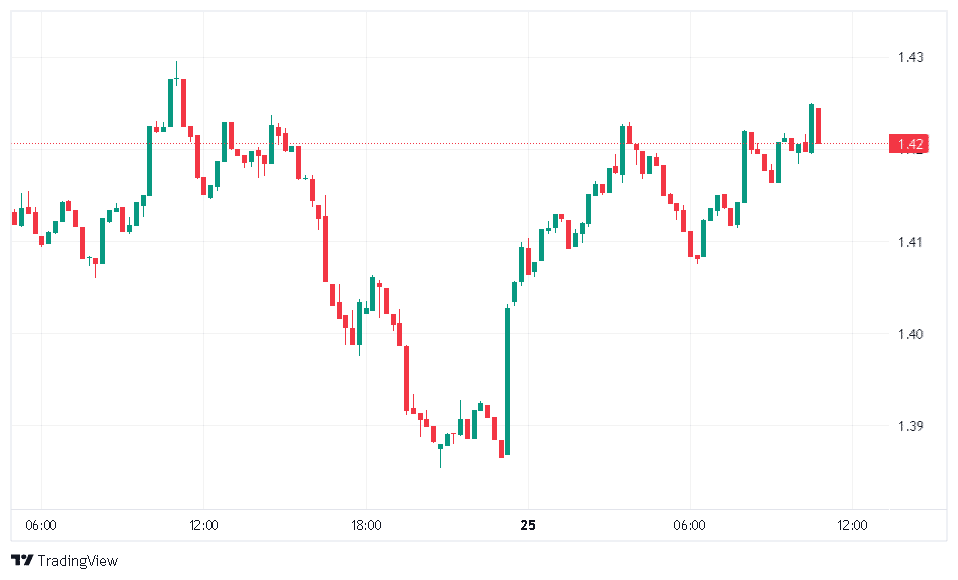
The market reacted quickly, and it did not do so quietly. XRP’s volume surged from $2.1 billion to $3.6 billion, at press time, while the price recovered from $1.38 to $1.42 as traders responded to the developments.
Source: CoinMarketCap

Rising volume alongside climbing prices signaled strong bullish participation Still, attention alone meant nothing.

XRP had seen excitement before, and much of it died fast. Looking ahead, Singapore could become a real utility catalyst, but failure to do so would mean this move would end up as just another temporary spike.


Final Summary

  • Ripple’s Singapore push gave XRP a harder, more credible utility narrative than the market usually gets.
  • The real test now lies in whether regulated pilots turn into sustained transaction demand.

Related Questions

QWhat was the main reason for XRP's trading volume surge to $3.6 billion?

AXRP's trading volume surged due to Ripple's expansion in Singapore, including its broader approval from the Monetary Authority of Singapore and participation in the MAS's BLOOM initiative for programmable trade settlement.

QHow did Ripple's Major Payment Institution license in Singapore benefit the company?

AThe license gave Ripple broader permissions to offer token-based settlement services and payment rails, allowing it to serve banks, fintechs, and crypto firms using XRP and RLUSD in the Singapore market.

QWhat specific problem does the MAS BLOOM initiative pilot program aim to solve?

AThe pilot program aims to address the challenges of cross-border trade settlement, which has been slow, fragmented, and inefficient, by using programmable payments that are triggered only after pre-agreed commercial conditions are met.

QWhat was the price movement of XRP following the news about Ripple's Singapore expansion?

AThe price of XRP recovered from $1.38 to $1.42 as traders responded to the developments in Ripple's Singapore strategy.

QWhy is Singapore considered a critical market for Ripple's Asia-Pacific strategy?

ASingapore is Ripple's fastest-growing region since 2017 and serves as a key proving ground for advancing real utility, thanks to its regulatory clarity and strategic importance in the Asia-Pacific region.

Related Reads

Pricing OpenAI Pre-IPO: A New, Life-or-Death Business on Hyperliquid Lasting Half a Year

Pricing OpenAI Pre-IPO: Hyperliquid's High-Stakes, Six-Month Business Venture The article analyzes the nascent market for pre-IPO perpetual contracts on the Hyperliquid blockchain, exemplified by two contrasting teams: Trade.xyz and Ventuals. Trade.xyz, an anonymous team, successfully built the largest pre-market on Hyperliquid. Its strategy focused on near-term events, like the SpaceX IPO. By listing a SpaceX contract with a known launch date and price, the market had a tangible "anchor" (the eventual Nasdaq opening price) to converge upon, which kept speculation in check. This approach fueled significant growth. In stark contrast, Ventuals, backed by Paradigm, failed despite holding coveted contracts for OpenAI and Anthropic. Its critical flaw was its pricing mechanism for these companies, which have no imminent IPO. Ventuals' oracle price was half-derived from infrequent private market transactions and half from its own contract's moving average. This created a self-reinforcing loop where buying pressure artificially inflated the price, disconnecting it from real supply and demand. The market became illiquid and structurally skewed. Ventuals shut down nine months after launch, reportedly through an acquisition. Its final settlement prices—OpenAI at ~$1,341 and Anthropic at ~$1,618—were thus partially products of its flawed model. Ironically, some company employees and late-stage VCs reportedly used these prices for valuation reference, highlighting the desperate demand for price discovery in opaque private markets. The failure of Ventuals exposes the core challenge of this business: price for illiquid, non-public assets requires a robust, self-correcting market, which is absent without a definitive public listing event. Nevertheless, demand is driving major players like Coinbase and traditional finance (e.g., Citi) to enter the space, aiming to provide 24/7 trading for coveted private company shares. The venture's ultimate viability, however, hinges on solving the fundamental pricing problem Ventuals could not.

marsbit8m ago

Pricing OpenAI Pre-IPO: A New, Life-or-Death Business on Hyperliquid Lasting Half a Year

marsbit8m ago

M&A Deals in the Crypto Market Are Unusually Active

Title: M&A Activity in Crypto Market Becomes Unusually Active A rare signal is emerging in the crypto primary market: mergers and acquisitions (M&A) are nearing half of all financing deals. According to RootData, this month, M&A cases in the crypto industry reached 10, while financing rounds numbered only 14, meaning M&A accounts for approximately 42% of primary market transactions—the highest level in history. This does not signal a sudden industry boom. Instead, the rapid rise in M&A share primarily reflects the continued downturn in the financing market. Since November 2024, monthly crypto M&A deals have remained between 10-20, while financing deals have plummeted from around 100 to about 50, possibly hitting a new low this month. For project teams, this means the traditional path of relying on narratives, token expectations, and ecosystem subsidies to maintain valuations is narrowing. For leading companies, it presents a rare window to acquire teams, licenses, technology, liquidity, and market access at lower prices, with less competition and stronger bargaining power. Key active buyers include Coinbase, Kraken, Ripple, MoonPay, Polymarket, Kaiko, Sol Strategies, GSR, Keyrock, Jupiter, Paxos, and Ondo Finance. Their M&A logic is consistent: acquiring key capabilities at lower costs during the industry downturn. This is driven by more attractive valuations, reduced time and trial-and-error costs, the acquisition of licenses and compliance resources, and the integration of industry upstream and downstream segments. Current M&A focuses are concentrated in four areas: trading infrastructure (e.g., Coinbase acquiring Deribit, Kraken acquiring NinjaTrader), payments and stablecoins (e.g., MoonPay, Ripple expanding payment networks), compliance licenses, and asset issuance/distribution (e.g., acquisitions related to RWA and token issuance platforms like Coinbase's purchases of Liquifi and Echo). The rise in M&A is altering the primary market's exit logic. It provides an alternative path to the token-dependent model, encouraging teams to build tangible products, revenue, and strategic value that can be integrated. This could inject confidence into the market, showing that asset buyers and exit possibilities still exist, albeit with a stricter focus on real utility. However, this trend also indicates the crypto industry is becoming more centralized. As asset issuance, trading, market-making, custody, payments, and data gradually consolidate in the hands of a few major players, the industry's initial emphasis on openness and anti-monopoly is being reshaped by commercial realities. Coupled with rising compliance barriers, this signals the end of the low-barrier era for crypto entrepreneurship.

链捕手41m ago

M&A Deals in the Crypto Market Are Unusually Active

链捕手41m ago

Trading

Spot
Futures

Hot Articles

What is XRP 2.0

XRP 2.0: A New Frontier in the Cryptocurrency Landscape Introduction to XRP 2.0 In the ever-evolving realm of cryptocurrency, new projects continuously emerge, vying for attention and adoption. One such promising initiative is XRP 2.0, a novel cryptocurrency project designed to leverage advanced blockchain technology and robust encryption methodologies. While the name draws parallels with Ripple’s XRP, it’s crucial to note that XRP 2.0 operates independently, focusing on enhancing transaction security, privacy, and scalability. As the digital financial landscape increasingly embraces decentralized solutions, XRP 2.0 aims to contribute meaningfully to web3 and the overall expansion of crypto projects. What is XRP 2.0? At its core, XRP 2.0 is a cryptocurrency project that aims to create a secure and decentralized digital currency ecosystem. Its foundational technology integrates sophisticated blockchain principles with cutting-edge encryption techniques. The overarching goal of XRP 2.0 is to establish itself as a reliable and efficient platform enabling swift transaction execution while prioritizing enhanced privacy protections for its users. The project is promoted as a solution to many limitations faced by existing cryptocurrencies, proposing a system that can handle a higher volume of transactions with improved speed and privacy. This versatility positions XRP 2.0 as a significant contender in a marketplace riddled with various digital currencies. Who is the Creator of XRP 2.0? The identity of the creator behind XRP 2.0 has been flagged as ‘Wilbur.’ However, comprehensive details regarding Wilbur or their associated entity remain elusive. The anonymity of many cryptocurrency creators is not an uncommon phenomenon in the industry, often designed to maintain a degree of privacy and security. Who are the Investors of XRP 2.0? As of now, specific information related to the investment foundations or organizations supporting XRP 2.0 is not publicly available. In the cryptocurrency sector, the backing by reputed investors can significantly influence a project's credibility and success, yet the transparency regarding the financial supporters of XRP 2.0 has not been established. How Does XRP 2.0 Work? XRP 2.0 stands out by employing a combination of blockchain technology and advanced encryption algorithms that ensures secure and decentralized transactions. Its innovative structure includes unique features designed to foster user engagement and broaden functionalities beyond conventional cryptocurrency transactions. Among these features, XRP 2.0 incorporates AI-powered capabilities, such as text-to-image and text-to-speech functionalities. These additions are designed to enhance the interactive experience for users, promoting broader applicability across various sectors. By bridging technological advancements with user-centered design, XRP 2.0 aims to capture the attention of a diverse range of individuals and enterprises looking to integrate cryptocurrency solutions into their operational frameworks. Timeline of XRP 2.0 Understanding XRP 2.0 requires examining the milestones that have defined its journey thus far: July 23, 2023: XRP 2.0 is introduced as a novel cryptocurrency project, aiming to revolutionize secure and decentralized transaction capabilities in the blockchain domain. September 8, 2023: The launching of another project, XRP20, occurs, marking the emergence of an ERC-20 token on the Ethereum blockchain that remains unrelated to XRP 2.0. November 13, 2023: The XRP Ledger undergoes a significant update with the release of rippled server software version 2.0.0. It is essential to note that this development is disconnected from the XRP 2.0 cryptocurrency project. Key Points About XRP 2.0 To distill the essence of XRP 2.0, several critical factors emerge: Unique Features: The inclusion of features like AI-powered text-to-image and text-to-speech further diversifies the potential applications of XRP 2.0. Blockchain Technology: The framework utilizes advanced blockchain mechanisms and encryption protocols, ensuring a secure and decentralized environment for transactions. Scalability and Privacy: XRP 2.0 prioritizes enhanced privacy protections in transaction processes and the scalability necessary to accommodate a growing user base. No Affiliation with Ripple: Importantly, despite its name, XRP 2.0 does not have any allegiance or collaboration with Ripple’s XRP, distinguishing its operational framework and objectives within the cryptocurrency ecosystem. Conclusion XRP 2.0 represents an ambitious venture into the cryptocurrency sphere, aiming to offer a combination of security, privacy, and efficiency in digital transactions. By integrating sophisticated technologies and user-friendly features, the project sets out to broaden the horizons of what cryptocurrency can achieve in today's digital economy. While the anonymity of its creator and lack of disclosed investors might raise questions for some, XRP 2.0's focus on advanced functionalities and decentralisation enhances its appeal amidst an increasingly crowded crypto market. As the cryptocurrency landscape continues to evolve, XRP 2.0 may yet emerge as a pivotal player in the expansion of secure and scalable blockchain solutions.

949 Total ViewsPublished 2024.04.01Updated 2024.12.03

What is XRP 2.0

Discussions

Welcome to the HTX Community. Here, you can stay informed about the latest platform developments and gain access to professional market insights. Users' opinions on the price of XRP (XRP) are presented below.

活动图片















