White House Crypto Adviser To Banks: Don’t Panic Over Stablecoin Returns

bitcoinistPublished on 2026-02-14Last updated on 2026-02-14

Abstract

White House crypto adviser Patrick Witt advises banks not to panic over stablecoin yield programs, arguing they are not an existential threat. He suggests banks and crypto firms can coexist by offering similar products, and a compromise on rewards is possible. The core dispute over allowing platforms to pay rewards is holding up the CLARITY Act, a key crypto bill defining regulatory roles for the SEC and CFTC. Lawmakers face a narrowing window to reach a deal before the midterm elections potentially fracture the bipartisan coalition. The White House is pushing for a solution to provide legal certainty and unlock institutional capital currently waiting for clearer rules.

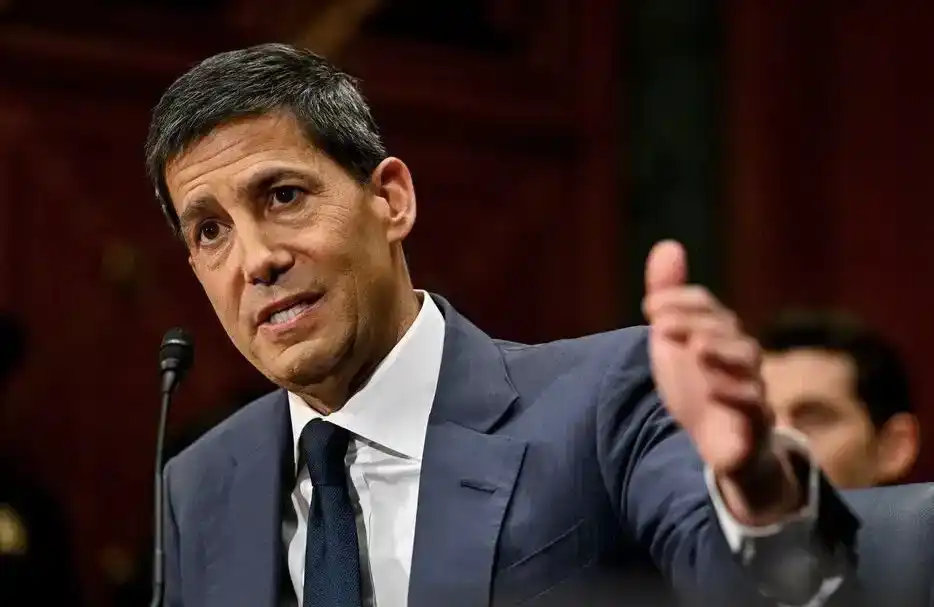
Patrick Witt, a senior White House crypto adviser, told reporters that banks should not see stablecoin yield programs as an existential threat.

He argued that banks and crypto firms can both offer similar products to customers and that the controversy over rewards is fixable through compromise.

Reports note he made the comments in a sit-down with Yahoo Finance as lawmakers and industry groups continue talks.

Banks Can Offer Similar Products

Big lenders have options, and some are already moving to use them. According to meetings and follow-ups, several banks are seeking OCC charters and exploring ways to provide stablecoin-style accounts to customers, which undercuts the idea that yield programs automatically steal deposits from traditional banks.

That dynamic helped bring both sides into a recent White House convening, but the talks did not settle the core dispute over whether platforms should be allowed to pay rewards to holders.

Stablecoin Yields Hold Up Legislation

At the center of the fight is the CLARITY Act, a bill meant to draw lines between the SEC and the CFTC while creating a basic asset taxonomy for cryptocurrencies.

Reports say the debate over rewards and interest has become a major hold-up, with senators and industry groups trading proposals and pushbacks as they try to hash out workable language. SEC and CFTC are both part of the tug-of-war over who gets to police different tokens and services.

BTCUSD now trading at $69,818. Chart: TradingView

A Race Against The Calendar

Pressure to finish a deal is rising because lawmakers face an election calendar that could change the political math. US Treasury Secretary Scott Bessent warned that if Democrats win back the House the bipartisan coalition working on the bill could fracture, making rapid progress less likely.

That warning is echoed around Capitol Hill by lobbyists and some industry leaders, who say the current window to pass a compromise is dwindling.

A Narrow Window To Act

The White House has signaled it wants a solution before the fall slog of midterm politics takes hold. White House advisers have urged both sides to find middle ground, saying a functioning framework would unlock large pools of institutional capital now sitting on the sidelines.

Reports have disclosed that these investors are reluctant to deploy funds until the rules are clearer, which is one reason the administration is pressing for movement.

The debate is not only technical; it is political and strategic. Lawmakers will need to balance banks’ worries about deposits with crypto firms’ demand to preserve business models that rely on customer rewards.

For consumers, the immediate effect will depend on how any compromise treats protections, transparency and how rewards are funded.

For markets, the bigger prize is legal certainty — and that prize is getting harder to win as the calendar tightens.

Featured image from Unsplash, chart from TradingView

Related Questions

QWhat did White House crypto adviser Patrick Witt say about banks' view on stablecoin yield programs?

APatrick Witt told reporters that banks should not see stablecoin yield programs as an existential threat.

QWhat are some banks doing in response to stablecoin competition, according to the article?

ASeveral banks are seeking OCC charters and exploring ways to provide stablecoin-style accounts to customers.

QWhat legislation is at the center of the stablecoin regulatory debate?

AThe CLARITY Act, a bill meant to draw lines between the SEC and the CFTC while creating a basic asset taxonomy for cryptocurrencies.

QWhy is there pressure to finish a regulatory deal quickly, according to the article?

ALawmakers face an election calendar that could change the political math, and the current window to pass a compromise is dwindling.

QWhat is the bigger prize for markets in this regulatory debate, as stated in the article?

AThe bigger prize for markets is legal certainty regarding cryptocurrency regulations.

Related Reads

Lowering Expectations for BTC's Next Bull Market

The author, Alex Xu, explains his decision to significantly reduce his Bitcoin holdings (from full to ~30% of his portfolio) during the current bull cycle, citing a lowered long-term outlook for BTC's price appreciation in the next cycle. He outlines six key reasons for this reduced expectation: 1. **Diminished Growth Drivers:** The narrative of exponential user adoption has largely played out with institutional ETF adoption. The next major growth phase—adoption by sovereign national reserves or central banks—seems unlikely in the near future. 2. **Personal Opportunity Cost:** More attractive investment opportunities have emerged in other assets, such as undervalued companies. 3. **Industry-Wide Contraction:** The broader crypto industry is struggling, with most Web3 business models (SocialFi, GameFi, DePIN) failing. This overall萧条 (depression) reduces the fundamental demand and consensus for Bitcoin. 4. **Strain on Major Buyer:** MicroStrategy, a major corporate buyer of BTC, faces rising financing expenses for its debt, which could slow its purchasing rate and create significant marginal pressure on the market. 5. **Increased Competition from Gold:** The emergence of "tokenized gold" has closed the functional gap (portability, divisibility) between physical gold and Bitcoin, offering a strong competitor in the non-sovereign store-of-value space. 6. **Security Budget Concerns:** The block reward halving continues to exacerbate the long-standing issue of funding Bitcoin's network security, with new fee source explorations like Ordinals and L2s largely failing. The author's decision to hold a significant (though reduced) position reflects a cautious, not bearish, outlook. He remains open to increasing his exposure if the fundamental reasons for his skepticism change or if new positive catalysts emerge.

marsbit20m ago

Lowering Expectations for BTC's Next Bull Market

marsbit20m ago

Can Iran 'Control' the Strait of Hormuz?

Iran has announced a comprehensive plan to assert control over the strategic Strait of Hormuz, a critical global oil shipping chokepoint. The proposed measures include requiring all vessels to obtain Iranian permission for passage, imposing fees for security, environmental protection, and navigation management—preferably paid in Iranian rials—and absolutely banning Israeli ships. Vessels from countries deemed hostile by Iran’s top security bodies may also be barred. Analysts suggest Iran’s motives are multifaceted: increasing pressure on the U.S. and Israel by leveraging control over oil transit to influence global prices and inflation; creating a new revenue stream, potentially exceeding $7.7 billion annually, to counter Western sanctions and support postwar reconstruction; and using transit permissions as bargaining chips in future negotiations, notably with the U.S. However, the plan faces significant practical and diplomatic challenges. Enforcing comprehensive interception and fee collection in the busy waterway, patrolled by international military forces, would be difficult. The U.S. has already countering with a blockade of Iranian ports and threats to intercept any ship paying fees, potentially strangling Iran’s oil exports and fee revenue. Broad international opposition, led by European and Gulf states, and legal controversies further complicate implementation. The proposal may ultimately serve more as a negotiating tactic than a feasible policy, with its execution remaining highly uncertain.

marsbit1h ago

Can Iran 'Control' the Strait of Hormuz?

marsbit1h ago

Trading

Spot
Futures

Hot Articles

How to Buy HOUSE

Welcome to HTX.com! We've made purchasing Housecoin (HOUSE) simple and convenient. Follow our step-by-step guide to embark on your crypto journey.Step 1: Create Your HTX AccountUse your email or phone number to sign up for a free account on HTX. Experience a hassle-free registration journey and unlock all features.Get My AccountStep 2: Go to Buy Crypto and Choose Your Payment MethodCredit/Debit Card: Use your Visa or Mastercard to buy Housecoin (HOUSE) instantly.Balance: Use funds from your HTX account balance to trade seamlessly.Third Parties: We've added popular payment methods such as Google Pay and Apple Pay to enhance convenience.P2P: Trade directly with other users on HTX.Over-the-Counter (OTC): We offer tailor-made services and competitive exchange rates for traders.Step 3: Store Your Housecoin (HOUSE)After purchasing your Housecoin (HOUSE), store it in your HTX account. Alternatively, you can send it elsewhere via blockchain transfer or use it to trade other cryptocurrencies.Step 4: Trade Housecoin (HOUSE)Easily trade Housecoin (HOUSE) on HTX's spot market. Simply access your account, select your trading pair, execute your trades, and monitor in real-time. We offer a user-friendly experience for both beginners and seasoned traders.

4.0k Total ViewsPublished 2025.04.27Updated 2025.04.30

How to Buy HOUSE

Discussions

Welcome to the HTX Community. Here, you can stay informed about the latest platform developments and gain access to professional market insights. Users' opinions on the price of HOUSE (HOUSE) are presented below.

活动图片