What NYSE’s ‘strategic’ 24/7 platform means for Ethereum and RWAs

ambcryptoPublished on 2026-03-25Last updated on 2026-03-25

Abstract

Tokenization is a key use case demonstrating stablecoin utility, with Ethereum currently dominating the real-world asset (RWA) market, accounting for 58% of its nearly $27 billion value. However, the New York Stock Exchange (NYSE) has partnered with Securitize to launch a 24/7 tokenized securities platform, potentially challenging Ethereum’s lead if scaled on alternative networks. Amid macroeconomic uncertainty, including high oil prices and inflationary pressures, capital is shifting toward tokenized assets like U.S. Treasuries, which surged 21% this month. Tokenized stocks also hit a $1 billion all-time high, up 20%, highlighting blockchain’s resilience and growing on-chain liquidity. NYSE’s move is seen as a strategic step to legitimize risk assets and capitalize on this momentum, signaling institutional-level confidence in RWAs and potentially reshaping the competitive landscape for Layer-1 networks.

Tokenization stands out as a primary use case that highlights the real utility of stablecoins.

For context, the real-world asset (RWA) segment represented nearly $27 billion in total value as of press time, with around 58% of that activity occurring on Ethereum [ETH]. Given its strong lead in both stablecoin supply and RWA adoption, Ethereum clearly serves as the core infrastructure layer driving this ecosystem.

However, a recent partnership involving the New York Stock Exchange (NYSE) could challenge this dominance.

According to reports, NYSE has partnered with Securitize to establish a 24/7 tokenized securities platform, potentially reducing Ethereum’s relative edge if such platforms scale on alternative networks.
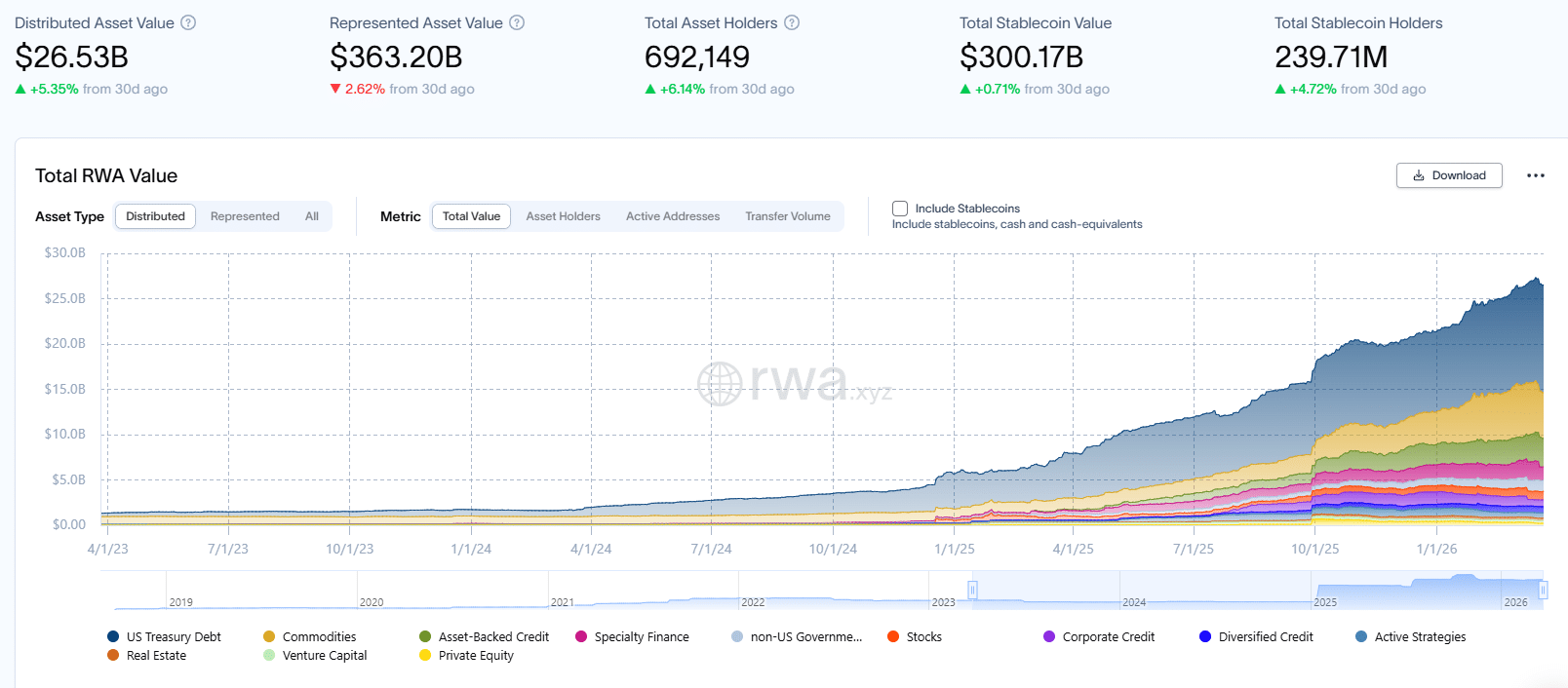
Source: RWA.xyz

From a technical lens, the NYSE is the largest stock exchange globally, with over $25 trillion in listed market cap. That’s a huge capital base.

Consequently, even a small migration of this value onto tokenized rails could significantly reshape the competitive landscape across Layer-1 networks.

That said, beyond the structural shift, the timing of this partnership stands out.

At the macro level, U.S. equities have been shedding significant capital over short timeframes amid ongoing macro uncertainty.
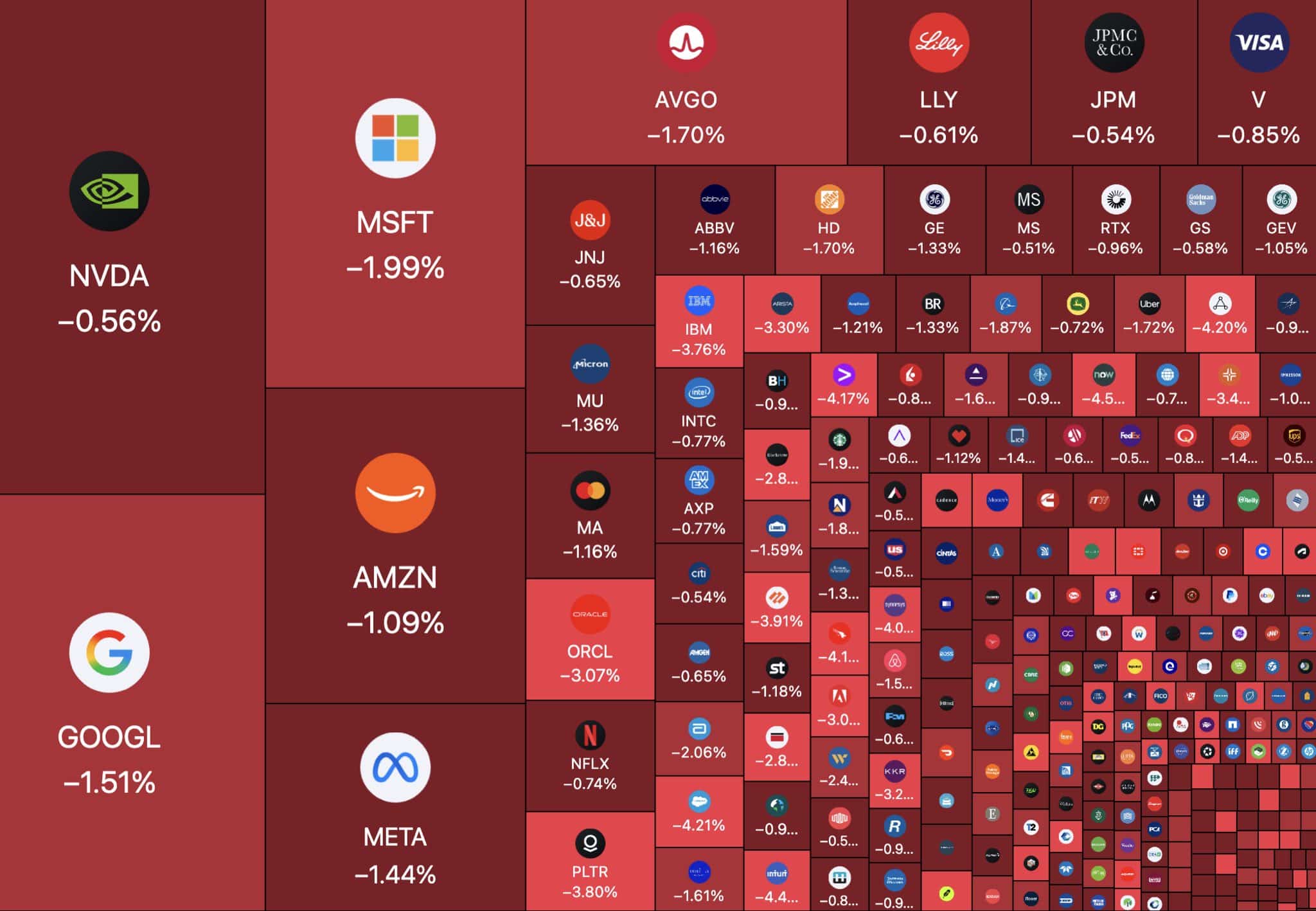
Source: X

Meanwhile, Bitcoin [BTC] and other risk assets have held up relatively better. Against this backdrop, is NYSE’s move into RWAs an early signal of “institutional-level validation” for risk assets?

NYSE takes a strategic step amid shifting macro dynamics

NYSE’s partnership looks like a strategic move in response to macro shifts.

Oil prices staying above $100/barrel have rattled global investor confidence. At the same time, inflationary pressures have kept the Federal Reserve on hold, effectively tightening monetary conditions.

As a result, capital has flowed into Treasuries, pushing yields to multi-month highs.

Interestingly, this trend is showing up in the tokenized sector too.

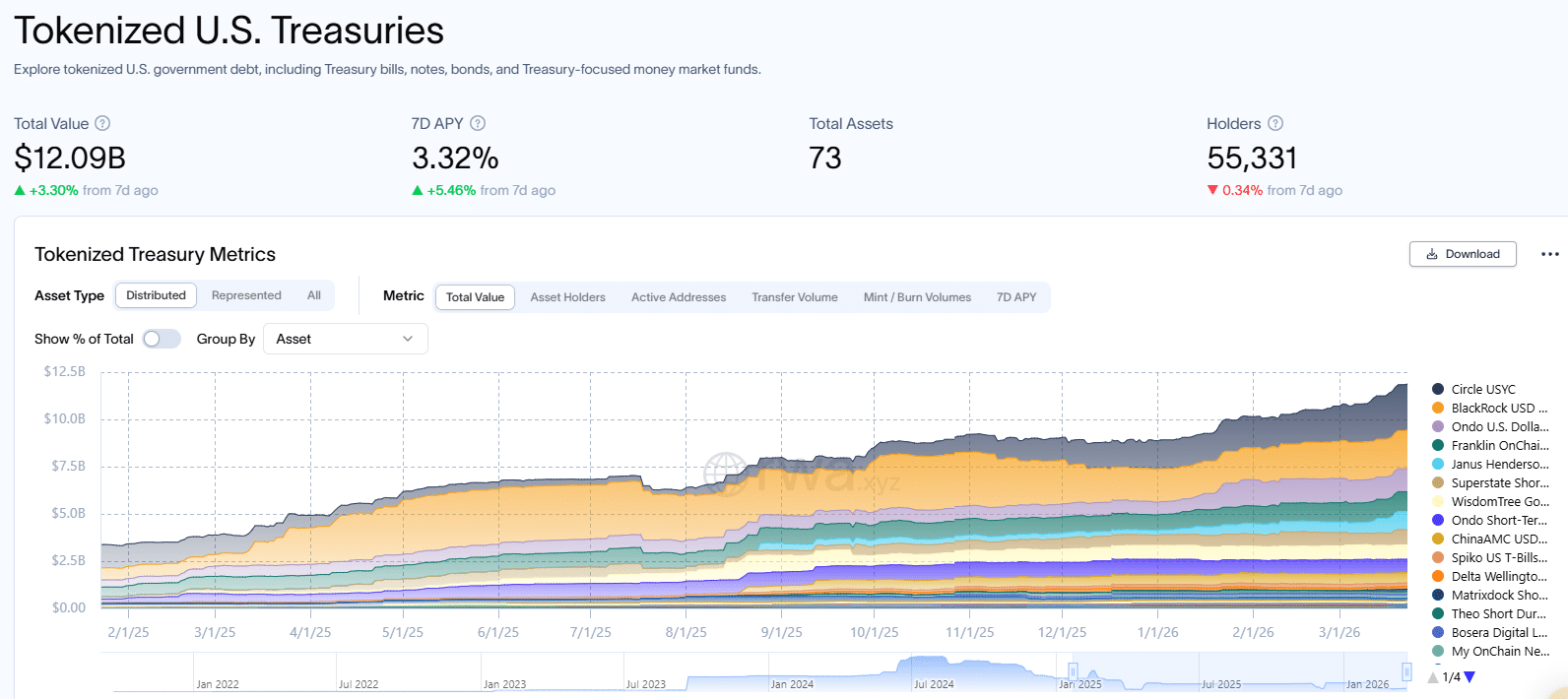
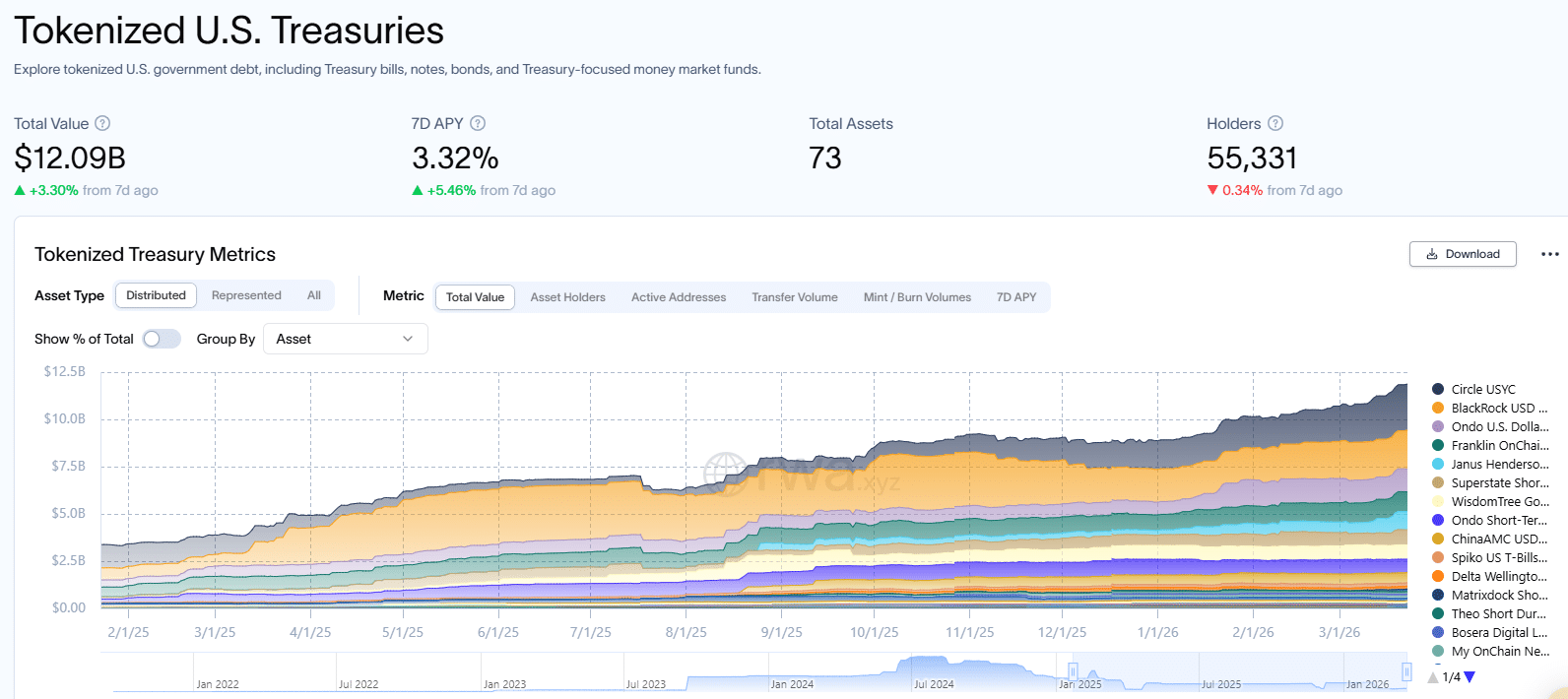
As the chart below shows, the U.S. tokenized Treasuries have jumped roughly 21% this month alone, now making up over 47% of total RWA asset value. In other words, as macro dynamics shift, the effect is clearly showing up in on-chain demand for tokenized assets.
Source: RWA.xyz

In this light, NYSE’s partnership with Securitize reflects a similar dynamic playing out.

As mentioned earlier, amid the FUD, U.S. equities have taken a hit, with sell-offs even prompting 2008-style crisis projections. By contrast, tokenized stocks have been among the top performers this month, rising 20% to reach a $1 billion all-time high.

In this context, NYSE’s move is clearly aimed at riding that momentum.

Put simply, while TradFi bears the brunt of macro uncertainty, capital is flowing into RWAs, showing that blockchain is proving its resilience beyond just offering 24/7 trading. Consequently, the partnership is more than a technical upgrade.

Instead, it’s a “strategic” step toward legitimizing risk assets, which form the backbone of on-chain liquidity for broader tokenization and stablecoin activity.


Final Summary

  • Ethereum dominates stablecoins and RWAs, but NYSE’s new 24/7 tokenized securities platform could shift the competitive landscape.
  • Macro pressures are driving capital into RWAs and tokenized assets, highlighting blockchain’s resilience and growing on-chain liquidity.


Related Questions

QWhat is the current market value of the real-world asset (RWA) segment and which blockchain dominates it?

AThe real-world asset (RWA) segment represents nearly $27 billion in total value, with around 58% of that activity occurring on Ethereum.

QWhat recent partnership could challenge Ethereum's dominance in the RWA and stablecoin ecosystem?

AThe New York Stock Exchange (NYSE) has partnered with Securitize to establish a 24/7 tokenized securities platform, which could challenge Ethereum's dominance if it scales on alternative networks.

QHow have U.S. tokenized Treasuries performed recently, and what does this indicate?

AU.S. tokenized Treasuries have jumped roughly 21% this month alone and now make up over 47% of total RWA asset value, indicating that macro economic shifts are driving capital into on-chain tokenized assets.

QWhat strategic move is NYSE making with its partnership, and why is it significant beyond just technical upgrades?

ANYSE's partnership is a strategic step toward legitimizing risk assets and riding the momentum of capital flowing into RWAs amid macro uncertainty. It's more than a technical upgrade as it validates blockchain's resilience and supports broader tokenization and stablecoin activity.

QHow have tokenized stocks performed compared to traditional U.S. equities recently?

AWhile traditional U.S. equities have faced sell-offs and taken a hit due to macro uncertainty, tokenized stocks have been among the top performers, rising 20% to reach a $1 billion all-time high.

Related Reads

$9.4 Billion: The Largest Robotics Funding This Year Has Emerged

Munich-based humanoid robotics company Neura has completed a $1.4 billion (approximately RMB 94.9 billion) Series C funding round, valuing the company at around $7 billion and positioning it among the global leaders in the sector. The investment round is notable not just for its size—reportedly the largest in robotics this year—but also for its strategic backers, which include tech giants like NVIDIA and Amazon, alongside established industrial players such as German engineering firms Bosch and Schaeffler. This mix of investors signals a significant shift in the industry's focus from technological demonstrations and general-purpose narratives toward practical, industrial deployment and commercialization. Neura's approach centers on developing humanoid robots for defined, high-value industrial tasks rather than pursuing a general-purpose model. Its early validation comes from a partnership with BMW, where its robots are being tested on actual production lines. The involvement of Bosch and Schaeffler, companies deeply embedded in global manufacturing, underscores a growing belief that humanoid robots are transitioning from labs to viable factory-floor solutions. The article highlights two converging trends driving investment: advancements in AI and large language models, which enhance robots' perception and decision-making in unstructured environments, and mounting pressure from labor shortages and rising costs in major manufacturing regions. The funding landscape is now bifurcating between companies like Figure AI, focusing on versatile general-purpose robots, and firms like Neura, targeting specific vertical industrial applications with clearer, shorter paths to ROI. While technical hurdles remain, the core challenges for widespread adoption are increasingly seen as engineering and commercial in nature: managing the high integration and customization costs for different factory environments and establishing robust, localized maintenance and service networks. The record investment in Neura, particularly from industrial capital, indicates the industry's growing confidence in moving from proving feasibility to solving the practical problems of scalability, reliability, and building sustainable business models around humanoid robots in real-world settings like automotive manufacturing and hazardous labor environments.

marsbit12h ago

$9.4 Billion: The Largest Robotics Funding This Year Has Emerged

marsbit12h ago

Trading

Spot
Futures

Hot Articles

Discussions

Welcome to the HTX Community. Here, you can stay informed about the latest platform developments and gain access to professional market insights. Users' opinions on the price of S (S) are presented below.

活动图片














