Web3's Failed Assumption: Ultimately Just Another Expansion of Wall Street's Balance Sheet

比推Published on 2026-01-09Last updated on 2026-01-09

Abstract

The article argues that the core assumption of Web3—that it would revolutionize finance by moving traditional assets on-chain—is failing. Instead, a one-sided absorption is occurring: Traditional Finance (TradFi) is successfully expanding into crypto, while the reverse movement of crypto into traditional assets is struggling. The pivotal moment was November 10, 2023, when CME's Bitcoin futures open interest surpassed Binance's, signaling a major shift. This is because TradFi giants like CME or BlackRock can launch crypto products with near-zero marginal cost, leveraging their existing regulatory licenses, mature risk models, and institutional networks. Conversely, crypto-native platforms face an insurmountable "compliance cost" barrier when trying to tokenize real-world assets (RWA), such as stocks. The stringent regulatory requirements for securities trading make it a prohibitively expensive endeavor. The author concludes that true liquidity comes from large, regulated institutional capital (pension funds, etc.), which prioritizes security and compliance. Products like Bitcoin ETF provide this, allowing traditional capital to enter easily. Therefore, crypto is being stripped of its ideological attributes and is becoming a pure, volatile financial asset class within the traditional system. The financial upper layers of trading and derivatives will likely remain dominated by TradFi, with Web3's role reduced to the base layer of asset generation and settlement.

Author: Max.s

Original Title: The Devoured Middle Ground: Could Web3's Endgame Be Just Another Table at Wall Street's Casino


For a long time, many natives of the crypto world have been intoxicated by a grand narrative: Web3 will launch a revolution against Web2. By moving Nasdaq stocks onto the blockchain and replacing the NYSE's matching engine with smart contracts, they believed they could ultimately reshape global finance with RWA (Real World Assets).

Watching the constantly flickering K-line charts, we need to remember this date when looking back: November 10, 2023. On this day, due to strong market expectations for the approval of the first spot cryptocurrency ETF, institutional funds massively entered through compliant channels, causing a surge in open interest on CME and surpassing Binance.

CME data that day: Open interest reached approximately 111,100 BTC, with a notional value of about $4.08 billion (accounting for roughly 24.7% of the total network open interest at the time).

Binance data: Open interest was approximately 103,800 BTC, with a notional value of about $3.8 billion.

We must face a harsh reality: This will be a one-sided devouring!

Look at the chart below
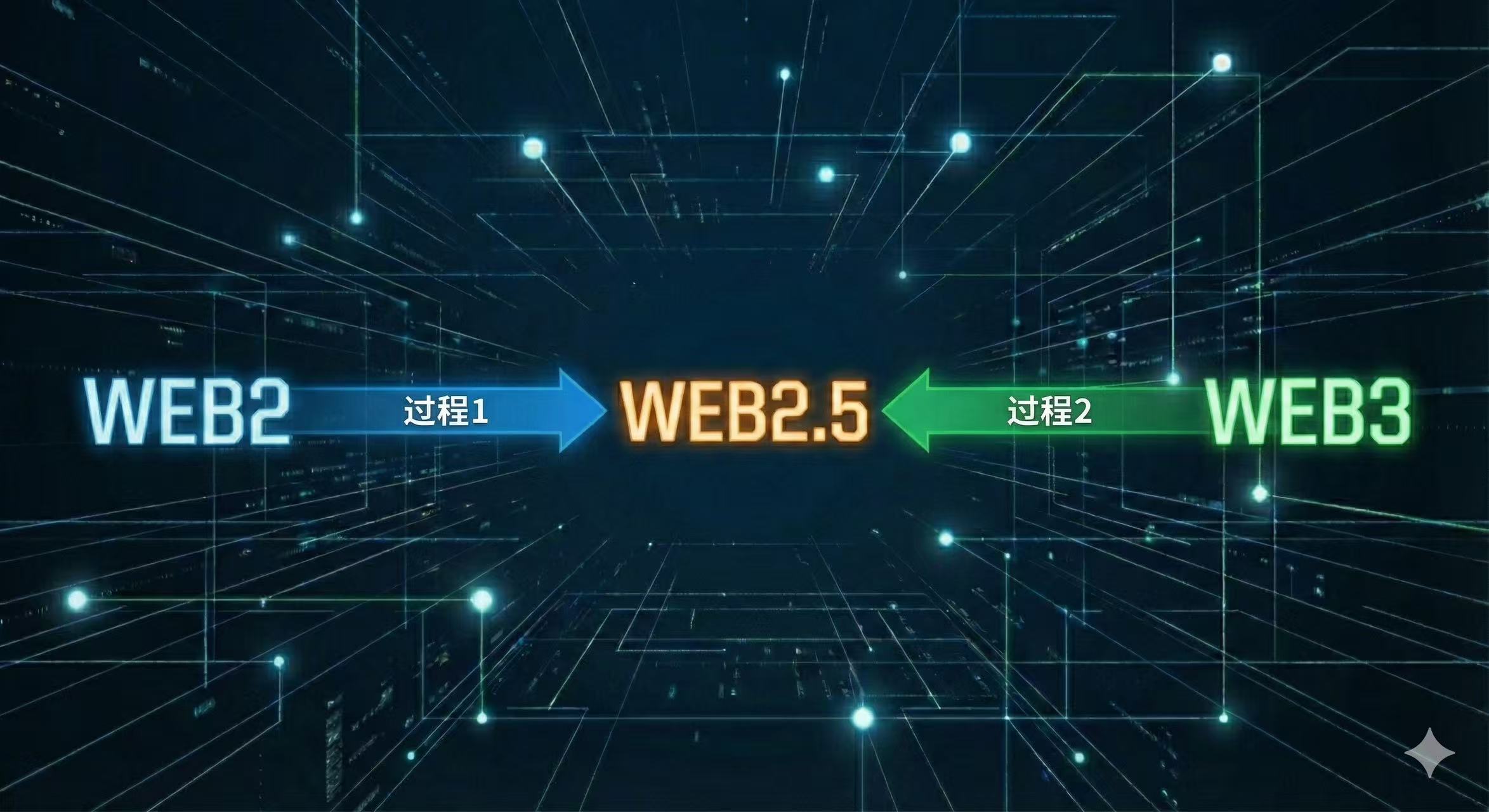
Process 1 in the chart represents the expansion of traditional finance (TradFi) into the crypto field, such as CME launching futures and BlackRock introducing ETFs. Process 2 represents the penetration of crypto finance into traditional assets, such as tokenized US stocks and RWA.

The current market's answer is clear: Process 1 is advancing triumphantly, while Process 2 is struggling painfully. The core of this difference lies not in technology, but in a "compliance cost"-induced dimensional reduction strike on liquidity.

Why can Wall Street giants easily cut into the heart of the crypto circle, while we find it difficult to attack their城池 (strongholds)?

Marginal cost in economics can explain everything.

For CME, CBOE (Chicago Board Options Exchange), EUREX (Eurex Exchange), or SGX (Singapore Exchange), the marginal cost of listing Bitcoin derivatives is almost zero.

These financial behemoths possess clearing licenses that have been operational for decades, extremely mature risk control models, and dedicated network lines connecting to the world's top hedge funds. For them, Bitcoin is just another ticker code after gold, crude oil, and soybeans. They don't need to rewrite underlying code, rehire compliance teams, or even re-educate clients. They just need to file a submission with the CFTC (Commodity Futures Trading Commission), tweak some parameters, and a new, compliant market capable of carrying trillions in liquidity is born.

In contrast, look at Process 2. When crypto exchanges attempt to "tokenize US stocks," they face an insurmountable chasm.

Remember FTX's once-proud equity tokens? That was not only one of the fuses for its downfall but also an original sin in the eyes of regulators. For a crypto-native platform to compliantly allow users to buy Tesla stock with USDT, it needs to obtain securities broker licenses, clearing licenses, resolve cross-jurisdictional securities law conflicts, and implement extremely complex KYC/AML processes. The compliance cost here is not linear; it's exponential.

For crypto-native enterprises, this is a war that was over before it even began. Traditional finance is not only inherently compliant; they *are* the rule-makers.

Why is compliance cost so important? Because compliance directly determines safety, and safety determines the entry threshold for capital.

Retail investors in the crypto market often misunderstand the source of "liquidity." True liquidity doesn't come from the few thousand U in a retail investor's hand; it comes from pension funds, endowment funds, sovereign wealth funds, and large market makers.

These behemoths face extremely strict Fiduciary Duty. This explains why the approval of Bitcoin spot ETFs in 2024 became a historic turning point.

Before ETFs, a traditional family office wanting to allocate Bitcoin had to go through incredibly complex approvals: Who manages the private keys? What if the exchange blows up? How is auditing handled? ETFs and CME futures perfectly solve this problem: no need to manage private keys, no need to trust offshore exchanges, everything is done within a US stock account.

The record-high open interest in CME's Bitcoin futures is not driven by retail speculation, but by Wall Street institutions engaging in basis arbitrage and risk hedging. Top high-frequency trading firms like Jump Trading and Jane Street have lower latency in CME's server rooms than on AWS.

As CBOE plans to re-enter the crypto derivatives market, and as SGX and EUREX begin laying out compliant derivative channels in Asia and Europe, we see a clear trend: the pricing power of crypto assets is shifting from offshore, unregulated exchanges (like the early BitMEX, or some current offshore CEXs) to regulated traditional financial exchanges.

Just as crude oil futures don't require the owner to physically move crude oil, future crypto finance won't require investors to actually use decentralized wallets.

In this process, cryptocurrency itself is stripped of its "currency" payment attributes, stripped of its "anti-censorship" ideology, and refined into a pure, highly volatile financial instrument. It is packed into ETF capsules, bundled into futures contracts, and stuffed into traditional 60/40 asset allocation portfolios.

The conclusion seems inevitable: Web3 finance (especially the secondary market trading part) will most likely be integrated into Web2 finance, becoming a trading category within traditional finance.

This might sound unpleasant to crypto purists, but it is precisely a sign of an asset's maturity.

The future landscape might look like this: the underlying blockchain technology (Web3) will still be responsible for asset generation and title verification, like BTC mining. But in the vast financial superstructure of trading, clearing, and derivatives, the Web2 giants, with their low-cost compliance advantages, will still occupy the main seats at the table.

For investors, seeing this clearly is crucial. Where the liquidity is, the Alpha is. And right now, liquidity is irreversibly flowing back to those in suits.


Twitter:https://twitter.com/BitpushNewsCN

Bitpush TG Discussion Group:https://t.me/BitPushCommunity

Bitpush TG Subscription: https://t.me/bitpush

Original link:https://www.bitpush.news/articles/7601254

Related Questions

QWhat was the key event on November 10, 2023, that signaled a shift in the crypto market's institutional participation?

AOn November 10, 2023, the open interest on CME for Bitcoin futures surged and surpassed that of Binance, driven by strong market expectations for the approval of the first spot cryptocurrency ETF. This indicated a massive influx of institutional capital through compliant channels.

QAccording to the article, what is the fundamental reason for the disparity between TradFi's expansion into crypto (Process 1) and crypto's attempt to penetrate traditional finance (Process 2)?

AThe core reason is 'compliance cost,' which creates a dimensional reduction in liquidity. Traditional financial institutions have near-zero marginal costs to offer crypto products due to existing licenses, risk models, and infrastructure, while crypto-native platforms face exponentially high, often insurmountable, compliance costs to offer traditional assets like tokenized stocks.

QWhy is the approval of Bitcoin spot ETFs considered a historic turning point for institutional investment in crypto?

ABitcoin spot ETFs solved the major compliance and security hurdles for large institutional investors like pension funds and family offices. They no longer need to manage private keys or trust offshore exchanges; they can simply allocate to Bitcoin within their existing, familiar stock brokerage accounts, fulfilling their fiduciary duties.

QWhat is the article's predicted final outcome for Web3 finance, particularly the secondary market trading sector?

AThe article concludes that Web3 finance, especially secondary market trading, will most likely be absorbed into Web2 finance. Crypto assets will become just another trading category within the traditional financial system, stripped of their ideological 'anti-censorship' and 'currency' properties and refined into pure, volatile financial instruments.

QHow does the article describe the shifting landscape of pricing power for crypto assets?

AThe pricing power for crypto assets is shifting from offshore, less-regulated exchanges (like the early BitMEX or current offshore CEXs) to regulated, traditional financial exchanges (like CME, CBOE, SGX, and EUREX) that are capturing the liquidity from large, compliant institutional capital.

Related Reads

Near Returns to the AI Stage: Transformation into a Public Chain Due to 'Payroll Difficulties,' Agent and Privacy Emerge as New Growth Narratives

NEAR Returns to AI Origins: From Payroll Struggles to Blockchain, Now Focusing on AI Agents and Privacy NEAR Protocol's journey began not with grand blockchain ambitions, but from a practical hurdle: its AI startup founders, including Transformer paper co-author Illia Polosukhin, couldn't efficiently pay international developers in 2017. This led them to pivot and build a high-performance, scalable blockchain. After years navigating various crypto narratives like sharding and cross-chain interoperability, NEAR is now leveraging its AI roots to re-enter the AI arena. A key driver is its "NEAR Intents" layer, which abstracts complex cross-chain transactions. Users simply state their goal (e.g., swap BTC for ETH), and a solver network finds the optimal route. This system has processed over $20B in cross-chain volume, generating significant fee revenue. A major growth area is private transactions via "Confidential Intents/Swaps," which hide trade details until settlement to protect against MEV and front-running. Remarkably, private swaps recently accounted for over 40% of NEAR's transaction volume, highlighting strong demand but also potential regulatory scrutiny. With its AI-founder pedigree, NEAR is positioning itself at the intersection of blockchain, AI agents, and privacy, aiming to become infrastructure for the emerging agent economy while navigating the challenges of its rapid adoption.

marsbit1h ago

Near Returns to the AI Stage: Transformation into a Public Chain Due to 'Payroll Difficulties,' Agent and Privacy Emerge as New Growth Narratives

marsbit1h ago

From Ethereum to AI's 'CROPS': What Exactly is This Set of 'Slow Variables' That Vitalik Repeatedly Emphasizes?

In recent discussions, Vitalik Buterin has frequently emphasized the concept of "CROPS," a framework defining core values for Ethereum's development. CROPS stands for Censorship Resistance, Capture Resistance, Open Source, Privacy, and Security. Initially outlined in the Ethereum Foundation's "EF Mandate," it represents a commitment to user sovereignty, ensuring that the network resists external control, remains open, protects privacy, and prioritizes security. The relevance of CROPS extends beyond Ethereum's foundational principles, becoming crucial in the context of AI integration. As AI agents begin handling wallet operations and automated transactions, the risk increases that users may cede control over their digital assets, privacy, and intentions to centralized AI service providers. A "CROPS AI" would therefore emphasize local execution where possible, privacy-preserving remote model calls (e.g., using zero-knowledge proofs), and transparent, verifiable processes to maintain user agency. Vitalik highlights a significant convergence between "CROPS Ethereum access layer" and "CROPS AI." Both address the same fundamental challenge: how users can access powerful services—be it blockchain data via RPCs or AI models—without exposing sensitive information or relinquishing ultimate control. This intersection points toward a future digital entry point that is more private, secure, and user-controlled. Ultimately, CROPS is not merely an abstract ideal but a practical guidepost. It steers development—from protocol resilience and wallet design to AI agent safety—towards a future where users retain self-sovereignty even as digital systems grow more complex and powerful. In an era of accelerating AI adoption, these "slow variables" of censorship resistance, openness, privacy, and security may define Ethereum's enduring value.

marsbit1h ago

From Ethereum to AI's 'CROPS': What Exactly is This Set of 'Slow Variables' That Vitalik Repeatedly Emphasizes?

marsbit1h ago

Silicon Valley 'Startup Guru' Steve Hoffman: Web3 + AI Could Be a Trap

Silicon Valley investor and "Godfather of Startups" Steve Hoffman warns that combining Web3 with AI is likely a trap, not a promising venture. In an interview, Hoffman argues that while AI is a foundational technology touching all industries, Web3 adds complexity, friction, and regulatory risk without solving mainstream consumer or business needs. He advises founders to focus on deep, specialized applications where startups can out-iterate giants, rather than on generic features easily replicated by large tech companies. Hoffman observes that Silicon Valley will lead foundational AI research, while China excels at rapid, large-scale application and commercialization, particularly in robotics. He stresses that AI-driven autonomous agents capable of collaborative, multi-step tasks are 2-4 years away, which will cause significant job displacement. The solution is not to slow AI but to redesign business models around human-AI collaboration and reform social systems like education and retraining. For startups, Hoffman recommends focusing on vertical, expertise-heavy domains to build defensibility. He sees major opportunities in AI fraud detection and cybersecurity. Key founder mindsets include systemic thinking over feature-focus, relentless customer centricity, building adaptive teams, and deeply understanding AI's capabilities and limits. Hoffman is also leading a non-profit initiative to establish university centers aimed at training future leaders in responsible, human-value-aligned AI innovation.

marsbit2h ago

Silicon Valley 'Startup Guru' Steve Hoffman: Web3 + AI Could Be a Trap

marsbit2h ago

Token Inefficient, Economy Tokenless

The article "Tokens Aren't Economical, Economics Aren't Tokenized" analyzes a pivotal shift in the AI industry from a technology-driven narrative to one dominated by capital efficiency. It highlights two concurrent trends: a severe capital shortage due to the exorbitant and recurring costs of compute (e.g., OpenAI's high burn rate) and a wave of corporate spin-offs where major tech companies are separating their AI units (like Kuaishou's Kling and Baidu's Kunlunxin). The core argument is that AI's "anti-internet" business model, where user growth increases costs rather than profits, has created a disconnect between high valuations and actual cash flow. Spin-offs address this by allowing AI assets to be valued independently. Within a parent company, they are seen as cost centers, but as standalone entities, they are priced based on their growth potential and scarcity in the primary market, leading to massive valuation premiums (e.g., Kling's estimated value tripling post-spin-off). The industry is at an inflection point, moving from "model worship" to "value realization." The competition is evolving from a pure compute (GPU) race to a broader focus on systemic efficiency and full-stack engineering (involving CPUs and orchestration) to achieve viable commercialization. The year 2026 is framed as a critical moment where the industry must definitively answer how to economically translate AI capability into tangible business value, reshaping the sector's future power structure.

marsbit2h ago

Token Inefficient, Economy Tokenless

marsbit2h ago

Trading

Spot
Futures

Hot Articles

Discussions

Welcome to the HTX Community. Here, you can stay informed about the latest platform developments and gain access to professional market insights. Users' opinions on the price of S (S) are presented below.

活动图片