Wall Street Shorts ETH: Vitalik Knows and Is Front-Running, Tom Lee Remains Deluded

marsbitPublished on 2026-03-06Last updated on 2026-03-06

Abstract

Wall Street short-selling firm Culper Research has disclosed a significant short position against ETH and related securities, including Bitmine (BMNR). The firm argues that Ethereum’s token economic model was broken following the Fusaka upgrade in December 2025. According to the report, Vitalik Buterin is aware of the issue and has been selling ETH, while prominent bull Tom Lee continues to invest despite what the report describes as clear signs of decline. Culper claims that the surge in on-chain activity post-Fusaka—cited by Lee as evidence of adoption—is largely driven by address poisoning and dust attacks, not genuine usage. Their analysis indicates that 95% of new wallet growth comes from dust addresses, poisoning attacks have tripled, and such transactions now account for 22.5% of all Ethereum activity. The upgrade increased the gas limit from 45M to 60M, aiming to expand capacity, but gas fees fell by ~90% instead of the projected 10–30%. Culper attributes this to a miscalculation in Layer-1 demand elasticity by Vitalik and developers, using outdated models. The report also notes declining validator earnings and a shift of developers and institutional activity to Solana, which it says is outperforming Ethereum in key metrics. The firm draws a parallel to past tech giants like Netscape and Nokia, suggesting Ethereum may face a similar decline absent structural changes.

This article is from:Culper Research

Compiled | Odaily Planet Daily (@OdailyChina); Translator | Azuma (@azuma_eth)

Editor's Note: On March 6, Wall Street short-selling firm Culper Research suddenly published an article announcing that it is shorting ETH and related securities such as BMNR. Culper Research's logic is that Vitalik and other developers miscalculated Ethereum's demand elasticity before the Fusaka upgrade, leading to the upgrade damaging ETH's token economic model. Culper Research also mentioned that Vitalik is well aware of this and is actively front-running with practical actions, while the deluded Tom Lee is heading toward a dead end.

In response to the firm's massive shorting, Vitalik himself and Tom Lee have not yet responded, but Vitalik's father, Dmitry Buterin (dima.eth), responded by saying: "When you see the phrase 'Vitalik knows this and is selling,' you don't need to read further. They are clowns craving attention, not researchers."

Below is the original content from Culper Research, compiled by Odaily Planet Daily. Compiling this article does not mean we agree with Culper Research's views, but rather to present the perspective of some Wall Street institutions on ETH and their market煽动.

Latest disclosure: We are shorting ETH and ETH-related stocks, including Bitmine (BMNR).

We believe that after the Fusaka upgrade in December 2025, ETH's token economic model has been broken. Vitalik knows this and is selling; while ETH's staunchest bull, Tom Lee, continues to add ineffective investments. ETH will continue to fall.

Tom Lee's Bitmine has been defending ETH, claiming that "ETH is not in a death spiral due to increasing utility." He cited the surge in active addresses and transaction numbers on Ethereum after the Fusaka upgrade as evidence of so-called "improved fundamentals" and institutional adoption, but he is completely wrong.
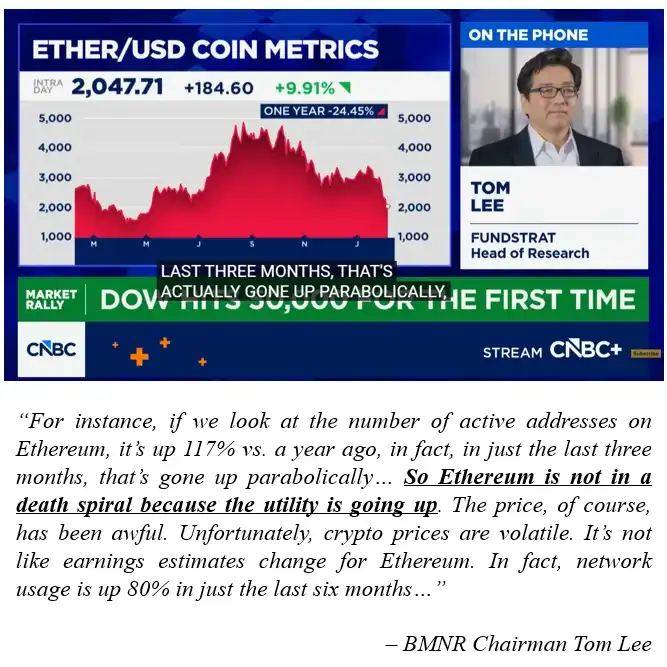
According to Tom Lee's own logic, if Ethereum's on-chain activity does not reflect real usage growth and fundamental improvement, then ETH is indeed in a death spiral.

And our research shows that this is exactly what is happening.

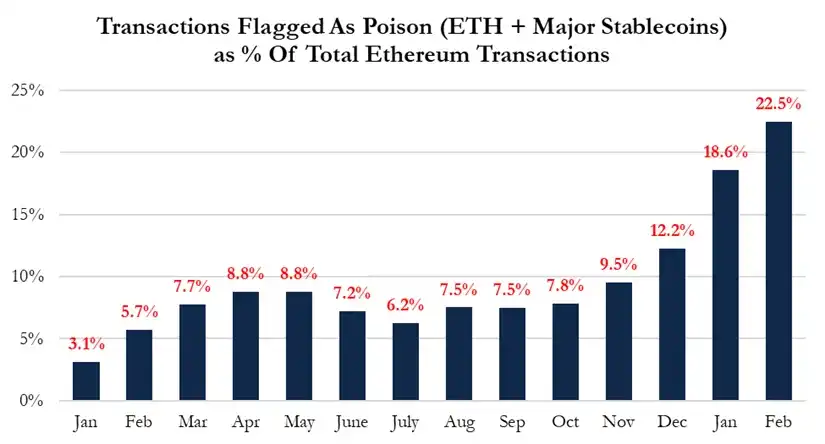
We conducted a comprehensive analysis of on-chain data from January 2025 to February 2026, and the results show that what Lee calls "institutional adoption driving Ethereum's activity growth" can actually be explained by a large number of low-value address poisoning and wallet dusting behaviors. These behaviors were triggered by the excess block space after the Fusaka upgrade.
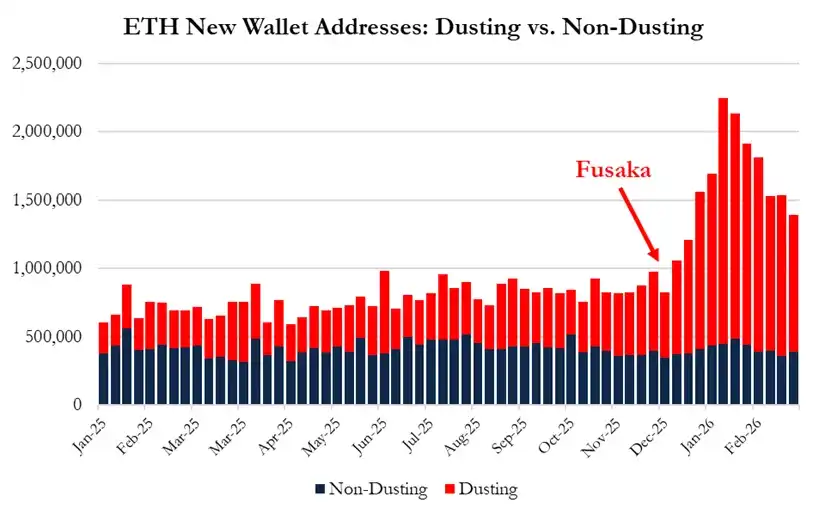
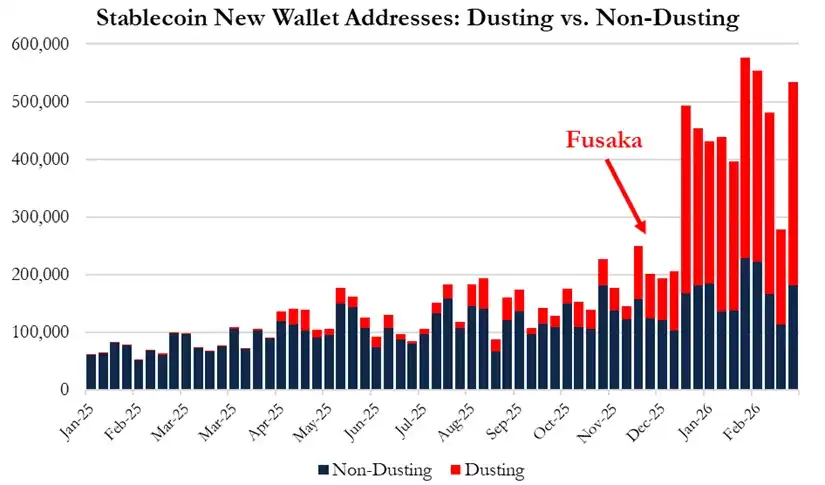
After the Fusaka upgrade:

  • 95% of new wallet growth comes from newly created dust addresses;
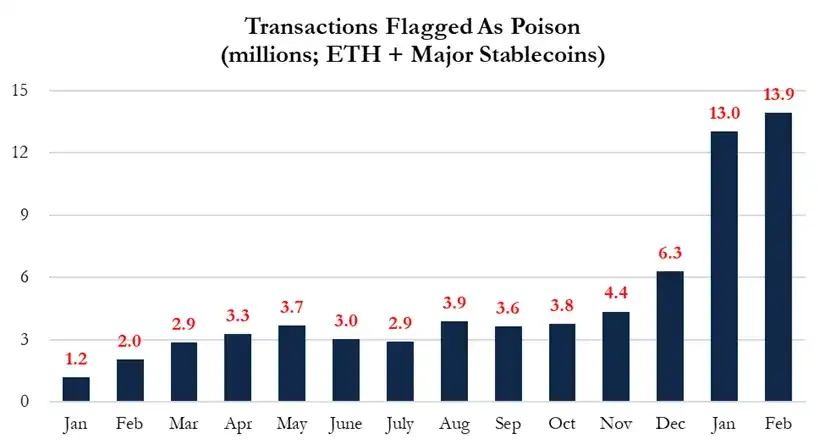
  • Address poisoning attacks increased by more than 3 times;
  • Poisoning behavior explains over 50% of Ethereum's transaction growth;
  • Poisoning transactions now account for 22.5% of all Ethereum transactions;
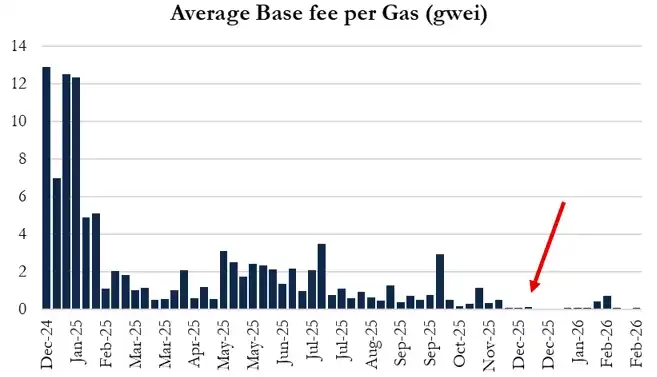
The Fusaka upgrade increased the gas limit from 45M to 60M, aiming to expand Ethereum Layer1's capacity. Vitalik and the protocol team previously predicted that gas fees would drop by 10%–30%, but the reality is that gas fees dropped by about 90%.

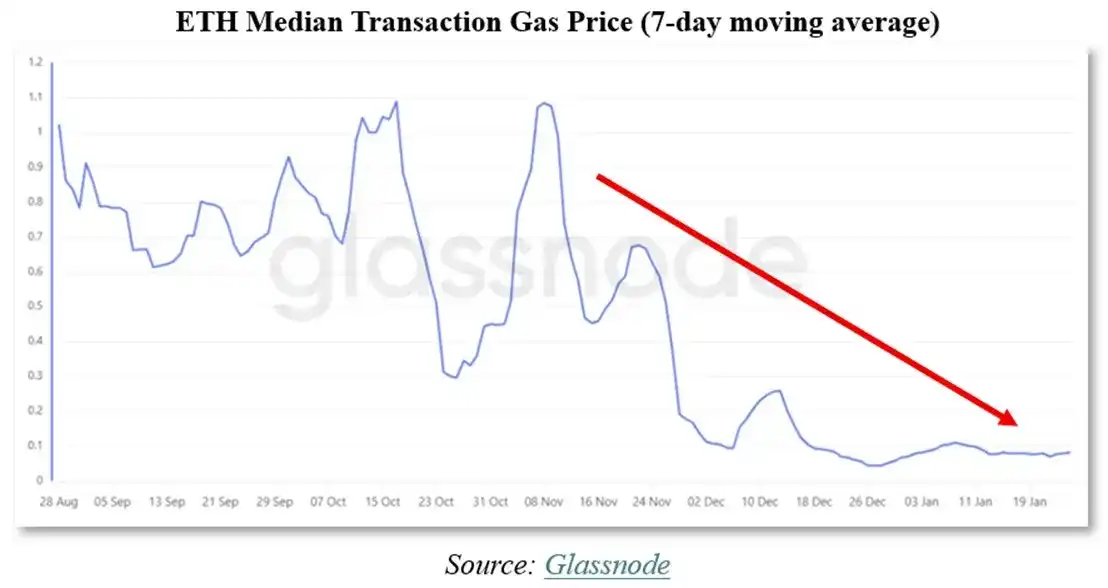
Vitalik and the validators made a serious miscalculation regarding Layer1 demand elasticity. They used outdated mathematical models (based on assumptions from before EIP-1559 and before Layer2 emerged), thereby overestimating Layer1 demand by 3 to 9 times. This is also why we believe Vitalik is selling large amounts of ETH. On January 30, Vitalik announced in advance that he would sell 16,384 ETH to fund the Ethereum Foundation's "austerity period," but since then, he has sold over 19,300 ETH and is still selling.

Vitalik understands what Tom Lee does not — ETH's token economic model has been broken.

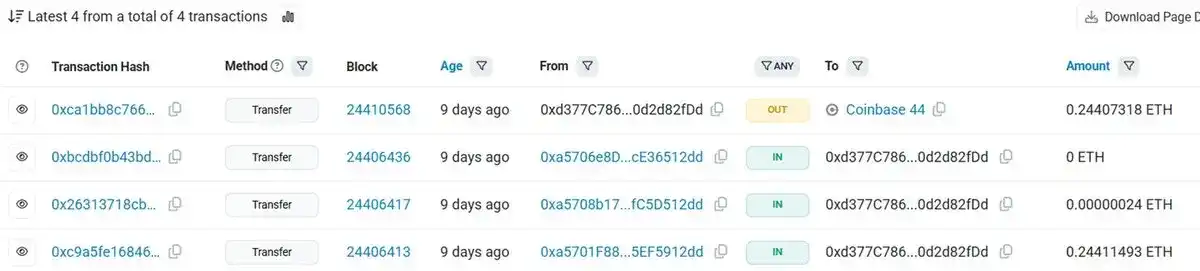
We personally documented Ethereum network address poisoning. We created two new addresses and transferred between them. Within 5 minutes, we were hit by an address poisoning attack. We encourage readers to verify this phenomenon themselves. Currently, the rate of losses due to poisoning attacks has increased by more than 8 times compared to before the Fusaka upgrade.

<极速赛车开奖结果查询官网div>
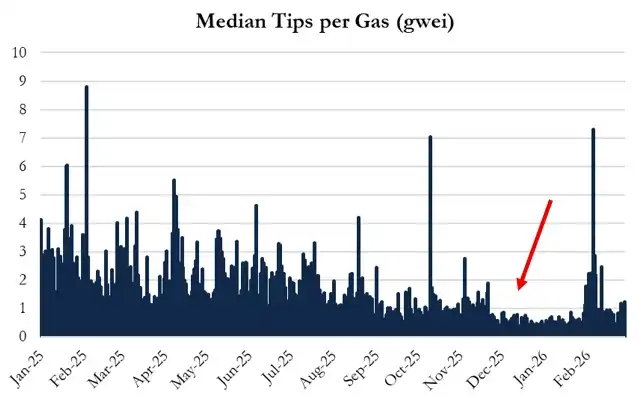
Additionally, the increase in the gas limit has hit Ethereum's validators群体, as validators now see a 40%–50% decline in tip income per unit of gas. Falling yields will weaken staking demand and high-value transaction activity, further undermining institutional adoption. This flywheel has now started to reverse.

Meanwhile, Ethereum continues to lose market share to Solana and its own Layer2 networks.

  • Solana developer count grew by 29% in 2025;
  • Ethereum developer growth was only 6%;
  • Talent is leaving the Ethereum ecosystem;
  • Institutions like Visa and Citigroup have chosen Solana for DeFi applications;
  • Solana DEX trading volume is already more than double that of Ethereum.

During the dot-com bubble era, Netscape and Nokia dominated the market for over 10 years, but the real winners were Google and Apple. We believe Ethereum is in a similar situation — we think Ethereum's token economic model has collapsed, Tom Lee is trapped in his own position, and ETH's price will continue to fall.

Related Questions

QWhat is the main argument presented by Culper Research for shorting ETH?

ACulper Research argues that the Fusaka upgrade in December 2025 broke Ethereum's token economic model. They claim the upgrade created a massive oversupply of block space, leading to a 90% drop in gas fees and a surge in spam activities like address poisoning and dusting attacks, which artificially inflate on-chain metrics. They believe this has triggered a death spiral for ETH.

QAccording to the report, what evidence does Culper provide to dispute Tom Lee's claim of 'improving fundamentals'?

ACulper disputes Tom Lee's claims by presenting on-chain data analysis showing that 95% of new wallet growth comes from dust addresses, address poisoning attacks have tripled, and these spam activities account for over 50% of transaction growth and 22.5% of all Ethereum transactions post-upgrade, rather than genuine adoption.

QWhat role does the article claim Vitalik Buterin is playing in this situation?

AThe article claims Vitalik Buterin is aware that the token economic model is broken and is 'front-running' the market by selling his ETH. It cites that he has sold over 19,300 ETH since announcing a sale of 16,384 ETH on January 30th to fund the Ethereum Foundation's 'austerity period'.

QHow did the Fusaka upgrade allegedly impact Ethereum validators?

AThe Fusaka upgrade's increase in the gas limit led to a 40-50% decrease in tip revenue per unit of gas for validators. This decline in yield is predicted to weaken staking demand and high-value transaction activity, further damaging institutional adoption.

QWhat broader market trend does Culper Research compare Ethereum's situation to?

ACulper Research compares Ethereum's situation to the internet bubble era, drawing a parallel to how former market leaders like Netscape and Nokia dominated for over a decade but were ultimately surpassed by new technologies like Google and Apple. They suggest Ethereum is losing its dominance to competitors like Solana.

Related Reads

Fu Peng's First Public Speech in 2026: What Exactly Are Crypto Assets? Why Did I Join the Crypto Asset Industry?

Fu Peng, a renowned macroeconomist and now Chief Economist at New火 Group, delivered his first public speech of 2026 at the Hong Kong Web3 Festival. He explained his perspective on crypto assets and why he joined the industry, framing it within the context of macroeconomic trends and financial evolution. Fu emphasized that crypto assets are transitioning from an early, belief-driven phase to a mature, institutionally integrated asset class. He drew parallels to the 1970s-80s, when technological advances (like computing) revolutionized traditional finance, leading to the rise of FICC (Fixed Income, Currencies, and Commodities). Similarly, current advancements in AI, data, and blockchain are reshaping finance, with crypto assets becoming part of a new "FICC + C" (C for Crypto) framework. He noted that institutional capital, including traditional hedge funds, avoided early crypto due to its speculative nature but are now engaging as regulatory clarity emerges (e.g., stablecoin laws, CFTC classifying crypto as a commodity). Fu predicted that 2025-2026 marks a turning point where crypto becomes a standardized, financially viable asset for diversified portfolios, akin to commodities or derivatives in traditional finance. Fu defined Bitcoin not as "digital gold" in a simplistic sense but as a value-preserving, financially tradable asset. He highlighted that crypto's future lies in regulated, institutional adoption, moving away from retail-dominated trading. His entry into crypto signals this maturation, where traditional finance integrates crypto into mainstream asset management.

marsbit36m ago

Fu Peng's First Public Speech in 2026: What Exactly Are Crypto Assets? Why Did I Join the Crypto Asset Industry?

marsbit36m ago

Justin Sun Sues Trump Family: What $75 Million Bought Was Only a Blacklist

Justin Sun, founder of Tron, has filed a lawsuit in federal court against World Liberty Financial (WLF), alleging he was made the "primary target of a fraudulent scheme" after investing $75 million. Sun claims the investment secured him an advisor title and WLFI tokens, which were later frozen by WLF, causing "hundreds of millions in losses." The dispute began in late 2024 when Sun's investment helped revive WLF's struggling token sale, which ultimately raised $550 million. Shortly after, the SEC dropped its lawsuit against Sun following Donald Trump's inauguration. However, relations soured when Sun refused WLF's demands for additional funding. In August 2025, WLF added a "blacklist" function to its smart contract, allowing it to unilaterally freeze tokens. Sun's holdings, worth approximately $107 million, were frozen, and he was threatened with token destruction. The lawsuit highlights WLF's structure, which directs 75% of token sale profits to the Trump family, who had earned $1 billion by December 2025. WLF's CEO is Zach Witkoff, son of U.S. Middle East envoy Steve Witkoff. The project faces scrutiny for opaque operations, including a controversial loan arrangement on the Dolomite platform, co-founded by a WLF advisor. Despite Sun's history with the SEC, the case underscores centralization risks within DeFi, as WLF controls governance and holds powers to freeze assets arbitrarily. Sun's tokens remain frozen as legal proceedings begin.

marsbit43m ago

Justin Sun Sues Trump Family: What $75 Million Bought Was Only a Blacklist

marsbit43m ago

$500 to Buy OpenAI Stock: Silicon Valley's Most Respectable Liquidity Invitation

Silicon Valley's largest venture capital platform, AngelList, has launched a new fund called USVC, allowing U.S. retail investors to buy into high-profile AI companies like OpenAI, Anthropic, and xAI with a minimum investment of $500—no accredited investor status required. Promoted by AngelList co-founder Naval Ravikant, the fund is framed as an opportunity for ordinary people to access high-growth private tech investments traditionally reserved for VCs. However, critics argue it functions more like an exit vehicle for early insiders. USVC acquires shares not through primary rounds but largely via secondary transactions—purchasing stakes from early investors, VC funds, and employees looking to cash out at peak valuations. With companies like xAI heavily weighted in the portfolio, the fund effectively channels retail money into providing liquidity for insiders who entered at much lower valuations. The fund’s structure raises concerns: shares are illiquid, with no secondary market, and buybacks are limited and discretionary. The actual annual fee reaches 3.61%, far above the advertised 1% management fee. This model parallels the "low float, high fully diluted valuation" strategy seen in crypto, where early investors profit by selling to latecomers at inflated prices. The timing—alongside similar moves by platforms like Robinhood—suggests that Silicon Valley’s sudden interest in retail inclusion may be less about democratizing access and more about securing exits for insiders.

marsbit1h ago

$500 to Buy OpenAI Stock: Silicon Valley's Most Respectable Liquidity Invitation

marsbit1h ago

Trading

Spot
Futures
活动图片

Hot Categoriesright-arrow

Hot Tagsright-arrow