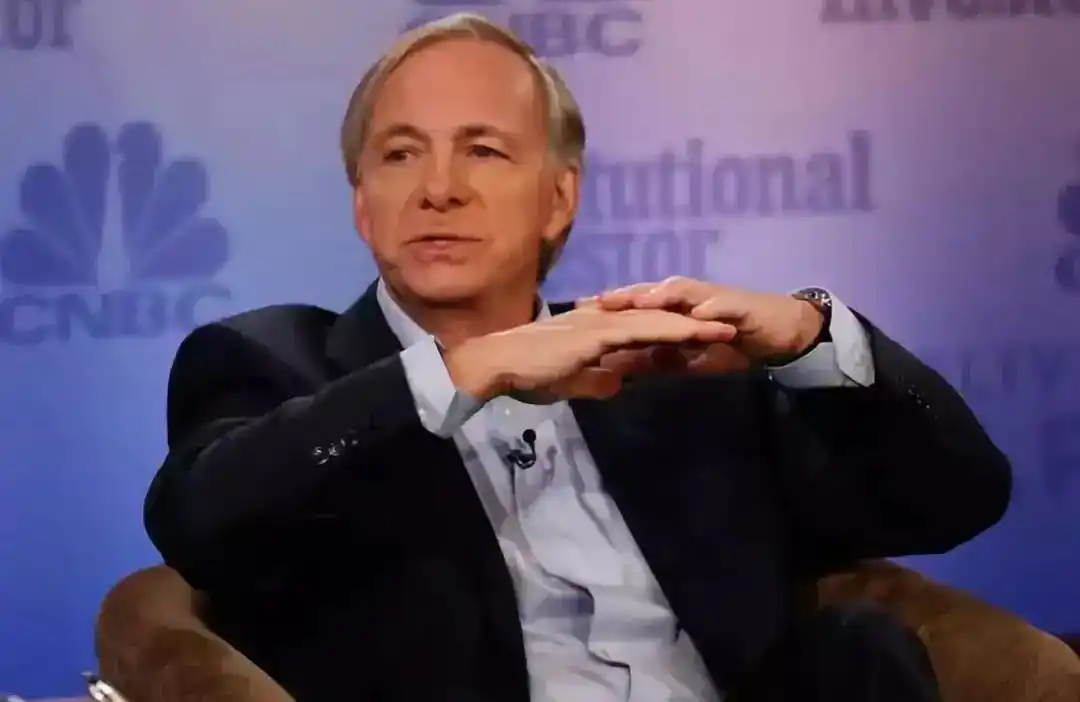
Wall: Inflation Has Cooled in the Past Four Weeks, AI is Reshaping the Economy, Forward Guidance Loses Necessity

链捕手Published on 2026-07-02Last updated on 2026-07-02

Abstract

Summary: At the European Central Bank's forum in Sintra, Federal Reserve Chairman Christopher Waller stated the Fed will no longer provide forward guidance on future interest rate paths. Policy decisions will be made at each meeting based on the latest data. He noted that U.S. inflation risks have eased over the past four weeks. Waller discussed the significant impact of artificial intelligence on the economy, acknowledging its potential to boost productivity and supply but also its uncertain effects on employment and inflation—a determination he stressed must be data-driven. He reaffirmed the Fed's independence from political pressure and indicated a continued desire to reduce the size of the central bank's balance sheet, though this will be a gradual process. Waller also highlighted the formation of five internal working groups to review various aspects of Fed policy and communication.


Author: Li Jia, Wall Street Insights


On July 1, at the annual Central Banking Forum held by the European Central Bank in Sintra, Portugal, Wall reiterated that the Federal Reserve will not provide forward guidance on the future path of interest rates. He hopes that policymakers can engage in full discussions based on the latest data at each meeting, rather than signaling policy direction to the market in advance.

He stated that U.S. inflation risks have eased somewhat over the past four weeks, and the supply expansion brought by AI could profoundly change the way the economy operates, with the U.S. at the center of this transformation. However, whether AI will ultimately bring inflation or deflation should be judged by the central bank based on data.
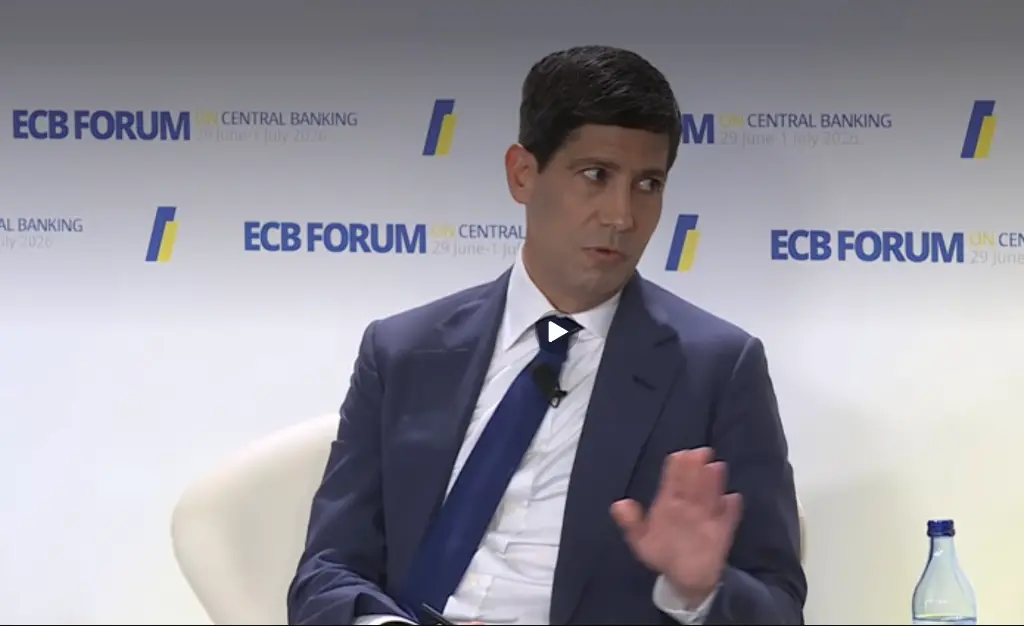
Will Not Provide Any Interest Rate Forward Guidance

Wall stated that the Federal Reserve is "charting a new course" and will not signal interest rate moves in advance as it did in the past. He said:

"We will hold our next meeting in four weeks, and I hope we can have a real family-style debate then."

He emphasized again that forward guidance is not the right policy for the current economic situation. In the future, the Fed will continue to make decisions based on the latest economic data, not by committing to a policy path in advance.

This means the Federal Reserve will rely more on real-time economic data rather than signaling policy to the market in advance.

At the June meeting, the Federal Reserve unanimously decided to keep the federal funds rate unchanged in the 3.5%-3.75% range. However, the latest dot plot showed that nine out of 18 officials still expect at least one rate hike this year, and the market has largely priced in the possibility of at least one 25-basis-point hike by the end of the year.

However, Wall himself declined to reveal his own policy inclination, only emphasizing that future policy decisions will depend on data performance.

AI is Changing the Economy at an Unprecedented Pace

Wall discussed the macroeconomic impact of artificial intelligence at the forum. He said the speed at which AI model capabilities are improving shows a clear exponential growth trend.

He pointed out that the supply capacity expansion driven by AI will become a new variable that future monetary policy must focus on, as productivity improvements mean the economy can achieve faster growth with lower inflationary pressure.

However, he also acknowledged that there is still great uncertainty about how AI will affect the job market.

"There is still a serious question about when AI will truly begin to affect employment."

He emphasized that the Federal Reserve must continue to achieve its dual statutory goals of maximum employment and price stability, and any policy adjustments must balance both.

Inflation Risk Down, but Whether AI Has an Inflationary Effect Remains to Be Seen

Wall stated that U.S. inflation risk has declined over the past four weeks, meaning price pressures have eased to some extent recently.

However, regarding the market's widespread discussion on whether AI is a deflationary force or a new source of inflation, Wall did not give a clear answer. He said:

"Whether AI has an inflationary effect should be decided by the central bank."

In his view, AI can both improve production efficiency and expand supply on one hand, and stimulate new investment and demand on the other. Therefore, the final effect needs to be judged based on data, not preset conclusions.

In addition, Wall pointed out that Fed policy not only affects the U.S. but also has significant spillover effects through global financial markets.

Reiterating Fed Independence: Policy Will Not Be Affected by External Pressure

Responding to ongoing external concerns about Federal Reserve independence, Wall once again made a clear statement. He said:

"The Federal Reserve has long been independent, and it will remain independent. You won't see any change."

This statement is also seen by the market as a response to President Trump's recent repeated calls for the Fed to cut rates. Wall emphasized that the Fed will independently decide the appropriate policy path and will not change decisions due to external political pressure.

U.S. Faces Great Opportunity for Productivity Enhancement

Beyond monetary policy, Wall also focused on the long-term growth prospects of the U.S. economy that day.

He said he has been focused on monetary policy work for the past four weeks, and the current era is one of great opportunity for the United States. Wall believes that the supply side of the U.S. economy remains strong, and potential growth rates appear to be trending upward. Therefore, there is ample reason to be optimistic about future productivity.

He said if the economic performance of the past four quarters can serve as a reference for the future, then the U.S. economic outlook deserves optimism. He stated:

"The United States is not afraid of productivity-driven economic growth."

However, he also acknowledged that it is not yet clear whether productivity improvements will have a direct impact on short-term monetary policy, but the continuous expansion of supply capacity will undoubtedly profoundly influence future policymaking.

Unchanged Stance on Balance Sheet Reduction

Besides interest rate policy, Wall also discussed the Fed's balance sheet.

He said, his view on the balance sheet has not changed over the past four weeks. "It's no secret that I want the Fed's balance sheet to be smaller."

However, he also said that the Fed remains open about the final appropriate size of the balance sheet. Wall noted that balance sheet policy mainly works through asset prices, so any major decisions regarding the balance sheet will be subject to public discussion and decided collectively by the FOMC.

He also stated that the current balance sheet size of about $6.7 trillion is still far above pre-pandemic levels, and even if reduction continues, it cannot be completed in a short time. "Eighteen weeks is far from enough."

Five Reform Working Groups to See New Progress

In fact, abandoning forward guidance is only part of Wall's push for Fed reform.

Last month, Wall announced the establishment of five internal special working groups, responsible for studying communication mechanisms, the balance sheet, data usage, productivity & employment, and the inflation framework, among other issues. He recently revealed that the list of special working group members will be announced as early as next week.

Wall stated that these working groups will not only involve internal Fed officials but also invite external experts, including some international figures from outside the United States. He hopes that through these reforms, the Fed's policy framework and communication mechanisms will be re-examined, making monetary policy more suitable for the rapidly changing economic environment.


Trending Cryptos

Related Questions

QAccording to Governor Waller, what is the main change in the Federal Reserve's communication strategy regarding future interest rate decisions?

AGovernor Waller stated that the Federal Reserve will no longer provide forward guidance about future interest rate paths. He emphasized that policy decisions will be made on a meeting-by-meeting basis based on the latest economic data, marking a departure from the previous practice of signaling future policy direction to the market.

QWhat assessment did Waller give about recent US inflation trends?

AWaller indicated that US inflation risks have eased over the past four weeks, meaning price pressures have shown a degree of moderation recently.

QHow does Waller view the impact of AI on the economy and inflation according to the speech?

AWaller believes AI is transforming the economy at an unprecedented, exponential pace. He noted that AI-driven supply expansion could allow for faster growth with lower inflation by boosting productivity. However, he did not conclude whether AI is ultimately inflationary or disinflationary, stating the Fed must judge its effects based on data as AI can both enhance supply and stimulate new investment and demand.

QWhat was Waller's stance on the Federal Reserve's independence in the context of political pressure?

AWaller strongly reaffirmed the Federal Reserve's independence. He asserted that the Fed has long been independent, remains independent, and will not change, emphasizing that policy decisions will be made autonomously and not be influenced by external political pressures.

QWhat are Waller's comments regarding the Federal Reserve's balance sheet (quantitative tightening)?

AWaller said his views on the balance sheet have not changed in the past four weeks, reiterating his clear desire for the Fed's balance sheet to shrink. He noted the current size of about $6.7 trillion is still well above pre-pandemic levels and that any significant reduction would take considerable time, far longer than '18 weeks'. The ultimate size remains an open question for FOMC discussion and collective decision.

Related Reads

Robinhood Chain Mainnet Goes Live: Can Stocks Finally Be Moved Into Wallets?

Robinhood has officially launched its public mainnet, Robinhood Chain, along with stock-like tokens, the USDG yield product, and a DeFi lending portal. This marks a significant shift where a major online broker is integrating its user interface, regulatory compliance, self-custody wallet, and on-chain protocols into a single, streamlined experience. The goal is to simplify access to stock exposure, stablecoin yields, collateralized lending, and AMM trading for mainstream users. Eligible non-U.S. users can hold these "Stock Tokens"—structured as tokenized debt securities—in the Robinhood Wallet for 24/7 exposure to assets like U.S. stocks or ETFs. U.S. users can access an estimated ~7% APY on dollar-backed USDG through the Robinhood Earn program via self-custody wallets, with lending infrastructure powered by Morpho protocol. Built as a Layer 2 on Arbitrum, Robinhood Chain leverages existing DeFi protocols like Uniswap. The core strategy is not to reinvent DeFi but to channel Robinhood's large traditional finance user base (27.4 million funded customers as of Q1 2026) into on-chain finance, lowering the technical barriers. However, key limitations exist. The stock tokens are not direct equity ownership and are unavailable in the U.S. and some jurisdictions due to regulatory constraints. The ~7% yield is variable and carries inherent DeFi risks, not guaranteed principal protection. Furthermore, while AMMs enable trading, price discovery for major stocks will likely remain anchored in traditional markets like NASDAQ for the foreseeable future. Ultimately, Robinhood Chain is an early experiment in "on-chain brokerage." Its success will depend on real-world metrics like trading volume, sustained user migration to self-custody, stable yield performance, and regulatory feedback, rather than its launch narrative.

marsbit45m ago

Robinhood Chain Mainnet Goes Live: Can Stocks Finally Be Moved Into Wallets?

marsbit45m ago

Circle CEO Responds to OUSD Challenge: Stablecoin Market Is 'Winner-Takes-All', Consortium Model Doomed to Fail

Circle CEO Jeremy Allaire addresses market concerns following the announcement of the Open USD (OUSD) stablecoin project backed by 140 global companies. Allaire argues the stablecoin market exhibits "winner-takes-all" dynamics due to powerful network effects. He cites USDC's near-decade lead in three key areas: 1) **Application Integration & Protocol Development**: Thousands of integrated services and protocols (like CCTP) create utility and lock-in for developers and users. 2) **Liquidity Network Effects**: A deeply embedded, globally distributed liquidity infrastructure across primary and secondary markets, built over years. 3) **Regulatory Integration**: Extensive licensing and compliance groundwork ensuring USDC's acceptance in major markets like Europe and Japan. Allaire challenges OUSD's proposed advantages. He contends that promises of free redemption, while appealing, face market realities where such models can become exit routes for other stablecoins. He also questions the feasibility of fully distributing all revenue to an alliance, stating it would "starve" the critical infrastructure investments needed for scale and utility. Furthermore, he expresses skepticism about large alliance governance models, noting they often lead to slow decision-making and misaligned incentives. While welcoming OUSD to the ecosystem, Allaire reaffirms confidence in USDC's dominant position, backed by its long-term infrastructure investments and strong partnerships, including its ongoing collaboration with Coinbase.

marsbit47m ago

Circle CEO Responds to OUSD Challenge: Stablecoin Market Is 'Winner-Takes-All', Consortium Model Doomed to Fail

marsbit47m ago

Circle CEO Responds to OUSD Challenge: Alliance Model Doomed to Fail, It's a 'Winner-Takes-All' Game

Circle CEO Jeremy Allaire addresses the challenge posed by the new Open USD (OUSD) stablecoin project, backed by 140 global companies. He argues that the stablecoin market exhibits "winner-take-all" characteristics, where USDC's near-decade-long lead in application integrations, global liquidity, and regulatory compliance secures its dominant position. Allaire outlines three key network effects underpinning USDC's strength: 1) Extensive integration as an internet protocol layer, 2) Deep, globally distributed liquidity networks, and 3) Deep integration with global policy and regulatory frameworks. He cites data showing USDC facilitated 80% of on-chain USD stablecoin transaction volume in Q1 2026. He directly counters OUSD's proposed advantages: 1) "Free minting and redemption" may not be sustainable against market realities, which USDC addresses via contractual mechanisms. 2) "Sharing all revenue" risks starving the infrastructure of necessary investment for growth and reliability. 3) A "consortium model" often leads to slow innovation and poor coordination compared to focused, independent operators like Circle. Allaire reaffirms Circle's strong partnership with Coinbase and notes that Circle continues to collaborate with many OUSD founding members. He concludes by welcoming OUSD to the ecosystem while expressing confidence in USDC's entrenched network advantages and continued expansion.

Odaily星球日报50m ago

Circle CEO Responds to OUSD Challenge: Alliance Model Doomed to Fail, It's a 'Winner-Takes-All' Game

Odaily星球日报50m ago

Trading

Spot

Hot Articles

Discussions

Welcome to the HTX Community. Here, you can stay informed about the latest platform developments and gain access to professional market insights. Users' opinions on the price of AI (AI) are presented below.

活动图片