Vietnam Begins 5-Year Crypto Licensing Pilot To Regulate Exchanges

bitcoinistPublished on 2026-01-22Last updated on 2026-01-22

Abstract

Vietnam has launched a five-year pilot program to license and regulate cryptocurrency exchanges, moving the sector from a legal "gray area" into a formal framework. The Ministry of Finance began accepting applications under new rules requiring exchanges to meet strict capital and operational criteria. These include a minimum charter capital of ~$380 million, with significant institutional ownership, and specific staffing and experience requirements for executives and technical personnel. Major financial and tech firms have already announced partnerships and preparations to enter the newly regulated market.

Vietnam has launched a pilot program to license cryptocurrency exchanges, aiming to bring the rapidly growing market into a formal legal framework after years of regulatory uncertainty.

Vietnam’s Crypto Licensing Pilot Begins

On Tuesday, Vietnam began its pilot licensing regime to officially regulate crypto trading platforms in the country for the first time, in an effort to gradually move the sector from the shadows into a properly supervised framework under the local financial authorities.

According to local reports, the Ministry of Finance issued Decision No. 96/QD-BTC on January 20, introducing procedures necessary for the implementation of Government Resolution No. 05/2025/NQ-CP.

The three new administrative procedures cover the issuance, modification, and revocation of licenses for entities operating crypto asset trading platforms. The Ministry announced that it began accepting applications from businesses seeking to offer crypto asset trading services.

For context, the country’s cryptocurrency market lacked a clear legal framework, existing in an unsupervised, “gray area.” Last year, the National Assembly passed the “Law on Digital Technology Industry,” which took effect on January 1, 2026, to create a foundation for authorities to develop suitable management policies.

In September, Vietnam’s Deputy Prime Minister Ho Duc Phoc signed Government Resolution No. 05/2025/NQ-CP, allowing a five-year pilot program for the issuance and trading of crypto assets.

As reported by Bitcoinist, under Resolution No. 05, organizations seeking to provide services for crypto trading markets must be registered with the financial authorities and fully comply with a strict set of rules, including a minimum contributed charter capital of VND10 trillion, worth around $380.66 million.

Notably, at least 65% of the charter capital must be held by institutional investors, with more than 35% contributed by at least two institutions such as commercial banks, securities companies, fund management companies, insurance companies, or technology enterprises.

The general director must have at least two years of experience in finance, while the CTO must have at least five years of experience in information technology. Moreover, firms must hire at least 10 technology staff with cybersecurity certificates and at least 10 staff with securities practice certificates working in other departments.

Financial Institutions Dive Into Digital Assets

Following the issuance of Resolution No. 05, major financial players, including securities companies and banking institutions, have announced their intention to participate in the pilot and enter the sector, noted the report.

In June, two SSI’s subsidiaries, SSI Digital Technology JSC and SSI Asset Management Company Limited, signed Memorandums of Understanding with Tether, U2U Network, and Amazon Web Services to develop a digital financial ecosystem in Vietnam based on blockchain and cloud computing platforms.

In addition, VIX Securities contributed capital to establish the VIX Crypto Asset Exchange and partnered with tech giant FPT Corp. to prepare its technology infrastructure.

Meanwhile, the banking sector saw MBBank enter a technical cooperation agreement with Dunamu, the operator of the Korean exchange Upbit, to establish a crypto exchange in Vietnam while jointly developing the legal framework and investor protection mechanisms.

Techcombank also established the Techcom Crypto Asset Exchange with a charter capital of several hundred billion VND. Similarly, VPBank stated it is fully prepared to begin operations as soon as it receives regulatory approval.
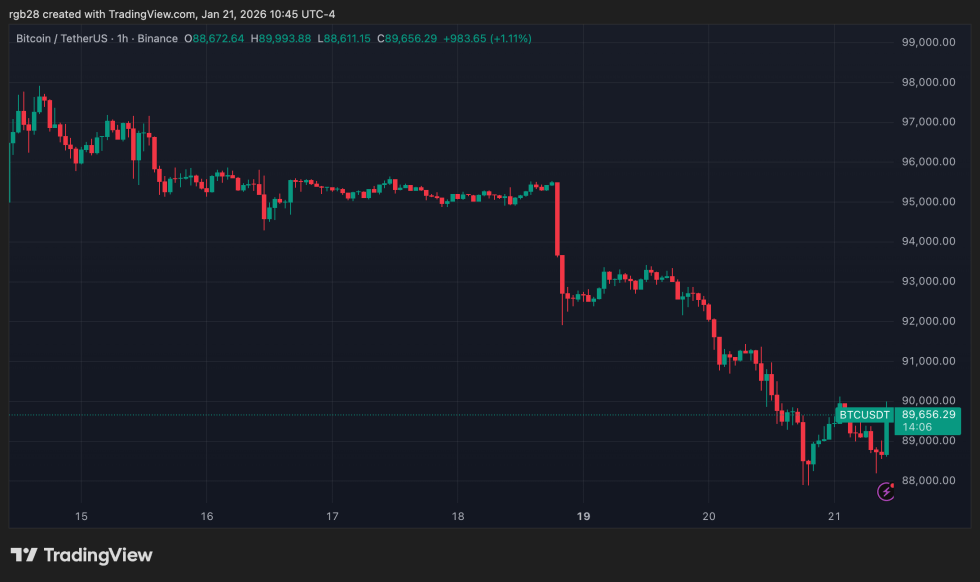
Bitcoin (BTC) trades at $89,656 in the one-week chart. Source: BTCCUSDT on TradingView


Related Questions

QWhat is the main purpose of Vietnam's new pilot program for cryptocurrency exchanges?

AThe main purpose is to bring the rapidly growing cryptocurrency market into a formal legal framework and regulate crypto trading platforms under the supervision of local financial authorities, moving the sector out of its previous unregulated 'gray area'.

QWhat is the minimum charter capital requirement for an organization to provide crypto trading services under Resolution No. 05?

AThe minimum charter capital requirement is VND10 trillion, which is worth approximately $380.66 million.

QWhat are the key experience requirements for the leadership of a licensed crypto exchange in Vietnam?

AThe general director must have at least two years of experience in finance, and the Chief Technology Officer (CTO) must have at least five years of experience in information technology.

QWhich major financial institutions have announced plans to participate in Vietnam's crypto pilot program?

AMajor players include SSI's subsidiaries (SSI Digital Technology JSC and SSI Asset Management Company Limited), VIX Securities, MBBank, Techcombank, and VPBank, which have partnered with companies like Tether, U2U Network, Amazon Web Services, FPT Corp., and Dunamu.

QWhat law created the foundation for Vietnam to develop management policies for the digital technology industry, including cryptocurrencies?

AThe 'Law on Digital Technology Industry' was passed by the National Assembly last year and took effect on January 1, 2026, creating the foundation for authorities to develop suitable management policies.

Related Reads

Now the Greatest Regret Is to My Family: Crypto Experts Took a Stumble in the Stock Market

Summary: This article examines the significant losses recently suffered by cryptocurrency traders and influencers who ventured into the stock market, specifically by heavily investing in AI-related and semiconductor storage stocks. The narrative centers on the dramatic reversal in the Korean and US equity markets in late July, with stocks like SK Hynix and related leveraged ETFs experiencing historic plunges, erasing massive gains. The analysis highlights several key factors behind the "flip." Traders, accustomed to crypto's high volatility and frustrated by a stagnant market, chased the apparent momentum in AI-themed equities. Many made fatal mistakes: applying high-leverage strategies common in crypto (e.g., 2x ETFs, on-chain perpetual contracts) to stocks, and failing to understand the distinct rules of different stock markets (like Korean pre-market trading). This led to widespread liquidations, especially when a thin Korean pre-market trade triggered a cascading flash crash on a decentralized exchange. Post-crash reflections from prominent figures reveal deep regret and self-criticism. They acknowledge misjudging their expertise, overestimating their edge against sophisticated institutional players, and the dangers of leverage. The article concludes that while such setbacks are part of trading, surviving long-term requires recognizing one's limitations and the inherent risks of cross-market strategies.

marsbit47m ago

Now the Greatest Regret Is to My Family: Crypto Experts Took a Stumble in the Stock Market

marsbit47m ago

US Senate Makes Important Amendments to "Conflict of Interest" Section of Cryptocurrency Bill

The U.S. Senate has taken a key step regarding the CLARITY Act, which could shape the future of the U.S. crypto market. On July 29, Senators Tom Tillis and Ruben Gallego finalized amendments to the bill's "conflict of interest" rules, one of its most contentious aspects. The bipartisan bill aims to tighten restrictions on high-level federal officials' ties to digital assets. The new text, crafted as an alternative to a White House-endorsed ethics code, is expected to impose stricter rules limiting officials' ability to issue or directly participate in digital asset projects. However, with Congress entering an August recess and the revised text not yet reviewed by much of the Senate, the bill's timeline is uncertain. Senate Majority Leader John Thune indicated a procedural vote could occur between July 29 and August 1 but expressed doubt the full bill could pass before the break. The House-approved CLARITY Act, passed in July 2025, has been under Senate negotiation for over a year. Key goals of the CLARITY Act include clarifying jurisdictional boundaries between the SEC and CFTC, setting rules for digital commodity spot markets, and addressing topics like stablecoin yields, DeFi, and illicit financing. The stablecoin yield provisions could significantly impact U.S.-based DeFi protocols, exchanges, and issuers, affecting their global competitiveness. The outcome is being closely watched by both the U.S. and global digital asset markets.

cryptonews.ru1h ago

US Senate Makes Important Amendments to "Conflict of Interest" Section of Cryptocurrency Bill

cryptonews.ru1h ago

Pavel Durov Designated as a Terrorist in Russia. What Does This Mean for Telegram Users?

Pavel Durov, the founder of Telegram, has been added to Russia's list of terrorists and extremists by Rosfinmonitoring, as published on July 30. The entry includes his name and date of birth. The designation follows an announcement by the Russian Federal Security Service (FSB) on July 29, which charged Durov with aiding terrorist activity. The FSB alleges that a Telegram dating bot named "DaiVinchik" was used to recruit 46 individuals for attacks on police and arson, orchestrated by Ukrainian special services. The FSB also accuses Telegram's administration of failing to remove channels and bots used by Ukrainian intelligence and extremist groups. Durov is reportedly subject to an international arrest warrant. Inclusion on the Rosfinmonitoring list leads to significant restrictions: the freezing of Durov's bank accounts and assets, severe limitations on financial transactions, and a ban on election participation, media interaction, and event organization. Transfers to his accounts may be considered terrorism financing. For ordinary Russian Telegram users, purchasing Telegram Premium is not classified as financing terrorism, according to an IT expert. General use of the messenger—messaging, managing channels—does not automatically make a user a participant in extremist activity. There has been no official decision to ban Telegram itself. It is noted that French authorities are also investigating Durov over allegations of inadequate measures against criminal activity on the platform and insufficient cooperation with law enforcement. Durov denies all charges.

cryptonews.ru1h ago

Pavel Durov Designated as a Terrorist in Russia. What Does This Mean for Telegram Users?

cryptonews.ru1h ago

Trading

Spot
活动图片