On August 24, UTen Robot passed the listing hearing for the main board of the Hong Kong Stock Exchange, just one step away from going public.
The name "UTen Robot" might not ring a bell for you.
But if you often visit KTVs or hotels, you've likely bumped into it near private room doors or corridor corners—that metal cart carrying trays, waiting for elevators on its own.
The prospectus shows that as of the end of March 2026, the company had cumulatively sold over 114,000 robots. Currently, over 15,000 units are in operation daily, executing more than 360,000 delivery orders.
Still can't place it? That's okay.
Swap the name, and you'll probably recognize it—UTStarcom.
Yes, that telecom company that once swept the nation with the "Little Smart".
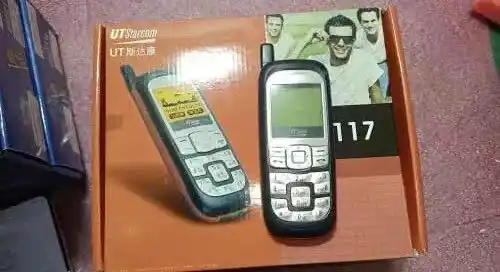
△
Strictly speaking, UTen Robot was not directly renamed from UTStarcom (China).
After the curtain fell on the Little Smart era, in 2013, former UTStarcom CEO Lu Ying led some employees to switch tracks and founded UTen Robot.
Although the founding team brought technical expertise from the telecom industry and shipment figures look decent, the real-world challenges of hard-tech entrepreneurship didn't get any easier.
△
From 2023 to Q1 2026, UTen Robot accumulated a net loss of 513 million yuan.
It's not unusual for a robot company to incur losses.
But compared to listed peers, UTen Robot's biggest issue is its relatively weak overall product gross margin, with its robot gross margin being only around 8%.
Even so, UTen has secured investments from Alibaba-affiliated entities (Ele.me, Yunfeng Capital), Legend Capital, SenseTime, and Huazhu Group, among other industrial capital. Why?
What does UTen's prospectus say?

Not Just Selling Robots, But Also Selling 'Eyes'
To many, UTen Robot is the "delivery robot" in hotels.
A guest orders a bottle of water or a pack of tissues in their room, the robot takes the elevator upstairs, arrives at the door, and calls to notify the guest for pickup.
But breaking down the prospectus reveals that UTen's business is far more complex than just "selling robots."
It currently has five main product lines:
- UT Sister: Smart hotel service robot;
- UT Brother: Entertainment and catering service robot;
- UT Guy: Outdoor autonomous delivery vehicle;
- UT Aunt: Indoor and outdoor cleaning robot;
- UT Bee: Mobile intelligent vending robot.
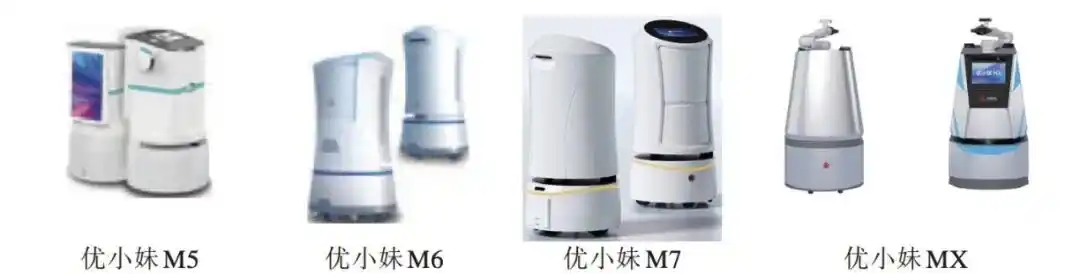
Additionally, the company has an AI visual model platform named "UT Cloud."
In simple terms, an AI visual model is like giving machines a pair of "eyes" that can judge—recognizing what's in the scene, what's happening, and whether there are any anomalies.
Currently, UTen applies this capability to scenarios such as construction, food production, elevator retrofit, sports education, and media content moderation.
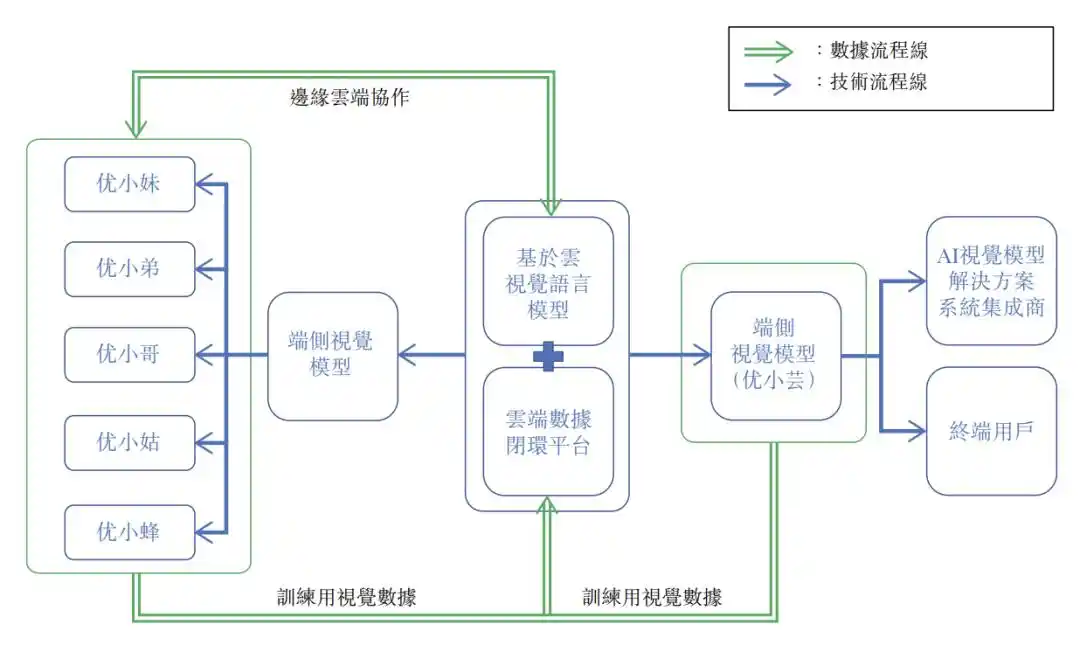
From the revenue composition, this "selling eyes" business is already quite significant.
In 2025, UTen achieved revenue of approximately 318 million yuan, of which, AI visual model solutions contributed about 119 million yuan, accounting for 37.5%, second only to robot product sales revenue (about 135 million yuan, 42.5%).
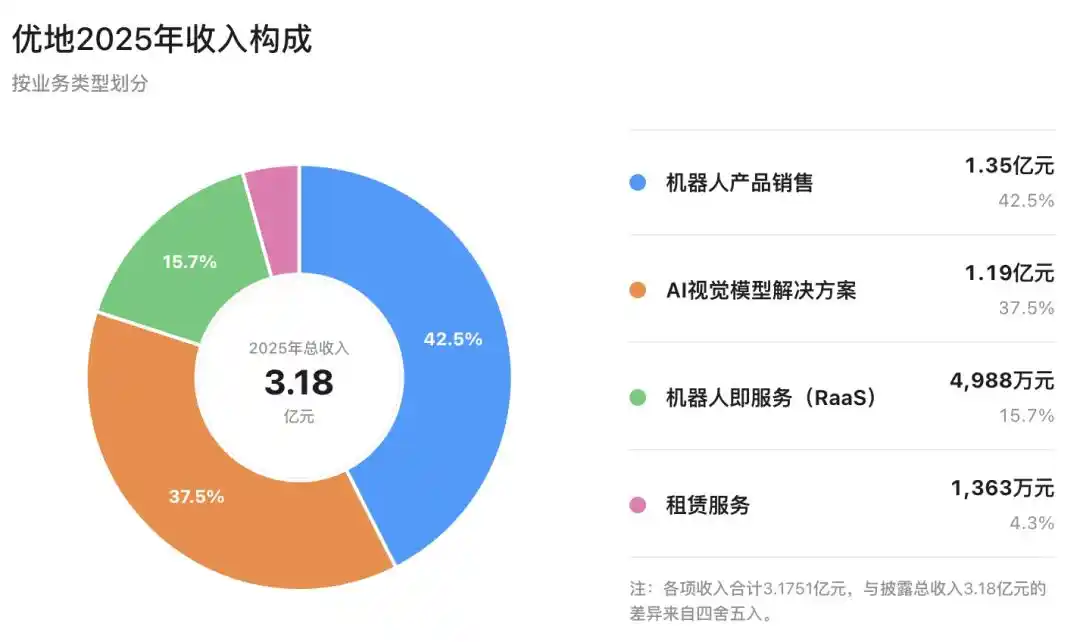
Looking at the four revenue sources combined, in 2025, over half of UTen's revenue no longer came from direct robot sales, but from AI visual projects, robot operations, and equipment leasing.
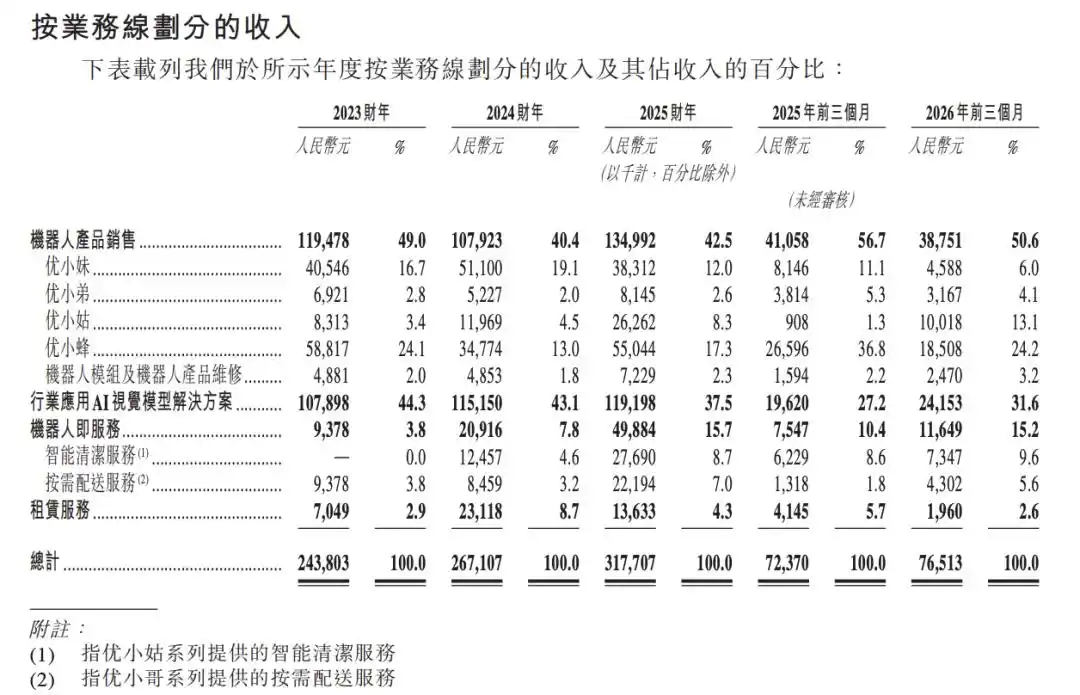
This represents the company's most significant business model adjustment in recent years.
The strategic direction is easy to understand: selling hardware only makes money once, whereas operating robots has the potential to generate recurring revenue.
If each robot executes enough orders daily, fixed costs can be spread thinner, making the business more stable.
But currently, this transformation is still in its early stages.
From 2023 to 2025, RaaS revenue grew from 9.38 million yuan to 49.88 million yuan, and its gross margin improved from -122.2%, -40.3% to 5.1%.
Turning positive indicates the model is starting to work.
However, a 5.1% gross margin also shows this business is not yet a mature "cash machine."
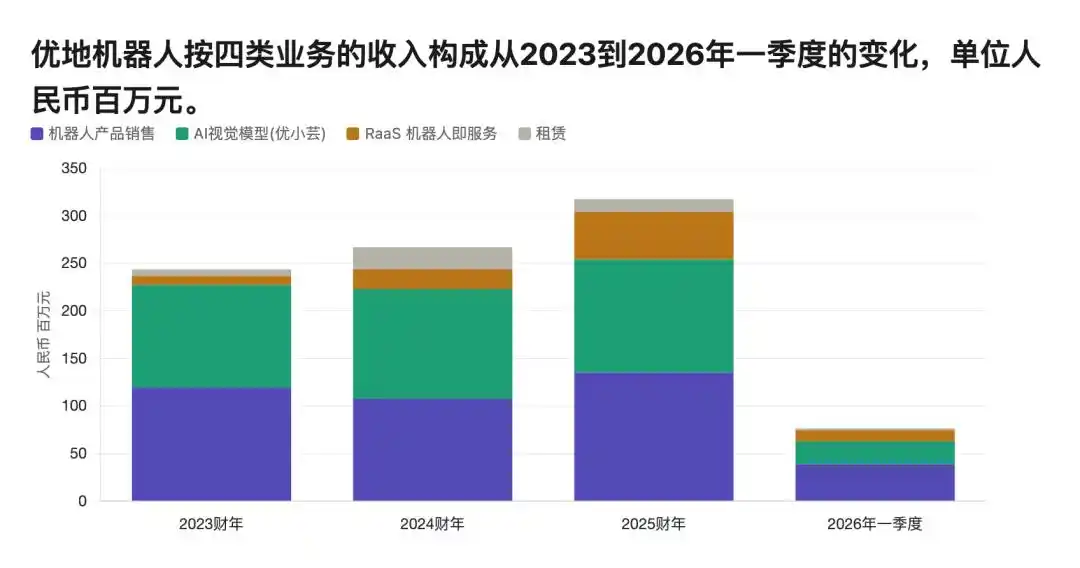
As of March 2026, UTen has cumulatively served over 5,100 clients globally and sold over 114,600 robots.
The figure of 114,600 units also needs unpacking.
In 2023, UTen sold 79,140 UT Bee vending robots, of which 79,114 were the low-priced H2 model.
That year, the average selling price of the UT Bee was only 743 yuan, with the H2's lowest price around 500 yuan.
Based on data disclosed in the prospectus, the H2 models sold in 2023 alone accounted for roughly 70% of the company's cumulative robot sales (as of end-March 2026).
These devices clearly do not hold the same commercial value as delivery or cleaning robots priced at tens of thousands of yuan or more.
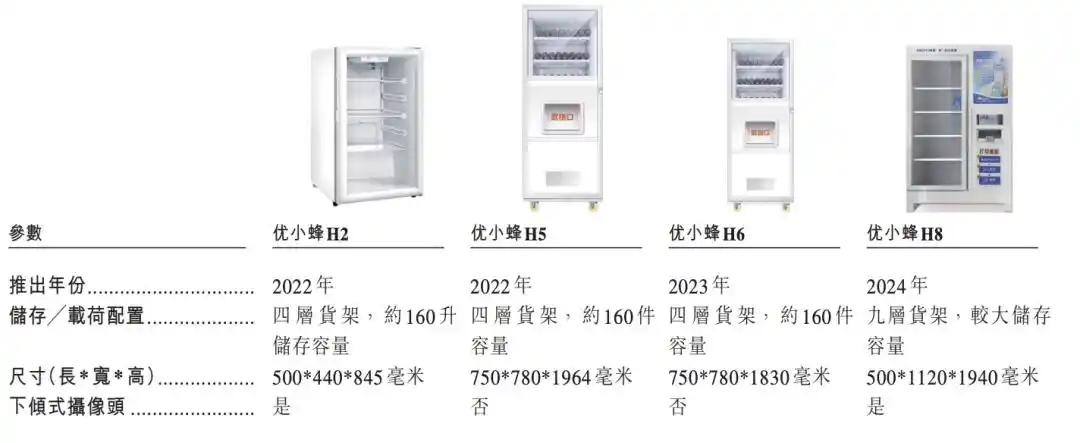
Starting from the second half of 2024, UTen gradually phased out the low-priced H2, shifting to the more functional, higher-priced H8.
In 2025, UT Bee sales dropped to 4,229 units, but the average selling price increased to 13,016 yuan.
This was an active product adjustment to "squeeze out the water."
Abandoning inflated low-price shipment volume in an attempt to gain higher unit prices and better revenue quality. Why did UTen do this?
Hardware Has Thin Profits, But Losses Are Narrowing
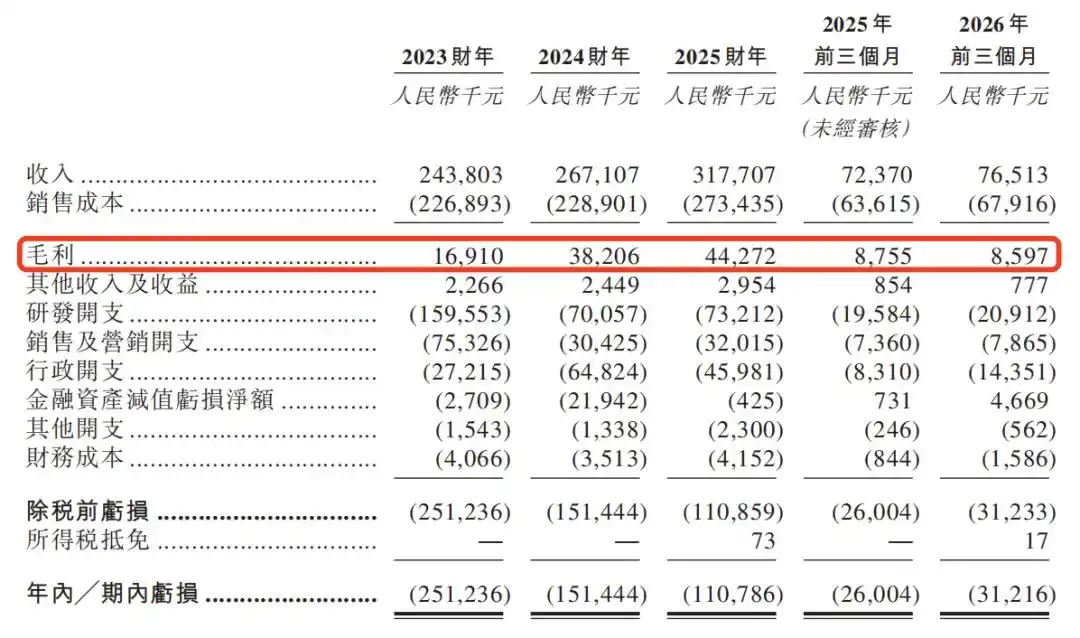
The prospectus shows that from 2023 to 2025, UTen's revenue was approximately 244 million yuan, 267 million yuan, and 318 million yuan, respectively, maintaining growth for three consecutive years.
For the same period, losses before tax were approximately 251 million yuan, 151 million yuan, and 111 million yuan, showing a year-on-year narrowing trend.
Adding the 31.23 million yuan loss in the first three months of 2026, the company's cumulative loss totals about 544 million yuan.
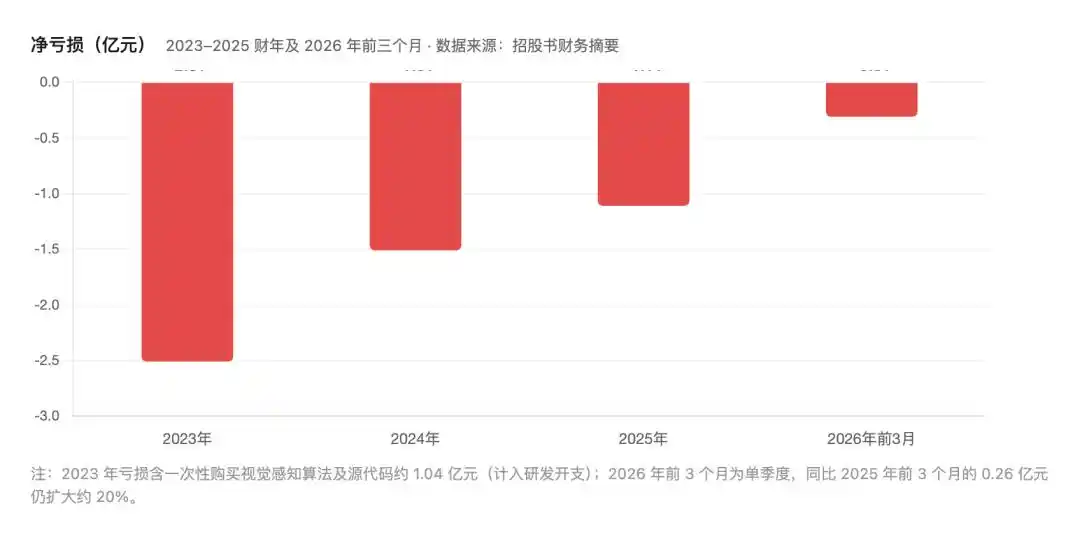
A note here: the 2023 loss had special reasons.
That year, UTen spent approximately 104 million yuan to purchase a set of visual perception algorithms and related source code in a one-off transaction, to accelerate the development of outdoor cleaning robots and AI visual models.
This expense was directly recorded as R&D costs, significantly inflating the 2023 loss.
Therefore, the 251 million yuan loss in 2023 cannot simply be interpreted as the normal annual operating loss.
However, even excluding this one-time expense, UTen is still not profitable.
UTen hasn't reached the point of "losing money on every unit sold." Rather, the gross profit it earns is not enough to sustain the company.
In 2025, UTen's revenue was 318 million yuan, generating a gross profit of about 44.27 million yuan. According to QbitAI's calculations, the company's overall gross margin for that year was approximately 13.9%.
By business segment:
- Robot product sales gross margin: 8.3%;
- AI visual model solutions gross margin: 18.9%;
- RaaS gross margin: 5.1%;
- Leasing services gross margin: 58.8%.
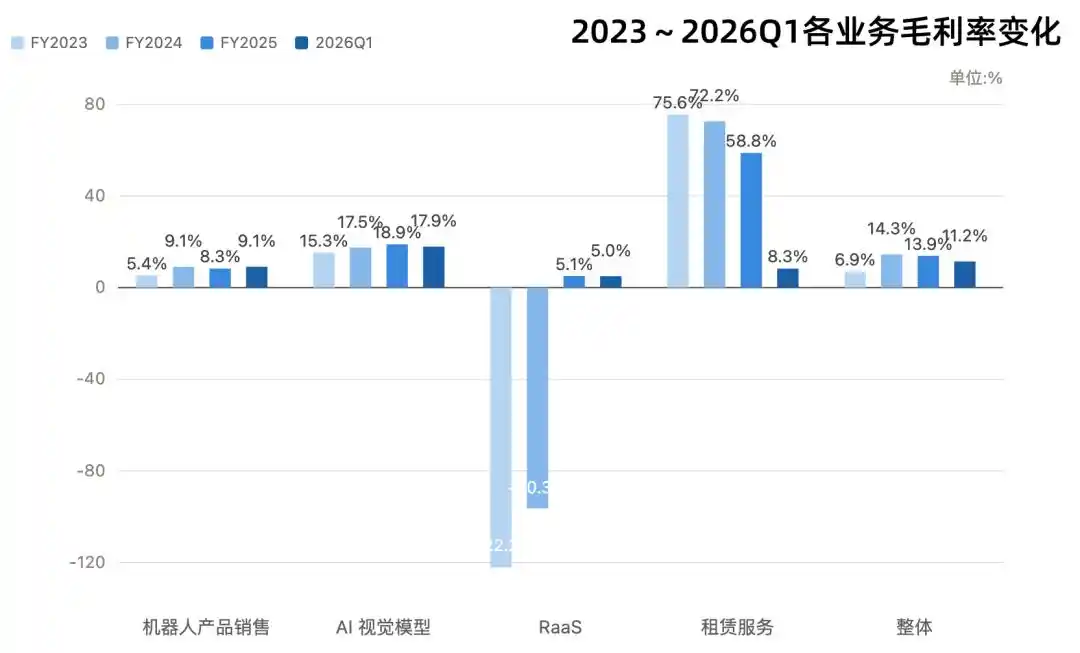
Leasing appears to be the most profitable, but in 2025, leasing only contributed 13.63 million yuan in revenue, accounting for 4.3% of total revenue—too small a volume to significantly change the overall profitability picture.
Meanwhile, the largest segment, robot product sales, has a gross margin of only 8.3%.
The prospectus provides a general explanation for gross margin fluctuations: changes in product mix, market competition, and economies of scale not yet fully realized.
From 2023 to 2025, UT Sister sales increased from 2,016 units to 2,851 units, but the average selling price dropped from 20,112 yuan to 13,438 yuan, a decrease of about one-third over two years.
In the first three months of 2026, the average price further fell to 11,138 yuan.
Sales are growing, but prices are getting cheaper, indicating that the hotel delivery robot market has entered a phase of more intense homogeneous competition.
Juxtaposed against the annual gross profit (44.27 million yuan) is UTen's R&D expenditure reaching 73.21 million yuan in 2025.
This means that even without considering sales, administrative, and financing costs, the company's entire annual gross profit couldn't even cover its R&D expenses.
Additionally, UTen had about 32.02 million yuan in sales and marketing expenses, 45.98 million yuan in administrative expenses, and 4.15 million yuan in financing costs in 2025.
This is the direct reason for the company's losses:
It's not about having no revenue, nor are products completely without gross profit. Rather, the current revenue scale and gross profit level are still insufficient to support the R&D and organizational costs.
This is a common situation among robot companies.
The good news is, the company's operational efficiency has improved.
From 2024 to 2025, UTen's revenue grew by 18.9%, while total operating expenses decreased from 189 million yuan to 154 million yuan, a drop of 18.4%; the ratio of operating expenses to revenue also fell from 70.6% to 48.5%.
Although in the first three months of 2026, the trend reversed slightly, with operating expenses growing 12.2% year-on-year, faster than revenue growth, the main reasons were related to increased listing expenses and professional service fees.
The financial data above shows that UTen has passed the stage of most severe losses but hasn't yet entered a stable state where revenue grows while losses shrink rapidly in sync.

Beyond paper profits, cash collection is another challenge.
From 2023 to 2025, the company's net cash outflow from operating activities was approximately 197 million yuan, 138 million yuan, and 98.84 million yuan, respectively.
The outflow decreasing year by year is a positive sign.
Meanwhile, UTen's accounts receivable increased from 41.60 million yuan at the end of 2023 to 125 million yuan at the end of 2025.
The accounts receivable turnover days increased from 67 days to 127 days, 165 days, and further reached 181 days in the first three months of 2026.
181 days is roughly half a year.
UTen typically grants customers credit terms of 60 to 90 days, with major customers sometimes receiving up to 120 days.
The actual collection period significantly exceeding contractual credit terms means that after delivering products and services, it's taking longer and longer for the money to return to the company's accounts.
Losses are not uncommon among robot companies filing for listing, so a company's potential cannot be judged solely by net loss.
But compared to similar listed companies, UTen's 13.9% overall gross margin is indeed not high.
Ultimately, it must find ways to increase the gross margin of robot products, expand recurring service revenue, and turn booked revenue into cash faster.
The 'Little Smart' Veterans Set Out Again
This prospectus also details the leadership team of UTen Robot, which is almost the original crew from UTStarcom (China).
Five co-founders: Lu Ying, Gu Zhenjiang, Xia Ge, Luo Pei, Liu Dazhi. The first three are all veterans of UTStarcom.
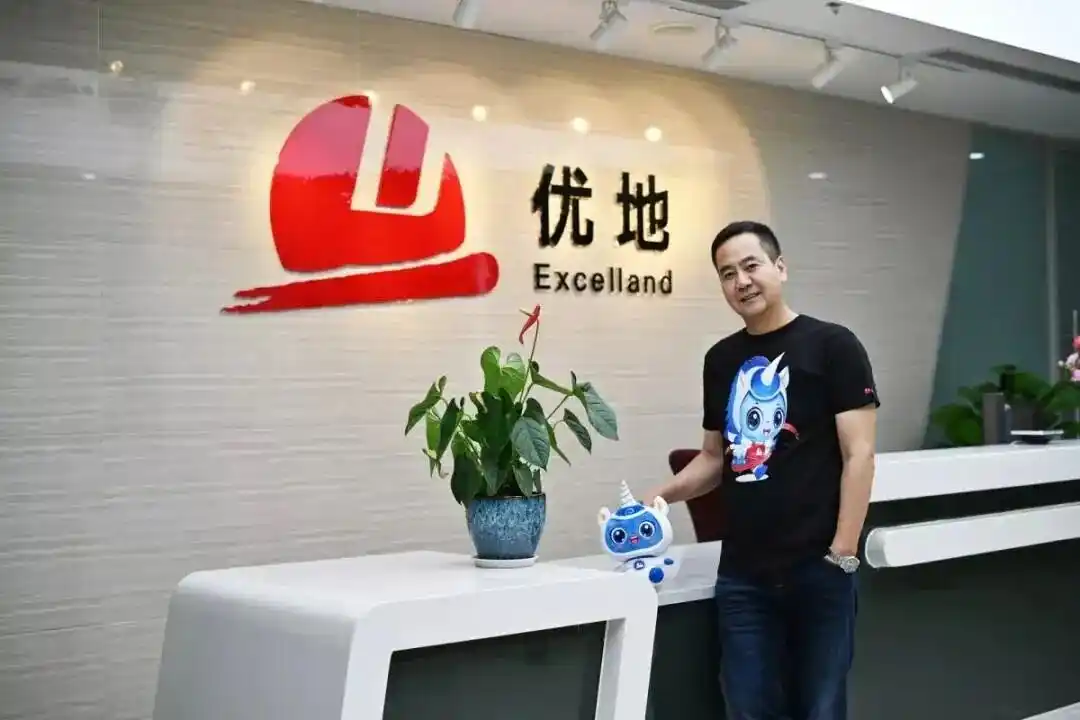
Lu Ying, 63 years old, Chairman and CEO of UTen Robot, previously served as Chairman and President of UTStarcom.
△
Gu Zhenjiang, 52 years old, President and General Manager of UTen. From 2002 to 2013, he served as Product Director at UTStarcom Communications Co., Ltd.
Xia Ge, R&D Vice President of UTen. According to Qixinbao, he previously worked at UTStarcom, responsible for algorithm and carrier-grade software system architecture development, from the original terminal division technical team.
The other two co-founders, Liu Dazhi (also Vice President) and Luo Pei (also R&D Vice President), are primarily responsible for system piloting and comprehensive testing.
Additionally, Liu Wei, Executive Director, Vice President, and Board Secretary of UTen, also worked at UTStarcom (China) for 9 years.
Clearly, this is a collective transformation of the old UTStarcom team.
Recall those days, riding on the popularity of its flagship product "Little Smart," UTStarcom was once immensely successful, with its market cap even surpassing Cisco's at one point.
However, the march of time is ruthless.
With the issuance of 3G licenses in China in 2009, the Little Smart had to complete frequency clearance and network shutdown, marking the end of its golden era.

During the same period, a group of professionals who emerged from UTStarcom also began seeking new paths.
Transitioning to service robots might seem far from communication equipment, but the underlying commercial capabilities share common ground.
They are not businesses solvable by just an app or an algorithm. Instead, they involve hardware-software integration, requiring component procurement, supply chain management, production quality control, as well as large-scale deployment, system integration, and after-sales maintenance.
Precisely this ability to commercialize complex systems is what the "Little Smart" veterans are most familiar with.
Before the IPO, the five co-founders and related shareholding platforms form the single largest shareholder group, collectively controlling 33.40% of UTen's shares.
Roughly estimating based on the pre-IPO post-money valuation of 3.84 billion yuan, this corresponds to a paper wealth of about 1.28 billion yuan.
The external shareholder list is also notable, essentially linking UTen's main usage scenarios.
As of the filing, Legend Capital-related entities hold 8.02%; Alibaba-affiliated Lazada (holds 7.90%); Hainan Yunfeng (holds 6.40%); SenseTime (holds 5.89%).
Additionally, entities related to Huazhu Group, BTG Hotels, GreenTree Hospitality, and iFlytek also appear on UTen's shareholder list.

This industrial capital ecosystem has two sides.
It can help UTen quickly find clients, scenarios, and partners. But it's worth continuous attention to see how much of the company's orders come from open market competition versus introductions from shareholders and industrial partners.
From September 2016 to July 2025, UTen completed 13 pre-IPO financing rounds, raising approximately 989 million yuan cumulatively.
Notably, UTen is applying through the Hong Kong Stock Exchange's Chapter 18C pathway for Specialist Technology Companies.
This is a listing channel specifically designed for "hard-tech companies that are not profitable in the short term."
However, tolerating losses does not mean this is a shortcut to listing without thresholds.
To list successfully, UTen must still meet a series of requirements including minimum expected market capitalization, revenue thresholds, and R&D investment ratios.
One More Thing
Looking at the extended timeline, UTen has actually progressed quite steadily over the past decade:
2013: Company founded;
2014: Began providing robot central control unit R&D services;
2015: Officially commenced robot product and solution R&D;
2016: First-generation indoor delivery robot "UT Sister" launched;
2018: Outdoor delivery robot "UT Guy" deployed;
2022: Cleaning robot "UT Aunt" launched; company selected as a national-level "Little Giant" specialized and sophisticated enterprise;
2023: AI visual platform "UT Cloud" commercialized, began "selling eyes" externally......
According to data from Frost & Sullivan, by 2025, UTen had become China's third-largest commercial service robot product and solutions company, with a market share of 8.9%; ranking fifth globally with a share of 4.1%.
The top player in the Chinese market held a 12.0% share, the second held 10.3%, and UTen (8.9%) trailed the leaders by only 3.1 percentage points.
This is also the most compelling part of UTen's prospectus.
A company that once earned tens of billions in revenue with the Little Smart didn't rest on its laurels when the old era ended. Its executives started from scratch, spending over a decade to re-enter the global top five in the robotics sector.
The prospectus also outlines five directions for the IPO proceeds: increasing R&D, expansion and acquisitions, sales and marketing, repaying loans, and supplementing working capital.
Half is money for the fight, half is money to survive.
This story of veterans fighting a comeback battle is quite compelling.
This article is from WeChat public account "QbitAI" (ID: QbitAI), author: Tian Yanlin