Two Funding Rounds Secured in 40 Days, Embodied Data Practitioner Enters the Arena

marsbitPublished on 2026-08-12Last updated on 2026-08-12

Abstract

Investment news outlet learned on August 12th that ScaleForce, an Embodied AI data infrastructure company, has raised two funding rounds within 40 days from investors including top domestic embodied AI industry players, Hengxu Capital, and Capital Today. Established less than three months ago, ScaleForce has already secured a multi-million-yuan data order from its lighthouse customer, TaShi Zhihang. It has also established collaborations with multiple world model companies, leading embodied intelligence hardware manufacturers, and industry solution providers. Founder Guo Jiangliang believes that the competition in embodied intelligence has entered its second phase, which focuses on data and intelligence. ScaleForce aims to enable data to flow through the entire lifecycle of physical AI, fostering infinite intelligence within the physical world. The immense popularity of embodied intelligence contrasts sharply with a severe shortage of high-quality, real-world interactive data needed for training. Unlike large language models that can scrape training material from the internet, embodied AI requires multimodal physical interaction data involving vision, touch, joint trajectories, object mechanics, and environmental temporal alignment, which must be collected in the real world. The industry faces challenges such as uncontrollable data quality, insufficient scale, and poor data generalization across different robotic platforms. ScaleForce addresses these issues with its core p...

The war of embodied intelligence has reached the data front.

Investors have learned that today (August 12), embodied intelligence data infrastructure company Scapepoint Technology (SCALEFORCE) has disclosed its first funding round for the first time: completing two rounds within 40 days, with investors including top domestic embodied intelligence industry players, Hengxu Capital, and Kylin Capital.

Established for less than three months, Scapepoint Technology has rapidly entered its operational phase: the lighthouse customer Taishi Zhihang's multimillion-yuan data order is in full swing, and collaborations have been established with multiple world model companies, leading embodied intelligence hardware manufacturers, and industry solution providers... The commercialization flywheel is accelerating.

"The competition in embodied intelligence has entered the second half, which focuses on data and intelligence." This is the real landscape Guo Jiangliang observes and the reason he chose to start this business. As he stated, what Scapepoint Technology aims to do is to enable data to run through the entire lifecycle of physical AI, cultivating infinite intelligence within the physical world.

How Hot Embodied Intelligence Is, How Scarce Data Is

The bustling scene is still vivid—reviewing the first half of 2026, domestic financing in the embodied intelligence sector totaled 93.5 billion yuan, a fivefold increase compared to the same period last year.

However, how hot embodied intelligence is, how scarce data is. An industry consensus is that an embodied large model capable of achieving general autonomous abilities requires at least tens of millions of hours of high-quality, real interaction data. Yet, as of early 2026, the total global available high-quality physical interaction data amounted to only about 500,000 hours—a gap exceeding 99%.

Unlike large language models that can scrape training materials from the internet, embodied intelligence requires multimodal physical interaction data involving vision, touch, joint trajectories, object mechanics, and environmental temporal alignment—these data cannot be obtained online and must be collected in the real world.

Even more challenging is that the industry faces three major dilemmas: uncontrollable data quality—low spatiotemporal alignment accuracy of multimodal data, inability to monitor anomalies in real-time; insufficient data scale—inability to manage collection devices at scale, low automation levels; poor data generalization capability—severe OOD (Out-of-Distribution) problems, nearly impossible cross-hardware reuse.

This is precisely the opportunity Guo Jiangliang saw when founding Scapepoint Technology—the competition in embodied intelligence is essentially a competition of data. Whoever can establish a moat in data infrastructure will gain the initiative in this race.

Through Scapepoint Technology, we see one answer: redefining the infrastructure of physical AI from the data source.
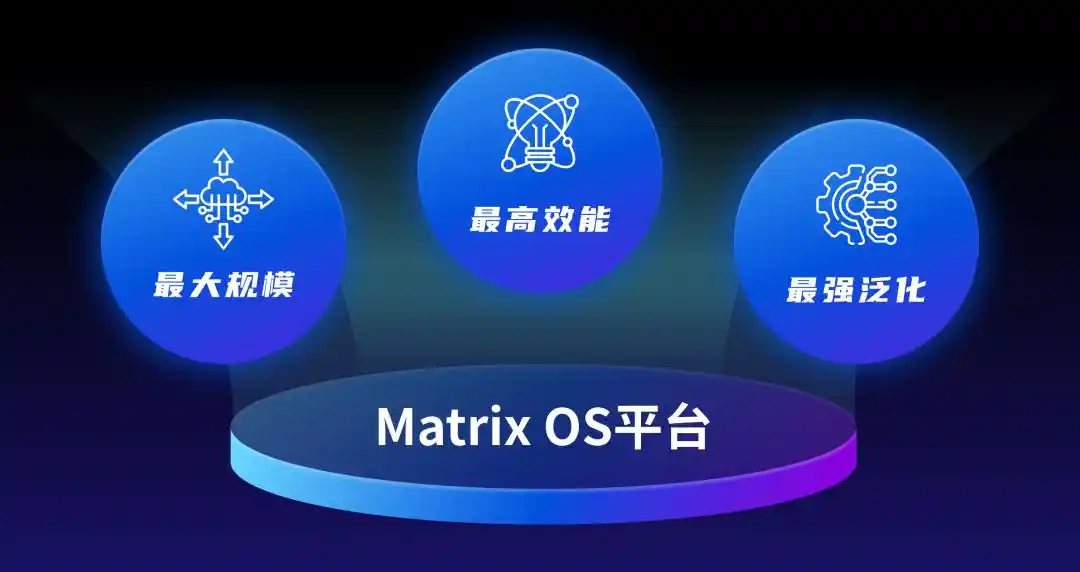
Currently, Scapepoint Technology has built the physical AI operating system MatrixOS. Among its components, the ADA (Action-Data Alignment) data generalization engine aims to solve the problem of cross-hardware data reuse. According to real-machine, multi-scenario evaluations, its success rate has jumped from 65% to 92%.

On the other end is data production efficiency. Scapepoint Technology has independently developed the GDP (Global-Deep-Proactive) data quality engine, which continuously optimizes data collection strategies through information entropy analysis, posterior probability estimation, action semantic analysis, and Bayesian active learning, achieving a data usability conversion rate of 80%, the highest level domestically.

On the data collection front, Scapepoint Technology has built a global-scale physical AI data production network. The platform supports unified management and scheduling of hundreds of thousands of data collection nodes worldwide, with an end-to-end automation level exceeding 95%. Furthermore, Scapepoint Technology adheres to a human-centric data collection paradigm, pioneering the development of a sub-millisecond multi-sensor time-synchronized data collection kit globally, capable of synchronously collecting multimodal data on a large scale, including vision, touch, force sensation, and behavior.

In simple terms, MatrixOS is more like a "production system" built around embodied intelligence data: the front end connects to the real physical world to continuously acquire data; the middle handles data processing, cleaning, generalization, and management; the back end then delivers data to models, robots, and specific application scenarios.

Once this chain is truly operational, data is no longer a one-time project delivery but can continuously enter the next round of training, generating new data, ultimately forming a data flywheel. It is reported that Scapepoint Technology is building the world's largest and lowest-cost high-quality data production and distribution network. Once established, the scale effect and cost advantage of data will become its strongest competitive moat.

Industry Window

Just Secured a Multimillion-Yuan Order

When will robots truly enter thousands of households?

At present, the fervor for embodied intelligence is undeniable. As the industry begins to enter the scaling phase, data collection, cleaning, generalization, management, and distribution are gradually becoming an independent industrial segment.

This is precisely the position Scapepoint Technology has chosen. Based on its fully developed MatrixOS platform, for hardware manufacturers, Scapepoint can provide targeted scenario data; for world model companies, it can provide real physical interaction data; for industry clients, it can build data closed loops around specific tasks.

This neutral positioning allows Scapepoint Technology to meet the robust demand from all segments of the industrial chain. Currently, the company has secured a multimillion-yuan data order from Taishi Zhihang—through the service of "targeted scenario data collection + MatrixOS platform data processing," assisting Taishi Zhihang's A-series robots in successfully entering multiple operational scenarios within Aptiv's factories.

Simultaneously, Scapepoint Technology has established deep cooperative relationships with multiple world model companies, including ZhiZaiWuJie, leading embodied intelligence hardware manufacturers, and industry solution providers. It has also joined the Huawei Ascend Computing Ecosystem, becoming one of the first global open-source contributors of embodied intelligence/world model data and algorithm pipelines for Ascend. Furthermore, the company has established deep frontier exploration collaborations in embodied intelligence with Peking University and Beihang University, jointly exploring the next generation of embodied intelligence technology boundaries.

Facing the overseas market's demand for high-quality real-scenario data, Scapepoint Technology's international layout has also been substantively initiated. It has assembled an overseas business team led by senior Southeast Asian operations and sales experts to advance overseas market business closure and partner network construction.

Yet, outsiders remain curious: how has a company less than three months old achieved such speed?

Although the face is new, behind Scapepoint Technology stands a team with profound accumulated experience—Founder Guo Jiangliang is a founding member of
Baidu Intelligent Cloud
and incubated from scratch several core products such as Baidu Cloud MapReduce, the machine learning platform, enterprise AI middleware, and industrial inspection cloud, leading the team to achieve business breakthroughs in strategic industries including industry, finance, energy, and power, accumulating tens of billions in revenue.

Later, he served as the Technical Vice President of the AI+manufacturing enterprise InnovationQizhi, where he fully constructed the industrial large model and industrial embodied intelligence technology system, experiencing the company's journey from startup to IPO. Throughout his career, a distinct hallmark of Guo Jiangliang has been his deep involvement at the forefront of Data & AI Infra technology and business.

Chief Scientist Alex holds a Ph.D. from the Institute of Computational Linguistics at Peking University and previously served as a core member at Meta AI and Huawei Noah's Ark Lab. He led the design of China's first-generation trillion-parameter-level MoE architecture LLM and participated in the entire process from data formulation and code development to underlying operator optimization, possessing profound reserves in cutting-edge algorithm technology and an international perspective.

Additionally, Chief Revenue Officer Victor has led enterprises to achieve nearly 1 billion yuan in sales performance and has deep accumulated experience in the domestic AI, large model, and embodied intelligence ecosystems; Chief Product Architect Angel has led the design, development, and implementation of multiple sets of enterprise-level data platform products.

With the three pieces of technology, product, and commercialization assembled, a team of long-time acquaintances and colleagues, possessing both cutting-edge technical vision and commercial operating experience, has been formed, becoming the foundation for Scapepoint Technology's product capabilities. As Guo Jiangliang puts it, "The biggest characteristic of our team is that we have fought battles together in the past, shouldered responsibilities side by side—we are all industry practitioners and serial entrepreneurs who have hands-on experience with data and driven business performance."

At present, the timing is becoming increasingly critical. As this year is publicly recognized by the industry as the "Year of Embodied Data," Guo Jiangliang led the team to decisively enter the fray. And the industry generally believes that the period from 2027 to 2029 may become a crucial window for the large-scale commercialization of humanoid robots. If robots see large-scale deployment in the coming years, then the data infrastructure that appears to be in its early stages today will also experience a true explosion.

A wave of heat is surging forward. Unitree Technology's IPO on the STAR Market is imminent, followed by a long queue of other IPOs. Years later, embodied intelligence is finally at the moment of realization. And the next journey presents a time window for embodied data that cannot be missed.

This article is from the WeChat public account "Investment Community" (ID: pedaily2012), author: Wu Qiong


Trending Cryptos

Related Questions

QWhat is Yuan Dian Technology (SCALEFORCE) and what milestone did it recently announce?

AYuan Dian Technology (SCALEFORCE) is a company focusing on embodied intelligent data infrastructure. It recently announced the completion of two rounds of financing within 40 days, backed by investors including top domestic embodied intelligence industry players, Hengxu Capital, and Kailian Capital.

QWhat core problem does Yuan Dian Technology's MatrixOS platform aim to solve for the embodied intelligence industry?

AThe MatrixOS platform aims to solve the critical data shortage and quality issues in embodied intelligence. It provides a comprehensive system for managing the entire data lifecycle — from high-quality multi-modal physical interaction data collection and processing to data generalization and distribution — addressing problems like poor data quality, insufficient scale, and lack of generalization across different robotic systems.

QWhat specific technological advantages or innovations has Yuan Dian Technology developed, as mentioned in the article?

AYuan Dian Technology has developed key innovations including: the ADA (Action-Data Alignment) data generalization engine, which improves cross-system data reuse success rates; the GDP (Global-Deep-Proactive) data quality engine for optimizing data collection, achieving high conversion rates; and a globally scalable data production network with highly automated, human-centric data collection suites that achieve sub-millisecond multi-sensor synchronization.

QWho is the founder of Yuan Dian Technology and what is his relevant background?

AThe founder of Yuan Dian Technology is Guo Jiangliang. He was a founding member of Baidu Intelligent Cloud, where he incubated several core products. Later, he served as the Technical Vice President at Innovation Qizhi, building industrial large-scale models and embodied intelligence systems. His career has been centered on cutting-edge data and AI infrastructure technology and business.

QAccording to the article, what is the significance of the current period for the embodied data industry?

AThe current period is considered the 'Embodied Data Starting Year.' The article suggests that the window from 2027 to 2029 may be critical for the large-scale commercialization of humanoid robots. Consequently, the data infrastructure needed to train these robots, which is currently in its early stages, is poised for significant growth and is seen as a crucial, time-sensitive opportunity for the industry.

Related Reads

The Last Mile of Stablecoins: MoneyGram Connects Crypto Wallets to Cash Outlets in Over 170 Countries

Stablecoins have revolutionized cross-border payments with speed and low cost, but a fundamental barrier remains: converting digital money into physical cash in most parts of the world. On August 11th, global remittance giant MoneyGram announced its "MoneyGram Ramps" crypto-cash service is now live on the Solana blockchain. This allows developers, via a simple API, to connect their applications to MoneyGram's network of nearly 500,000 cash agent locations across over 170 countries. Users can now walk into a local MoneyGram agent to convert their USDC into local currency cash or use cash to purchase USDC for their wallets. Solana wallet Rift is the first to integrate the service. MoneyGram, founded in 1940 and historically second only to Western Union in global remittance volume, was privatized in 2023. Since then, it has accelerated its shift into a fintech platform, opening its compliance capabilities, cash network, and settlement infrastructure as services for developers. Its involvement with crypto is not new, having previously partnered with Ripple, Stellar, and Circle, and even issuing its own stablecoin, MGUSD, on Stellar in 2026. The Ramps API solves a critical physical obstacle to stablecoin adoption. While a USDC transfer from New York to Lagos takes seconds and costs cents on-chain, the recipient often lacks a bank account to access the funds. MoneyGram's extensive physical agent network, prevalent in regions like Sub-Saharan Africa, Southeast Asia, and Latin America, bridges this gap, connecting on-chain dollars to the offline cash-based economy. No crypto-native company could replicate this network quickly. MoneyGram chose Solana for its multi-chain expansion due to its extremely low transaction fees (often less than a cent) and fast confirmation times, making it ideal for small-value, frequent remittances. Solana's developer ecosystem is also geared toward consumer-facing applications. This partnership represents a pragmatic path for stablecoins in everyday remittances. Users don't need to understand blockchain or have a bank account; they simply visit a trusted local agent. The underlying settlement shifts from SWIFT to Solana, but the user experience remains familiar. The true path to stablecoin adoption is being paved by an 85-year-old remittance company, using its physical network to solve the "last mile" problem for crypto.

marsbit13m ago

The Last Mile of Stablecoins: MoneyGram Connects Crypto Wallets to Cash Outlets in Over 170 Countries

marsbit13m ago

How to Adapt to Frequent Miraculous Comebacks After the New Patch When Trading in Polymarket's LOL Section?

After recent League of Legends (LoL) game updates, major comebacks and unpredictable outcomes have become more frequent, making trading on Polymarket's LoL prediction markets challenging. This article analyzes the causes and offers adaptation strategies. The author, a longtime LoL fan turned Polymarket trader, notes that post-update, a large early-game gold lead no longer guarantees victory. The current meta reduces the decisive weight of economy, emphasizing instead "advantage conversion, resource trading, team composition strength, and teamfight execution." Key systemic changes aiding comebacks include: Bounty/Kill Gold Compensation, Strategic Objective Bounties, and reduced Baron Nashor rewards. Furthermore, the prevalence of mage picks in the bot lane, instead of traditional marksmen (ADC), can lower sustained damage and teamfight reliability in the late game, contributing to throws. For more successful trading, the article suggests: 1. **Choosing the Right Region:** Prioritize major regions (LPL, LCK, LEC, LCS) where matches matter for World Championship qualification or player contracts, leading to more serious play. Avoid or be extremely cautious with regions like CBLOL (Brazil), TCL (Turkey), and North American Challengers, citing high volatility and potential for unreliable outcomes. 2. **Trading Strategies:** * **Placing Orders:** Use limit orders below market price for strong favorites. In close matchups, consider placing equal low-ball bids (e.g., 25-40 cents) on both sides of a match; if both fill for a total under $1, you secure profit regardless of the winner. Exploit team "power spikes" by buying low before their composition peaks and selling high. * **Timely Selling:** The most crucial lesson is to take profits. If you buy the early-leading team at a low price (e.g., 50-60 cents), sell most of your position (e.g., 75%) at 85-90 cents to lock in gains and avoid a potential comeback zeroing your position. * **Position Sizing:** Practice strict risk management. Do not exceed 5-10% of your capital per match and avoid "tilting" or chasing losses after a few bad trades. In summary, adapting to the new meta requires understanding that early advantages are less stable. Success depends on analyzing team compositions, player form, and regional contexts, combined with disciplined order placement, profit-taking, and capital preservation. The next patch in August is expected to revive traditional ADCs, potentially shifting the dynamics again.

Odaily星球日报25m ago

How to Adapt to Frequent Miraculous Comebacks After the New Patch When Trading in Polymarket's LOL Section?

Odaily星球日报25m ago

Strategy CEO Announces Plan to Resume Bitcoin Purchases This Year, With Buying Volume 25 Times Selling Volume

Strategy CEO Announces Resumption of Bitcoin Purchases This Year, Buy-to-Sell Ratio at 25x In a FOX Business interview, Phong Le, CEO of Strategy (formerly MicroStrategy), stated the company plans to resume its Bitcoin acquisition strategy within the current year. This ends a pause in buying that began in May. Le revealed that since the start of the year, Strategy has purchased approximately 175,000 bitcoins while selling around 7,000, making its buy volume about 25 times its sell volume. The company remains the world's largest corporate holder of Bitcoin, with 840,447 BTC, representing roughly 4% of the circulating supply. Le explained that recent sales were used to fulfill capital obligations under a newly approved framework, including paying preferred stock dividends, funding share buybacks, and bolstering the company's US dollar reserves, which now stand at about $4.7 billion. This move marks a shift from the firm's previous "never sell" mantra, which had contributed to its market premium. The change in strategy and the associated financial pressures led to a significant drop in its stock price (MSTR) and a rating downgrade from JPMorgan. The CEO framed the company's role as the "JPMorgan of the crypto economy," emphasizing its long-term goal of increasing the amount of Bitcoin per MSTR share. The announcement signals the return of a major institutional buyer to the Bitcoin market, which could provide price support. It is also viewed as a micro-indicator of recovering institutional confidence, suggesting the company believes the most acute phase of liquidity pressure has passed.

marsbit47m ago

Strategy CEO Announces Plan to Resume Bitcoin Purchases This Year, With Buying Volume 25 Times Selling Volume

marsbit47m ago

ArthurHayes新文:押注日元升值,ENA未来几月或涨5至10倍

Arthur Hayes argues that the Japanese Yen is significantly undervalued and posits that its appreciation against the US Dollar is imminent. He outlines three potential mechanisms for this shift, dismissing the first two—the Bank of Japan raising interest rates and domestic institutions selling foreign assets—as politically or economically unfeasible. He identifies the third and preferred method: the Japanese Ministry of Finance (MOF) using its holdings of US Treasuries as collateral in the Fed's FIMA repo facility to borrow US dollars, then selling those dollars to buy Yen in the forex market. Hayes believes US Treasury Secretary Bessant has signaled support for this approach, which requires the Fed's Foreign Currency Subcommittee, led by Chairman Walsh, to remove lending limits on the FIMA tool. Hayes asserts that implementing this "Scheme 3" would lead to a significant expansion of US dollar liquidity. He predicts this surge in liquidity will act as a catalyst, driving up the prices of assets like Bitcoin and physical gold. Within the crypto space, he views Ethereum (ETH) as undervalued and singles out Ethena's ENA token as a speculative play with potential for 5-10x gains in the coming months, contingent on a recovery in Bitcoin basis trades that would boost demand for its USDe stablecoin. He concludes that investors should watch for the Fed's rule change as the key trigger for these market movements.

marsbit59m ago

ArthurHayes新文:押注日元升值,ENA未来几月或涨5至10倍

marsbit59m ago

Trading

Spot

Hot Articles

How to Buy DATA

Welcome to HTX.com! We've made purchasing DATA Network (DATA) simple and convenient. Follow our step-by-step guide to embark on your crypto journey.Step 1: Create Your HTX AccountUse your email or phone number to sign up for a free account on HTX. Experience a hassle-free registration journey and unlock all features.Get My AccountStep 2: Go to Buy Crypto and Choose Your Payment MethodCredit/Debit Card: Use your Visa or Mastercard to buy DATA Network (DATA) instantly.Balance: Use funds from your HTX account balance to trade seamlessly.Third Parties: We've added popular payment methods such as Google Pay and Apple Pay to enhance convenience.P2P: Trade directly with other users on HTX.Over-the-Counter (OTC): We offer tailor-made services and competitive exchange rates for traders.Step 3: Store Your DATA Network (DATA)After purchasing your DATA Network (DATA), store it in your HTX account. Alternatively, you can send it elsewhere via blockchain transfer or use it to trade other cryptocurrencies.Step 4: Trade DATA Network (DATA)Easily trade DATA Network (DATA) on HTX's spot market. Simply access your account, select your trading pair, execute your trades, and monitor in real-time. We offer a user-friendly experience for both beginners and seasoned traders.

1.7k Total ViewsPublished 2026.07.01Updated 2026.07.01

How to Buy DATA

Discussions

Welcome to the HTX Community. Here, you can stay informed about the latest platform developments and gain access to professional market insights. Users' opinions on the price of DATA (DATA) are presented below.

活动图片