Trend in US Stocks: Jensen Huang's One Sentence Triggers $47 Billion Surge; Google Raises Funds for First Time in 20 Years

marsbitPublished on 2026-06-03Last updated on 2026-06-03

Abstract

U.S. markets reached record highs on June 2nd, but the real story was the intensifying AI arms race, now pivoting from chip supremacy to a scramble for capital to fund compute infrastructure. The day highlighted two stark realities: Nvidia CEO Jensen Huang's endorsement of Marvell Technology as the "next trillion-dollar company" at Computex fueled a historic 32.5% surge, adding $47 billion to its value. Conversely, Alphabet announced its first equity raise in two decades—an $80 billion plan—signaling that even its massive cash flow can't keep pace with soaring AI capital expenditures, forecast to exceed $180 billion in 2026. While the S&P 500 closed above 7,600 for the first time, led by tech and semiconductor stocks (SOXX +5.79%), sector performance was mixed. Alphabet's 4% drop dragged down communications services, illustrating market anxiety over the unsustainable cost of the AI buildout. Hewlett Packard Enterprise soared 25% on stellar earnings, proving AI's benefits extend beyond chip designers to infrastructure providers. Beneath the index highs, concerns linger over extreme concentration in a few AI stocks and geopolitical tensions. The focus now shifts to upcoming economic data, particularly Friday's nonfarm payrolls, which could challenge the market's current "ignore rates, chase AI" mentality.

Written by: Trend Research

The AI arms race is shifting from "whose chips are stronger" to "who can turn money into computing power the fastest."

On June 2nd, the market witnessed both sides of this coin: a casual remark by Jensen Huang at Taipei Computex drove Marvell's market value up by $47 billion in a single day, while Alphabet was forced to issue new shares for the first time in 20 years, raising $80 billion, all because its current profits can no longer feed the appetite of AI infrastructure.

One was being deified on stage, the other was selling its lifeblood off stage. This is the true face of the technology industry in 2026.

Major Indices All Close Higher: Three Major Indices Hit New Highs

On Tuesday, the S&P 500 closed at 7,609.78 points, up 0.13%, breaking the 7,600 mark for the first time in history. The Dow rose 229 points to 51,307.79 points (+0.45%). The Nasdaq edged up 0.03% to 27,093.90 points, also setting a new record.

But the most impressive performance wasn't from the large-cap blue chips. The Russell 2000 rose 0.90%, the biggest gainer among the four major indices. The resilience of small-cap stocks hints that market confidence in the economic fundamentals is not confined to those few trillion-dollar giants.

The S&P 500 has now risen for ten consecutive weeks (including the previous week). The last time such a winning streak occurred was during the AI rally that started at the end of 2024.

Semiconductor Night: Computex Becomes Wall Street's Remote Trading Floor

The semiconductor sector on June 2nd was ignited remotely by the Taipei Computex conference.

Marvell Technology (MRVL): +32.52%, marking the company's largest single-day gain in 26 years.

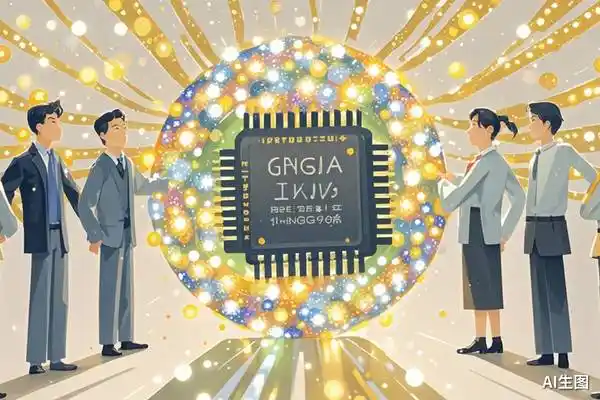
While sharing the stage with Marvell CEO Matt Murphy at Computex, Jensen Huang dropped six words: "The next trillion-dollar company, ladies and gentlemen."

This wasn't small talk. In March of this year, Nvidia invested $2 billion in Marvell, buying into its network interconnect and custom chip capabilities. Huang's logic is straightforward: when a computing task is split across thousands of chips in a data center, the "nervous system"—the interconnection network—between the chips becomes as critical as the chips themselves. Marvell builds that nervous system.

Calculated based on the closing price, Marvell's market cap soared from approximately $192 billion to around $255 billion in a single day. It's still five times away from the "trillion-dollar club," but the market clearly took Huang's words as a roadmap, not a courtesy.

The day before, on the opening day of Computex, Huang launched the RTX Spark superchip, Nvidia's first-ever PC processor, directly entering the territory of Intel and AMD, sending NVDA up 4.8%. By the next day, capital flowed from Nvidia to its "ecosystem members." This rotation itself tells a story: the marginal returns on AI investment are spreading from the "core" to the "periphery."

Hewlett Packard Enterprise (HPE): Surged about 25%, its largest single-day gain since going public.

HPE's Q2 earnings report was a classic "across-the-board beat": adjusted EPS of $0.79, versus Wall Street expectations of $0.53, beating by 49%; revenue of $10.68 billion, versus expectations of $9.79 billion, up 40% year-over-year. Server business revenue was $5.45 billion, nearly 20% above expectations.

More critical was the guidance: HPE raised its full-year EPS outlook from $2.30-$2.50 directly to $3.35-$3.45, adding a full dollar at once. CEO Antonio Neri said HPE is "two years ahead of its long-term financial plan."

HPE has been viewed by the market as a "relic of the old era" for years. The significance of this earnings report is that AI dividends aren't exclusive to Nvidia and chip designers; the "brick-and-mortar" server sellers are also feasting on the times.

Alphabet Sells Its Lifeblood to Raise Funds: The Anxiety Behind the $80 Billion Share Sale

The biggest bearish catalyst of the day was Alphabet's announcement of an $80 billion equity financing plan. The last time Google's parent company issued new shares was shortly after its 2005 IPO; it hasn't touched this path for 20 years.

The financing proceeds in three steps: Berkshire Hathaway subscribed to $10 billion at a discount (Class A shares at approximately $351.81 per share, Class C shares at approximately $348.20 per share); $30 billion will be issued publicly via underwriters (half of which are mandatory convertible preferred shares); an additional $40 billion will be sold gradually in the secondary market starting in Q3 via an "at-the-market" (ATM) offering.

Alphabet's reason was simple: capital expenditures in 2026 will exceed $180 billion, double that of 2025, and will be even higher in 2027. Even with Google's advertising and cloud businesses generating hundreds of billions in cash flow annually, it's no longer enough.

GOOGL closed down about 4% for the day. The market's worry isn't "Google is short of money," but rather "AI is burning money faster than anyone imagined." According to Goldman Sachs estimates, total AI-related capital investment by US tech giants in 2026 will reach approximately $800 billion. When even Alphabet needs to dilute equity to raise funds, investors are forced to recalculate: Is the endgame of this arms race winner-takes-all, or will everyone be crushed by capital expenditures together?

An investment banker offered a pithy remark to Al Jazeera: For hyperscale companies, "underinvestment is an existential threat, while overinvestment is merely expensive." This sentence accurately captures the current industry psychology: better to burn more money than fall behind.

Sector Divergence: AI Boosts Tech, Alphabet Weighs on Communications

Among the 11 sectors of the S&P 500, seven rose and four fell.

The Technology and Utilities sectors led the gains. Tech stocks were boosted by Marvell and HPE, with the semiconductor sub-sector generally strengthening (SOXX +5.79%). The rise in the Utilities sector was somewhat unexpected; after a 4.9% pullback in May, some funds started buying on the dip.

The Communication Services sector was the weakest of the day, completely dragged down by Alphabet alone. Alphabet holds too large a weighting in the S&P 500 Communication Services sector; once it falls, the entire sector struggles to recover.

The Financial sector fell slightly. Despite the new highs in the broader market, bank stocks are awaiting guidance from Friday's Nonfarm Payrolls and JOLTS Job Openings data.

Market Sentiment: Fear Index Runs Low, but Undercurrents Swirl

The VIX volatility index remained in the 15-16 range, near its yearly low, suggesting calm on the surface. The 10-year Treasury yield rose slightly to 4.46%, up 1 basis point from the previous day.

But two signals warrant caution:

First, Julian Emanuel of Evercore ISI pointed out, "Record concentration in AI names is driving the index higher while masking the side effects of a challenging geopolitical and consumer backdrop." Micron, Nvidia, and Alphabet contributed over 40% of the S&P 500's EPS revisions this year. There's a clear disconnect between the index's strength and the performance of the majority of stocks.

Second, on the geopolitical front, Iran announced the suspension of indirect talks with the US on the opening day of Computex, protesting Israeli military actions in Lebanon. Oil prices spiked during the session. Although Trump later stated on Truth Social that talks were still "progressing rapidly," the Middle East situation remains a Sword of Damocles hanging over the market.

After-Hours Focus: Palo Alto Networks Earnings Beat Expectations

Palo Alto Networks (PANW) rose over 8% in after-hours trading. The company's Q1 results exceeded analyst expectations, once again validating the resilience of cybersecurity spending. This is a positive signal for the tech sector at Wednesday's open.

Another heavyweight on the horizon: Broadcom (AVGO) will report Q2 earnings on June 3rd (Wednesday). As another key player in custom AI chips, Broadcom's results will directly test the market's most pressing question: "Is demand for AI chips still accelerating?"

Weekly Calendar: Nonfarm Payrolls to Determine Market's Next Move

Before Tuesday's open, April JOLTS Job Openings data was released, expected to remain stable around 6.8 million. But the real battle is on Friday with the May Nonfarm Payrolls report.

Market expectations for Fed policy are subtly shifting. With inflation stubbornly high, the probability of a rate hike by year-end has exceeded 60%. If the jobs data comes in strong, Treasury yields could rise further, putting pressure on high-growth stocks reliant on low-rate valuations.

But for now, the market's choice is: disregard interest rates for now, chase AI first.

Related Questions

QWhat event triggered Marvell Technology's massive single-day stock surge of 32.52%?

AMarvell Technology's stock surged 32.52% after Nvidia CEO Jensen Huang referred to Marvell as "The next trillion-dollar company" during a joint appearance with Marvell's CEO at the Computex event in Taipei. This endorsement, coupled with Nvidia's recent $2 billion investment in Marvell for its networking and custom chip capabilities, drove the rally.

QWhy did Alphabet announce an $80 billion equity financing plan, and what was the market's reaction?

AAlphabet announced an $80 billion equity financing plan to fund its massive AI infrastructure investments, as its 2026 capital expenditures are projected to exceed $180 billion, double that of 2025. This was the company's first stock offering in 20 years. The market reacted negatively, with GOOGL shares falling approximately 4% on the day, reflecting concerns over the immense and accelerating costs of the AI arms race.

QWhat was a key takeaway from Hewlett Packard Enterprise's (HPE) Q2 earnings report?

AA key takeaway from HPE's Q2 earnings report was its massive earnings beat and significantly raised guidance. Adjusted EPS of $0.79 crushed the $0.53 estimate, and revenue of $10.68 billion surpassed the $9.79 billion forecast. Most notably, HPE raised its full-year EPS guidance from $2.30-$2.50 to $3.35-$3.45, indicating that it was benefiting significantly from the AI-driven demand for servers.

QAccording to the article, what market dynamic is the sector rotation from Nvidia to companies like Marvell illustrating?

AThe sector rotation from Nvidia to companies like Marvell illustrates that the marginal returns on AI investments are now spreading from the "core" players (like chip designers) to the "peripheral" or supporting players in the ecosystem, such as those providing critical networking and infrastructure components.

QWhat major economic report is highlighted as the key determinant for the market's next move, and why is it important?

AThe May Non-Farm Payrolls (jobs) report on Friday is highlighted as the key determinant for the market's next move. Its importance stems from the market's shifting expectations for Federal Reserve policy. With inflation remaining high, a strong jobs report could push bond yields higher, potentially putting pressure on high-growth stocks that rely on low interest rates for their valuations.

Related Reads

ETH Bull and Bear Views Compilation: Can Ethereum's Value Flow Back to ETH?

Titled "ETH Bull and Bear Views: Can Ethereum's Value Flow Back to ETH?", this article synthesizes the current heated debate around Ethereum's native token, ETH, following Bankless co-founder David Hoffman's decision to sell his entire ETH holdings. The **bullish case**, represented by figures like Tom Lee (BitMine CEO) and Raoul Pal, argues that ETH's core thesis remains intact. They contend Ethereum is the essential, secure, and neutral foundational layer for future finance—encompassing stablecoins, RWA, DeFi, L2s, and Agentic AI. Bulls bet on ETH's long-term revaluation as institutional adoption of on-chain finance grows, with significant buying activity from entities like BitMine and Consensys cited as evidence. Conversely, the **bearish perspective**, led by Hoffman and analysts like Markus Thielen, questions ETH's value capture mechanism. They acknowledge Ethereum's network success but argue that the value created by L2s, DeFi, and applications does not sufficiently accrue to the ETH token itself. Bears point to ETH's prolonged underperformance versus the broader crypto market, lack of traditional cash flows, weakening "ultrasound money" narrative, and apparent institutional retreat (e.g., Harvard Management Company exiting its ETH ETF position) as key concerns. The debate highlights a pivotal shift: ETH is no longer just a community belief asset. The central question is whether ETH can transition from being a "**used infrastructure**" to a "**continuously bought and held core asset**" as more value enters the Ethereum ecosystem. The market is now critically examining the direct link between network growth and ETH's value.

marsbit36m ago

ETH Bull and Bear Views Compilation: Can Ethereum's Value Flow Back to ETH?

marsbit36m ago

Crypto is dead, Perps are forever

The crypto industry is shifting from a focus on creating native assets (like altcoins and protocol tokens) to becoming a "global asset pipeline." Native cryptocurrencies, except for Bitcoin, are seen as failing in their value storage and utility promises, with demand driven largely by speculation. Attention and liquidity are now moving toward real-world assets (RWAs) like U.S. stocks, bonds, gold, and oil traded on-chain via perpetual contracts (Perps). Stablecoins like USDT and USDC set the precedent, proving blockchain's core strength is efficient global settlement and transfer, not inventing new monetary systems. Meanwhile, assets like Ethereum and many DeFi tokens struggle as their narratives weaken against tangible traditional assets and the rapid real-world progress of AI. Perpetual contracts have emerged as a pivotal innovation. They simplify trading by offering pure price exposure to any asset, bypassing complexities of ownership, custody, and traditional market hours. Projects like Hyperliquid gained traction by combining CEX-like efficiency with on-chain transparency, capitalizing on post-FTX distrust, macroeconomic volatility, and the surge in demand for 24/7 stock trading. In conclusion, while the era of speculative native "crypto assets" may be over, perpetual contracts persist as the industry's most potent financial instrument—transforming all assets into globally accessible, constantly tradable instruments centered on price speculation.

marsbit42m ago

Crypto is dead, Perps are forever

marsbit42m ago

Tencent, Alibaba, ByteDance in a Battle for the Skill Store

Skill is becoming a key concept in the AI field, essentially serving as a structured "instruction manual" for AI Agents that specifies tool calls, decision logic, and output standards. This allows Agents to execute predefined tasks. As the number of Skills grows, distribution platforms have emerged. Major tech companies are swiftly entering this space. In March, Tencent, Alibaba, and ByteDance launched Skill stores within their respective Agent platforms. Subsequently, players like Zhipu AI, Meituan, and Xiaohongshu joined the fray. This competition for the "Skill store" is fundamentally a battle for the AI-era user entry point; whoever controls distribution controls the users. While ByteDance's Coze has experimented with paid Skills, most platforms offer them for free. The real value lies not in the stores themselves but in using them to attract and retain users within an ecosystem, driving revenue from services like cloud computing, model calls, or advertising. The landscape features three main player types: 1) **Internet giants** (e.g., Alibaba, ByteDance, Tencent, Meituan), leveraging Skills to drive traffic and monetize through their broader ecosystems (cloud services, transactions, ads). 2) **Large model companies** (e.g., Zhipu AI, Moonshot AI), using Skill stores to increase user engagement and monetize model API calls. 3) **Content platforms** (e.g., Xiaohongshu), treating Skills as a new content format to generate traffic and ad revenue. However, transforming Skill stores into a sustainable business faces significant hurdles. Key challenges include: the **difficulty in pricing Skills** due to inconsistent outputs across different models and contexts; **lack of cost transparency** (varying token consumption); **security risks** like Skill poisoning; and the **absence of standardized protocols** for development and evaluation. Unlike standardized mobile apps, Skills are often personalized workflows resistant to uniformity, which hinders the establishment of a reliable review and monetization system akin to the App Store. While there is genuine user demand for paid Skills—particularly in enterprise (e.g., contract review) and certain personal productivity scenarios—current platforms offer developers limited and unpredictable distribution. The future of Skill stores depends on overcoming these standardization, evaluation, and safety challenges to make acquiring a Skill as straightforward as downloading an app. For now, the stores function more as display shelves than robust marketplaces.

marsbit42m ago

Tencent, Alibaba, ByteDance in a Battle for the Skill Store

marsbit42m ago

The Crypto Scene Is Dead, Perpetual Swaps Are Eternal

The crypto industry is undergoing a fundamental shift. The era defined by minting novel, native digital assets (altcoins) is fading. These assets, lacking real-world cash flows or clear value, are losing relevance as attention and capital flow elsewhere. Two powerful external forces are reshaping the space. First, traditional assets like U.S. stocks, bonds, gold, and oil are being tokenized and traded on-chain. Second, the explosive growth of AI, with its tangible products, has overshadowed crypto's once-dominant "future narrative." This marks a critical pivot: crypto is transitioning from being a "factory for new assets" to becoming a "global conduit for existing assets." Its validated utility is not complex financial reinvention but efficient global settlement, transfer, and trading—the original promise of blockchain. Stablecoins like USDT and USDC exemplify this, offering faster dollar movement rather than replacing it. Consequently, native ecosystems like Ethereum face profound challenges. While still crucial infrastructure, ETH struggles to capture value as users interact with Layer 2s or trade traditional assets without needing to hold it. DeFi's grand narrative of rebuilding finance has narrowed to core needs like cheap transfers and deep liquidity. The true breakout innovation is the perpetual contract (Perp). It brilliantly bypasses the complexities of direct asset ownership (custody, compliance, dividends) by creating pure price exposure. Users can speculate on the price movement of *any* asset—NVIDIA, gold, oil—24/7, globally, and with leverage. This "price casino" model, while risky and ethically fraught, delivers unmatched liquidity and accessibility. Projects like Hyperliquid succeeded not by inventing new mechanics but by perfecting the timing and execution of this model. Key drivers included making on-chain Perps feel like centralized exchanges, post-FTX trust migration towards transparency, and rising demand to trade macro assets and equities round-the-clock. In conclusion, the crypto world's most enduring successes are the dollar (via stablecoins), Bitcoin, and trading. Its new frontier is not creating alternative assets but providing a seamless, perpetual trading layer—a new API—for the world's existing financial system. The age of native altcoins is over; the age of perpetual synthetic exposure has begun.

Odaily星球日报51m ago

The Crypto Scene Is Dead, Perpetual Swaps Are Eternal

Odaily星球日报51m ago

Trading

Spot
Futures

Hot Articles

How to Buy ONE

Welcome to HTX.com! We've made purchasing Harmony (ONE) simple and convenient. Follow our step-by-step guide to embark on your crypto journey.Step 1: Create Your HTX AccountUse your email or phone number to sign up for a free account on HTX. Experience a hassle-free registration journey and unlock all features.Get My AccountStep 2: Go to Buy Crypto and Choose Your Payment MethodCredit/Debit Card: Use your Visa or Mastercard to buy Harmony (ONE) instantly.Balance: Use funds from your HTX account balance to trade seamlessly.Third Parties: We've added popular payment methods such as Google Pay and Apple Pay to enhance convenience.P2P: Trade directly with other users on HTX.Over-the-Counter (OTC): We offer tailor-made services and competitive exchange rates for traders.Step 3: Store Your Harmony (ONE)After purchasing your Harmony (ONE), store it in your HTX account. Alternatively, you can send it elsewhere via blockchain transfer or use it to trade other cryptocurrencies.Step 4: Trade Harmony (ONE)Easily trade Harmony (ONE) on HTX's spot market. Simply access your account, select your trading pair, execute your trades, and monitor in real-time. We offer a user-friendly experience for both beginners and seasoned traders.

3.7k Total ViewsPublished 2024.03.29Updated 2026.06.02

How to Buy ONE

Discussions

Welcome to the HTX Community. Here, you can stay informed about the latest platform developments and gain access to professional market insights. Users' opinions on the price of ONE (ONE) are presented below.

活动图片