Tác giả: Ryan Yoon
Biên dịch: Deep Tide TechFlow
Deep Tide TechFlow ghi chú: Thị trường đang bước vào chu kỳ suy giảm, sự nghi ngờ đối với thị trường tiền mã hóa đang gia tăng. Tiger Research cho rằng, lần này khác với trước đây: những đợt giá lạnh trong quá khứ được kích hoạt bởi các vấn đề nội bộ (Mt. Gox bị hack, lừa đảo ICO, sự sụp đổ của FTX), trong khi lần tăng giảm này đều do các yếu tố bên ngoài thúc đẩy (sự chấp thuận ETF mang lại thị trường tăng giá, chính sách thuế quan và lãi suất dẫn đến sụt giảm).
Sau quá trình quản lý, thị trường đã phân chia thành ba tầng: khu vực tuân thủ, khu vực không tuân thủ, và cơ sở hạ tầng chia sẻ; dòng tiền không còn chảy theo hiệu ứng "thẩm thấu" (trickle-down) như trước đây. Vốn từ ETF chỉ dừng lại ở Bitcoin, không chảy ra các altcoin.
Thị trường tăng giá tiếp theo cần hai điều kiện: một ứng dụng đột phá (killer app) ra đời từ khu vực không tuân thủ + môi trường vĩ mô chuyển hướng hỗ trợ.
Toàn văn như sau:
Khi thị trường bước vào chu kỳ suy giảm, sự nghi ngờ đối với thị trường tiền mã hóa đang gia tăng. Câu hỏi hiện tại là, liệu chúng ta đã bước vào một mùa đông tiền mã hóa hay chưa.
Quan điểm cốt lõi
- Mùa đông tiền mã hóa tuân theo một trình tự: Sự kiện lớn → Sự sụp đổ niềm tin → Chảy máu chất xám
- Những mùa đông trước đây do vấn đề nội bộ gây ra; biến động hiện tại đều do yếu tố bên ngoài thúc đẩy; không phải là mùa đông cũng không phải là mùa xuân
- Sau quá trình quản lý, thị trường phân chia thành ba tầng: khu vực tuân thủ, khu vực không tuân thủ, cơ sở hạ tầng chia sẻ; hiệu ứng thẩm thấu biến mất
- Vốn từ ETF chỉ dừng lại ở Bitcoin; không chảy ra khỏi khu vực tuân thủ
- Thị trường tăng giá tiếp theo cần ứng dụng đột phá + môi trường vĩ mô hỗ trợ
1. Các mùa đông tiền mã hóa trước đây diễn ra như thế nào?
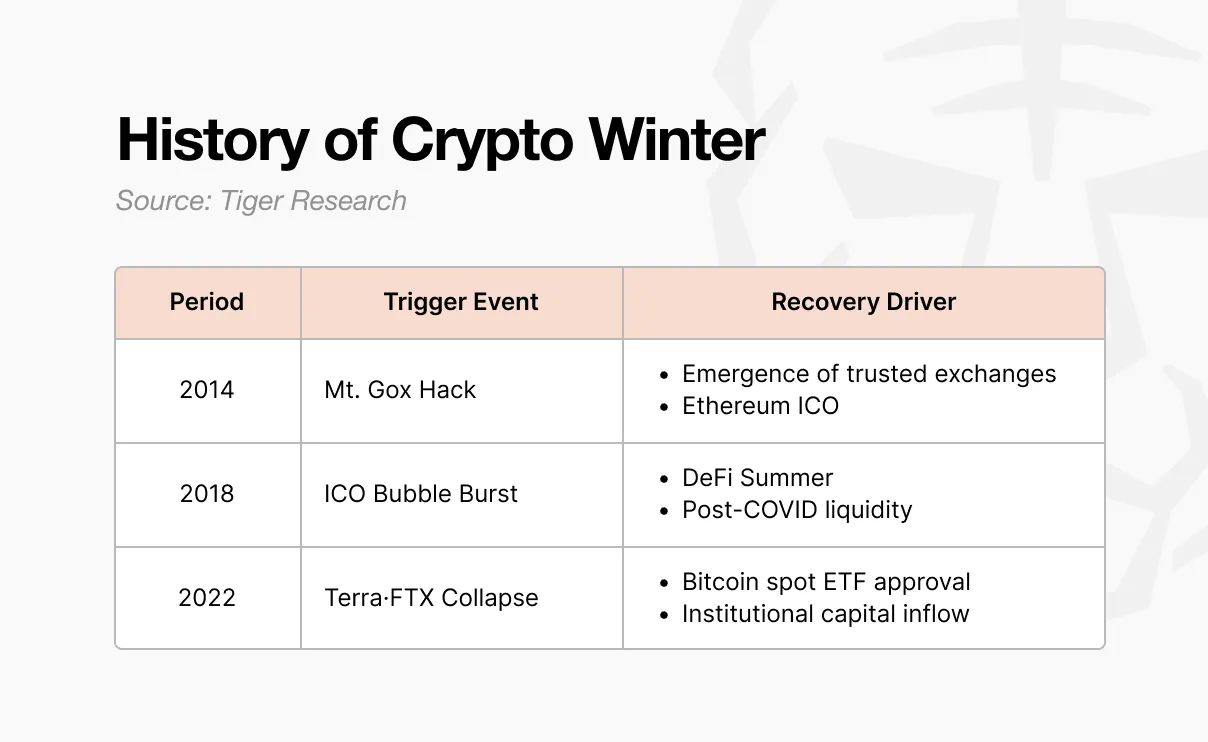
Mùa đông đầu tiên xảy ra vào năm 2014. Mt. Gox là sàn giao dịch xử lý 70% khối lượng giao dịch Bitcoin toàn cầu vào thời điểm đó. Khoảng 85 nghìn BTC đã biến mất trong một vụ tấn công của hacker, niềm tin thị trường sụp đổ. Các sàn giao dịch mới với chức năng kiểm soát nội bộ và kiểm toán xuất hiện, niềm tin bắt đầu được phục hồi. Ethereum cũng bước vào thế giới thông qua ICO, mở ra những khả năng mới cho tầm nhìn và phương thức gọi vốn.
Đợt ICO này đã trở thành ngòi nổ cho thị trường tăng giá tiếp theo. Khi bất kỳ ai cũng có thể phát hành token và gây quỹ, sự bùng nổ năm 2017 đã được châm ngòi. Các dự án chỉ với một bản whitepaper đã gọi được hàng trăm tỷ đổ vào, nhưng hầu hết đều không có nội dung thực chất.
Năm 2018, Hàn Quốc, Trung Quốc và Hoa Kỳ trút bỏ các biện pháp quản lý, bong bóng vỡ tung, mùa đông thứ hai đến. Mùa đông này chỉ kết thúc vào năm 2020. Sau COVID, thanh khoản đổ vào, các giao thức DeFi như Uniswap, Compound và Aave được chú ý, dòng tiền quay trở lại.
Mùa đông thứ ba khắc nghiệt nhất. Khi Terra-Luna sụp đổ vào năm 2022, Celsius, Three Arrows Capital và FTX lần lượt phá sản. Đây không chỉ là đợt giảm giá đơn thuần; chính cấu trúc của ngành cũng bị lung lay. Tháng 1 năm 2024, SEC Hoa Kỳ phê duyệt ETF Bitcoin spot, tiếp theo là Bitcoin Halving và chính sách thân thiện với tiền mã hóa của Trump, dòng tiền một lần nữa bắt đầu chảy vào.
2. Mô hình mùa đông tiền mã hóa: Sự kiện lớn → Sự sụp đổ niềm tin → Chảy máu chất xám
Cả ba mùa đông đều tuân theo cùng một trình tự. Một sự kiện lớn xảy ra, niềm tin sụp đổ, nhân tài rời đi.
Nó luôn bắt đầu bằng một sự kiện lớn. Vụ hack Mt. Gox, quản lý ICO, và phá sản FTX sau sự sụp đổ của Terra-Luna. Quy mô và hình thức của mỗi sự kiện khác nhau, nhưng kết quả thì giống nhau. Toàn bộ thị trường rơi vào tình trạng sốc.
Cú sốc nhanh chóng lan rộng thành sự sụp đổ niềm tin. Những người đang thảo luận về việc xây dựng gì tiếp theo bắt đầu nghi ngờ liệu tiền mã hóa có thực sự là công nghệ có ý nghĩa hay không. Bầu không khí hợp tác giữa những người xây dựng biến mất, họ bắt đầu đổ lỗi cho nhau về trách nhiệm.
Sự nghi ngờ dẫn đến chảy máu chất xám. Những người xây dựng đang tạo ra động lực mới trong blockchain rơi vào nghi ngờ. Năm 2014, họ chuyển hướng sang fintech và các công ty công nghệ lớn. Năm 2018, họ chuyển sang các tổ chức và AI. Họ đã đến những nơi có vẻ chắc chắn hơn.
3. Hiện tại có phải là mùa đông tiền mã hóa?
Mô hình của những mùa đông tiền mã hóa trước đây cũng có thể thấy ở hiện tại.
- Sự kiện lớn:
- Chính sách thuế quan của Trump gây chấn động thị trường
- Chính sách lãi suất của Fed chuyển hướng
- Thị trường tiền mã hóa tổng thể giảm
- Sự sụp đổ niềm tin: Tâm lý nghi ngờ lan rộng trong ngành. Trọng tâm chuyển từ việc xây dựng gì tiếp theo sang đổ lỗi lẫn nhau.
- Áp lực chảy máu chất xám: Ngành AI đang phát triển nhanh chóng. Hứa hẹn mức thoái vốn (exit) nhanh hơn và sự giàu có lớn hơn so với tiền mã hóa.
Tuy nhiên, rất khó để gọi đây là mùa đông tiền mã hóa. Những mùa đông trước đây bùng phát từ bên trong ngành. Mt. Gox bị hack, hầu hết các dự án ICO bị phát hiện là lừa đảo, FTX sụp đổ. Ngành công nghiệp tự đánh mất niềm tin.
Bây giờ thì khác.
Việc phê duyệt ETF mở ra thị trường tăng giá, chính sách thuế quan và lãi suất thúc đẩy sự sụt giảm. Các yếu tố bên ngoài đã đẩy thị trường lên, và các yếu tố bên ngoài cũng đã kéo thị trường xuống.
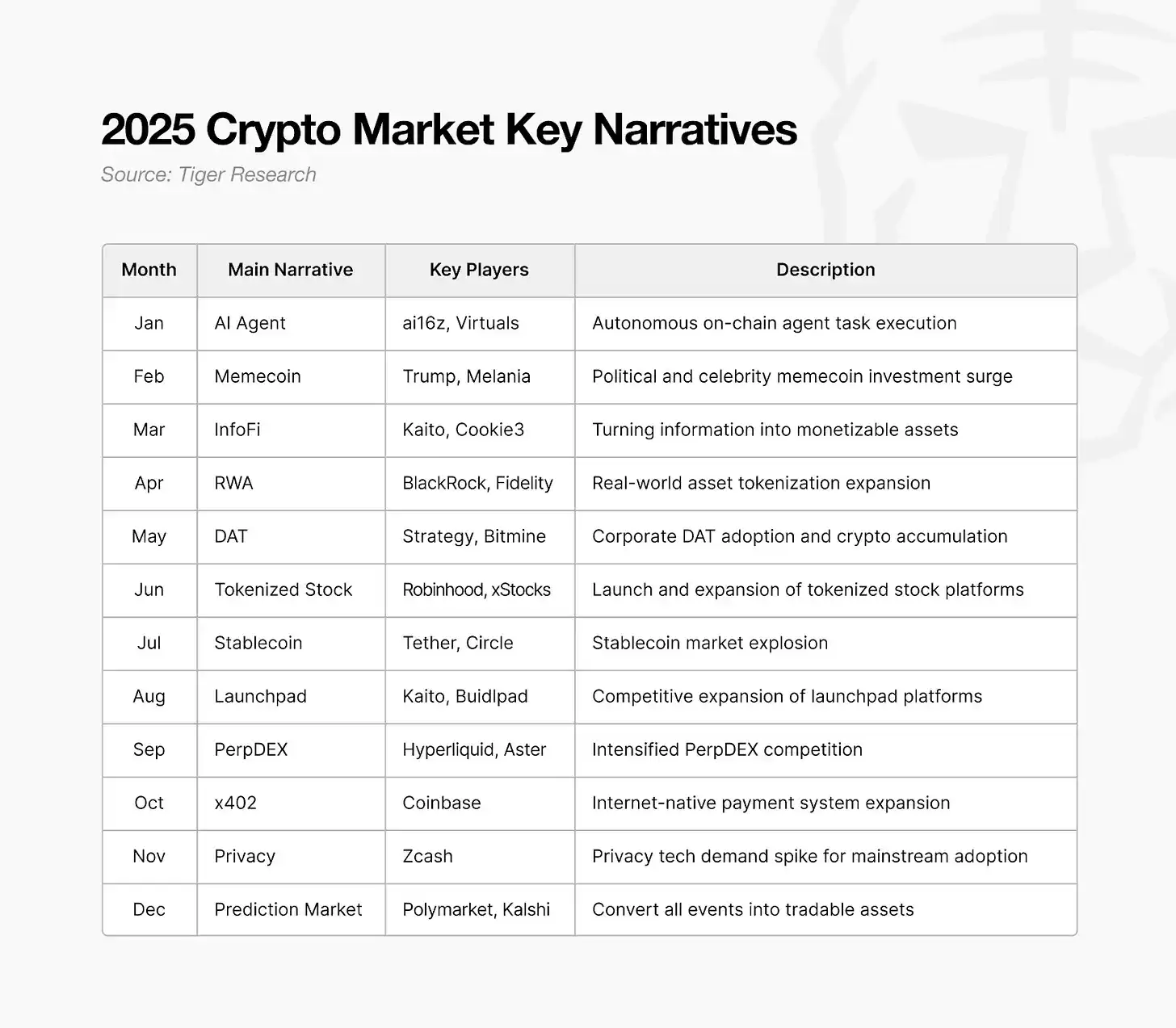
Những người xây dựng cũng không rời đi.
RWA, perpDEX (sàn giao dịch phi tập trung hợp đồng vĩnh viễn), thị trường dự đoán, InfoFi, quyền riêng tư. Các luồng ý tưởng (narrative) mới liên tục xuất hiện, chúng vẫn đang được tạo ra. Chúng chưa kéo được toàn bộ thị trường như DeFi đã làm, nhưng chúng cũng không biến mất. Ngành công nghiệp không sụp đổ; môi trường bên ngoài đã thay đổi.
Chúng ta đã không tạo ra mùa xuân, vì vậy cũng không có mùa đông.
4. Thay đổi cấu trúc thị trường sau quản lý
Đằng sau điều này là sự thay đổi cấu trúc thị trường lớn sau quá trình quản lý. Thị trường đã phân chia thành ba tầng: 1) Khu vực tuân thủ, 2) Khu vực không tuân thủ, và 3) Cơ sở hạ tầng chia sẻ.
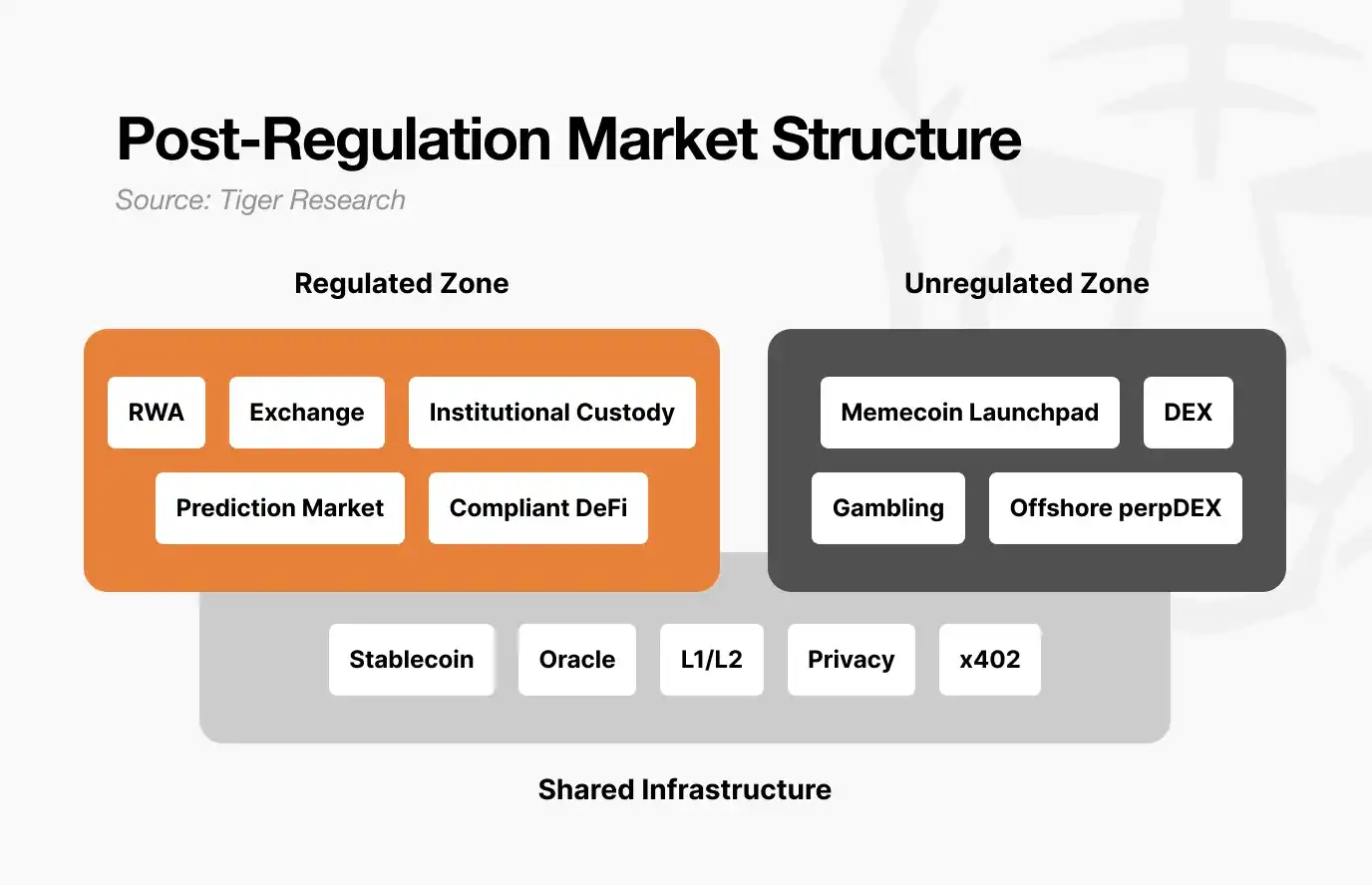
Khu vực tuân thủ bao gồm mã hóa tài sản thực (RWA tokenization), các sàn giao dịch, lưu ký thể chế, thị trường dự đoán và DeFi dựa trên sự tuân thủ. Chúng chấp nhận kiểm toán, thực hiện công bố thông tin và được bảo vệ pháp lý. Tăng trưởng chậm, nhưng quy mô vốn lớn và ổn định.
Tuy nhiên, một khi đã vào khu vực tuân thủ, rất khó để kỳ vọng lợi nhuận bùng nổ như trước đây. Biến động giảm, không gian tăng trưởng bị hạn chế. Nhưng rủi ro giảm giá cũng bị hạn chế.
Mặt khác, khu vực không tuân thủ trong tương lai sẽ trở nên đầu cơ hơn. Rào cản gia nhập thấp, tốc độ nhanh. Tình huống tăng 100 lần trong một ngày, giảm -90% vào ngày hôm sau sẽ xảy ra thường xuyên hơn.
Tuy nhiên, không gian này không phải là vô nghĩa. Các ngành công nghiệp được sinh ra trong khu vực không tuân thủ mang tính sáng tạo, một khi được xác thực, chúng sẽ bước vào khu vực tuân thủ. DeFi đã làm điều này, các thị trường dự đoán hiện đang làm điều này. Nó đóng vai trò là sân chơi thử nghiệm. Nhưng bản thân khu vực không tuân thủ sẽ ngày càng tách biệt với hoạt động kinh doanh của khu vực tuân thủ.
Cơ sở hạ tầng chia sẻ bao gồm stablecoin và oracle. Chúng được sử dụng cả trong khu vực tuân thủ và không tuân thủ. Cùng một USDC được sử dụng để thanh toán RWA cho các tổ chức, cũng được dùng để giao dịch trên Pump.fun. Các oracle cung cấp dữ liệu xác thực cho trái phiếu kho bạc được mã hóa, cũng như thanh lý cho các DEX ẩn danh.
Nói cách khác, khi thị trường phân chia, dòng chảy vốn cũng thay đổi.
Trước đây, khi Bitcoin tăng, altcoin cũng tăng thông qua hiệu ứng thẩm thấu. Bây giờ thì khác. Vốn thể chế thông qua ETF chỉ dừng lại ở Bitcoin, và dừng ở đó. Vốn từ khu vực tuân thủ không chảy vào khu vực không tuân thủ. Thanh khoản chỉ dừng lại ở những nơi giá trị đã được chứng minh. Và ngay cả Bitcoin, so với tài sản rủi ro, vẫn chưa chứng minh được giá trị như một tài sản trú ẩn an toàn (safe-haven asset).
5. Điều kiện cho thị trường tăng giá tiếp theo
Quản lý đã được sắp xếp. Những người xây dựng vẫn đang xây dựng. Vậy thì còn lại hai điều.
Thứ nhất, phải xuất hiện một ứng dụng đột phá mới từ khu vực không tuân thủ. Một thứ gì đó tạo ra giá trị chưa từng tồn tại trước đây, giống như DeFi Summer năm 2020. Các tác nhân AI (AI agents), InfoFi và mạng xã hội trên chuỗi (on-chain social) là những ứng cử viên, nhưng chúng vẫn chưa đạt đến quy mô có thể thúc đẩy toàn bộ thị trường. Quy trình mà các thử nghiệm trong khu vực không tuân thủ được xác thực và bước vào khu vực tuân thủ phải được tạo ra một lần nữa. DeFi đã làm được điều này, các thị trường dự đoán hiện đang làm điều này.
Thứ hai, môi trường kinh tế vĩ mô. Ngay cả khi quản lý được sắp xếp, những người xây dựng đang xây dựng, cơ sở hạ tầng đang tích lũy, nếu môi trường kinh tế vĩ mô không hỗ trợ, không gian tăng trưởng cũng bị hạn chế. DeFi Summer năm 2020 bùng nổ khi thanh khoản được giải phóng sau COVID. Đợt tăng giá sau khi ETF được phê duyệt vào năm 2024 cũng trùng với kỳ vọng giảm lãi suất. Bất kể ngành công nghiệp tiền mã hóa hoạt động như thế nào, nó không thể kiểm soát lãi suất và thanh khoản. Để những thứ mà ngành xây dựng có được sức thuyết phục, môi trường kinh tế vĩ mô phải chuyển hướng.
Một "mùa tiền mã hóa" nơi mọi thứ cùng tăng giá như trước đây khó có thể xuất hiện trở lại. Bởi vì thị trường đã phân chia. Khu vực tuân thủ tăng trưởng ổn định, khu vực không tuân thủ tăng mạnh giảm mạnh.
Thị trường tăng giá tiếp theo sẽ đến. Nhưng nó sẽ không dành cho tất cả mọi người.