The Year's Most Expensive New Stock Hits the Market: Pinson Laser, Bright Prospects Amid Concerns

marsbitPublished on 2026-08-18Last updated on 2026-08-18

Abstract

Annual Most Expensive IPO Debuts: Pinsun Laser's Bright Prospects Shadowed by Concerns Pinsun Laser, dubbed "A-share's first precision laser stock", has made its debut on the STAR Market with a record-high issue price of 186.88 yuan per share this year. Despite the hype, its journey is marked by challenges. The company's allure lies in its "small and beautiful" profile. It issued a small float of only 10 million new shares, boosting its price elasticity and retail investor appeal. Financially, it has shown strong performance with revenue growing at a 68.2% CAGR from 2023 to 2025 and gross margins consistently above 67%. As the domestic leader in precision lasers for quantum technology, it holds a 9.21% global and 16.85% domestic market share in 2024, offering a scarce A-share investment opportunity. Its P/E ratio of 49.42x at issuance was below the industry average, suggesting room for valuation growth. However, Pinsun's path is fraught with hurdles. Its core market—lasers for quantum tech (computing, sensing, communication)—remains a niche, research-driven sector. Global demand is projected to grow at a modest sub-8% CAGR through 2030, constrained by the distant commercialization timeline of quantum computing, which heavily relies on research funding cycles. The company's prestigious clientele, including top global universities, exposes it to funding volatility. It faces intense competition from entrenched giants like Germany's Toptica and the US's Coherent. While Pinsun ...

By | Alpha Factory

The year's most expensive new stock has been listed.

Upon opening, Pinson Laser will officially debut on the STAR Market. As "the first stock in the A-share market for precision lasers," Pinson Laser's issue price per share reached 186.88 yuan, making it the most expensive new stock of the year. In comparison, the most discussed stock on the STAR Market currently, Yushu, has an issue price of 150.8 yuan per share.

Over the past three years, the company's revenue has grown at a compound annual growth rate of 68.2%, with gross margin consistently above 67%. The company is engaged in the R&D, production, and sales of precision lasers, primarily serving fields with grand prospects like quantum technology.

However, before reaching that future, Pinson Laser still faces a series of real-world challenges, including fluctuations in downstream demand and competition from overseas giants.

01 How Did Pinson Laser Become the 'Year's Most Expensive New Stock'?

"Small yet beautiful" is an important reason why Pinson Laser became the most expensive new stock.

"Small" refers to its small float.

In this IPO, Pinson Laser issued only 10 million new shares, making it one of the new stocks with the smallest number of shares issued this year. Calculated at the issue price, the company is expected to raise a total of 1.869 billion yuan.
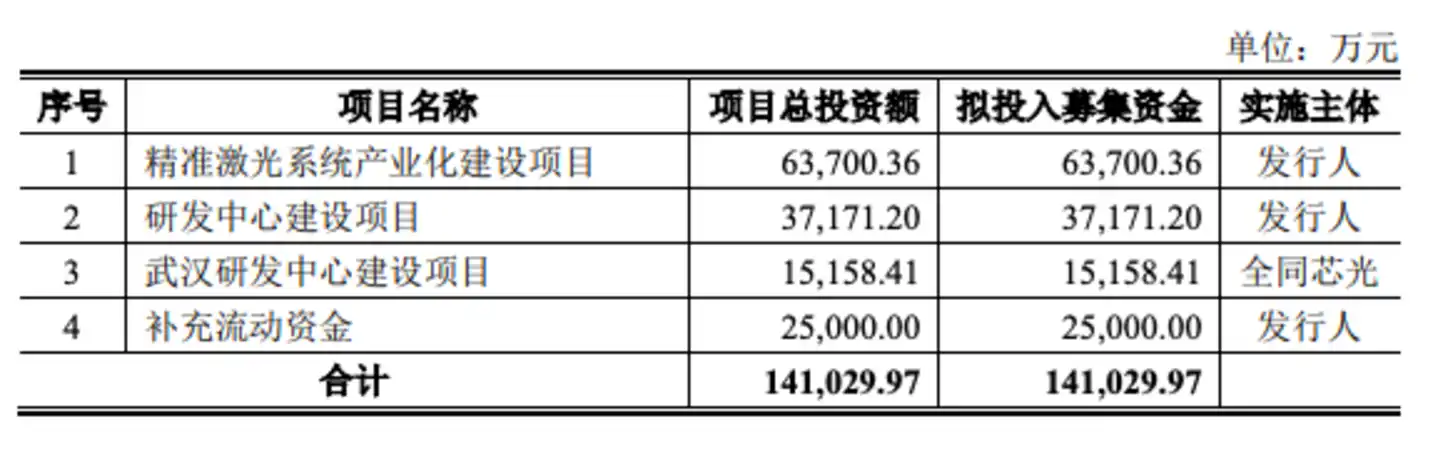
Pinson Laser's proposed fundraising projects are expected to use 1.41 billion yuan of the raised funds; Data source: Prospectus

The small share capital not only pushed up the issue price but also increased the post-listing stock price volatility. Pinson Laser's unrestricted float is only 7.6178 million shares, accounting for 19.04% of the total share capital, corresponding to a float market value of approximately 1.42 billion yuan—this size is also not large within the STAR Market.

At the same time, this makes the subscription threshold quite friendly. The upper limit for online subscription is 2,000 shares, requiring a Shanghai market value of only 20,000 yuan for a full subscription, allowing many retail investors to participate. Consequently, Pinson Laser's lottery winning rate is quite low at only 0.02%.

Pinson Laser's "beauty" refers to its impressive performance.

Pinson Laser's main business is precision lasers, with its core application scenario being the quantum technology field.

In terms of performance, from 2023 to 2025, the company's revenue was 148 million yuan, 292 million yuan, and 418 million yuan respectively, achieving a three-year compound growth rate of 68.2%. During the same period, net profit attributable to shareholders grew from 60.46 million yuan to 159 million yuan, with profit growth largely matching revenue expansion.

Performance growth has also strengthened the company's position in the industry. According to QY Research data, in 2024, Pinson Laser held a 9.21% market share in the global quantum technology laser market and a 16.85% share in the domestic market. In the niche field of precision lasers, Pinson Laser is already the domestic leader.

Furthermore, the company's gross margin has remained stable at a high level between 67% and 70%, indicating that Pinson Laser's growth is driven by genuine demand rather than price competition.

Besides being "small yet beautiful," the valuation premium brought by scarcity is another significant reason why Pinson Laser became the "year's most expensive new stock."

For investors looking to buy into a core hardware player in the quantum technology sector, Pinson Laser is currently almost the only choice in the A-share market. This "one-of-a-kind" scarcity supports the market's acceptance of its high pricing, a logic that has been repeatedly validated on the STAR Market this year.

It's worth noting that Pinson Laser's price-to-earnings (P/E) ratio at issuance is 49.42 times, lower than the industry average P/E ratio (68.04 times). This largely implies that the company's high gross margin has not been fully "priced in."

02 The Road to the Stars and Beyond is Paved with Thorns

Quantum technology is often imbued with "star-reaching" imagination. Whether it's quantum computing, quantum precision measurement, or quantum communication, each direction points toward disruptive technological revolutions. And lasers are indispensable core hardware for these cutting-edge technologies.

But stripping away the conceptual halo, the quantum information laser track where Pinson Laser operates is currently still a niche market dominated by scientific research procurement.

Data from QY Research shows that the global scientific research laser market size in 2024 was approximately $2.147 billion, expected to reach $3.331 billion by 2030, with a compound annual growth rate of less than 8%.

An 8% growth rate might be respectable in the manufacturing sector, but this growth rate clearly cannot support excessively high imaginations.

The reason for the limited market size is straightforward: quantum computing and quantum precision measurement are still mainly in the laboratory stage, with true industrial applications still far off.

Pinson Laser's customer list is quite impressive, covering top-tier quantum research institutions in Europe and America such as Harvard University, University of Colorado, California Institute of Technology, and ETH Zurich.

This client list certainly testifies to the company's technical strength from the side. However, the demand from research institutions is significantly influenced by funding cycles. Orders surge when funding is ample and contract sharply when budgets tighten—a challenge faced by all scientific instrument and equipment manufacturers.

Pinson Laser also frankly admits in its prospectus that if downstream market demand declines or competition increases significantly in downstream application segments, the company may face risks of declining gross margin and operating performance.

Competition from overseas giants is another layer of pressure. The high-end narrow-linewidth precision laser market has long been dominated by overseas manufacturers, with Germany's Toptica and America's Coherent being the traditional powerhouses in this field.

Pinson Laser's technical approach has its own characteristics, adopting a "seed source + fiber amplification + nonlinear frequency conversion + frequency stabilization" architecture, which differs from the traditional schemes of overseas manufacturers. It can achieve narrow linewidth, low-noise laser output across the full spectrum from 177nm to 5000nm. While this route offers advantages in cost and spectral coverage, it still needs time to catch up in terms of brand recognition.

A greater variable lies in the significant uncertainty surrounding the industrialization pace of quantum computing. The industry generally believes that commercial applications for general-purpose quantum computers are at least a decade or more away.

Before that, the primary customers for quantum technology lasers will remain research institutions, with a clearly visible market ceiling. If the industrialization process of quantum computing is slower than expected, Pinson Laser's growth story will need to find new support.

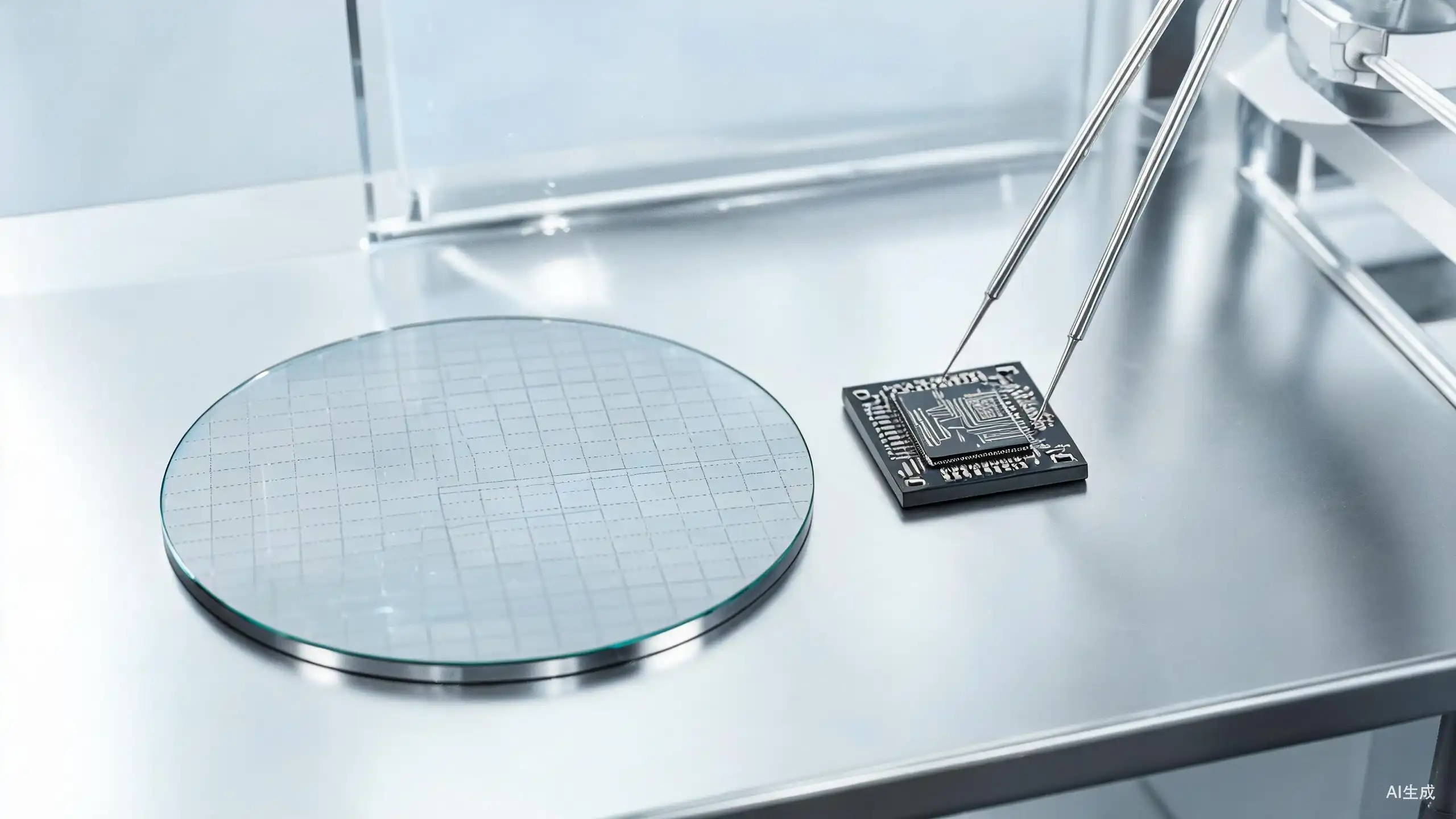
The semiconductor business has been entrusted with high hopes as a second growth curve. Pinson Laser's products have already penetrated semiconductor fields such as wafer fabrication, wafer measurement and inspection, and wafer stealth dicing. From 2023 to 2025, the company's revenue in this field increased from 25.15 million yuan to 104 million yuan.

The semiconductor equipment market is far larger than the scientific research laser market. If Pinson Laser can gain a foothold in the semiconductor field, it would undoubtedly significantly raise the company's business ceiling.

But competition in the semiconductor market is equally fierce. International giants like Coherent and II-VI have deep layouts in the semiconductor laser field. For Pinson Laser to increase its share from 1.98% in the semiconductor sector will be no easy task.

R&D is another test for Pinson Laser. During the reporting period, the company's R&D expenses were 22.12 million yuan, 41.71 million yuan, and 61 million yuan respectively, accounting for 14% to 15% of revenue. This proportion is not low, but the absolute amount pales in comparison to the hundreds of millions of dollars in R&D investment by overseas giants.

It's not hard to see that between the "star-reaching" prospects and revenue lies a long path of industrialization.

For Pinson Laser, focusing on the present is more likely to lead to the shores of the future.

Trending Cryptos

Related Questions

QWhat are the main factors that made Pinzhun Laser the most expensive IPO of the year?

AThe main factors are its 'small but beautiful' characteristics. 'Small' refers to its small float share, which increases price volatility and makes it accessible to retail investors. 'Beautiful' refers to its impressive financial performance, with revenue CAGR of 68.2% over three years and consistently high gross margins above 67%. Additionally, its scarcity as a core hardware player in the quantum technology sector creates valuation premiums, and its P/E ratio was lower than the industry average, suggesting its high profitability wasn't fully priced in.

QWhat are the primary risks or challenges facing Pinzhun Laser's business in the quantum technology sector?

AThe primary risks include: 1) A limited, niche market dominated by research institutions whose demand is volatile and dependent on research funding cycles. 2) Fierce competition from established international giants like Germany's Toptica and America's Coherent. 3) Significant uncertainty around the industrialization timeline for quantum computing, which is likely more than a decade away, keeping the market's growth ceiling relatively low in the near term.

QHow does Pinzhun Laser plan to expand its business beyond the quantum technology research market?

APinzhun Laser is focusing on the semiconductor sector as its second growth curve. The company has already begun supplying products for wafer manufacturing, measurement/inspection, and stealth dicing. Revenue from this segment grew significantly from 25.15 million yuan in 2023 to 104 million yuan in 2025. The semiconductor equipment market is much larger than the research laser market, offering a substantial opportunity to raise the company's business ceiling.

QWhat is the structure of the global market for quantum technology lasers, and what is Pinzhun Laser's position within it?

AThe global quantum technology laser market is currently a small, research-driven market. According to QY Research data, the global market size was approximately $2.147 billion in 2024. In this niche, Pinzhun Laser has established itself as a domestic leader. In 2024, it held a 9.21% market share in the global market for lasers used in quantum technology and a 16.85% share in the domestic Chinese market.

QWhat is unique about Pinzhun Laser's technical approach compared to its overseas competitors?

APinzhun Laser employs a unique technical architecture consisting of 'seed source + fiber amplification + nonlinear frequency conversion + frequency stabilization.' This differs from the traditional solutions used by overseas competitors like Toptica and Coherent. Pinzhun's approach offers advantages in cost and wavelength coverage, enabling narrow-linewidth, low-noise laser output across the full spectrum from 177nm to 5000nm.

Related Reads

Domestic RF Filters, Finally Starting to Compete?

China's domestic filter industry, particularly in the challenging BAW (Bulk Acoustic Wave) segment, has reached a significant inflection point, moving from solving the "availability" problem to entering a phase of commercial competition and scale. The market is attractive, with the global mobile terminal RF filter market projected to reach $9.2 billion in 2025, and BAW filters showing strong growth. However, the sector is historically dominated by giants like Broadcom and Qorvo, protected by deep patent walls, as evidenced by lawsuits that have bankrupted competitors like Akoustis. Previously, high-frequency BAW filter production in China was nearly zero. Now, domestic players like Nous Micro, Wuhan Memsensing, Hansky, and others are forming a genuine industrial cluster, achieving mass production and shipping hundreds of millions of chips to clients. Different business models are emerging, including IDM and fab-lite approaches through partnerships with foundries like Sai Microelectronics and Runxin Sensing. A key signal of this new competitive phase is a patent lawsuit filed by Nous Micro against Wuhan Memsensing in June 2025, alleging infringement of a core BAW resonator patent. This conflict, rather than mere internal friction, underscores that the industry now has substantial products and market stakes to contest. The challenge is no longer just technical breakthrough but transforming technological leads into sustainable commercial success through superior patents, product performance, cost control, and customer acquisition. Chinese companies are finally positioned to compete for a share of this lucrative market long held by foreign leaders.

marsbit28m ago

Domestic RF Filters, Finally Starting to Compete?

marsbit28m ago

Zhang Lei: How He Became the Biggest Money-Maker This Year

Zhang Lei's company Pinzhun Laser (频准激光) became the biggest "meat sign" (highly profitable new share) of the year on its A-share market debut. Its stock price skyrocketed nearly 600% from its IPO price, generating potential single-lot profits of over 550,000 RMB for lucky subscribers. Founded by Zhang Lei, a 2014 Ph.D. graduate from the Shanghai Institute of Optics and Fine Mechanics, Pinzhun Laser specializes in ultra-stable, narrow-linewidth lasers critical for quantum computing. Its lasers are used by leading global research teams at Harvard, Caltech, and France's PASQAL. The company later successfully applied its core frequency conversion technology to the semiconductor sector, developing deep-ultraviolet lasers for advanced chip manufacturing and inspection. This move diversified its revenue, with semiconductor sales growing rapidly to account for over 25% of its business by 2025. The company boasts gross margins consistently above 69%. Remarkably, Pinzhun Laser required only two major external funding rounds before its IPO, a testament to its early profitability. Key strategic investors in its IPO included major downstream players like BOE,佰维存储 (BIWIN), and中微半导体 (AMEC), signaling strong industry validation. The article highlights the crucial early-stage support from Hangzhou-based capital, particularly funds associated with the Hangzhou Institute of Optics and Fine Mechanics. This "patient capital" model, part of Hangzhou's broader 300-billion-yuan industrial fund strategy, focuses on partnering with scientist-entrepreneurs through the risky valley of death from lab to market. The success of Pinzhun Laser and another Hangzhou-backed firm,宇树科技 (Unitree Robotics), showcases how this supportive ecosystem helps build leading hard-tech companies.

marsbit33m ago

Zhang Lei: How He Became the Biggest Money-Maker This Year

marsbit33m ago

3-Month Loss of $10 Billion, DAT Companies Begin to Return to Rationality

During the recent earnings season, major Digital Asset Treasury (DAT) companies reported staggering combined losses of approximately $10 billion for Q2 and over $30 billion for the first half, primarily due to markdowns on their bitcoin holdings. However, contrary to expectations, their stock prices have rebounded from June lows, indicating the market had already priced in these losses. The key shift is a collective return to rationality. Companies like Strategy, Sharplink, and Metaplanet are now prioritizing a new core metric: increasing the amount of crypto assets per share. This marks a departure from last year's aggressive growth-at-all-costs narrative. To achieve this, they are adopting disciplined capital allocation—issuing stock to buy crypto when trading at a premium, and halting dilution or initiating buybacks when at a discount. Some, like Strategy, have even broken "never sell" pledges to uphold this discipline. A major tool enabling this strategy is the STRC model—perpetual preferred shares offering high dividends (e.g., 12-13%) to raise fixed-income capital for purchasing bitcoin. Strive, Bitmine, and Metaplanet have launched their own variants. Sharplink pursues a different path, staking its vast Ethereum holdings to generate native yield. While the premium of DAT stocks over their underlying crypto asset value has declined and may not fully return, the model is evolving rather than ending. Stripped of hype, DAT firms are becoming actively managed, leveraged thematic funds. Their survival through massive losses and continued institutional investment (with major funds adding billions to positions during downturns) suggests the industry is maturing into a more calculated, long-term business focused on compounding crypto per share.

marsbit37m ago

3-Month Loss of $10 Billion, DAT Companies Begin to Return to Rationality

marsbit37m ago

PI Price Forecast Remains Stable at $0.086 as Pi Network Reforms App Economy

PI price forecast remains stable around $0.086 as it continues to trade below a key descending trendline from April. The token has been consolidating in a narrow range between $0.078 and $0.086 throughout August, with major EMAs positioned above the price indicating bearish pressure. Key resistance levels are identified at the 20-day EMA ($0.08772) and the SuperTrend indicators around $0.09-$0.10. Support sits at the current price and the August range low of $0.070. Fundamentally, Pi Network announced a major change to its App Studio pricing model, set for August 24, 2026. The fixed, subsidized rate of 0.25 Pi for app creation/editing will shift to a usage-based model reflecting actual AI service costs. Subsidized rates will remain for apps demonstrating genuine user adoption. Separately, the mandatory node protocol upgrade has reached version 26.1, with only version 27.1 remaining to complete the sequence. On-chain activity shows increased transaction volume, including patterns of repeated 0.03 Pi transfers, potentially related to testing following the protocol upgrade. The bullish scenario targets a break above the $0.08772-$0.09000 resistance cluster, opening a path toward the 50-day EMA at $0.09560. The bearish risk is a breakdown below the consolidation range, potentially testing the $0.070 support level. The conclusion notes that while fundamental developments are progressing, the price chart remains technically constrained until it can decisively break above the persistent downtrend line and key moving averages.

cryptonews.ru40m ago

PI Price Forecast Remains Stable at $0.086 as Pi Network Reforms App Economy

cryptonews.ru40m ago

Trading

Spot

Hot Articles

What is ₿O₿

Bitcoin Bob ($₿o₿): Pioneering Bitcoin-Centric DeFi Through Hybrid Layer-2 Innovation In an era where the digital economy is rapidly evolving, Bitcoin Bob ($₿o₿) emerges as a revolutionary project aiming to enhance Bitcoin's utility in the decentralized finance (DeFi) sector. Officially launched in May 2024, Bitcoin Bob, also known as Build on Bitcoin (BOB), represents a hybrid Layer-2 blockchain solution that melds Bitcoin’s renowned security and immutability with Ethereum's programmability. This initiative seeks to fill a crucial gap in the Bitcoin ecosystem by facilitating the integration of smart contracts and decentralized applications while maintaining the core principles of trust and security inherent to Bitcoin. With significant backing from prominent venture capitalists, Bitcoin Bob is positioned to redefine the role of Bitcoin in the DeFi landscape, making it a cornerstone of decentralized financial operations globally. What Is Bitcoin Bob, $₿o₿? At its core, Bitcoin Bob is a hybrid blockchain solution designed to enhance the functionality of Bitcoin. The main objective of the project is to enable decentralized finance on Bitcoin, facilitating swift and seamless transactions while ensuring high levels of security. Bitcoin Bob employs advanced technology, specifically a hybrid layer-2 architecture that combines Bitcoin's security attributes with the programmability and flexibility of the Ethereum Virtual Machine (EVM). This pragmatic approach allows the project to operate effectively without compromising the fundamental values of Bitcoin, making it a monumental step in bridging the gap between traditional Bitcoin holders and the emerging DeFi ecosystem. One of the standout features of Bitcoin Bob is its role in providing a trust-minimized environment through innovative mechanisms, such as optimistic rollups initially relying on Ethereum, transitioning eventually to full Bitcoin integration. This hybrid system is designed to ensure that the vast liquidity present in Bitcoin is not only preserved but also utilized effectively in various DeFi protocols. Who Is the Creator of Bitcoin Bob, $₿o₿? The creative force behind Bitcoin Bob is co-founder and CEO Alexei Zamyatin, who brings a wealth of experience and knowledge from his extensive background in the cryptocurrency space. Zamyatin holds a PhD in Computer Science and has been actively involved in Bitcoin development since 2015. His deep understanding of both Bitcoin and Ethereum ecosystems plays a crucial role in shaping Bitcoin Bob’s vision and technological underpinnings. Alongside Zamyatin is co-founder Dominik Harz, who serves as the Chief Technology Officer (CTO). Together, the duo has cultivated a team of talented individuals with a shared passion for pushing the boundaries of blockchain technology, ensuring Bitcoin Bob's innovative stature in the market. Who Are the Investors of Bitcoin Bob, $₿o₿? Bitcoin Bob has successfully garnered support from a range of prominent investors and venture capital firms that recognize its potential to transform the Bitcoin landscape. In March 2024, the project completed a robust $10 million seed funding round, led by Castle Island Ventures, with notable participation from firms like Coinbase Ventures and Bankless Ventures. Shortly afterward, in July 2024, Bitcoin Bob secured an additional $1.6 million in strategic funding. This round was co-led by Ledger Ventures and featured angels from various prominent firms such as BlackRock, Aave, and Curve. The strong financial backing reflects an industry-wide recognition of Bitcoin Bob’s innovative approach to unlocking Bitcoin’s potential in the DeFi space. This funding is crucial not only for the project’s continued development but also for establishing an incubator to foster Bitcoin-native decentralized applications (dApps) aimed specifically at meeting the needs of a growing user base. How Does Bitcoin Bob, $₿o₿ Work? The operational mechanics of Bitcoin Bob are rooted in its hybrid rollup architecture, which is designed to combine the benefits of Bitcoin's security with the versatility of Ethereum’s EVM. The project employs a phased security model that outlines its interaction with users and developers in the following manner: Phase 1 – The initial phase operates as an optimistic rollup on Ethereum, wherein transactions are processed with a promising expectation of validity, paving the way for future developments on Bitcoin. Phase 2 – As the project transitions, it will integrate Bitcoin finality through Bitcoin Staking, leveraging the Babylon Network to enhance security. This mechanism requires validators to lock up Bitcoin, thus verifying BOB transactions, which not only enhances security but also creates yield prospects for participants. Phase 3 – The forward-looking vision for Bitcoin Bob is to fully integrate with Bitcoin, using innovative technologies such as BitVM and zero-knowledge proofs to facilitate off-chain computation while retaining the security integrity of Bitcoin. Key innovations such as BitVM2, a trust-minimized bridge protocol co-authored by Zamyatin, are critical to the project's functionality, allowing for Bitcoin deposits and withdrawals without the need for extensive network reliance. This enables the ecosystem to efficiently connect with Ethereum and other compatible chains, creating a streamlined and effective interaction model for users and developers. Timeline of Bitcoin Bob, $₿o₿ Understanding the evolution of Bitcoin Bob involves tracking its important milestones: 2019: Alexei Zamyatin and Dominik Harz establish a research firm focused on blockchain solutions, laying the groundwork for future projects. March 2024: Bitcoin Bob successfully raises $10 million in a seed funding round, marking its entrance into the competitive blockchain landscape. May 1, 2024: The official mainnet launch occurs, showcasing the project’s capabilities with significant user adoption and total value locked (TVL). July 2024: The project attracts an additional $1.6 million in strategic funding for establishing its incubator, aimed at fostering Bitcoin-driven innovations. October 2024: Bitcoin Bob releases a “Vision Paper,” detailing its hybrid layer-2 design and forward-looking strategies. 2025: Expected rollout of Phase 2 features, focusing on Bitcoin finality and BitVM bridges aimed at enhancing overall functionality. Conclusion: Redefining Bitcoin’s Role in Decentralized Finance Bitcoin Bob ($₿o₿) is not just another blockchain project; it represents a paradigm shift in the way Bitcoin can interact with broader financial applications. By meticulously combining Bitcoin's security with Ethereum's flexibility, Bitcoin Bob aims to reshape the DeFi landscape, bridging the gap between digital currency and decentralized applications. With a robust technological framework, strong leadership, and strategic funding, Bitcoin Bob is well-positioned to establish itself as a fundamental player in the cryptocurrency ecosystem, unlocking new dimensions of liquidity and utility for Bitcoin. As the project continues to evolve and expand, it promises to usher in a new era of innovation, proving that Bitcoin's potential extends far beyond being a mere store of value, but rather as a cornerstone of the future financial landscape. As the project advances through its anticipated phases, all eyes will be on Bitcoin Bob, particularly regarding its commitment to incorporating decentralized principles and ensuring that users can enjoy the full benefits of DeFi anchored by Bitcoin.

916 Total ViewsPublished 2025.06.30Updated 2025.06.30

What is ₿O₿

How to Buy O

Welcome to HTX.com! We've made purchasing O1 exchange (O) simple and convenient. Follow our step-by-step guide to embark on your crypto journey.Step 1: Create Your HTX AccountUse your email or phone number to sign up for a free account on HTX. Experience a hassle-free registration journey and unlock all features.Get My AccountStep 2: Go to Buy Crypto and Choose Your Payment MethodCredit/Debit Card: Use your Visa or Mastercard to buy O1 exchange (O) instantly.Balance: Use funds from your HTX account balance to trade seamlessly.Third Parties: We've added popular payment methods such as Google Pay and Apple Pay to enhance convenience.P2P: Trade directly with other users on HTX.Over-the-Counter (OTC): We offer tailor-made services and competitive exchange rates for traders.Step 3: Store Your O1 exchange (O)After purchasing your O1 exchange (O), store it in your HTX account. Alternatively, you can send it elsewhere via blockchain transfer or use it to trade other cryptocurrencies.Step 4: Trade O1 exchange (O)Easily trade O1 exchange (O) on HTX's spot market. Simply access your account, select your trading pair, execute your trades, and monitor in real-time. We offer a user-friendly experience for both beginners and seasoned traders.

3.1k Total ViewsPublished 2026.06.19Updated 2026.06.29

How to Buy O

Discussions

Welcome to the HTX Community. Here, you can stay informed about the latest platform developments and gain access to professional market insights. Users' opinions on the price of O (O) are presented below.

活动图片