The Speculator's Dream

cryptonews.ruPublished on 2026-08-21Last updated on 2026-08-21

Abstract

A sharp rise in Bitcoin prices has revived speculator activity. Trading volumes for cryptocurrency futures on the SPB Exchange reached a record 70 billion rubles over two days, while Forex market participants also reported a doubling in the volume of Bitcoin CFD trades. However, cryptocurrency futures remain a niche instrument of interest to a limited circle of traders. On August 20, trading volumes for "neo-assets" (perpetual futures) on the SPB Exchange exceeded 50 billion rubles for the first time, with 80% of total volume attributed to these contracts. The surge is linked to investors capitalizing on Bitcoin's rapid price increase of over 12% in three days, surpassing $77,000 for the first time since May. Forex dealers also saw increased activity, with trading volumes for Bitcoin CFDs at "Alfa-Forex" jumping to 5.5–6.5 million rubles per day, compared to an August average of 2.5 million. Despite the volatility, crypto futures are still a minor market segment. For comparison, July's estimated crypto futures volume on the Moscow Exchange was under 40 billion rubles, while USD/RUB futures for September saw 164 billion rubles in volume on August 20 alone. Analysts attribute the niche status to a lack of demand from large investors for hedging, the unpredictability of crypto prices compared to traditional assets, and structural factors like overnight/weekend trading halts and associated carrying costs.

The sharp rise in the Bitcoin price has revived speculators. The trading volume of cryptocurrency futures on the SPB Exchange reached a record 70 billion rubles in two days, while Forex market participants also recorded a twofold increase in the trading volume of Bitcoin CFDs. However, cryptocurrency futures remain a niche instrument, interesting only to a limited circle of traders.

On August 20, trading volumes of "neo-assets," perpetual settled futures, on the SPB Exchange exceeded 50 billion rubles for the first time, the platform announced on August 21. On August 19, their trading volume reached 26 billion rubles. The share of these contracts in the total trading volume was about 80% on both days. The exchange regularly reports an increase in the trading volume of "neo-assets," but before this, the trading volume rarely exceeded 10 billion rubles.

As explained to Kommersant at the exchange, the main trading volume on August 19 and 20 came from cryptocurrency instruments: over the two days, the trading volume for them amounted to 70 billion rubles, with the Bitcoin contract being the most popular.

Investors were actively playing the rise in cryptocurrency prices, experts point out. "Sharp price fluctuations always attract traders, and neo-assets are convenient due to the absence of intraday commissions and built-in leverage," notes Denis Degtyar, personal financial advisor at "GBIG Holdings." On August 19, the price of Bitcoin began to rise rapidly and soared by more than 12% in three days, exceeding $77 thousand for the first time since May, and the rise in quotes was further amplified by the mass closing of short positions (see Kommersant, August 21).

Managing Director of the Derivatives Market at the Moscow Exchange, Maria Patrikeeva, also noted that the daily trading volume of futures linked to cryptocurrency increased significantly over two days, reaching 8 billion rubles.

Clients of Forex dealers also hurried to play the sharp rise in quotes. Professional participants launched CFDs on cryptocurrencies in the summer of 2026 (see Kommersant, July 24). "Trading activity at 'Alfa-Forex' noticeably increased, especially for Bitcoin contracts, where trading volumes reached 5.5–6.5 million rubles per day, while throughout August the average daily trading volume of Bitcoin contracts was 2.5 million rubles," stated its CEO, Guzel Protsenko. The CEO of "BKS Forex," Taras Danilyuk, reported that "the volume of open positions for CFDs on crypto-assets approximately doubled on these days."

However, even despite the volatility of the crypto market, cryptocurrency futures remain a niche instrument for speculators, market participants indicate. On the Moscow Exchange, the trading volume of cryptocurrency futures in July, according to Kommersant's estimate, was less than 40 billion rubles, while the trading volume of futures for the USD/RUB exchange rate with September execution, for example, amounted to 164 billion rubles on August 20 alone, and the trading volume of September gold futures was 71 billion rubles for the day.

According to the estimate of Pavel Gavrilov, an investment analyst at "Alfa-Investments," this is due to the lack of demand for cryptocurrencies from large investors looking to hedge risks.

The situation is further complicated by the fact that exchanges have breaks at night and on weekends, which "creates a risk of large gaps at the opening of trading," notes Oleg Abelev, head of the investment department at IK "Rikom Trust." Meanwhile, holding long-term positions is complicated by additional costs: SPB Exchange charges a fee for carrying a position over to the next day, and Moscow Exchange's futures involve daily revaluation of variation margin, which can partially eat into profits, experts point out. "Investors avoid cryptocurrency contracts also because price changes in crypto are much less predictable compared to traditional assets," notes Alexey Primak, founder of IFIT.

end-content

Trending Cryptos

Related Questions

QWhat record-breaking event occurred on the SPB Exchange regarding cryptocurrency futures trading volume?

AThe trading volume of cryptocurrency futures on the SPB Exchange reached a record 70 billion rubles over two days, with a single-day volume exceeding 50 billion rubles for the first time on August 20th.

QAccording to experts, why did the sharp increase in Bitcoin's price attract significant trading activity in cryptocurrency derivatives?

ASharp price fluctuations always attract traders. The 'neo-asset' futures contracts were convenient due to the absence of intraday commissions and built-in leverage, allowing traders to capitalize on the rapid price movement.

QHow did the trading activity in Bitcoin CFDs (Contracts for Difference) at forex dealers change during the price surge mentioned in the article?

ATrading activity in Bitcoin CFDs at forex dealers saw a significant increase. For example, at 'Alfa-Forex', daily trading volumes reached 5.5-6.5 million rubles during the surge, compared to an August average of 2.5 million rubles. 'BCS Forex' reported that open positions in crypto CFDs roughly doubled on those days.

QWhy are cryptocurrency futures still considered a niche instrument despite recent volatility, according to the article?

AThey remain niche because there is a lack of demand from large institutional investors who use derivatives for hedging risks. Additionally, their trading volumes are much smaller compared to traditional assets like USD/RUB futures or gold futures.

QWhat are some specific risks or costs mentioned that make holding long-term positions in cryptocurrency futures difficult?

ARisks include overnight and weekend trading breaks, which can lead to large price gaps. Costs involve the SPB Exchange charging a fee for carrying a position overnight, and the Moscow Exchange's futures requiring daily revaluation of variation margin, which can eat into profits.

Related Reads

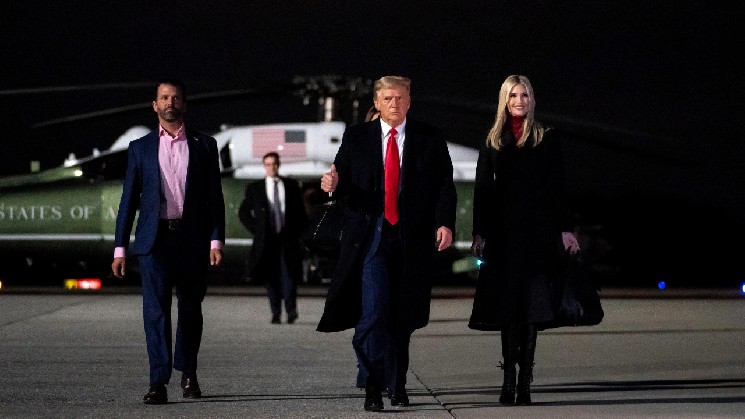
Trump Heads to South Carolina Amid Intensified Congressional Battle, Backed by Cryptocurrency and Artificial Intelligence Supporters

Former US President Donald Trump is re-engaging in the political arena as America prepares for upcoming Congressional elections, which will heavily influence the regulation of cryptocurrencies and artificial intelligence. Trump is reportedly leveraging his $400 million MAGA Inc. super PAC to aid vulnerable Republicans in maintaining their Congressional majority. The outcome of these elections is critical for major financial backers this cycle. The cryptocurrency industry seeks a Republican-led Congress to pass the CLARITY Act and secure favorable regulations from the SEC and CFTC. Simultaneously, the AI sector aims to counter the perception that it is a liability in elections. Trump's campaign begins with a rally in South Carolina for Senator Darlin Graham. Republican officials suggest his influence could be decisive. Concurrently, crypto, AI, and online gambling companies have contributed a record $517 million this election cycle, with significant sums directed toward Trump-aligned groups. For instance, AI-focused PACs have raised and spent tens of millions. However, AI investments face public skepticism, with concerns over data centers potentially harming local political candidates. The effectiveness of Trump's strategy will be tested in the upcoming elections, where Republican candidates may rely on his support despite its controversial nature.

cryptonews.ru13m ago

Trump Heads to South Carolina Amid Intensified Congressional Battle, Backed by Cryptocurrency and Artificial Intelligence Supporters

cryptonews.ru13m ago

Trading

Spot

Hot Articles

Discussions

Welcome to the HTX Community. Here, you can stay informed about the latest platform developments and gain access to professional market insights. Users' opinions on the price of S (S) are presented below.

活动图片