Original | Odaily Planet Daily (@OdailyChina)
Author | Azuma (@azuma_eth)
Yesterday, a feature interview with Hyperliquid founder Jeff Yan in Colossos magazine went viral across the internet (see "Jeff Yan's 'Hyper Life'").
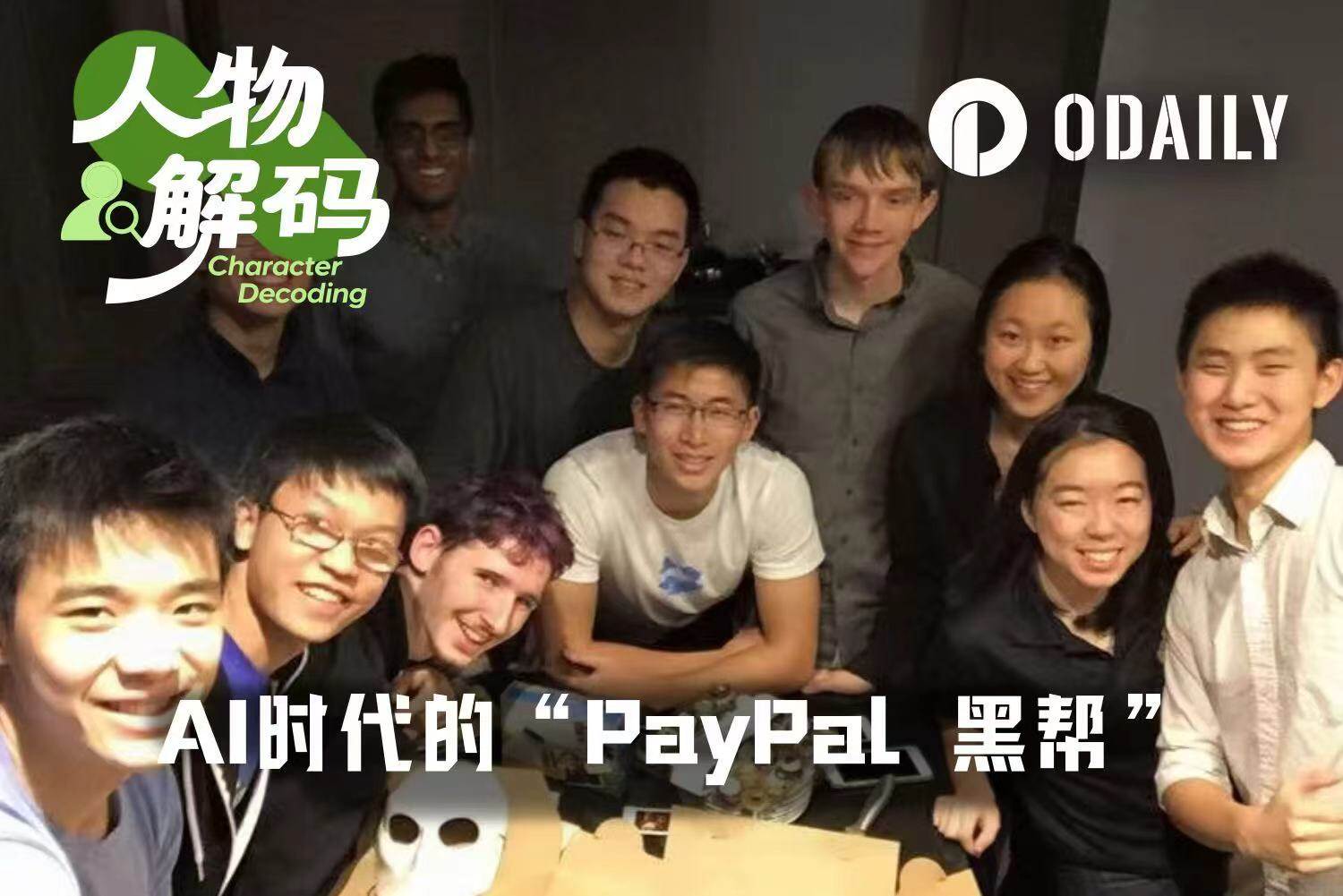
In the interview, Jeff Yan revealed a little-known story — during his junior year at Harvard, he participated in the inaugural internship program at quantitative trading giant Hudson River Trading (HRT). Ten interns were selected for that cohort. Aside from Jeff Yan, who chose the cryptocurrency track, several others from the same intern class have become prominent figures in the AI field, including Meta's AI business line head Alexandr Wang, Decagon founder and CEO Jesse Zhang, and Cognition founder and CEO Scott Wu.
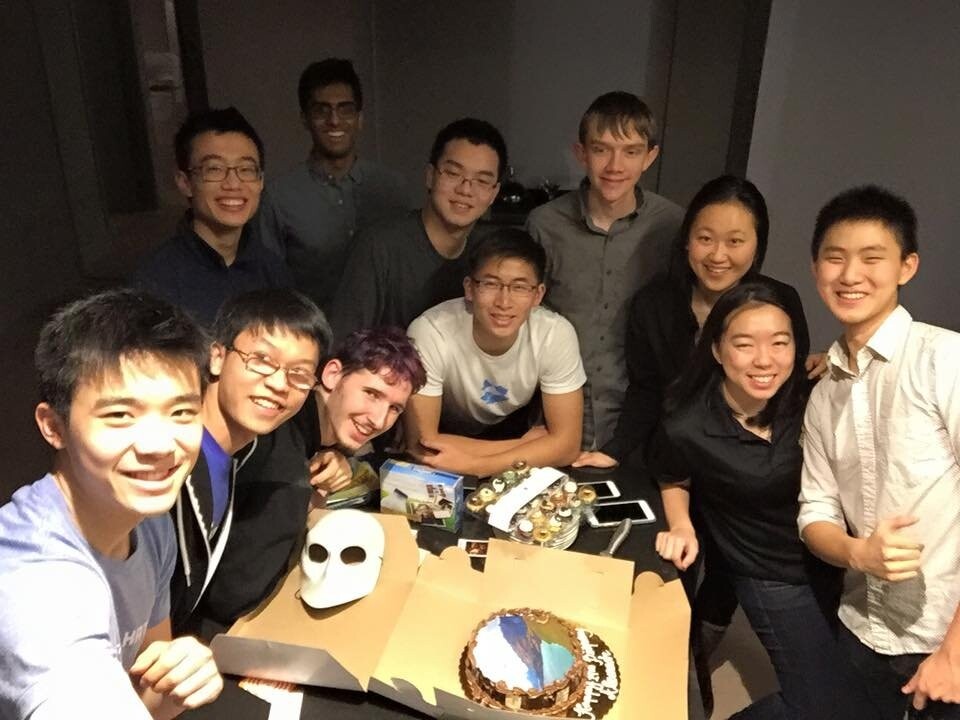
Odaily Note: The intern group photo shared by Jesse Zhang
According to additional disclosures by Scott Wu himself, the HRT internship wasn't the starting point of their friendship. As early as high school, many of them had met through Olympiad competitions (Jeff Yan, Scott Wu, and several others had won gold medals). This small circle included many other notable names, including but not limited to Perplexity co-founder and CSO Johnny Ho, Pika co-founder and CEO Demi Guo, and Steven Hao, Alexandr Wang's former partner in founding Scale AI......
During the formative years of Jeff Yan, Scott Wu, and others, the "PayPal Mafia" represented by Elon Musk and Peter Thiel was already dominating the business world, and people began searching for the next similar special network. Jeff Yan's circle had also discussed this topic. The 19-year-old Alexandr Wang once said to his friends: "Why can't it be us?"
Ten years later, Alexandr Wang's bold statement seems to be coming true. Leveraging AI, this group of young people from the Hudson River are shaking up the era in their own way.
Alexandr Wang: Zuckerberg's AI Brain
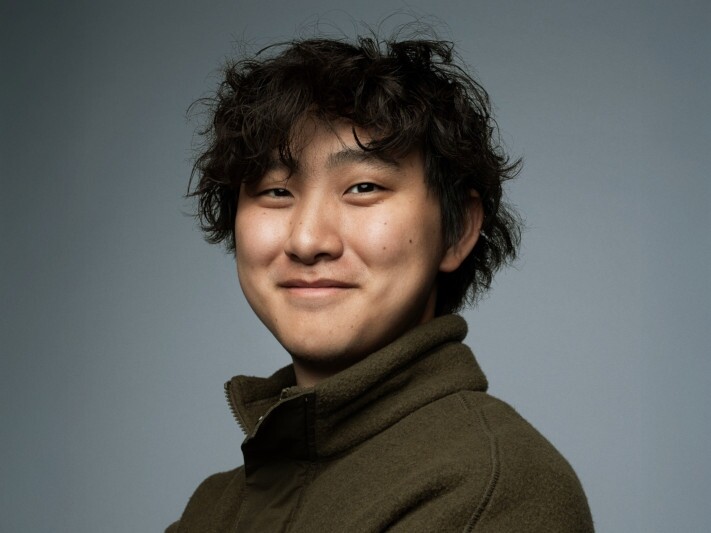
Alexandr Wang is perhaps the most well-known figure in this circle. Born in 1997 in Los Alamos, New Mexico, Alexandr Wang is the descendant of Chinese immigrants. His parents were physicists at the Los Alamos National Laboratory — where the US's first atomic bomb was secretly developed during World War II.
Alexandr Wang showed a keen interest in mathematics and programming from a young age. He qualified for the Mathematical Olympiad Program in 2013, the US Physics Team in 2014, and reached the finals of the US Computing Olympiad in 2012 and 2013.
In 2015, Alexandr Wang dropped out of the Massachusetts Institute of Technology (MIT) and founded Scale AI the following year. Scale AI annotates data used for training AI in computer vision and audio transcription. Riding the wave of the AI boom, Scale AI's valuation soared, reaching $7.3 billion by 2021. With a 15% stake, Alexandr Wang's net worth surpassed the $1 billion mark.
In June 2025, Meta, which had clearly fallen behind in the AI race, acquired a 49% stake in Scale AI for $14.3 billion. Zuckerberg's附加条件 was that the soul of Scale AI, the then 28-year-old Alexandr Wang, had to join Meta. Alexandr Wang subsequently joined Meta to lead its AI development team, the "Meta Superintelligence Labs" (MSL).
On the night of April 8th, Zuckerberg's big bet paid off. MSL officially released its first self-developed AI model, Muse Spark. Muse Spark is a native multimodal reasoning model supporting tool calling, visual chain-of-thought, and multi-Agent orchestration. It is the most powerful model Meta has released to date. During training, MSL observed predictable scaling improvements in the model's pre-training, reinforcement learning, and test-time reasoning phases.
Scott Wu: Olympiad Prodigy, Creator of a $10 Billion AI Unicorn
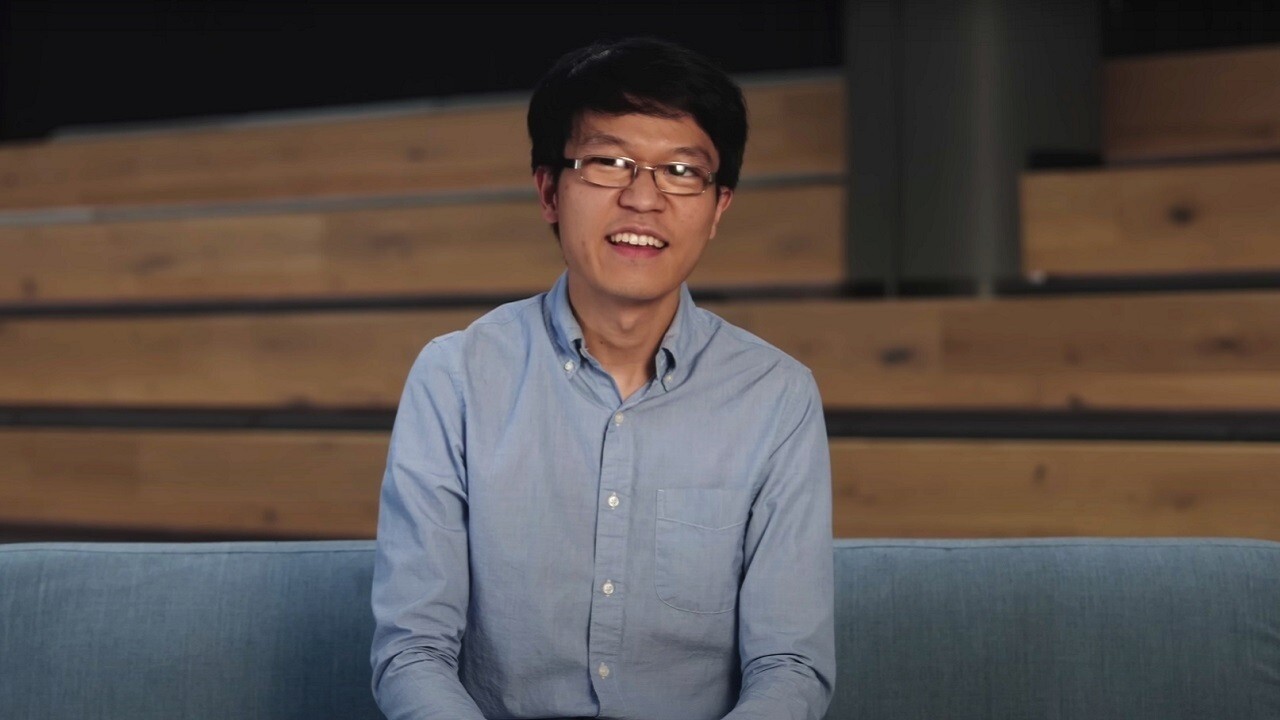
Scott Wu was born in 1997 to a family of Chinese immigrants in Louisiana. Growing up, Scott Wu actively participated in programming and mathematics competitions, winning three gold medals in the International Olympiad in Informatics (IOI), including first place in 2014.
After high school, Scott Wu attended Harvard University but dropped out after two years. During his undergraduate studies at Harvard College, he was a member of the university team that participated in the 2016 International Collegiate Programming Contest (ICPC), winning a gold medal and ranking third overall.
In 2019, Scott Wu co-founded the social platform Lunchclub as its CTO. In 2023, he co-founded Cognition with friends Steven Hao and Walden Yan (both Olympiad gold medalists), serving as CEO.
In 2024, the Cognition team launched Devin, the world's first autonomous AI software engineer. Devin can independently complete coding, testing, and deployment, and supports the decomposition and collaboration of complex tasks. It significantly outperformed GPT-4 in the SWE-bench benchmark test. In May 2024, Cognition raised $175 million in a round led by Peter Thiel's Founders Fund, valuing the company at $2 billion post-money. In September 2025, Cognition raised another $400 million, skyrocketing its valuation to $10.2 billion.
By early 2026, Cognition's annualized revenue had reached $400 million.
Johnny Ho: Net Worth $2.1 Billion, Once Considered Acquiring TikTok and Chrome
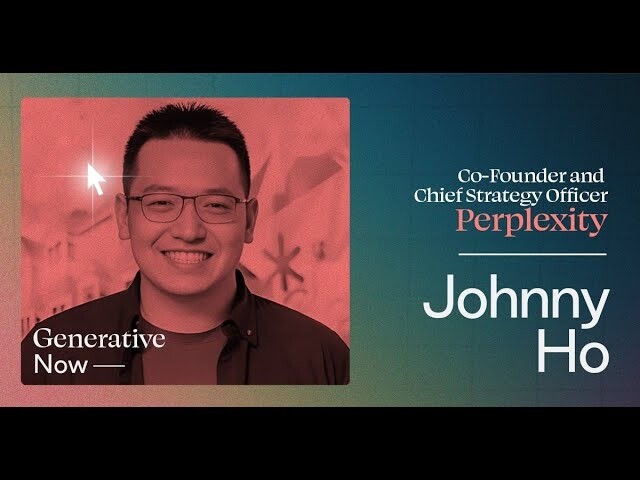
Like Scott Wu, Harvard graduate Johnny Ho won three gold medals in the International Olympiad in Informatics (IOI), achieving a perfect score and first place in 2012.
In August 2022, Johnny Ho co-founded Perplexity with Aravind Srinivas, Andy Konwinski, and Denis Yarats. Perplexity is an AI search engine company offering a conversational search service that displays citation sources for answers and provides related question suggestions.
In 2023, Perplexity's monthly visits reached 10 million; by April 2024, its monthly active users reached approximately 15 million. That same year, Perplexity embarked on a frenzied fundraising spree. In its fourth round at the end of the year, it raised $500 million at a valuation of $9 billion. In July 2025, Perplexity completed another $100 million funding round, raising its valuation to $18 billion.
It's worth noting that Perplexity has made several bold "minnow-swallowing-whale" acquisition proposals (with VCs willing to fund them), including an offer to acquire TikTok in early 2025, proposing to merge Perplexity, TikTok's US operations, and new capital partners into a new entity. In August 2025, it also approached Google with a proposal to buy its core product, the Chrome browser, for $34.5 billion.
According to the latest Forbes data, Perplexity's current valuation has reached $20 billion, and Johnny Ho's personal wealth is estimated at $2.1 billion.
Jesse Zhang: $4.5 Billion Valuation After Three Years in AI Startup
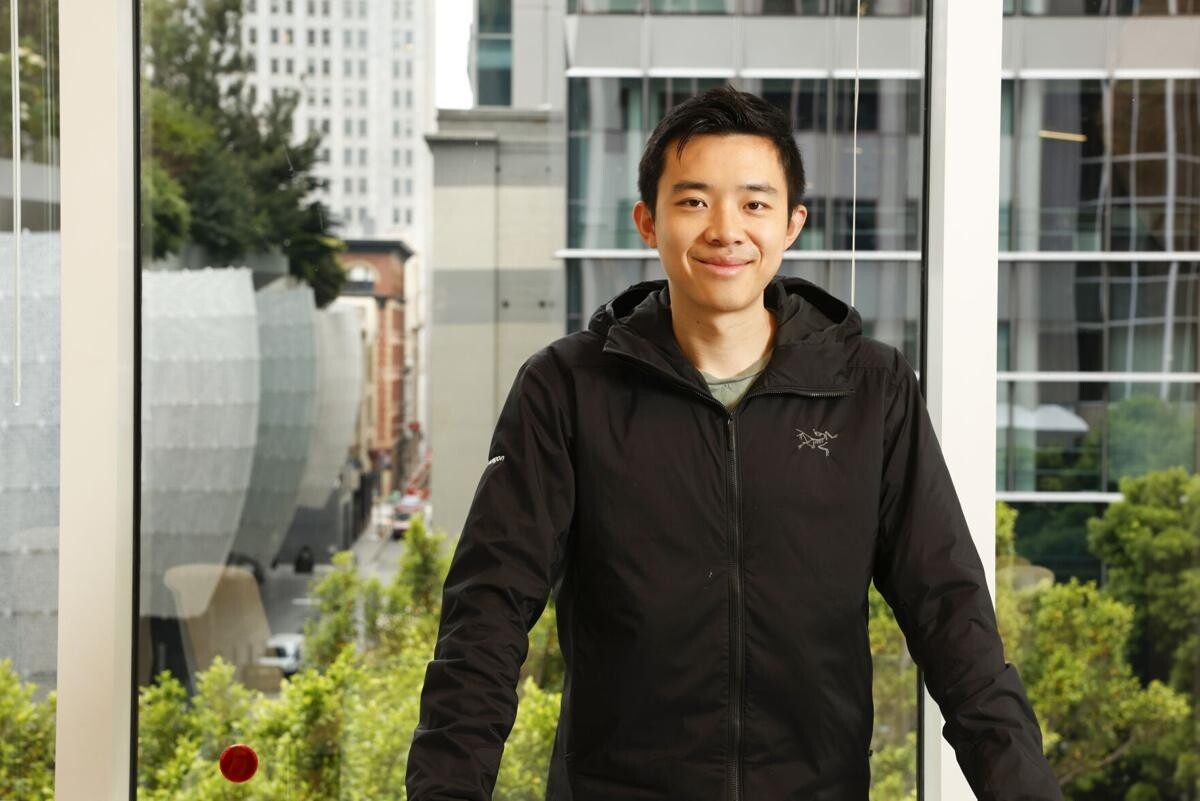
Jesse Zhang was also born in 1997 and grew up in the San Francisco Bay Area. From high school, Jesse Zhang was a typical "competition enthusiast" — he was selected for the Mathematical Olympiad Program (MOP) twice, was a finalist in the Intel STS, and participated in MIT's RSI research program. At Harvard, he completed his four-year undergraduate course in just three years.
In 2018, Jesse Zhang co-founded Lowkey, a platform for sharing gaming highlights, with friends. The project received seed funding from Y Combinator and Series A funding from a16z. In 2021, Lowkey was acquired by Pokémon GO developer Niantic for an undisclosed amount.
In 2023, Jesse Zhang co-founded Decagon with partner Ashwin Sreenivas, focusing on automating enterprise customer service using AI Agents to address the high labor costs and low efficiency of call centers.
In June 2024, shortly after its founding, Decagon quickly raised $35 million, including a $5 million seed round led by a16z and a $30 million Series A round led by Accel. Four months later, Decagon raised $65 million in a Series B round. In June 2025, a Series C round raised $131 million, pushing the valuation to $1.5 billion. In January 2026, a Series D round raised $250 million, skyrocketing the valuation to $4.5 billion... Along with the rising valuation was Decagon's revenue generation capability. By the end of 2025, the company's disclosed annual revenue exceeded $30 million.
Demi Guo: Hangzhou-born '95er, Pioneer in AI Video Generation
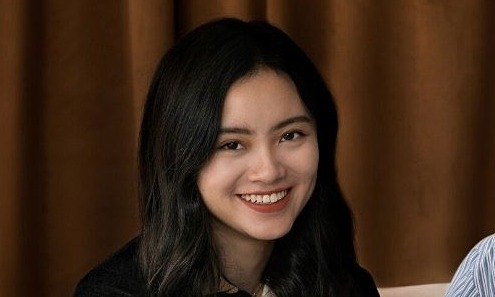
Demi Guo was born in Hangzhou, China, in 1999 and moved to Silicon Valley, USA, with her family during her childhood.
Demi Guo won a silver medal at the 2015 International Olympiad in Informatics. She graduated from Harvard University with a bachelor's degree in mathematics and a master's degree in computer science, then dropped out of a PhD program at Stanford University to focus on entrepreneurship in generative AI video content creation.
In April 2023, Demi Guo co-founded Pika with Chenlin Meng, serving as CEO. Pika focuses on developing video generation technology. Its core products include the Pika 1.0 and Pika 2.0 models, which support 3D animation, anime, cartoon, and cinematic style generation, offering features like video extension, canvas expansion, and element replacement.
Regarding funding, Pika completed a $20 million seed round before its official launch. It then raised $35 million in a Series A round in November 2023, led by Lightspeed Venture Partners. In June 2024, Pika completed an $80 million Series B round at a valuation of $470 million, led by Spark Capital, with participation from Greycroft, Lightspeed Venture Partners, and actor Jared Leto, among others.
Steven Hao: AI Tech Guru with a Net Worth Over $1 Billion
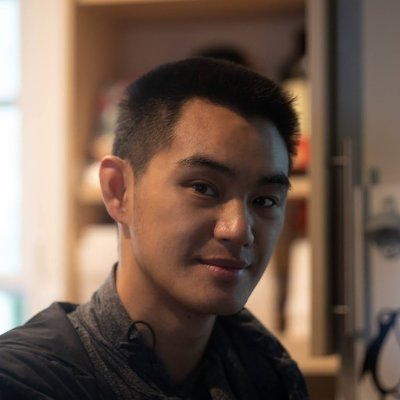
Steven Hao, a graduate of MIT's mathematics department, also won a gold medal in the International Olympiad in Informatics (IOI). He was a partner of Alexandr Wang at Scale AI and has now joined Scott Wu's Cognition as CTO. Both companies have been detailed earlier and won't be elaborated on here.
According to Forbes data, the 30-year-old Steven Hao's personal wealth is estimated to be $1.3 billion.
Epilogue: We Might Be Witnessing a New Legend
I thought about giving this small circle a new name like the "PayPal Mafia," perhaps calling them the "Hudson River Mafia" or the broader "Olympiad Mafia"... Although the era and story trajectory are completely different, they seem to share the same core spirit as the previous generation's "PayPal Mafia" — behind the camaraderie of high-level competition, what truly connects them is a shared pursuit of intellectual density, engineering efficiency, system re-architecting capabilities, and a profound foresight into where the future begins.
A new generation of entrepreneurs has stepped onto the stage. Before them lies the question, "How will AI reshape the world?" — a problem far more challenging than any Olympiad. This is their battlefield and their stage.