Written by: @0xBenniee
TL;DL;
Token issuance is no longer the only solution: For teams with clear cash flow, channels, and compliance paths, TGE is not a mandatory option.
Short- to medium-term prices are primarily driven by three factors: liquidity, attention, and token distribution structure.
The long-term value of a token depends on value capture; how value is captured is crucial to its long-term worth.
The next stop for tokens may be the "machine economy": Payments between Agents and native protocols like x402, promoting pay-per-call and profit-sharing based on contribution.
This article's thoughts originate from a reply by @DrPayFi (Huma.Finance Co-founder) to the author's question:
Q:
Huma has built a complete Payfi infrastructure over the past year, but tokens in an ecosystem often limit a project's development. For example, issued tokens are essentially liabilities and create a counterparty relationship with retail investors; not all stakeholders can profit. The team must invest significant effort in market cap management or token distribution.
Of course, at TGE, no early participating users were disadvantaged, which seems out of place in a market where "nobody looks long-term."
Detailed reply as follows;
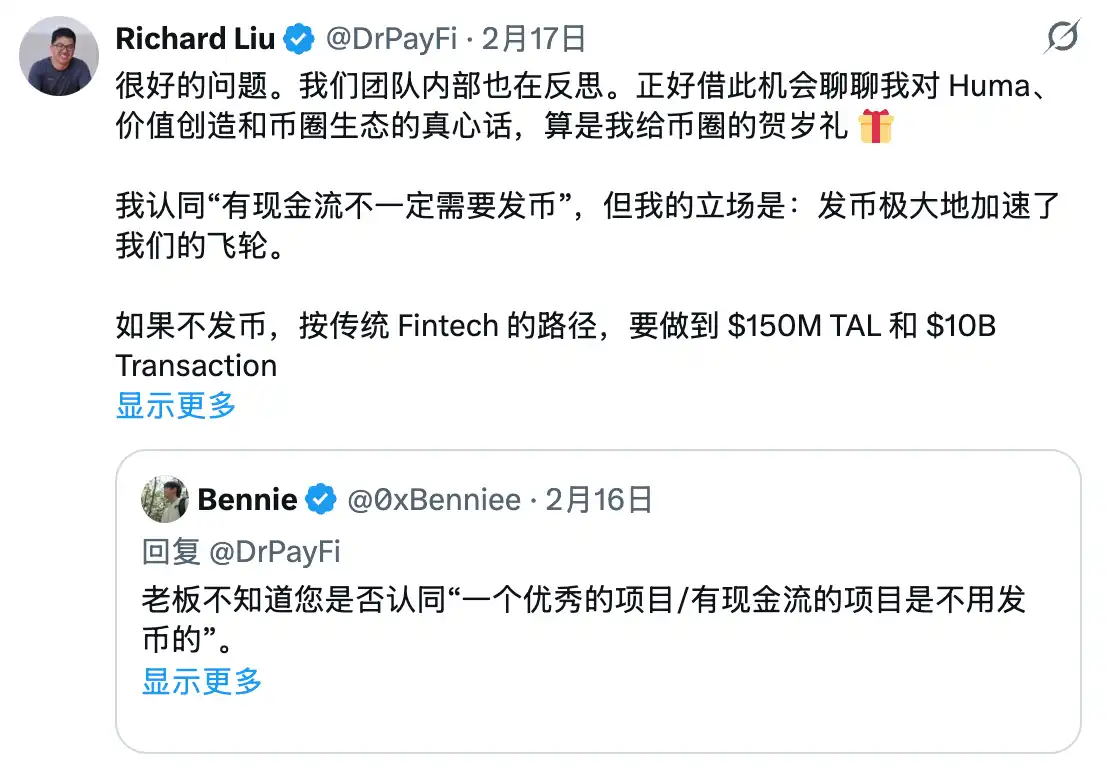
Firstly, TGE is a harvesting sickle for some projects with no substance, but for a long-term project, it might be an "accelerator"
This was a recurring topic of discussion at Consensus: For the vast majority of projects that already have stable cash flow, issuing a token may not be the more profitable choice, and is often more detrimental than beneficial.
Because once TGE begins, while advancing the product and refining growth, the team must also bear additional external variables like price expectation management, liquidity structure and market making arrangements, complex communications with exchanges, and market sentiment fluctuations. These uncertainties continuously consume organizational attention and can even inversely affect product节奏 and strategic decisions.
- What is an "accelerator"?
In the Payfi network, compared to traditional Fintech growth paths that often rely more on licenses, channels, and regional networks, scaling liquidity rapidly and converting it into TAL (Total Active Liquidity) that can be genuinely used typically requires a longer time.
TGE provides a more efficient mechanism for "global distribution and attention aggregation": Compared to the thresholds and geographical limitations of stock market listings, Tokens allow global users anywhere to participate, hold, and trade with low barriers via DEX/CEX, binding them to network growth. This provides additional momentum for ecological collaboration and growth flywheels, helping projects gain user attention in a shorter time and increase real user growth for the product.
- What is a "sickle"?
Conversely, for some projects that fundamentally lack a product/user base, TGE → selling tokens becomes the only path to exit/profit. Through repeated pumping and dumping, they can simply extract liquidity from the market and exit.
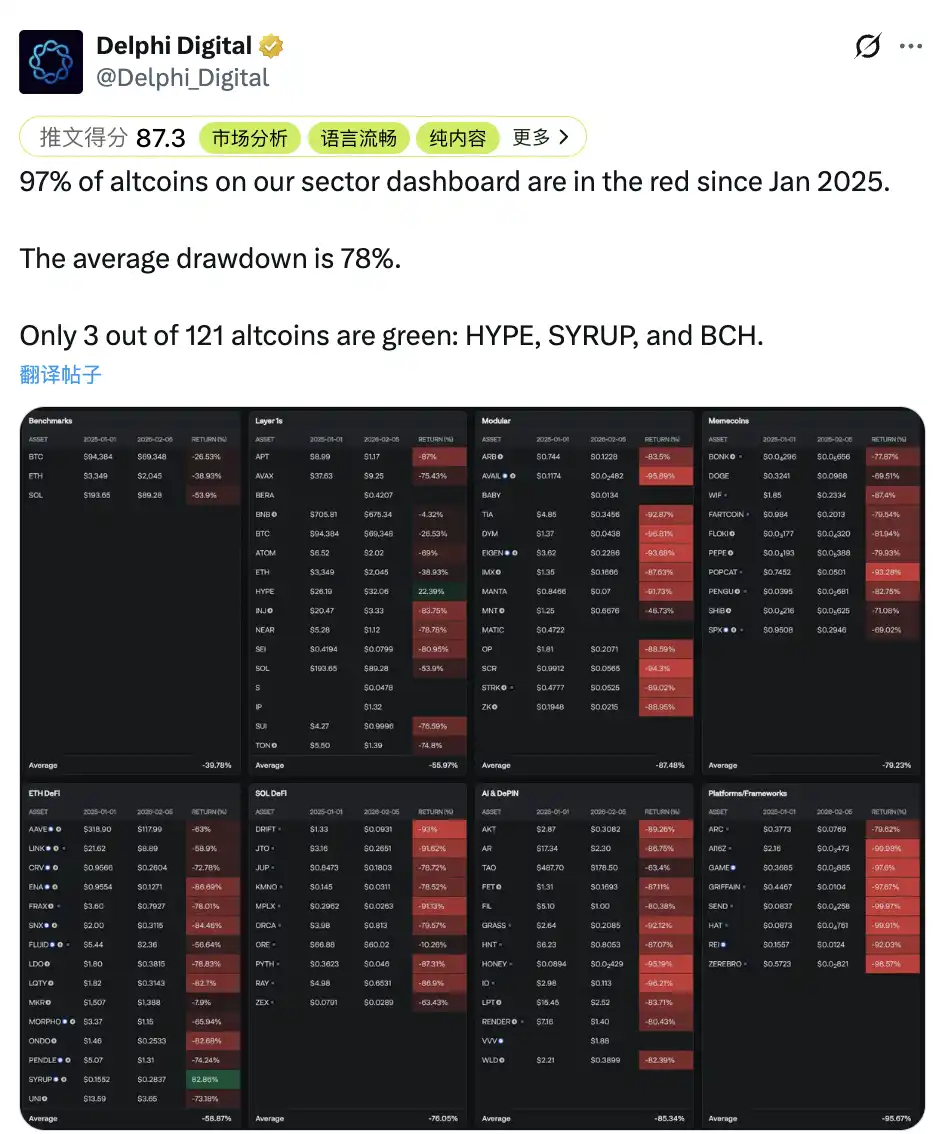
More crucially, this is not an isolated case but the norm in the current market. Over the past year, the vast majority of newly issued tokens have experienced significant pullbacks; 97% of tokens saw an average price shrinkage of 78% over the past year. As market liquidity thins and exits rely increasingly on the secondary market, this "blood-sucking" secondary market strategy becomes more frequent, effective, and irreversible.
Factors determining post-TGE token price and potential external returns
Current Crypto projects still have some structural issues, namely the long-term mismatch between "exit channels" and "external growth."
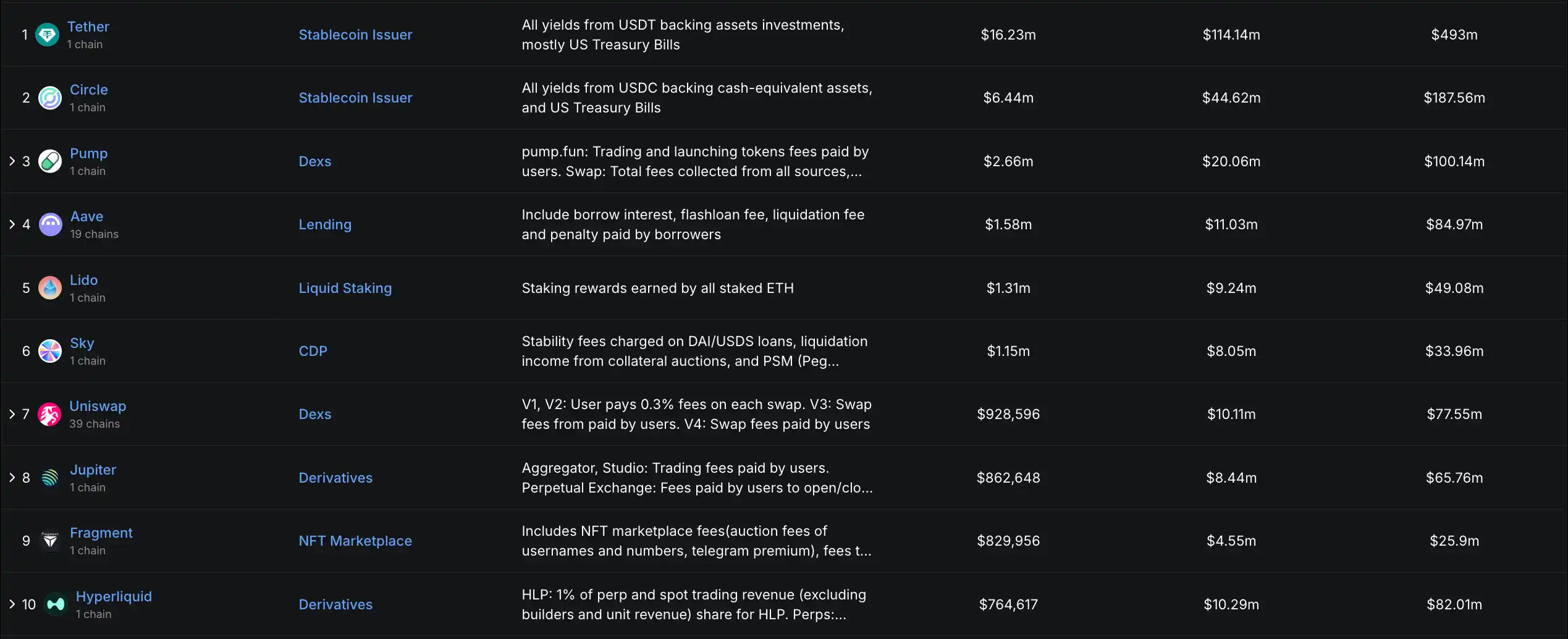
On one hand, the supply side (public chains and projects) has long been "over-issuing," but the market's capital size and on-chain real transaction intensity are insufficient to support the continuously rising FDV/market cap. Most projects struggle to form stable, scalable protocol revenue based on the product itself, let alone use this cash flow to absorb the pressure of large future unlocks.
Taking DeFiLlama's statistics as an example, only 6 protocols had protocol revenue exceeding $1M in the past 24 hours, and only 49 had protocol revenue exceeding $5M in the past 30 days. This means that relying solely on protocol revenue often cannot support excessively high valuations, and is even less able to handle the supply shock from token unlocks in subsequent cycles.
On the other hand, the coordination of market makers, exchanges, users, and other factors also plays a highly uncertain variable in the token price. When early capital exits rely increasingly on the secondary market, the price is naturally dominated by interested parties.
Apart from early VCs who can still achieve partial exits through mergers and acquisitions or follow-up financing, more projects, at a stage where cash flow is not yet formed and the financing window is tightening, tend to shift financing functions to the secondary market: through phased unlocks and so-called "reasonable减持," they transfer the already scarce market liquidity from retail investors to the project side.
Short-term, this can keep the project alive, but long-term it pushes the market into a negative cycle, eventually evolving into an irreversible development of "bad money driving out good."
This corresponds to what @ChaseWang mentioned in an interview: in the current environment, the short- to medium-term trends of many assets often revolve around the following three variables:
-Liquidity: Whether people in the market have money, their willingness to buy/risk appetite, and whether there are more attractive alternative assets determine the upper limit of price increases.
-Traffic (Attention): The reach of top KOLs,投放 by agencies and channel resources, and the concentration of retail attention often determine the amplitude of short-term fluctuations.
-Token Distribution Structure: The size of the circulating supply post-TGE, the distribution of holdings, the unlock and release schedule of token economics, and arrangements around liquidity.

The thinner the liquidity, the more the market relies on narrative and price; the more it relies on price, the more it damages user and long-term capital confidence, eventually evolving into a game of chip博弈 between the project side and retail investors.
But in reality, project teams, retail investors, and exchanges are not natural adversaries. The true common interest of the three parties is to maximize the "upper limit & imagination of the leader," bringing in incremental capital and real-use scenarios from outside, rather than反复 PVP within existing funds, treating the secondary market as an endless ATM.
Flowing water does not compete to be first; it competes in its endless flow.
Product Value and Value Capture
Many projects are not lacking in "product value," but the value does not feed back into the Token.
Returning to today's topic, you'll find a more counterintuitive fact: a project not issuing a token does not mean it isn't great. For example, @Pumpfun proved that "product value" itself can be established in Web3, but whether the project's token can be priced long-term depends on value capture: if there is a lack of a clear回流 mechanism, token value can often only be supported by sentiment and token distribution structure.
A typical positive example is Hyperliquid. Its "token value capture" is widely recognized by the market: real revenue generated by the protocol → forms continuous buy-side回流 (e.g., buyback mechanisms) → directly binds the token's value to trading activity. The more active the trading and the greater the revenue, the stronger the token's承接力, and the clearer its pricing anchor.
Conversely, common counterexamples usually fall into three structures:
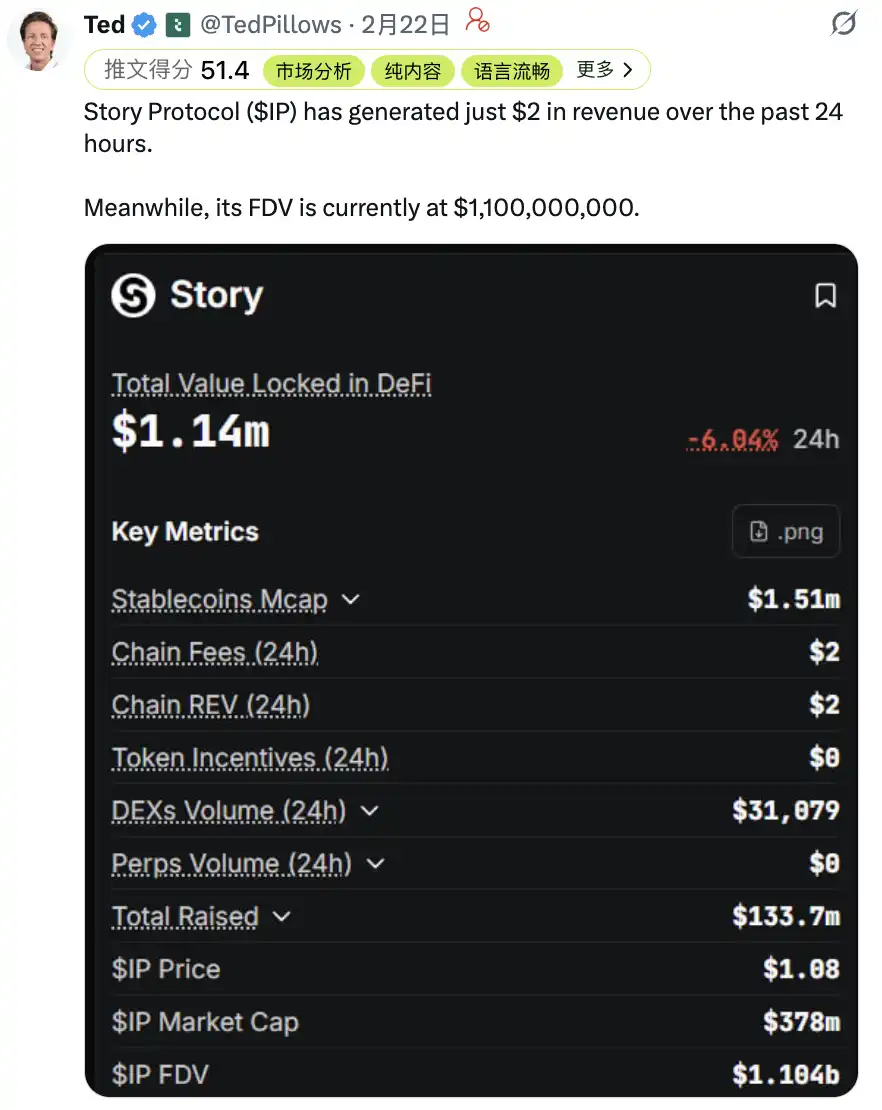
- The product has revenue, but the token price doesn't reflect it: The money earned by the protocol stays with the team/company/channel side. The token itself is only responsible for "governance voting" or "narrative performance." Value回流 is absent, and long-term pricing relies solely on sentiment.
- The token has incentives, but no real demand/users: Data (TVL/trading volume looks good) is inflated through high inflation subsidies, but plummets once incentives are removed, leaving only unlocks and selling pressure.
- Using the secondary market as a financing and exit channel: When the project's cash flow is not yet sustainable, it chooses to let the secondary market bear the financing pressure. The token becomes the project's "liability side," and its pricing logic gradually degenerates into a chip博弈.
So, where is the future path?
If we understand the "path" of traditional payments in the past as a major breakthrough that solved geographical isolation: allowing people and merchants, banks and banks, to complete trusted settlements under unified rules even thousands of miles apart. Then the main theme of the next twenty years might shift from "people paying people" to "programs paying for programs." Payments between Agents using Crypto will become a new high-frequency transaction form.
If we turn the timeline back to 2006, Mastercard completed its IPO on May 24, 2006, at $39.00 per share. It was then seen more as traditional financial infrastructure for "bank card networks/clearing processing."
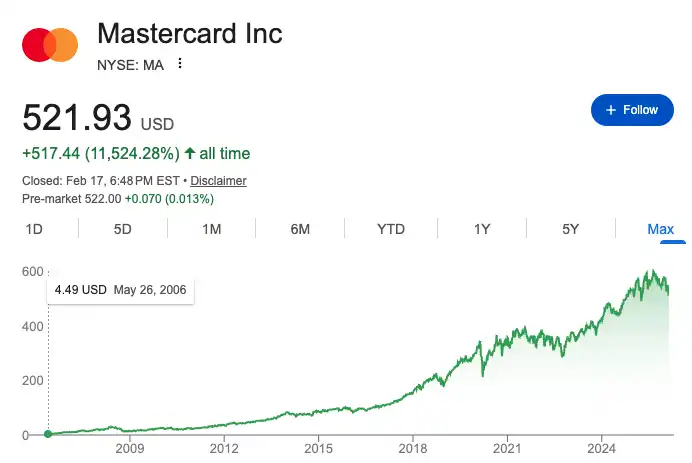
Today, Mastercard's network connects 210+ countries and regions, with a merchant acceptance network of 150M+ and over 3.5B+ cards in circulation. Mastercard implemented a 10:1 stock split in January 2014. Calculating at the current price of approximately $521.93, investors holding Mastercard stock have achieved 134x growth over the past 20 years.
What about crypto? Blockchain might not be born solely for transfers between humans; it's more like a settlement language prepared for the next generation of automation.
In the future Agent economy, the payment demand for API calls will likely become a new high-frequency scenario: Agents will not only exchange information and tasks but also engage in "pay-per-use, instant settlement" around data, models, computing power, and service calls. Experiments like Clawbot, which lets Agents transfer money to each other to "earn," are already某种程度上 validating the feasibility of this path.
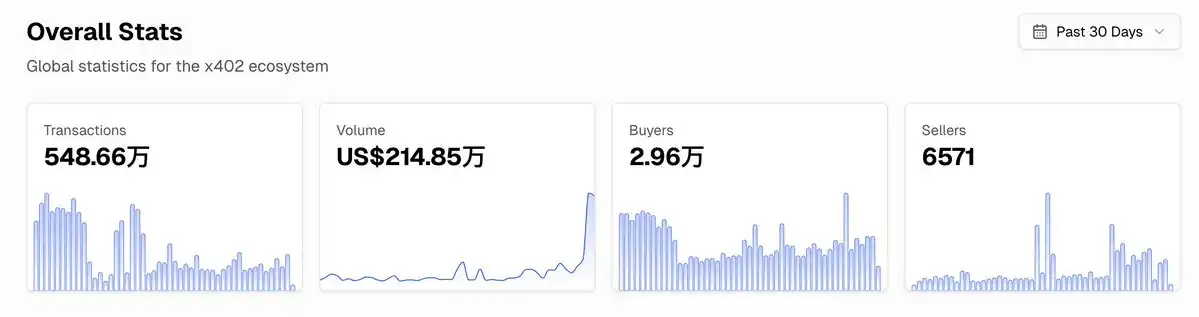
Precisely because of this, the 24/7 efficient settlement, programmable funds, and traceable ledger provided by blockchain have the opportunity to become a more universal payment base for the future robotic society.
In the next stage, retail investors don't need to pin all their hopes on TGE. Increasing regulation is not necessarily the end of tokens but更像 is forcing the industry to separate two things: financing and exit, returning to the more replicable path of equity/IPOs; Tokens should return to what they are meant to do (on-chain incentives, node collaboration, resource allocation).
Meanwhile, TGE may continue to exist in parallel, but it should more be the "lubricant" of the network. Especially in the future Agent economy, tokens combined with protocols like x402 that embed payment into HTTP might become infrastructure for pay-per-call and profit-sharing based on contribution.
Final Thoughts
It is undeniable that we are in a colder/more残酷 four-year cycle.阵痛 is inevitable, just like the body's self-protection expelling toxins; the industry also needs to squeeze out the toxins in the system (bubbles, Scams,劣质 projects). If bad money is not driven out, the real infrastructure can hardly be seen. Currently, we are更像 sitting on a high-speed train. The scenery outside the window changes, the people around might change, but our direction never changes.
I want to借用 Richard's words at the end: "The current winter is like the bursting of the Internet bubble in 2000. It washed away a host of unreliable .coms, leaving behind Amazon and Google. Regulation will squeeze out scams, and the blockchain protocols that truly solve problems will reshape the global financial infrastructure in the next 5 years".
If we had the chance to go back to those days, would we still have the courage and cognition to catch unicorns like Amazon and Google? If the next cycle is a game for institutions, then all past structures will be reshuffled. By the time the new格局 arrives, I hope we are still at the table.