Tether Finally Gets Audited by a Big Four Firm, But USDT's Transparency Issues Are Far From Over

marsbitPublished on 2026-08-14Last updated on 2026-08-14

Abstract

Tether announced that KPMG U.S. has completed its first independent audit of Tether International's financial statements as of December 31, 2025, issuing an unqualified opinion—the highest level of assurance. The audit confirms Tether's assets exceeded liabilities by $6.814 billion at that date, with physical verification of gold bars and examination of underlying records. This represents a significant step beyond the quarterly reserve attestations Tether previously received, moving to a full financial statement audit that examines internal controls, transaction sampling, and accounting policies. However, the article highlights several ongoing transparency questions. The full KPMG audit report has not been publicly released, preventing independent verification of details like asset classification or related-party transactions. The audit covers a specific entity, "Tether International, S.A. de C.V.," leaving the scope concerning Tether's complex corporate structure unclear. Furthermore, the $6.8 billion excess reserves confirmed for end-2025 had shrunk to approximately $4.1 billion by Q2 2026. Risks within the reserve composition, particularly concerning secured loans, persist even with an audit. The audit's data is also already 8 months old, while USDT's circulation has grown rapidly. Strategically, the audit is seen as a move to bolster Tether's position amid U.S. regulatory developments like the GENIUS Act, which mandates audits for stablecoin issuers but leaves a path ...

Author: Xiaobing

A decade of questioning, a single day for resolution.

On August 13, Tether announced that KPMG US had completed its first independent audit of the financial statements of Tether International, S.A. de C.V. as of December 31, 2025, issuing an unqualified opinion. This is the highest rating an independent auditor can give, signifying that KPMG believes Tether's financial statements fairly present the company's financial position, results of operations, and cash flows in all material respects in accordance with US Generally Accepted Accounting Principles (US GAAP).

The audit covered the balance sheet, income statement, statement of changes in equity, and cash flow statement. Auditors physically counted and individually inspected each gold bar held by Tether, verifying the underlying evidence of transaction records, systems, valuations, counterparties, and asset ownership. The audit results show that as of the end of 2025, Tether's reserve assets exceeded its liabilities by $6.814 billion.

CEO Paolo Ardoino announced this result on X in an unusually triumphant tone. He called it "the largest initial financial audit in history" and directly countered Tether's many critics over the years.

The significance of this audit should not be underestimated, but it is not the finish line. Carefully dissecting the content and scope of this audit reveals the most subtle and crucial parts of USDT's transparency issues.

Audit and Attestation Are Two Completely Different Things

First, let's clarify a basic concept.

For the past few years, Tether has released quarterly reserve attestation reports issued by BDO Italy. These reports verify whether Tether's reserve assets cover its issued token liabilities at a specific point in time. It's akin to taking a snapshot of a safe: is the money there, and is it enough.

What KPMG has done this time is completely different. A full financial statement audit is not just about counting how much money is in the safe; it's about examining the source, flow, ownership records, valuation methods, and the integrity of the entire financial reporting system. Auditors must sample-test transactions, assess internal controls, judge the appropriateness of accounting policies, and check if related-party transactions are adequately disclosed.

This is also why it took Tether a decade to reach this point. Friedman LLP's engagement was terminated in 2017, MHA Cayman (later integrated into the BDO system) was appointed for attestation in 2021, SOC 2 Type 1 information security reviews were completed in 2024, the engagement of a Big Four firm for a full audit was announced in March 2026, and PwC was involved in preparing internal systems for compliance. Each step on this path laid the groundwork for the final audit.

For Tether, the leap from attestation to audit represents substantive progress. However, from the perspective of investors and regulators, several questions remain that demand further inquiry.

Five Questions That Still Need Answers

Where is the actual audit report?

As of the time of writing, Tether has announced the completion of the audit and KPMG's unqualified opinion but has not provided the full text of KPMG's audit report to the public or media. CoinDesk inquired whether Tether would publicly release the complete KPMG audit document and has not yet received a response. The value of an audit report lies not only in the concluding page but also in the notes, accounting policy explanations, key audit matters, detailed classification of reserve assets, and related-party transaction disclosures. Publishing only the conclusion without the full report prevents external analysts from independently verifying those most critical details.

What are the boundaries of the audited entity? The entity audited by KPMG is "Tether International, S.A. de C.V." Ardoino told The Block that this is the issuer of USDT and the audit covers all financial data. However, Tether's group structure is far more complex than a single entity. Parent company Tether Holdings Limited (registered in the BVI), Tether Operations Limited, Tether Investments Limited, Tether Gold-related entities, etc., form a multi-layered holding structure. In previous BDO attestation reports, assets of Tether Investments Limited were explicitly excluded from the definition of "reserves." Whether KPMG's audit scope aligns with the coverage of BDO's attestations and whether intra-group related-party transactions were sufficiently examined within the audit scope are questions that can only be judged by seeing the full report.

The $6.8 billion reserve buffer is rapidly shrinking. KPMG's audit confirmed reserve assets exceeding liabilities by $6.814 billion as of the end of 2025. By Q1 2026, BDO attestations showed this figure had risen to approximately $7.1-8.2 billion (varying by data source). However, by Q2 2026, BDO attestations indicated the reserve buffer had dropped to $4.11 billion, shrinking by about 40% from the KPMG audit date.

Credit and concentration risks in reserve assets have not disappeared with the audit. An unqualified opinion means the financial statements are fairly presented, not that the reserve assets are risk-free. As of Q1 2026, approximately 80-83% of Tether's reserves were US Treasuries, 5-7% overnight reverse repurchase agreements, 3-5% money market funds, with the remainder being gold (over 146 tons), Bitcoin, and secured loans. The "secured loans" category has long been a focal point for external scrutiny. Tether promised to eliminate this asset class by the end of 2023, but as of mid-2024, $5.5 billion remained. Questions about to whom the loans are made, the nature of the collateral, and the concentration levels have consistently received limited disclosure in attestations. A full audit report, if made public, should provide more detailed classification in its notes.

Audit timing and the issue of continuity. This audit corresponds to financial data from eight months ago. In these eight months, USDT's circulation has grown from about $144 billion to over $184 billion, an increase of approximately $40 billion. For a financial institution with a balance sheet expanding at such a speed, the timeliness of an annual audit is inherently diminished. Will Tether commit to having KPMG continue the audit for the 2026 financial year? Will the audit frequency increase to semi-annual or even quarterly? Tether has not yet directly addressed these questions.

A Key Move in the Regulatory Chess Game

To understand the strategic significance of this audit, one must place it in the larger regulatory landscape.

In July 2025, the US President signed the GENIUS Act, establishing a federal regulatory framework for stablecoins. The Act requires compliant issuers to hold 1:1 reserves in cash or short-term Treasury bills, publish monthly reserve attestations, and undergo annual audits. However, the key point is that the GENIUS Act's audit requirements do not automatically apply to foreign issuers. Tether is headquartered in El Salvador and is not a US-registered entity.

The Act provides a path for foreign issuers: the US Treasury Department must make a "reciprocity determination," deeming the regulatory framework of the issuer's home country "comparable" to that of the US. As of mid-2026, this determination was still pending. Senator Jack Reed even separately proposed the "Foreign Stablecoin Transparency Act," aiming to close the regulatory gap in the GENIUS Act for foreign issuers.

In this context, Tether obtaining an unqualified opinion from KPMG is undoubtedly a powerful card. It signals to US regulators that even without legal compulsion, Tether is proactively raising its transparency standards to align with the strictest audits. Simultaneously, in January 2026, Tether launched the USAT token specifically for the US market through Anchorage Digital Bank as a compliant Plan B.

But there remains a distance between audit completion and regulatory compliance. The GENIUS Act provides digital asset service providers with a three-year transition period (until July 2028), after which non-compliant stablecoins will be prohibited from being listed on US trading platforms. The clock is ticking, and Tether securing the audit is only one of the necessary conditions for clearance.

Filtering out all the noise, this audit indeed proves several important things.

At least as of the end of 2025, Tether had the capability to present its financial statements to the world's most rigorous audit standard and receive the highest rating. This is no easy feat. KPMG would not risk its reputation by issuing a false opinion for a $1.8 trillion financial entity. After all, Arthur Andersen fell due to the Enron audit scandal; the Big Four value their credibility more than anyone.

The audit also confirms that Tether holds a substantial buffer exceeding its liabilities, with a reserve structure dominated by US Treasuries and gold holdings physically verified. For a company long questioned about "whether its reserves even exist," this is the most powerful answer to date.

As Ardoino said, this is not the end but "the beginning of the next journey." Indeed, the true test begins the moment the complete audit report is made public.

Related Questions

QAccording to the article, what is the key difference between the KPMG audit and the previous attestation reports by BDO?

AThe KPMG audit is a full financial statement audit that assesses the entire financial reporting system, including verifying transactions, evaluating internal controls, and checking the appropriateness of accounting policies. In contrast, the BDO attestation reports were snapshots verifying that reserve assets covered issued token liabilities at a specific point in time, akin to confirming the money is present and sufficient.

QWhat are the five main unresolved questions regarding USDT's transparency mentioned in the article?

A1. Where is the full KPMG audit report? 2. What is the precise boundary of the audited entity 'Tether International, S.A. de C.V.'? 3. Why is the reserve buffer shrinking rapidly? 4. Have the credit and concentration risks of reserve assets disappeared with the audit? 5. What about the timeliness and continuity of the audit, given the rapid growth of USDT?

QWhat strategic significance does the KPMG audit hold within the U.S. regulatory landscape, specifically regarding the GENIUS Act?

AThe KPMG audit serves as a strong signal to U.S. regulators. Since the GENIUS Act's audit requirement does not automatically apply to foreign issuers like Tether, obtaining a clean audit from a 'Big Four' firm demonstrates Tether's proactive effort to meet high transparency standards. This could be a crucial factor in the U.S. Treasury's pending 'reciprocity determination' for foreign stablecoin issuers.

QWhat did the KPMG audit specifically confirm about Tether's reserves as of December 31, 2025?

AThe KPMG audit confirmed that as of December 31, 2025, Tether's reserve assets exceeded its liabilities by $6.814 billion. It also verified that the reserves are backed by assets like U.S. Treasuries and that the company's physical gold holdings were individually inspected and counted.

QHow does the article frame the completion of the KPMG audit in relation to the history of scrutiny towards Tether?

AThe article frames the audit as the most definitive answer yet to the long-standing question of whether Tether's reserves exist and are sufficient. It represents a significant milestone after a decade of scrutiny and a substantial progression from attestations to a full audit. However, it is characterized not as an endpoint, but as the beginning of the next phase of the transparency journey, with the real test being the public release of the full audit report.

Related Reads

The Return of NFT Summer: Which Projects on Robinhood Chain Are Worth Focusing On?

**Summary: "NFT Summer Returns – Which Robinhood Chain Projects Deserve Attention?"** Following the meme coin trend, NFTs are emerging as the new speculative focus on Robinhood Chain. The recent NFT surge gained traction with **StonkBrokers**, a pixel-style "stockbroker" PFP collection of 4,444 NFTs, whose floor price briefly surpassed 13 ETH. The hype significantly amplified with the launch of **Spritehood Wisps** by former Pudgy Penguins co-founder Cole Villemain. This 44,444-item fantasy RPG-inspired collection sold out in under an hour, generating approximately $1.28 million. The article highlights key projects driving this wave: **Already Minted Projects:** * **StonkBrokers**: ERC-6551 NFTs pre-loaded with tokenized stocks, offering rewards based on activation levels with its native token, $STONKBROKER. Floor: ~11.98 ETH. * **Spritehood Wisps**: "Wisp" NFTs that can later be burned to summon customizable Sprite characters. Floor: ~0.0125 ETH. * **Cash Cats**: A 10k PFP collection capitalizing on the popularity of the $CASHCAT meme coin. Floor: ~0.26 ETH. * **Chain Mancers**: A 5k PFP project where each NFT is tied to 500k $MANCER tokens, offering a share of protocol fees. Floor: ~0.9 ETH. **Upcoming Projects (Not Yet Minted):** * **The Saudis**: A revival of a popular 2022 pixel-art project, planning a 5,555-item collection on Robinhood Chain. Whitelist requires holding an original NFT. * **bolds**: A potential "pure art" PFP collection from artist boldleonidas, emphasizing "no utility, anti-hype." * **Chog**: The mascot of the Monad ecosystem, planning a free NFT mint on Robinhood Chain this month, with whitelist tied to holding $CHOG tokens. * **Pizza Ninjas**: An established Bitcoin Ordinals project hinting at a potential new series on Robinhood Chain. The trend underscores renewed creator and investor interest in NFTs, fueled by Robinhood Chain's growing ecosystem.

Odaily星球日报7m ago

The Return of NFT Summer: Which Projects on Robinhood Chain Are Worth Focusing On?

Odaily星球日报7m ago

Unitree is Not Worth Its Current Valuation

Unitree's recent IPO pricing at 150.80 yuan per share, valuing the company at 60.99 billion yuan, has sparked intense market speculation. The valuation metrics appear stretched, with a P/E ratio of 219.23x—nearly six times the industry average—earning it the nickname "dream valuation." Off-exchange platforms like Hyperliquid have seen even more extreme pre-market prices, implying valuations up to four times the IPO level. The core concern is the mismatch between this valuation and the company's current business reality. Unitree's revenue breakdown reveals that over 73% of its humanoid robot sales in the first nine months of 2025 came from research and education, with another 17% from commercial exhibitions. Only 9% was classified as industrial application, and within that small slice, approximately 70% was for enterprise tours and guest reception—essentially advanced display items. Consequently, revenue from actual industrial tasks like manufacturing, inspection, and logistics accounted for less than 3% of total humanoid robot sales. Financially, growth is showing signs of strain. While Q1 2026 revenue grew 68.49% year-over-year, this represents a sharp slowdown from the 332.64% growth seen in Q1 2025. More notably, net profit (non-GAAP) halved, dropping 52.55%, attributed to surging R&D and marketing expenses. The company has also updated its risk disclosures, highlighting the threat of competition from Tesla's Optimus, which plans mass production. Analysts and institutional investors express caution. Some point out that current industry orders are largely for validation, not scalable commercial deployment. One estimate suggests only about 250 of Unitree's 2025 shipments were for genuine industrial use. The high valuation is seen as fueled by global humanoid robot hype and retail investor frenzy. For it to be sustained, Unitree must achieve explosive growth in industrial demand, maintain market share against powerful rivals, and preserve its high gross margins—a challenging set of conditions. While short-term structural factors might support the stock price, the consensus is that the valuation will eventually need to reconcile with fundamental business performance.

Odaily星球日报26m ago

Unitree is Not Worth Its Current Valuation

Odaily星球日报26m ago

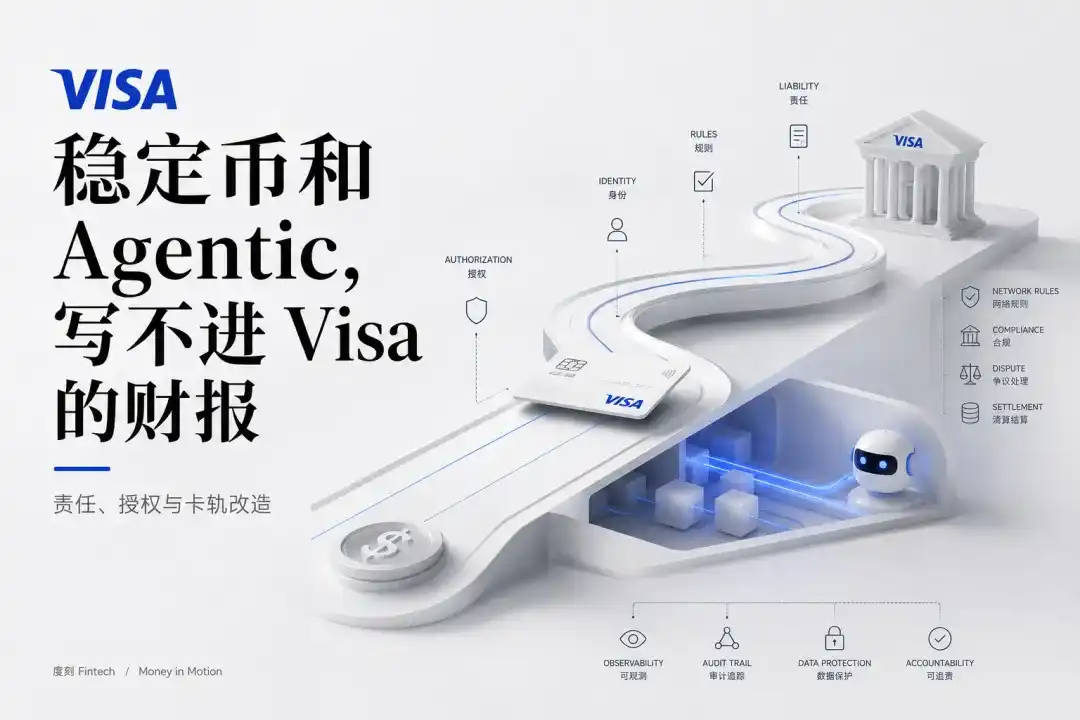
Stablecoins and Agentic Commerce Can't Make It into Visa's Earnings Report

**Title: Stablecoins and Agentic – Not Yet on Visa's Financial Statements** **Summary:** On July 16, Visa announced the Visa Stablecoin Platform (VSP), a platform for managing stablecoin issuance and movement, starting with OpenUSD. However, 12 days later, in its FY2026 Q3 earnings call, CEO Ryan McInerney detailed VSP but mentioned no revenue model, timing, or clients. CFO Christopher Suh's financial report did not mention VSP. Analysts' questions largely ignored stablecoins, focusing instead on cross-border growth and core metrics. The article examines Visa's business model using a "highway" analogy: Visa builds the payment network (the road), sets rules, and collects "tolls." Its revenue comes from four main streams: Service Revenue, Data Processing Revenue, International Transaction Revenue, and Other Revenue. After client incentives, Visa's net take-rate has remained stable at ~29 basis points. Currently, Visa's only meaningful revenue from stablecoins comes from "U Cards" – cards linked to stablecoin wallets. In these transactions, stablecoins are converted to fiat *before* entering Visa's network, so they are processed as regular card transactions, contributing to the standard 29 bps fee. Visa's other stablecoin initiatives—settlement pilots (converting *Visa's own* net obligations to stablecoins) and the new VSP platform—do not yet generate revenue; they are operational improvements or future commercial offerings. Regarding Agentic Commerce, Visa's products (Agent Score, Token Assurance Framework) are "devices" allowing AI agents to use the *existing* payment network. They are billed as value-added services. Visa views agentic commerce primarily as AI agents acting on behalf of humans in traditional commerce (replacement), not the potentially new market of machine-to-machine transactions (creation). Strategically, CEO McInerney listed stablecoins and agentic as a *fourth-tier* investment priority, behind core areas like consumer payments and value-added services. They are components within existing strategies, not standalone growth engines with defined addressable markets. In contrast, Mastercard took a different approach by acquiring BVNK for ~$1.8B to gain immediate scale in stablecoin payment processing. Visa's strategy appears conservative: building optionality without major bets. Its core moat is its decades-old dispute resolution and consumer protection infrastructure. The market values Visa for its current robust consumer spending, growing value-added services, and share buybacks—not for its stablecoin or AI agent initiatives. The narrative hype around these topics exceeds their current financial significance for the company.

marsbit37m ago

Stablecoins and Agentic Commerce Can't Make It into Visa's Earnings Report

marsbit37m ago

Trading

Spot
活动图片