Tapping into the Nation's Sentiment, He Conducts a Monetization Experiment with Personal Tokens

比推Published on 2025-12-29Last updated on 2025-12-29

Abstract

Nick Shirley, an independent investigative journalist, has captured massive attention across the United States by exposing alleged fraud and corruption in Minnesota's childcare system. His viral videos, viewed hundreds of millions of times, revealed a daycare center receiving $1.9 million in tax-free funds despite having no visible students and misspelling "learning" as "learing" on its sign. The story gained traction with endorsements from figures like U.S. Vice President Vance and Elon Musk. Capitalizing on the momentum, Shirley launched his personal creator token, $thenickshirley, on Base via Zora, earning over $41,000 in royalties and reaching a market cap of nearly $9 million. The incident also inspired meme tokens like $learing on Solana. This case exemplifies a new model of creator monetization—bypassing traditional platforms and advertisers—using blockchain to directly convert social influence and public engagement into revenue. It highlights the potential for decentralized tools to reshape media economics and content monetization.

Author: Azuma

Original Title: The Man Who Struck a Chord with American Social Sentiment Has Issued a Token


Who is the most viral person in the U.S. right now? The answer might not be the familiar names like Trump or Musk, but a man named Nick Shirley.
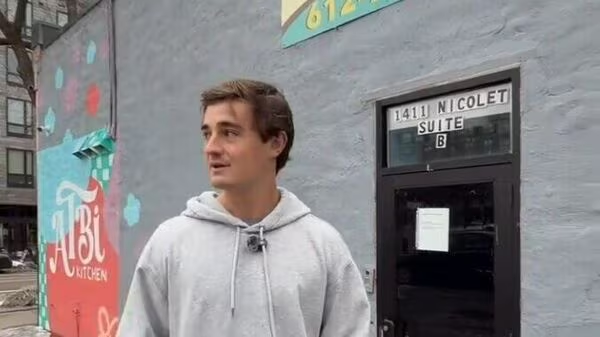
Who is Nick Shirley? He is an independent investigative journalist currently stirring up social sentiments across the United States. On December 27, Nick Shirley posted several investigative videos on social media platforms like X, Instagram, and YouTube, alleging rampant fraud and corruption in Minnesota.

In the videos, Nick Shirley visited a daycare center in the state. Although it was supposed to be operating hours, the center was closed, and the 99 registered students listed in public records were nowhere to be found. Nick Shirley asked a local resident who had lived in the area for eight years about this, and the respondent said: "I've lived here since 2017, but I've never seen any children."
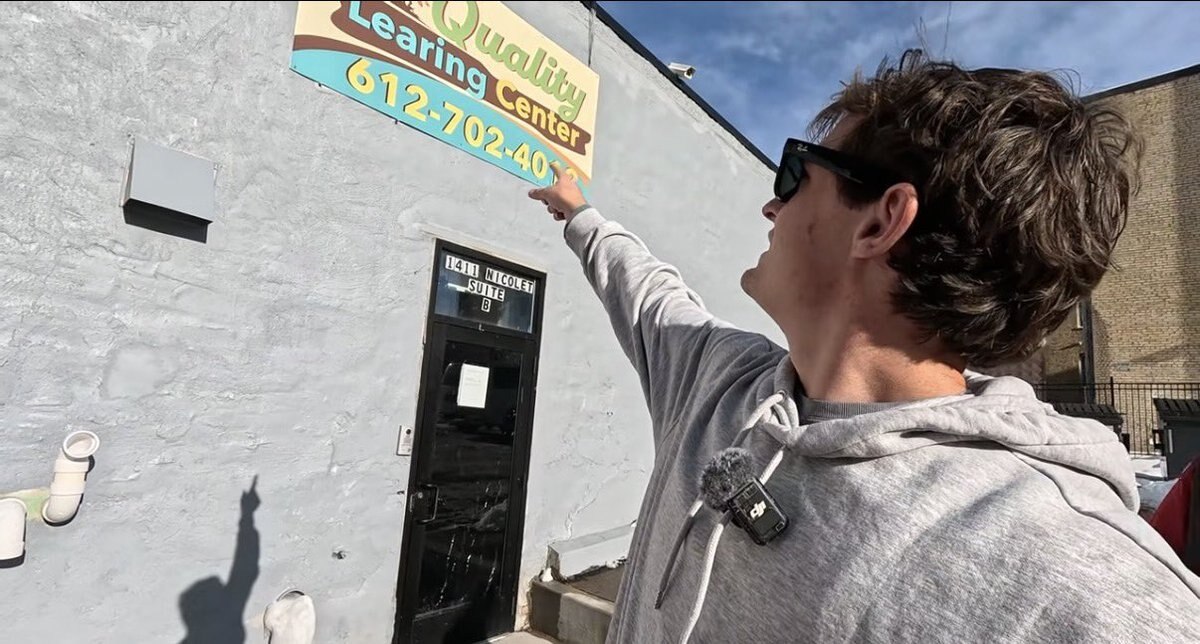
Nick Shirley stated in the video: "This is one of hundreds of 'daycare centers' that have received millions of dollars in government funding. This daycare, which can't even spell 'learning' correctly, received $1.9 million in tax-free support... and this is just one case among thousands of businesses in Minnesota suspected of fraudulent operations... Minnesota Governor Tim Walz is aware of these frauds but has never reported them."

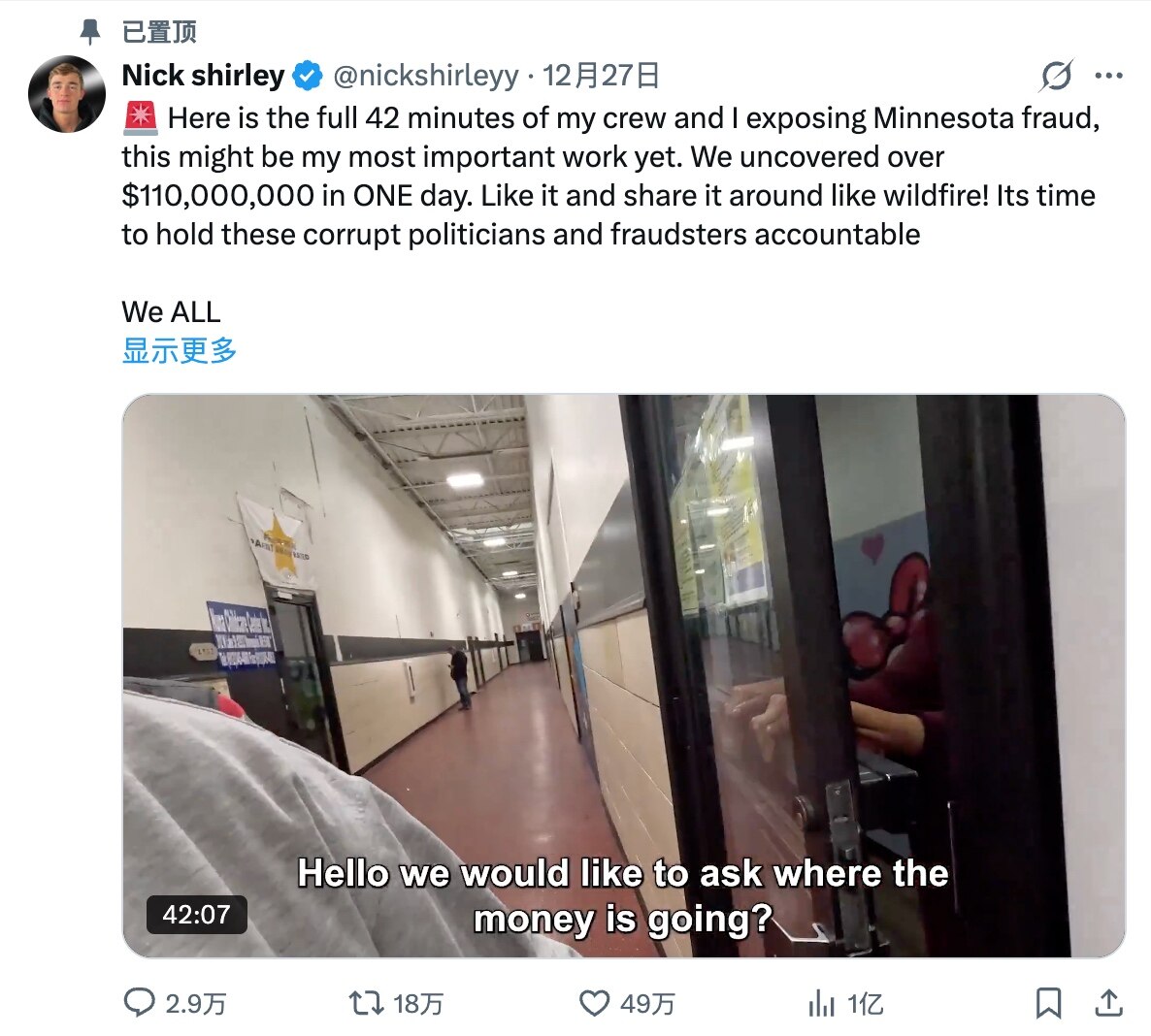
Nick Shirley's videos sparked massive attention and discussion across the United States. Within just two days, the total views of the videos reached hundreds of millions, with the full 42-minute investigative video on X alone garnering over 100 million views.
Prominent figures from politics and business also joined the conversation with Nick Shirley. U.S. Vice President Vance repeatedly reposted and replied,直言 Nick Shirley's investigation is more valuable than all the 2024 Pulitzer Prize works; Musk also followed Nick Shirley's account, highly praising his media value and calling "learing" the "word of the year."

Here's some additional U.S. political context: Minnesota is traditionally considered a Democratic stronghold in American politics, but in recent years, its political landscape has shown significant changes, exhibiting characteristics of a swing state. More crucially, the current governor, Tim Walz, was Harris's running mate during the 2024 election and could have been in Vance's current position as vice president... so it's no surprise that Vance personally joined the fray.

Given such a high-profile topic, coupled with the social and political attributes that Meme culture thrives on, the on-chain world was quick to respond.

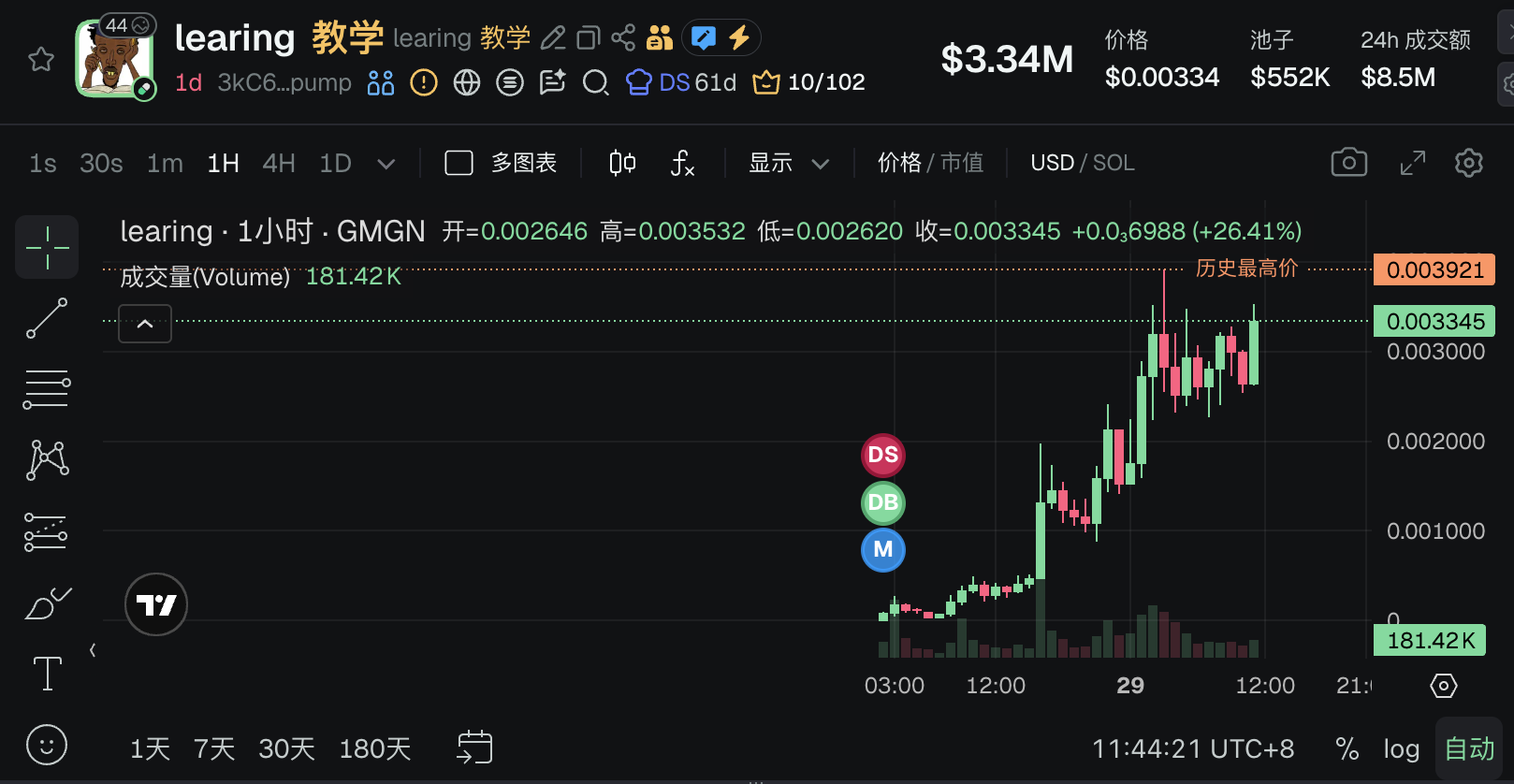
First, the community spontaneously炒作 around the most abstract misspelling from the investigation, "learing." The market cap of this Meme token on Solana is temporarily reported at $3.34 million.
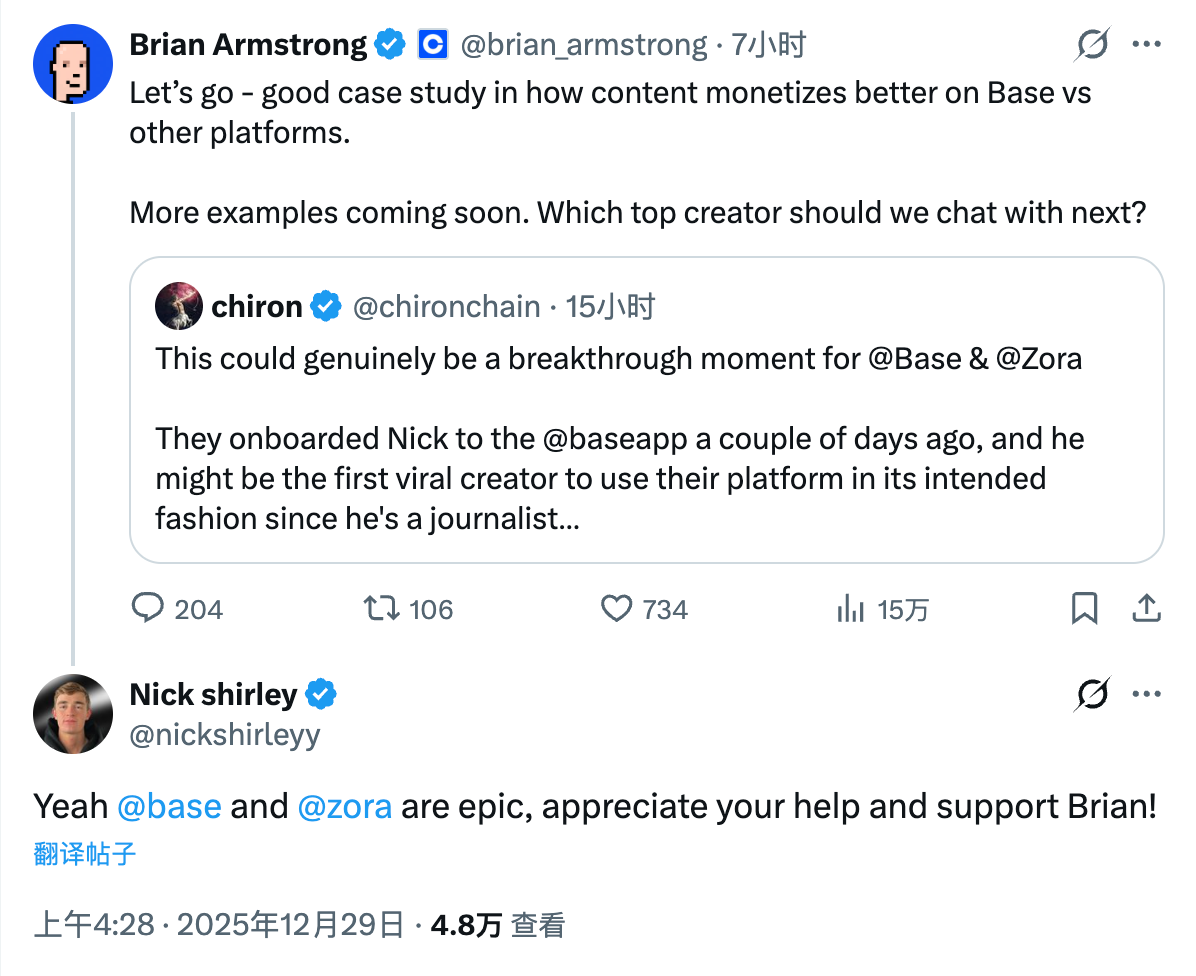
紧接着, the community discovered that Nick Shirley疑似 registered on Zora's creator platform and issued a personal creator token, $thenickshirley, on Base. Subsequent interactions in the comments between Coinbase founder Brian Armstrong and Nick Shirley confirmed that the token was indeed issued by him.
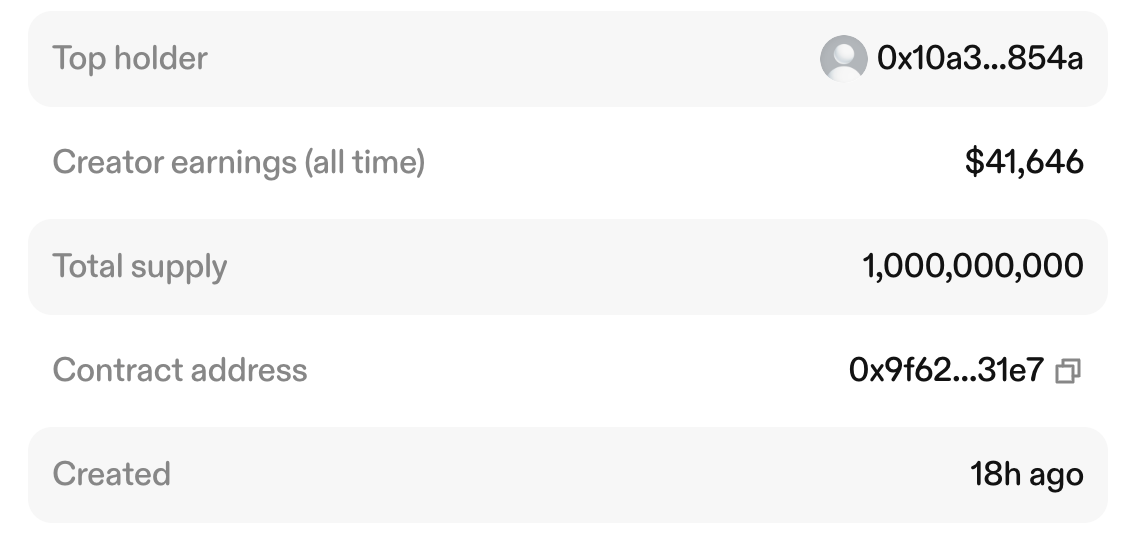
As of writing, the market cap of $thenickshirley is temporarily reported at $5.65 million (having once reached a high of $9.02 million), and Nick Shirley himself has already earned $41,646 in creator revenue through royalties.
Brian Armstrong commented on this, stating that it proves content monetization on Base is more effective than on other platforms. Nick Shirley didn't forget to thank Brian Armstrong after making money, praising Base and Zora as "legendary."

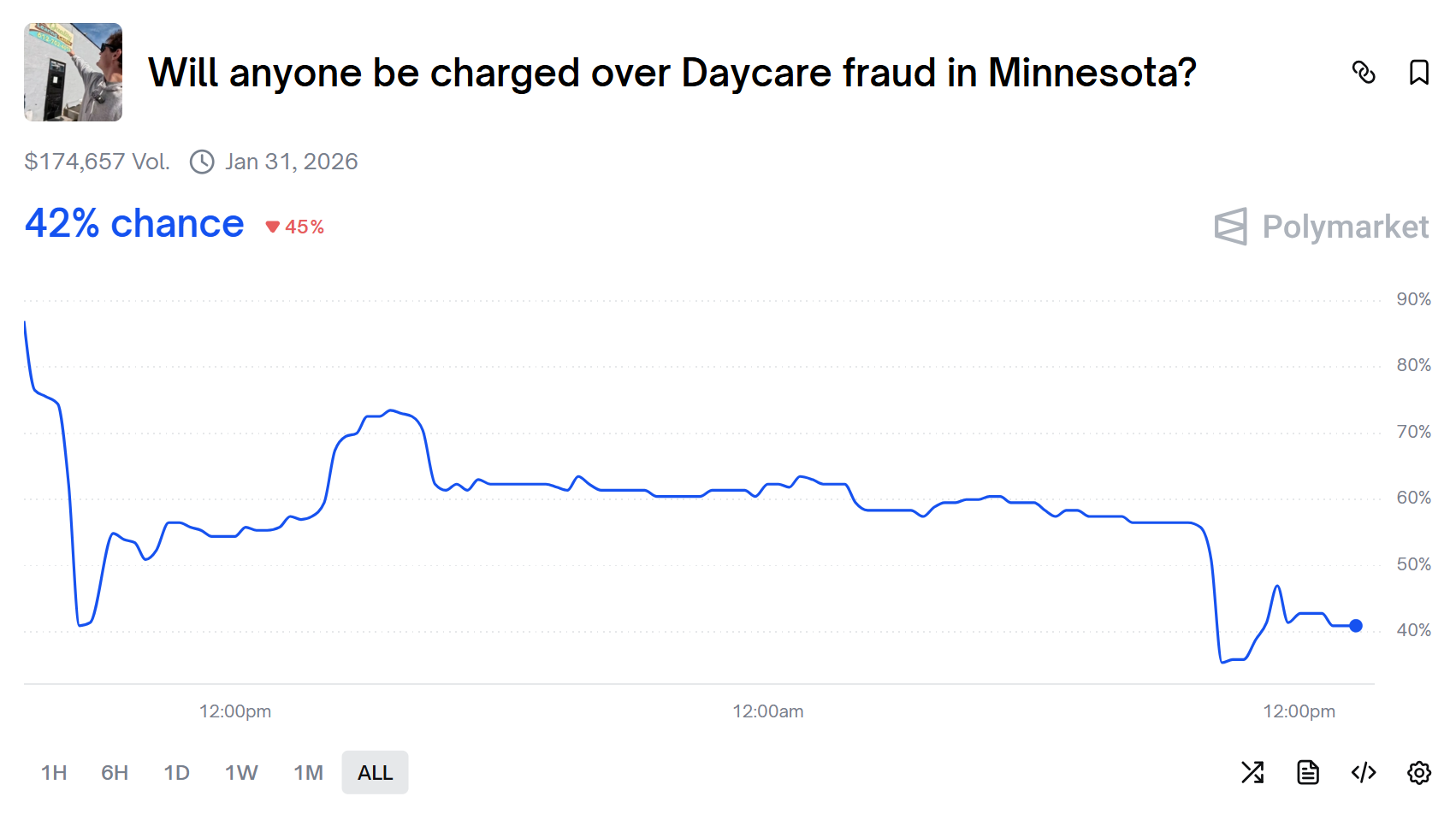
Additionally, the prediction market Polymarket quickly followed up with speculation on the后续"处理" of this topic. The current odds are as shown in the figure below:
1 hour ago, Nick Shirley posted his Venmo and crypto addresses on X, openly accepting "donations."
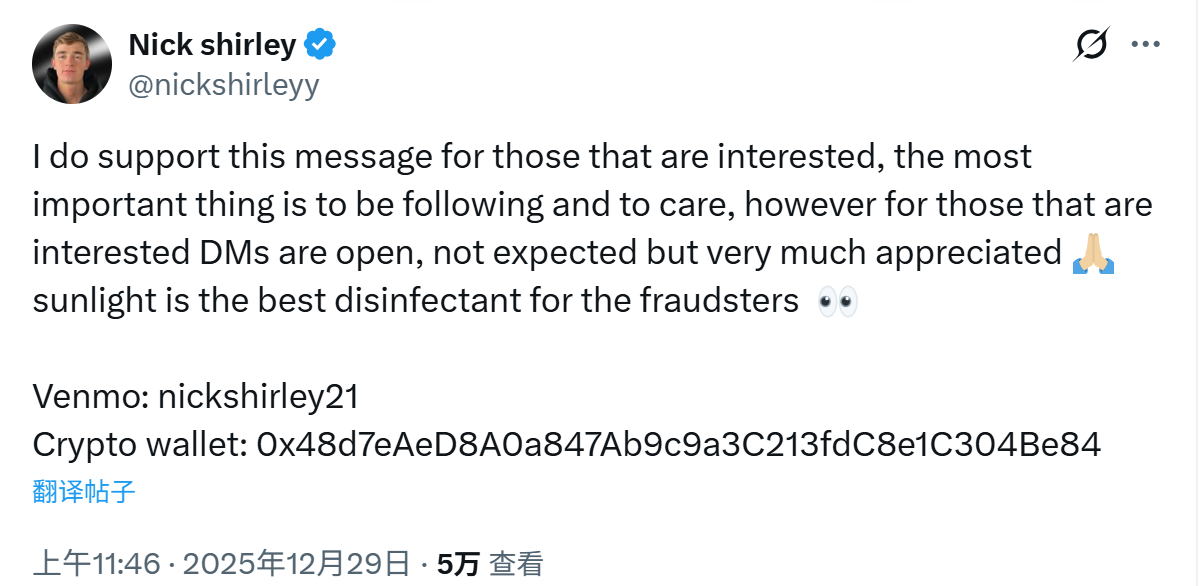
From the emerging Meme hotspot $thenickshirley, to Nick Shirley's token issuance itself, to opening up "all-channel crowdfunding" and the ongoing external market发酵, we are witnessing a performance of the dance between network media and open finance.

This is not merely a Meme speculation but更像 a real-world experiment on "creator economy + on-chain content monetization" — an individual with immense传播力 and public issue influence in the real world, without sponsors, platform revenue shares, or advertisers, directly completed the monetization loop of attention using on-chain tools.

What it validates is not "how high this token can rise," but a more fundamental question: whether content can truly be monetized on decentralized platforms in a lower-friction, more transparent manner. Within this, perhaps lies the future evolutionary direction of the media industry.


Twitter:https://twitter.com/BitpushNewsCN

BitPush TG Discussion Group:https://t.me/BitPushCommunity

BitPush TG Subscription: https://t.me/bitpush

Original article link:https://www.bitpush.news/articles/7598953

Related Questions

QWho is Nick Shirley and why did he gain significant attention in the United States?

ANick Shirley is an independent investigative journalist who gained widespread attention by exposing alleged fraud and corruption in Minnesota's childcare system through viral social media videos.

QWhat was the key finding in Nick Shirley's investigation that sparked public outrage?

AHe revealed a daycare center with 99 registered students that appeared non-operational during business hours and had received $1.9 million in tax-free funding despite misspelling 'learning' as 'learing' on its sign.

QHow did Nick Shirley monetize his viral content through blockchain technology?

AHe launched a personal creator token called $thenickshirley on Base via Zora's creator platform, earning $41,646 in royalty income while also publicly sharing his Venmo and crypto addresses for donations.

QWhich prominent figures publicly supported Nick Shirley's investigation?

AVice President Vance praised his work as more valuable than all 2024 Pulitzer Prize entries, while Elon Musk endorsed his media impact and humorously called 'learing' the 'word of the year'.

QWhat broader significance does this case hold according to the article?

AIt demonstrates a real-world experiment in creator economy and on-chain content monetization, showing how individuals with public influence can directly monetize attention through decentralized tools with lower friction and transparency.

Related Reads

Codex Goal Mode Usage Guide: How to Make AI Continuously Pursue a Specific Objective

"Codex Goal Mode: How to Make AI Work Continuously Toward a Specific Goal" OpenAI's Codex "goal mode" (/goal) transforms the AI from a reactive code assistant into a proactive execution agent capable of working autonomously for hours or even days to achieve a defined objective. To maximize its effectiveness, follow these key principles: 1. **Define Clear, Verifiable Exit Criteria:** The goal prompt should be a concise, measurable success condition, not a lengthy specification. Use quantifiable metrics like "reduce build time by 30%" or "achieve 100% test parity." 2. **Provide Initial Guidance and Tools:** Direct Codex toward likely problem areas and specify available tools (e.g., browsers, testing environments) to prevent it from exploring unproductive paths. 3. **Enable Progress Measurement:** Equip Codex with ways to track advancement, such as creating comparison tools for visual tasks or evaluation sets, ensuring it can gauge its own progress. 4. **Use a Realistic Execution Environment:** For tasks like performance optimization, provide access to environments that closely mimic production (e.g., similar configs, databases) to yield valid results. 5. **Be Cautious with Visual Goals:** Avoid vague "pixel-perfect" instructions. Instead, supplement visual references with functional checklists or design system specifications to prevent Codex from obsessing over minor details. 6. **Implement Progress Tracking:** For long-running tasks, have Codex commit code to draft PRs, update progress documents, or send Slack updates to maintain visibility into its work. 7. **Review and Consolidate Results:** Once the goal is met, instruct Codex to review its work, clean up ineffective experimental code, and reflect on what strategies succeeded or failed. Ultimately, using goal mode shifts the developer's role from writing prompts to managing a persistent engineering agent—defining objectives, establishing metrics, configuring environments, and conducting final reviews.

marsbit52m ago

Codex Goal Mode Usage Guide: How to Make AI Continuously Pursue a Specific Objective

marsbit52m ago

From Ethereum to AI's 'CROPS': What Exactly Is This 'Slow Variable' That Vitalik Has Repeatedly Emphasized?

Recently, Vitalik Buterin has frequently emphasized the concept of "CROPS," first outlined in the Ethereum Foundation's March mandate as core principles guiding its focus: Censorship Resistance, Capture Resistance, Open Source, Privacy, and Security. CROPS represents Ethereum's commitment to providing foundational capabilities for user sovereignty—enabling asset ownership, identity expression, and coordination without reliance on centralized platforms or surrendering ultimate control. This framework is gaining new urgency with the rise of AI, particularly AI agents managing digital assets and automating transactions. While AI offers convenience, it risks centralizing user data, intent, and control if dependent on opaque, centralized services. Vitalik argues for "CROPS AI"—AI that is open, privacy-preserving, secure, and capable of local execution to maintain user agency. He highlights convergence between "CROPS Ethereum access layers" and "CROPS AI," such as using zero-knowledge proofs for private remote LLM calls and Ethereum RPC reads, ensuring users can access services without exposing sensitive information. Ultimately, CROPS is not just an abstract ideal but a practical guide for Ethereum's development and AI integration. It addresses the critical long-term question: as digital systems grow more powerful, how can users retain control over their privacy, assets, and autonomy? In an AI-driven era, these principles may define Ethereum's enduring value—prioritizing verifiable, secure, and user-centric design over short-term optimizations like speed and cost alone.

marsbit56m ago

From Ethereum to AI's 'CROPS': What Exactly Is This 'Slow Variable' That Vitalik Has Repeatedly Emphasized?

marsbit56m ago

Trading

Spot
Futures

Hot Articles

Discussions

Welcome to the HTX Community. Here, you can stay informed about the latest platform developments and gain access to professional market insights. Users' opinions on the price of S (S) are presented below.

活动图片