# Trading Related Articles

HTX News Center provides the latest articles and in-depth analysis on "Trading", covering market trends, project updates, tech developments, and regulatory policies in the crypto industry.

2% of Users Contribute 90% of Trading Volume: The True Portrait of Polymarket

A deep analysis of Polymarket's user base reveals a stark concentration of trading activity: just 2% of users, classified as high-frequency, high-volume professional traders (P6), generate nearly 90% of the platform's total trading volume. This contrasts with the 69% of users who are low-activity, small-scale participants (P2), driven primarily by major events like elections or sports. The study, analyzing three months of on-chain data, segments users into seven profiles based on transaction frequency (T1-T7) and volume (V1-V7). While the user base is dominated by infrequent, small-scale bettors, the trading volume is overwhelmingly controlled by a small cohort of algorithmic and systematic traders. This structural split directly influences market dynamics. Cryptocurrency markets are dominated by P6 traders, indicating heavy algorithmic activity. Sports markets attract a more diverse mix, including seasoned human bettors. Political markets have the highest share of users but are filled with event-driven, one-time participants. The findings have critical implications for fee structures. Polymarket's current tiered fees—highest for crypto (1.80%), lower for sports (0.75%) and politics (1.00%), and zero for geopolitics—are strategically aligned with the tolerance of each user profile. A flat fee could severely damage liquidity by discouraging the vital P6 segment. The report concludes that platform growth strategies must be tailored to target specific user profiles: P6 for volume, P2 for user growth. It posits that Polymarket's future may lie at the intersection of crypto and AI, potentially becoming a mass-market platform for autonomous trading agents.

marsbit03/27 10:07

2% of Users Contribute 90% of Trading Volume: The True Portrait of Polymarket

marsbit03/27 10:07

Dialogue with Robinhood VP: A Large Number of Users Buy the Dip, AI is Just a Tool

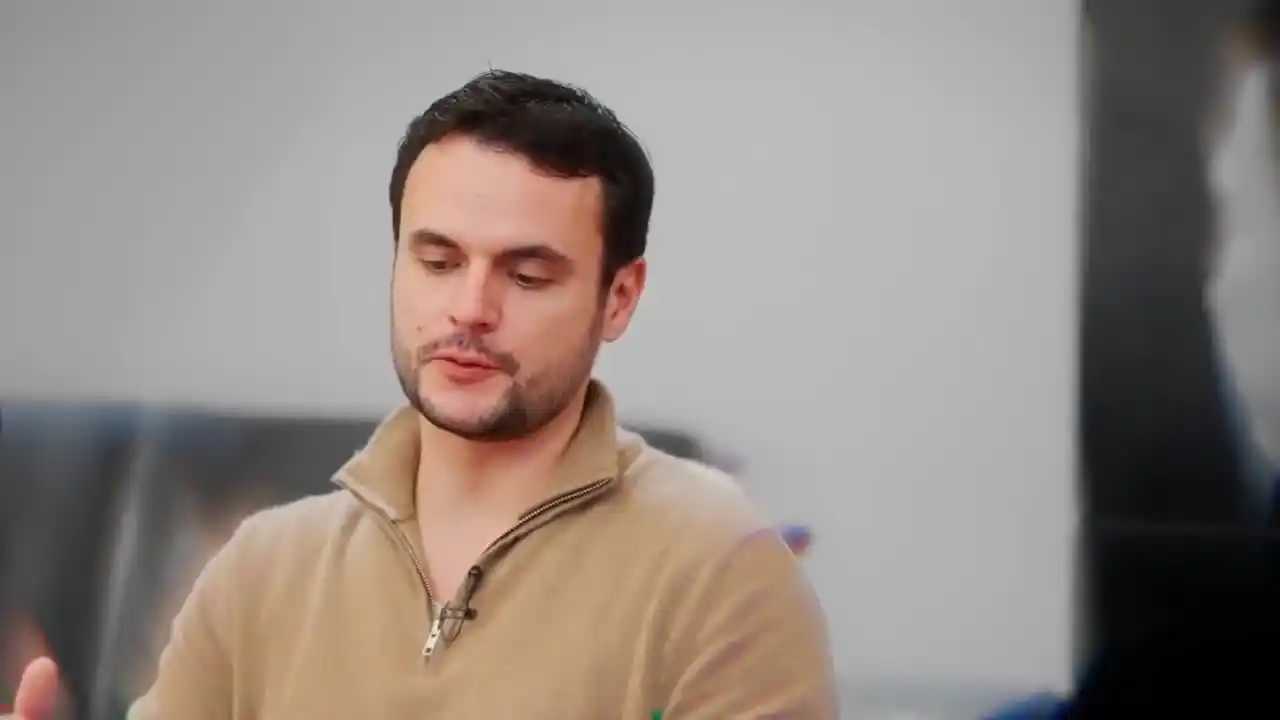
In a podcast interview, Robinhood's VP of Crypto and GM of International, Johann Kerbrat, discussed key trends and company strategies. He noted that during recent market volatility, many users bought the dip, highlighting Bitcoin's resilience and the advantage of 24/7 crypto trading. Robinhood is expanding its 24x5 equity trading to better serve global users and news-driven activity. The platform integrates stocks, crypto, options, futures, and prediction markets, allowing users to cross-utilize assets and create complex strategies, including hedging. Kerbrat emphasized accessibility and education over judging products. AI is heavily utilized internally for code generation, compliance, and market summaries (e.g., Cortex feature), accelerating development and personalization for international expansion. Robinhood is building an Ethereum L2 chain to enhance real-world asset (RWA) tokenization, aiming for instant settlement and 24/7 trading, currently testing with 2000 tokenized stocks in the EU under MiCA regulations. The recent Bitstamp acquisition expands institutional services like liquidity provision and white-label crypto solutions. Stablecoin usage on Robinhood is primarily for on/off-ramping and institutional settlements. The company joined the Global Dollar Network (USDG) to share stablecoin yields with users. Kerbrat sees AI as a tool to enhance, not replace, jobs, and highlights new family banking products for financial education and wealth transfer. Competition with rivals like Coinbase benefits consumers through lower fees.

marsbit03/26 07:53

Dialogue with Robinhood VP: A Large Number of Users Buy the Dip, AI is Just a Tool

marsbit03/26 07:53

a16z Crypto Operating Partner: Wall Street Is Undergoing Its Biggest Infrastructure Upgrade in 30 Years

Wall Street is undergoing its largest infrastructure upgrade in 30 years by migrating to on-chain systems, moving beyond mere blockchain exploration. This shift is driven by the promise of significantly faster capital movement, similar to the electronic trading revolution of the 1990s which reduced costs, expanded participation, and increased market size. Tokenization—digital representations of real-world assets like Treasuries and stocks on blockchain—enables 24/7 markets, instant settlement, fractional ownership, and global accessibility. Major institutions are already adopting this: DTCC plans to tokenize U.S. Treasuries by 2026, NYSE is launching a platform for on-chain stock trading, and Tradeweb has executed real-time blockchain-based Treasury trades. The current financial system’s inefficiencies—high fees, slow settlement, and intermediary dependencies—create opportunities for disruption. Smart contracts and atomic settlement eliminate these frictions, turning existing profit margins into avenues for innovation. Regulatory clarity, such as the CLARITY Act, is further accelerating this transition. Established institutions are not competitors but potential customers for new infrastructure products. Founders have a window to build the next generation of financial services atop this emerging regulated, institutional-grade framework. The outcome will be a larger, more liquid, and accessible global market.

marsbit03/26 03:59

a16z Crypto Operating Partner: Wall Street Is Undergoing Its Biggest Infrastructure Upgrade in 30 Years

marsbit03/26 03:59

活动图片