# Tech Related Articles

HTX News Center provides the latest articles and in-depth analysis on "Tech", covering market trends, project updates, tech developments, and regulatory policies in the crypto industry.

Metrics Ventures Market Watch: The Brewing Storm

In the past month, the market has been actively trading contrasting expectations, balancing global supply chain disruptions fueling re-inflation against both actual and anticipated (Walsh) interest rate hikes. This volatility has impacted commodities and most equities, though tech has temporarily benefited from concentrated short-term liquidity. Fundamentally, as previously analyzed regarding the Strait of Hormuz situation, the US faces deep-seated balance sheet issues beyond what any single Fed chair can resolve. Hypotheses around a figure like Walsh could only materialize if AI fundamentally reshapes production relations. Until then, most non-AI-leading nations (effectively all except the US and China) risk fiscal and monetary policy collapse, rendering the identity of the Fed chair ultimately irrelevant. For crypto assets, there is currently no clear role in these dominant narratives. The market remains strongly capped by the 200-day moving average. While trends may shift from "anything but AI" to "anything but mines," this phase is dominated by the silicon vs. carbon (AI vs. traditional) dichotomy, leaving little room for crypto—though its time will come. **Market Overview & Commentary** The crypto market lacks significant catalysts beyond hype, plagued by low volume and scarce innovation, with clear technical resistance. Currently, crypto struggles for attention as global focus lies elsewhere. Assets like gold, oil, and grains are more direct hedges against supply-chain-driven inflation/stagflation. Bitcoin needs more time for capitulation and consolidation; this reset is expected to last until at least Q4 2026. Looking ahead, three factors will likely drive future market volatility: 1. Whether Walsh repeats the patterns of predecessors like Bassant or Musk, shifting stance into a new policy cycle. 2. The market underestimates the severity of global supply chain damage and the prolonged time needed for repair, which will eventually lead to recognition of acute resource shortages and price swings. 3. AI non-beneficiary, high-inflation nations (e.g., UK, Japan) will face severe fiscal and monetary crises. Rapid AI-driven displacement could trigger a collapse of existing credit and welfare systems. Ultimately, the market may realize that an AI bubble burst could spark contagious sovereign credit crises. The monetary and fiscal responses to such a scenario could serve as the ultimate catalyst for Bitcoin's next major bull run.

marsbit05/26 07:43

Metrics Ventures Market Watch: The Brewing Storm

marsbit05/26 07:43

Is a Super IPO Wave Coming? Will It Drain and Crash the U.S. Stock Market?

The article discusses concerns about a potential "super IPO wave" hitting the U.S. stock market, with major companies like SpaceX, OpenAI, and Anthropic preparing to go public. While these large IPOs could collectively raise hundreds of billions, raising fears of a market "blood drain," analysis suggests the impact may be limited. Key points include: * Historical data shows IPO waves often coincide with strong market returns, as they typically occur during periods of high investor demand. * Model estimates suggest even the largest IPOs might only cause a market dip of around 1%. They are more likely to trigger a routine market pullback rather than end a bull market. * The current demand side remains supportive due to high household cash balances, strong corporate earnings growth, continued stock fund inflows, and robust share buyback announcements. * The main risk lies in concentrated investor positions, particularly in large-cap tech stocks, which are at elevated levels. A shift in funds towards new issuances could pressure these crowded sectors. * Recent fund flows show strength concentrated in U.S. and tech stocks, while other regions like Europe and Japan are experiencing outflows. The conclusion is that the IPO wave itself is unlikely to crash the market unless it coincides with a weakening in underlying demand factors like earnings or fund inflows into U.S. equities. The focus should be on whether demand can continue to absorb the new supply.

marsbit05/26 01:52

Is a Super IPO Wave Coming? Will It Drain and Crash the U.S. Stock Market?

marsbit05/26 01:52

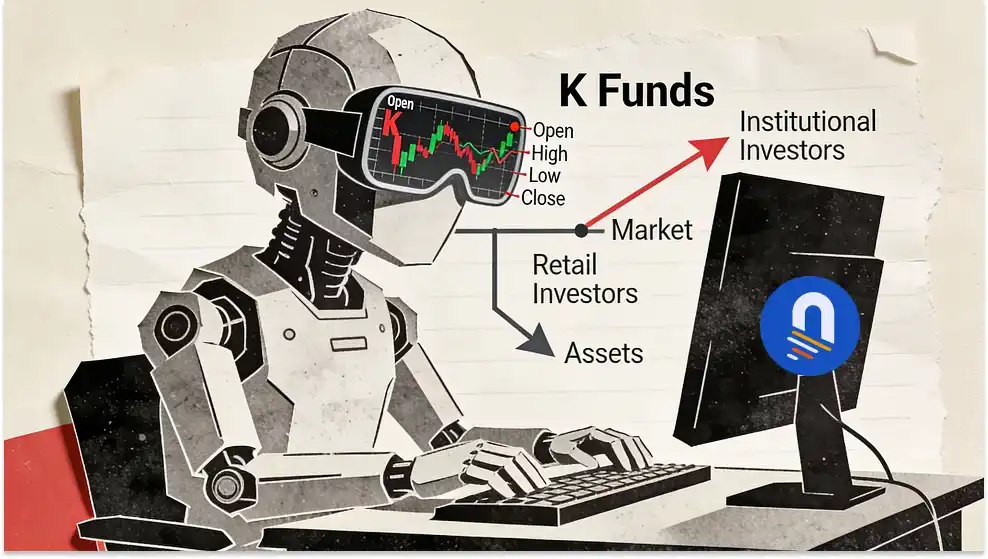
Silicon Bull, Carbon Bear: The Wealth Code of 2026 is Only 'Chips' and 'Light'

The article, titled "Silicon Bull, Carbon Bear: In 2026, the Wealth Code Lies Only in 'Chips' and 'Optics'", discusses the extreme market divergence in 2026 driven by the AI investment frenzy. Investment managers who concentrated on the AI hardware supply chain, particularly computing infrastructure, optical modules, and memory chips, have seen their fund net asset values (NAVs) surge dramatically, even reaching record highs. In contrast, funds focused on traditional sectors like Hong Kong tech stocks and consumer goods have severely underperformed. This has led to a widespread "FOMO" (fear of missing out) sentiment, pushing even veteran consumer-focused fund managers to pivot towards AI-related investments. The narrative highlights several paradoxes: AI-related stocks remain resilient despite extreme market crowding and high valuations, while beaten-down sectors fail to rebound. The author dubs this split market "Silicon Bull, Carbon Bear," suggesting a bull market only for those invested in silicon-based tech (AI hardware) and a bear market for carbon-based traditional economy sectors. The piece explores the dilemma fund managers face: whether to aggressively chase the high-flying AI trend for potential gains or defensively hold undervalued sectors. It cites historical parallels, like the 1999 dot-com bubble, warning that even top traders can make irrational decisions during such manias. Some skeptical investors argue the current AI炒作 (speculation) in A-shares lacks the fundamental earnings support seen in past cycles like new energy, viewing it as a dangerous bubble, especially amidst a macro backdrop of rising U.S. bond yields. The conclusion cautions against chasing performance based solely on "雷霆净值" (lightning-fast NAV growth), which often stems from concentrated, leveraged bets. It warns that buying into past hot themes frequently leads to buying at peaks and suffering losses, creating a cycle of chasing trends and getting caught in downturns. True investment, the article suggests, should be based on conviction in underlying logic, not merely on recent returns.

marsbit05/21 07:46

Silicon Bull, Carbon Bear: The Wealth Code of 2026 is Only 'Chips' and 'Light'

marsbit05/21 07:46

Nvidia's Wednesday Earnings Night: The Battle That Decides the Fate of the AI Bull Market is Here

NVIDIA is set to report its quarterly earnings after the U.S. market closes on Wednesday, May 20. This event is widely seen as a crucial test for the current AI-driven bull market. The semiconductor sector is exhibiting severe technical overbought conditions, with the Philadelphia Semiconductor Index (SOX) trading approximately 60% above its 200-day moving average—the most extreme deviation since the dot-com bubble peak of 1999/2000. Market sentiment is highly concentrated on a few AI-related stocks, raising concerns about overall market breadth. Analysts highlight a key contradiction: while fundamentals for AI and semiconductors remain strong, significant technical pressures are building. Option market activity reflects this tension. Positions are heavily skewed towards bullish calls, yet there is also notable hedging activity through put options on broad indices and sector ETFs, signaling preparation for potential downside volatility. An unusual pattern of rising stock prices alongside rising implied volatility further underscores the market's expectation for a major move. For NVIDIA specifically, the market's primary focus will be on its forward guidance for the next quarter, which is deemed more critical than the immediate earnings results. Despite a recent seven-day rally adding roughly $1.7 trillion in market cap, historical data shows NVIDIA's stock has often declined the day after its past five earnings reports. The outcome of this report is expected to have a significant ripple effect across the broader technology and semiconductor markets, given NVIDIA's pivotal role.

marsbit05/18 12:02

Nvidia's Wednesday Earnings Night: The Battle That Decides the Fate of the AI Bull Market is Here

marsbit05/18 12:02

TechFlow Intelligence Brief: South Korean Stock Market Plunges, Trump's Q1 Holdings Revealed

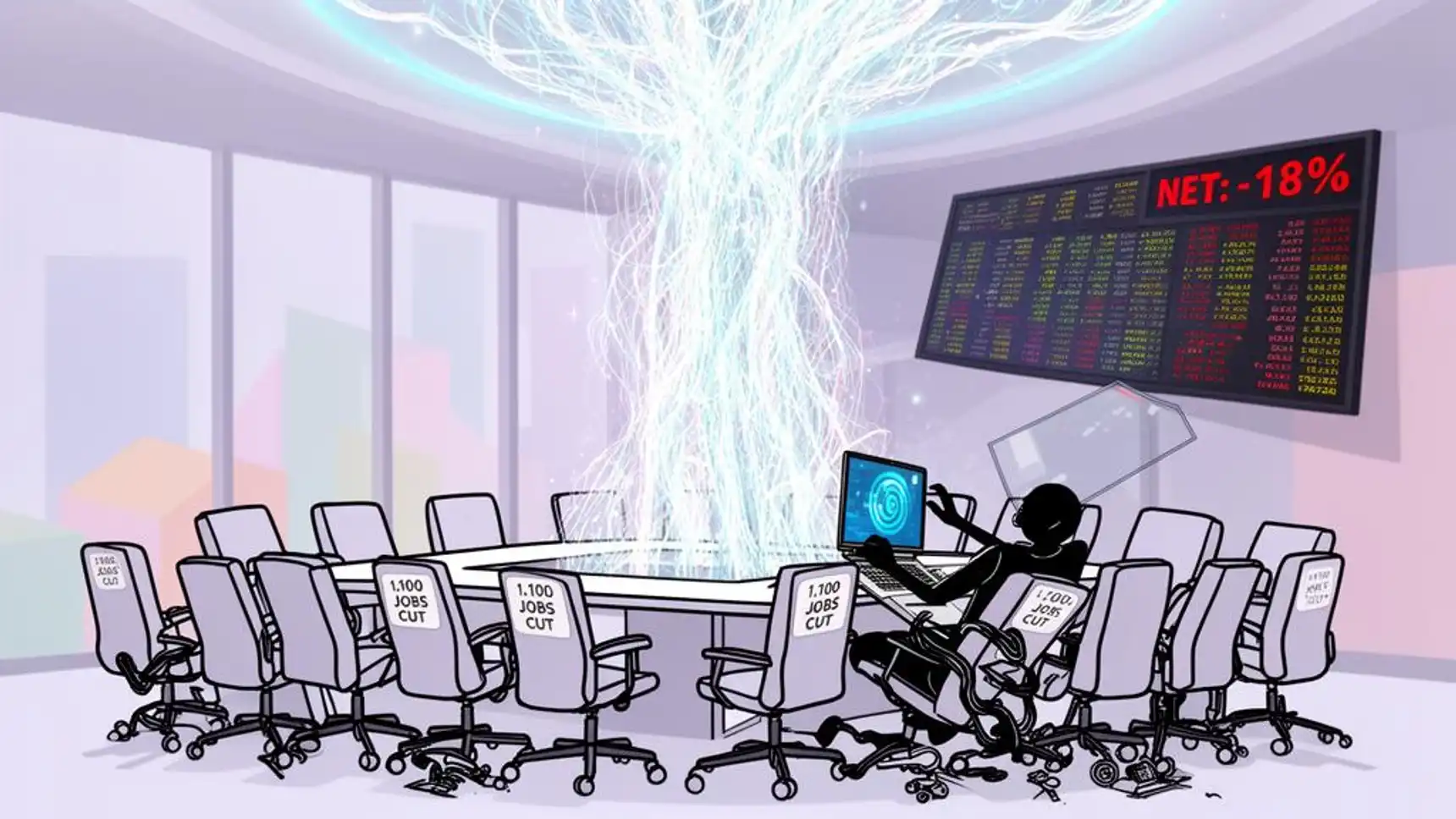
This TechFlow intelligence report covers key developments across AI, crypto, hardware, tech companies, and finance. In AI, Anthropic's valuation surpasses OpenAI, while AWS users face massive bills from runaway Claude API calls, highlighting AI's cost risks. A local AI model executing 'rm -rf' sparks safety debates. Meanwhile, arXiv enforces bans for AI-generated paper errors, and ChatGPT's impact on education grading is questioned. The crypto sector sees a US Senate committee passing a market structure bill, $2B in Bitcoin options expiring, and debates on Bitcoin's seizure resistance and DeFi's value without stablecoin yields. Hardware news includes NVIDIA planning RTX 5090 price hikes and the US approving H200 chip sales to Chinese firms. Tech company updates feature a macOS M5 chip exploit, Apple's iPhone price cuts, a South Korean stock market plunge, and Cisco's record revenue alongside layoffs. In stocks, NVIDIA's market cap hits $5.7T as Trump's Q1 portfolio shifts toward AI infrastructure stocks like NVIDIA and Broadcom. Cerebras' IPO soars, and a Reddit user reports massive gains on a leveraged ETF, fueling discussions on an AI bubble. Macro developments show precious metals falling due to Indian tariff hikes and strong US data. The Iran conflict disrupts Hormuz Strait shipping, affecting oil supplies. New tech includes 'haptic dreaming' to improve robot task success and Meta's Ray-Ban Display glasses with virtual handwriting. The underlying theme is AI's dual reality: creating both massive unexpected costs and immense market valuations. As technology advances rapidly, academia, markets, and regulators are all grappling to find a new equilibrium between innovation, risk, and control.

marsbit05/15 10:59

TechFlow Intelligence Brief: South Korean Stock Market Plunges, Trump's Q1 Holdings Revealed

marsbit05/15 10:59

Tech Stocks' Narrative Is Increasingly Relying on Anthropic

The narrative of tech stocks is increasingly relying on Anthropic. Anthropic, the AI company behind Claude, has become central to the financial stories of major tech giants. Elon Musk dissolved xAI, merging it into SpaceX as SpaceXAI, and secured an exclusive deal to rent the massive "Colossus 1" supercomputing cluster to Anthropic. In return, Anthropic expressed interest in future space-based compute collaborations. Google and Amazon are also deeply invested. Google plans to invest up to $40 billion and provide significant compute power, while Amazon holds a 15-16% stake. Both companies reported massive quarterly profit surges largely due to valuation gains from their Anthropic holdings. Crucially, Anthropic has committed to multi-billion dollar cloud compute contracts with both Google Cloud and AWS. This creates a clear divide: the "A Camp" (Anthropic-Google-Musk) versus the "O Camp" (OpenAI-Microsoft). The A Camp's strategy intertwines equity, compute orders, and profits, making Anthropic a "systemic financial node." Its performance directly impacts its partners' financials and stock prices. In contrast, OpenAI, while leading in user traffic, faces commercialization challenges, lower per-user revenue, and a recently restructured relationship with Microsoft. The AI industry is shifting from a race for raw compute (symbolized by Nvidia) to a focus on monetizable applications, where Anthropic currently excels. However, this concentration of market hope on one company amplifies systemic risk. The rise of powerful open-source models like DeepSeek-V4 poses a significant threat, as they could undermine the value proposition of closed-source models like Claude. The article suggests ongoing geopolitical efforts to suppress such competitors will be a long-term strategic focus for Anthropic's allies.

marsbit05/12 01:14

Tech Stocks' Narrative Is Increasingly Relying on Anthropic

marsbit05/12 01:14

活动图片