# Pricing Related Articles

HTX News Center provides the latest articles and in-depth analysis on "Pricing", covering market trends, project updates, tech developments, and regulatory policies in the crypto industry.


From Subsidies to Token-Based Pricing to Price Cuts: Is OpenAI Sparking a Price War? Is the Inflection Point for Token Economics Nearing?

The commercialization of generative AI is facing a critical inflection point as a potential price war looms. According to The Wall Street Journal, OpenAI is considering a significant cut to its token fees to compete with rival Anthropic, signaling a shift from a growth-at-all-costs model focused on token consumption. This move comes as both companies, reportedly losing billions on compute, prepare for IPOs, and as enterprise customers face "bill shock" from switching to usage-based token billing. Reports indicate poor ROI, with one analysis finding only 18 cents of every dollar spent on AI tokens generates user-facing value. The industry's initial phases—from flat-rate subscriptions to aggressive subsidies—have given way to a reckoning with real costs. Analysts debate the future: some predict a bifurcation between premium, high-cost models for complex tasks and cheaper alternatives for routine work, while others believe overall spending will still rise as agentic AI increases tokens per task. Notably, Chinese model DeepSeek's low-cost API is gaining traction with U.S. enterprises, adding competitive pressure. The core challenge is redefining value beyond token volume ("tokenmaxxing") toward measurable productivity ("valuemaxxing"), as the entire AI value chain, from cloud providers to chipmakers, feels the ripple effects of unsustainable pricing.

marsbit06/11 23:50

From Subsidies to Token-Based Pricing to Price Cuts: Is OpenAI Sparking a Price War? Is the Inflection Point for Token Economics Nearing?

marsbit06/11 23:50

Buy an NFT First to Get a Ticket? The Largest World Cup Ticket Slump in History

"Ticketing Woes for 2026 World Cup: NFT 'Right-to-Buy' and High Prices Dampen Sales" Despite anticipation for the 2026 FIFA World Cup, with 48 teams and 104 matches across North America, the tournament faces significant unsold tickets, with approximately 180,000 group-stage tickets still available for resale just before kick-off. This unexpected shortfall is attributed to FIFA's controversial new ticketing strategy, which includes an NFT-based "Right-to-Buy" (RTB) system and opaque, dynamic pricing. FIFA introduced RTBs as digital collectibles (NFTs) sold on its FIFA Collect platform. An RTB grants the holder only the right to purchase a ticket for a specific match later, not the ticket itself. This two-step process, criticized for selling "scarcity" first, saw RTBs priced from tens to hundreds of dollars, generating millions in revenue for FIFA. With many tickets remaining available on official channels, the value of these prepaid purchase rights is now being questioned. Compounding the issue are ticket prices, reported to be 2 to 4 times higher than the 2022 Qatar World Cup, and up to 7 times more for marquee matches. FIFA employed dynamic pricing, common in U.S. sports, but lacked transparency on seat availability and exact locations during sales, frustrating global fans facing high travel costs. This has drawn scrutiny from regulators in New York and New Jersey. FIFA's official resale platform also drew criticism for imposing high fees—roughly 10% on sellers and 17% on buyers, allowing FIFA to profit further from secondary market transactions. While FIFA President Gianni Infantino states over 6 million tickets have been sold, the situation highlights a potential disconnect between fan enthusiasm and willingness to pay under an aggressive commercial model.

marsbit06/11 08:59

Buy an NFT First to Get a Ticket? The Largest World Cup Ticket Slump in History

marsbit06/11 08:59

Trade.xyz's Rebase Refusal Sparks Controversy, On-Chain Pre-IPO Market Faces Major Pricing Test

The debate surrounding Trade.xyz's refusal to adjust its SPCX (SpaceX pre-IPO) perpetual contract pricing amid updated share count revelations highlights a key challenge for on-chain pre-IPO markets. While several centralized exchanges (CEXs) paused and repriced their contracts after SpaceX's filing showed a ~10% increase in total shares, Trade.xyz maintained its market-driven pricing logic, which tracks expected per-share price sentiment rather than fundamental valuation metrics like market cap. This discrepancy triggered cross-platform arbitrage and caused leveraged long positions on Trade.xyz to suffer significant losses, as the platform's HIP-3 architecture lacks a native "Rebase" mechanism to neutrally adjust all user positions following such corporate actions. The incident underscores the difficulty for decentralized perpetual exchanges (Perp DEXs) to implement Rebase—a process CEXs handle by centrally pausing markets and adjusting ledger data. On-chain, this requires complex smart contract modifications, increasing gas costs, complexity, and potential attack surfaces. While some DEXs have managed similar adjustments, Trade.xyz's current design does not natively support it, though the team is reportedly exploring solutions for future events like stock splits. Ultimately, the controversy serves as a critical case study for the nascent on-chain pre-IPO sector, raising questions about price discovery reliability, transparent rule disclosure, and the readiness of DeFi infrastructures to handle traditional corporate actions as real-world assets (RWAs) gain traction.

marsbit06/11 07:58

Trade.xyz's Rebase Refusal Sparks Controversy, On-Chain Pre-IPO Market Faces Major Pricing Test

marsbit06/11 07:58

Doubao Charges More than GPT, While DeepSeek Slashes Prices Dramatically: Who Will Win?

The article discusses the divergent pricing strategies of two major Chinese AI companies. In May, Doubao (by ByteDance) began testing fees, with its professional tier priced higher than ChatGPT Plus. Meanwhile, DeepSeek permanently cut prices for its V4-Pro API to a quarter of the original, setting new global lows. Doubao, with high user traffic from ByteDance apps like TikTok, leads in monthly active users but faces massive compute costs from its free model. Its move to a freemium model targets heavy users, aiming to balance scale and monetization amid substantial investments. DeepSeek's price cut is attributed to architectural innovations that slash inference costs, adaptation to domestic hardware reducing dependency, and engineering optimizations. It focuses on the enterprise (B2B) market, aiming to become a leading model base. Both companies are currently unprofitable. The article contrasts their approaches with Anthropic, which is profitable by primarily serving enterprises with high-value use cases like coding and agents. It argues that sustainable AI business models require integrating AI into real workflows to deliver tangible ROI, rather than just offering chat services. DeepSeek's recent $7 billion funding round, including investments from Tencent, is noted to bolster its B2B position. The ultimate winner will be the player that successfully transforms AI into measurable returns, whether through consumer productivity ecosystems or enterprise platforms.

marsbit06/11 06:23

Doubao Charges More than GPT, While DeepSeek Slashes Prices Dramatically: Who Will Win?

marsbit06/11 06:23

Anthropic Released the "Most Powerful Model," But Most People Can't Use It

In April, Anthropic launched a preview of its "Mythos" model, which was not publicly released due to its exceptional ability to autonomously discover high-risk zero-day vulnerabilities, posing a security threat if misused. It was restricted to a trusted group of security partners under "Project Glasswing." On June 10, Anthropic officially released Fable 5 and Mythos 5. They share the same underlying model but are distributed under different rules. Fable 5 is for general users, while Mythos 5 remains locked for trusted security partners. Benchmarks show Fable 5 leading in software engineering and long-task execution, with significant improvements in generating production-ready code. However, Fable 5 includes a safety classifier that automatically downgrades requests related to cybersecurity, biochemistry, or model distillation to the weaker Opus 4.8 model. This mechanism, while intended for safety, can affect the user experience and has faced criticism for being overly conservative. Pricing is another key point. Fable 5's API costs are double that of Opus 4.8. Furthermore, after a free trial period ending June 23, it will be removed from standard subscription plans, requiring users to purchase additional credits for access. This shift signals a move towards pay-as-you-go pricing for the most advanced capabilities. The strategy highlights a growing divergence in the AI industry: while some players like DeepSeek are drastically cutting prices, Anthropic is increasing them for its top-tier model, using cost as a filter for high-value users. The article suggests the AI market is stratifying, with commoditized capabilities becoming cheaper while premium, cutting-edge models command a significant price premium.

marsbit06/10 23:52

Anthropic Released the "Most Powerful Model," But Most People Can't Use It

marsbit06/10 23:52

GitHub, Transfixed by AI

On the night of February 9th, GitHub suffered a major outage caused by a simple configuration change—reducing a cache refresh interval from 12 to 2 hours—that triggered a cascade of failures. This was not an isolated event, but part of a broader pattern. In early 2026, GitHub experienced at least 8 major incidents, failing to meet its promised 99.9% availability. These outages stemmed from structural issues: explosive growth in load, tight service coupling, and insufficient protection against abnormal traffic. This unprecedented load is driven by AI Agents. In 2025, GitHub handled ~1 billion commits. By 2026, weekly commits reached 275 million, projecting to ~14 billion for the year—a 14x increase. AI tools like Claude Code now contribute 4.5% of all public repository commits, with weekly submissions surging 25x in just three months. AI-generated pull requests jumped from 4 million to 17 million per month in half a year. Unlike human developers, AI Agents work continuously, generating commits at a scale that overwhelms infrastructure designed for human rhythms. The surge also shattered GitHub's business model. Copilot's flat-rate pricing, based on assisting human developers, became unsustainable as Agentic AI sessions consumed resources worth hundreds of dollars for a few dollars in fees. In response, GitHub imposed usage limits and, by June 1st, shifted to a pay-per-use "AI Credits" system. Facing this new reality, GitHub realized a 10x scaling plan was insufficient. It announced a need to *redesign* its architecture for 30x current scale—decoupling services, adding fault isolation, and improving change management to prevent cascading failures. Other platforms like Stripe and AWS are facing similar challenges with AI Agents. Fundamentally, GitHub is transitioning from a human collaboration platform to an "exhaust pipe" for automated AI workflows. Its detailed post-mortem reports aim to maintain trust during this turbulent rebuild. The February outage was not just a technical glitch, but a signal of the software industry's entry into a new, AI-driven era.

marsbit06/04 10:40

GitHub, Transfixed by AI

marsbit06/04 10:40

SaaS Battle Royale: The Survivors Who Win All Share One Common Trait

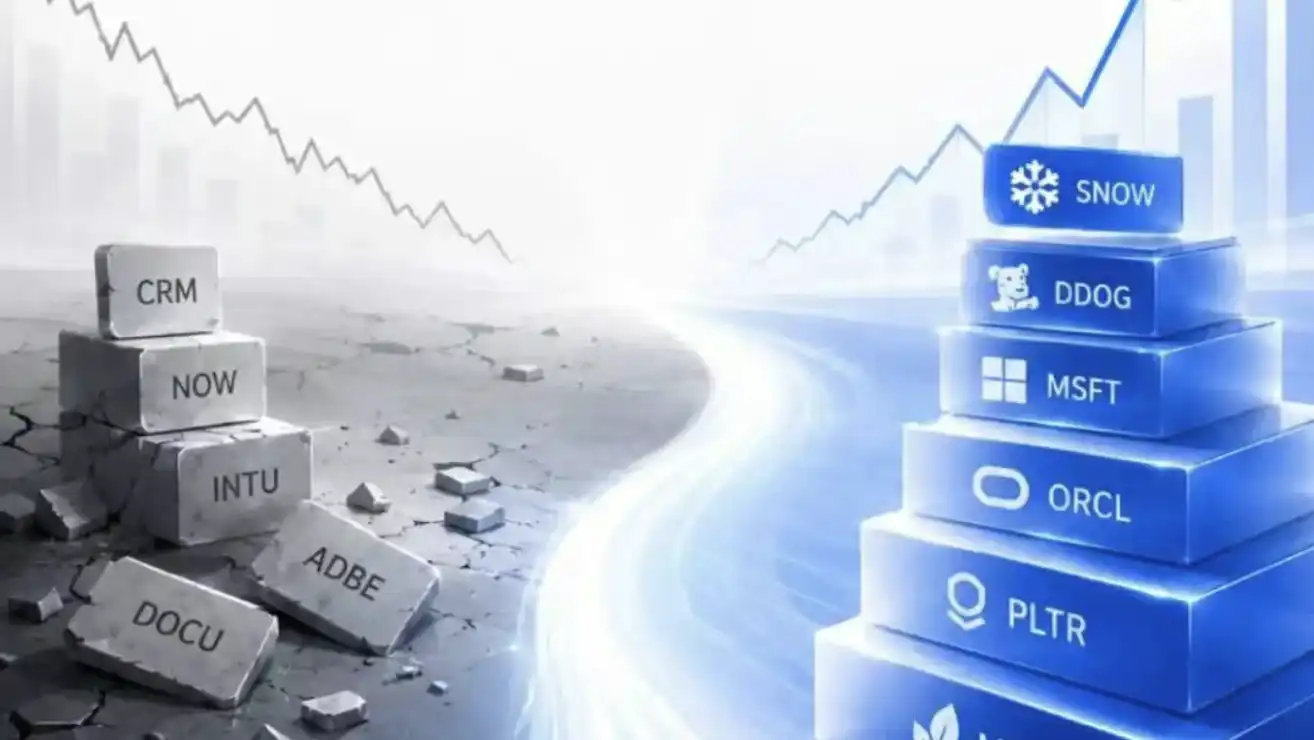
**Summary** The AI revolution has triggered a "SaaS apocalypse," forcing a brutal market shakeout. The key dividing line is the pricing model. Companies like Snowflake and Datadog, which charge based on consumption (e.g., data processed or compute used), are thriving. AI workloads actively *generate* more demand for their services, fueling growth. Datadog's accelerating revenue is a prime example. Microsoft and Palantir, as platform/ecosystem players, also benefit by acting as essential channels for AI deployment. In contrast, traditional SaaS firms built on per-seat or per-task licensing (e.g., Intuit, Adobe) face direct pressure, as AI threatens to automate the very human tasks their software supports. Companies like Salesforce, a per-seat giant, are caught in the middle. While showing strong AI monetization (e.g., its Agentforce platform) and experimenting with consumption-based "Flex Credits," its stock remains under pressure, illustrating that the market rewards *completed* transitions, not just the intent. The recent Microsoft Build conference underscored key trends: AI is evolving from an assistant to an autonomous "agent," and platform providers like Microsoft are consolidating their control. The market's recovery is highly selective, focused on identifying which companies are "fed by AI" versus "eaten by AI." Future focus will be on the diffusion of this recovery to transforming companies and the real-world adoption data of AI agents like Microsoft Copilot.

marsbit06/03 02:02

SaaS Battle Royale: The Survivors Who Win All Share One Common Trait

marsbit06/03 02:02

From Tokens to Machine Labor: AI is Shifting from Tool to "Worker"

The article "From Token to Machine Labor: AI is Evolving from Tool to 'Worker'" argues that the business model for AI is shifting beyond simply selling computational resources (tokens, GPU hours) or model access. Instead, a new "machine labor market" is emerging, where the core economic transaction is the purchase of economically useful work directly performed by software. The central thesis is that AI pricing will evolve through four stages: 1) raw tokens, 2) standardized LLM capabilities (e.g., text generation), 3) industry-specific labor markets (e.g., legal review, radiology), and finally 4) a programmable results market where tasks like resolving a support ticket are bid on and priced based on outcome. In this future, buyers will care less about *which* model or GPU completes a task and more about whether the work meets specified standards for accuracy, latency, and cost. This transition reframes the impact of AI on human labor. Rather than simple replacement, it suggests a re-coordination where machines handle standardized, verifiable work, freeing humans for roles involving oversight, context management, responsibility, and final judgment. In some cases, this "last 1%" of human input becomes more valuable as it enables the other 99% to be automated. Furthermore, as AI reduces the cost of work, demand may expand, creating larger markets (e.g., 24/7 customer service) rather than just cheaper versions of existing ones. The article concludes that while infrastructure (GPUs, models, tokens) remains crucial upstream, the market is converging on a simpler, tradeable unit: machine labor that can be defined, measured, priced, and procured based on contractible specifications.

marsbit05/31 12:33

From Tokens to Machine Labor: AI is Shifting from Tool to "Worker"

marsbit05/31 12:33

Why Sam Altman's 'Water and Electricity Theory' Sparks Copyright Controversy

OpenAI CEO Sam Altman's recent statement that "intelligence will become a utility like electricity or water" has sparked significant controversy, primarily around copyright issues and the nature of AI development. While positioning AI as a utility serves as a compelling narrative for infrastructure investors, critics argue the analogy is flawed in three key areas. First, there's a fundamental "property gap." Traditional utilities like water and power create new, physical infrastructure from scratch. In contrast, major AI models are trained by reorganizing vast amounts of existing human-created content—books, articles, code, etc.—often scraped from the web without explicit permission or compensation to creators. This "free acquisition, paid resale" model is seen by many as ethically problematic. Second, there's a "pricing gap." True public utilities are typically regulated to ensure universal service with non-discriminatory, cost-plus pricing. AI's token-based pricing, however, involves significant price discrimination (e.g., output tokens costing much more than input tokens) and is designed for revenue maximization, not equitable access. Third, a "governance gap" exists. Utilities operate under public oversight, while AI pricing and development are currently controlled by a few private companies. Furthermore, the industry's own shift toward buying licensed training data (e.g., deals with Reddit or news publishers) undermines its previous legal reliance on "fair use" for freely scraped data. In conclusion, while AI is indeed becoming a foundational technology, calling it a public utility remains contentious. The title requires not just scale and a pay-per-use model, but also credible solutions for data provenance, equitable pricing, and public governance.

marsbit05/27 10:03

Why Sam Altman's 'Water and Electricity Theory' Sparks Copyright Controversy

marsbit05/27 10:03

活动图片