# Memory Related Articles

HTX News Center provides the latest articles and in-depth analysis on "Memory", covering market trends, project updates, tech developments, and regulatory policies in the crypto industry.

Lobster Key 11 Questions: The Most Easy-to-Understand Breakdown of OpenClaw Principles

"OpenClaw Demystified: A Beginner's Guide to AI Agent Principles" explains the popular OpenClaw AI assistant by breaking down its core functions into 11 key questions. The article first clarifies that the underlying large language model is merely a "text prediction engine" with no real understanding, memory, or senses. OpenClaw acts as a "shell" around this model, creating the illusion of memory by appending massive prompts containing its personality files (AGENTS.md, SOUL.md, USER.md) and the entire conversation history before each interaction. This mechanism is why it's "expensive"—each query processes thousands of tokens of context, not just the latest message. A core differentiator is tool use. The model itself only outputs text; OpenClaw parses this output for specific structured commands (e.g., `[Tool Call] Read("file.txt")`) and executes the corresponding action (reading the file) locally on the user's machine. This allows it to act, not just advise. For complex tasks, it can even write and run its own Python scripts, a powerful but dangerous capability. To manage limited context windows and complex tasks, OpenClaw uses sub-agents. A main agent can spawn sub-agent to handle a sub-task and return a summarized result, preventing the main context from being overloaded. Crucially, sub-agents cannot spawn their own to avoid infinite loops. Unlike standard chatbots, OpenClaw is proactive due to its heartbeat mechanism, which periodically prompts the model to check for tasks. It can also "sleep" via cron jobs to wait for long-running tasks, saving resources. The guide ends with critical security warnings. OpenClaw has extensive local access, making it a significant risk. It can malfunction (e.g., deleting emails uncontrollably) or fall victim to prompt injection attacks, where malicious input from the web is mistaken for a user's command. The strong recommendation is to run it on a dedicated, isolated "sacrificial" computer with minimal permissions and mandatory human confirmations for destructive actions.

Odaily星球日报03/11 09:53

Lobster Key 11 Questions: The Most Easy-to-Understand Breakdown of OpenClaw Principles

Odaily星球日报03/11 09:53

After Integrating OpenClaw into Every Aspect of My Life, I Personally Switched It Off

After extensively using OpenClaw (formerly Clawdbot and Moltbot) for over a month as a 24/7 AI assistant integrated with Telegram, email, and calendar, the author decided to shut it down. The primary reasons were its unreliability in long-term memory retention despite claims, high and unpredictable API costs (over $150 monthly), and significant security vulnerabilities, including exposed API keys and unauthorized data transmission. The author realized that a constantly running AI was unnecessary for most valuable tasks, which were better handled through active, intentional work. The core functions of OpenClaw—remembering user context and automating tasks—were effectively replicated using Claude’s ecosystem. By creating a consolidated CLAUDE.md file (replacing OpenClaw’s multiple configuration files), leveraging Claude’s built-in memory features, and integrating with Obsidian via CLI for efficient knowledge management, the author achieved similar functionality with greater reliability. For mobile access, Claude’s Remote Control feature or a Telegram bot solution provided seamless interaction. Scheduled tasks were handled through Claude’s Cowork feature, avoiding the cost of continuous API checks. Ultimately, Claude Pro or Max subscriptions offered a more predictable cost structure ($20–$200/month) and a stable, secure environment. The author concluded that Claude’s ecosystem delivers nearly all of OpenClaw’s promised benefits without the operational headaches, making it a superior choice for practical AI assistance.

marsbit03/02 10:13

After Integrating OpenClaw into Every Aspect of My Life, I Personally Switched It Off

marsbit03/02 10:13

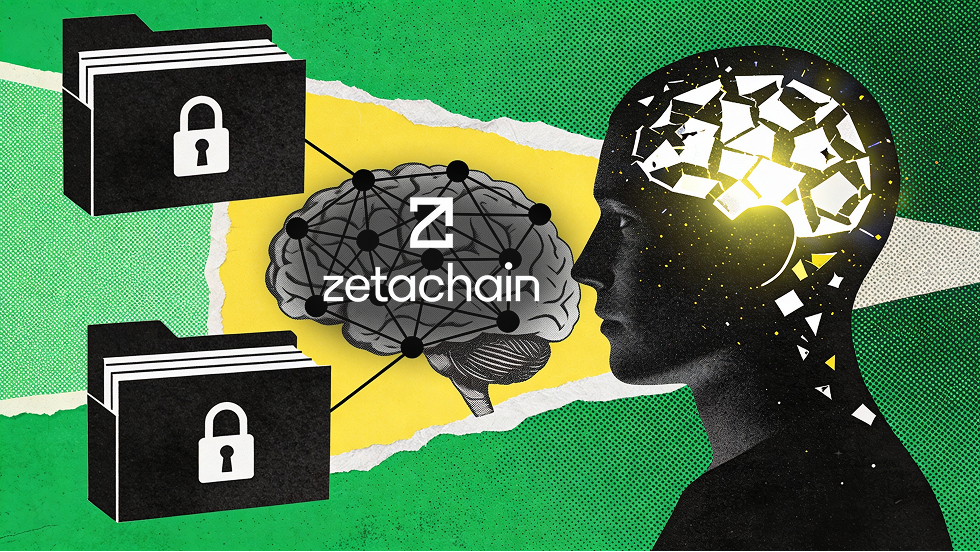
Interview with ZetaChain Lead Jessie Zhang: Reclaiming Humanity's Right to Think Between Decentralization and AI

Interview with Jessie Zhang, Head of Incubation and Investment at ZetaChain, discussing the intersection of decentralization and AI, and the importance of reclaiming human cognitive sovereignty. ZetaChain, initially known for cross-chain interoperability, evolved in 2025 from building foundational infrastructure to focusing on real-world applications, connecting major blockchains like Bitcoin, Ethereum, and Solana. The team began exploring how blockchain could address growing concerns around AI, particularly data privacy and centralized control. Jessie highlights the risks of AI-driven "cognitive centralization," where user data—including intentions, emotions, and preferences—is concentrated in few platforms, threatening individual autonomy. Examples like OpenAI retaining deleted user chats and past incidents of algorithmic manipulation (e.g., Facebook influencing elections) underscore the urgency. ZetaChain’s response is Anuma, a private AI platform built as a "personal memory layer." Anuma acts as a privacy-first AI管家 (butler) that manages user data locally, allowing interaction with models like ChatGPT or Claude without surrendering personal information. It ensures data sovereignty, prevents context fragmentation across AI tools, and safeguards independent thinking. Jessie emphasizes that privacy is an architectural imperative, not just a feature, and that blockchain’s trustless, ownership-based model is critical for AI ethics. Anuma, while built on ZetaChain, targets mainstream users with seamless Web2-like体验, reflecting ZetaChain’s vision: invisible infrastructure delivering tangible value. The core message: AI should enhance human capability without compromising cognitive autonomy. In an era of intelligent systems, preserving the right to think independently is both a technological and moral necessity.

marsbit02/06 05:53

Interview with ZetaChain Lead Jessie Zhang: Reclaiming Humanity's Right to Think Between Decentralization and AI

marsbit02/06 05:53

活动图片