# Integration Related Articles

HTX News Center provides the latest articles and in-depth analysis on "Integration", covering market trends, project updates, tech developments, and regulatory policies in the crypto industry.

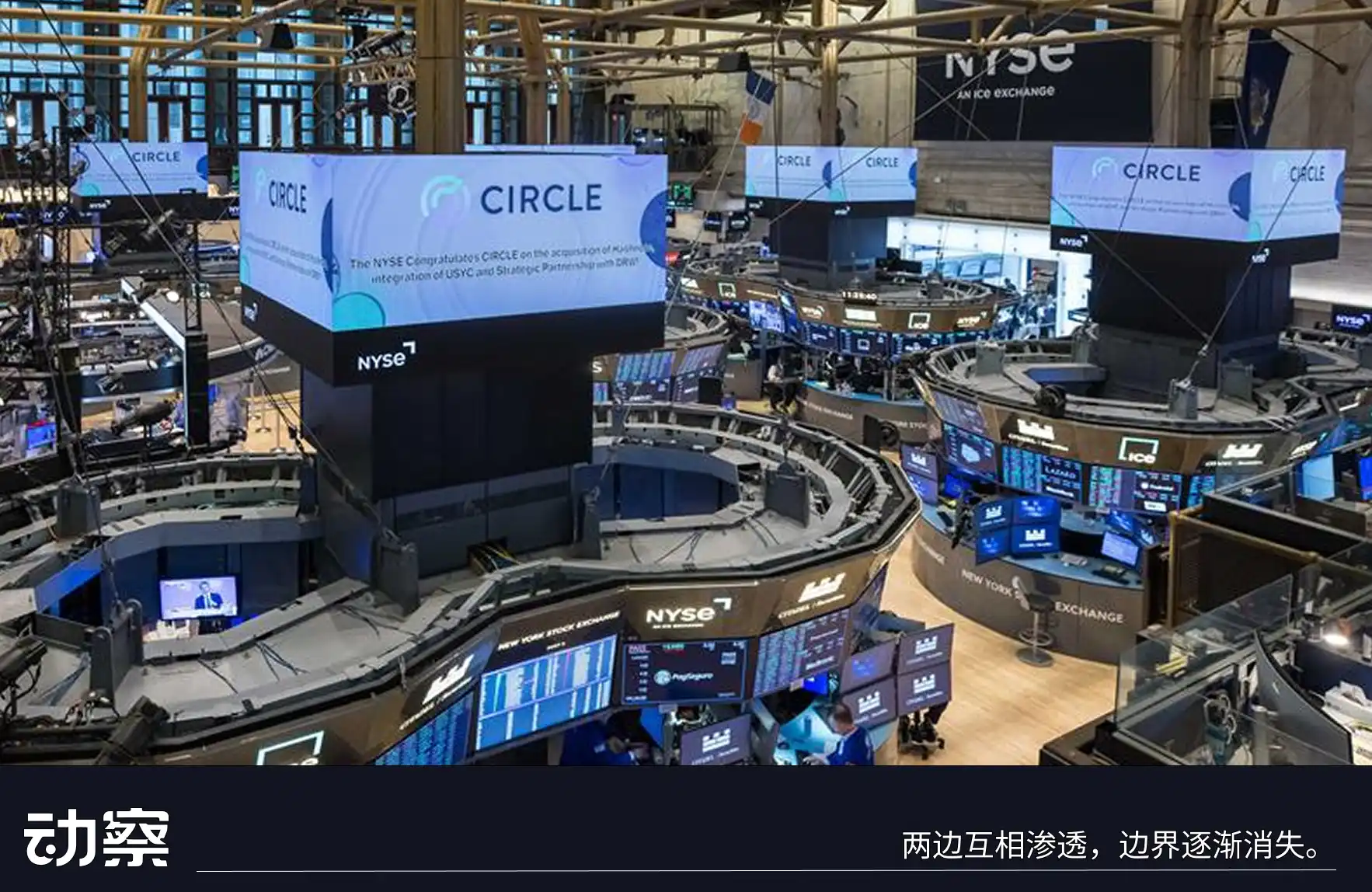
The Year Token Economics Were Debunked

The year 2025 is portrayed as a turning point where the fundamental economic model of crypto tokens was invalidated. The passage of regulatory frameworks like the CLARITY Act in the US forced projects to choose between being classified as a security (under the SEC) or a commodity (under the CFTC), with most falling into the former category. This led to a crisis of "coin rights" (币权). A key trend emerged: traditional financial institutions began acquiring crypto companies, but only for their technology and talent, explicitly excluding the associated tokens from deals. Examples include Circle's acquisition of Interop Labs (without the AXL token) and similar moves by Kraken and Coinbase. This shattered the investor narrative that buying a project's token was equivalent to owning equity, as tokens held no legal claim to a company's assets or profits. Simultaneously, major DeFi protocols like Aave and Uniswap faced internal conflicts. Aave's developers were accused of diverting front-end fees from the community treasury, while Uniswap had to implement complex legal structures to distribute fees to token holders without attracting SEC scrutiny. This highlighted a core dilemma: providing token dividends risked being classified as a security, while avoiding regulation meant tokens remained valueless. The article concludes that the crypto industry is being assimilated into traditional finance, but this "fusion" means value is flowing toward legally recognized entities—companies, equity, and licenses—rather than to token holders. Tokens, like American Depositary Shares (ADS), may remain as tradable rights, but they lack the legal protections and claims of traditional equity, marking the end of an era for the original token economy promise.

marsbit01/21 06:06

The Year Token Economics Were Debunked

marsbit01/21 06:06

The Biggest Trap of Stablecoins: 99% of Companies Issuing Tokens Are Just 'Self-Indulgent'

Stablecoins are increasingly being adopted by traditional finance companies like Klarna, PayPal, Stripe, and Cash App due to their ability to reduce settlement costs, enable global reach, and provide instant settlements. However, the article argues that most companies issuing their own branded stablecoins are engaging in futile "self-aggrandizement," as the market cannot sustainably support thousands of different tokens. Key benefits of stablecoins include significantly lower transaction fees compared to credit cards, borderless transactions without FX fees, and 24/7 near-instant settlement. While these advantages are clear, the article emphasizes that success depends not on issuing a token, but on integrating stablecoins as a payment rail into existing products and workflows. Case studies highlight different approaches: PayPal’s PYUSD serves as a defensive move to retain users within its ecosystem; Klarna uses stablecoins to reduce internal payment friction; and Stripe strategically avoids issuing its own token, instead facilitating transactions using established stablecoins like USDC. The piece concludes that liquidity, acceptance, and integration matter far more than branding. Merchants and users will gravitate toward simplicity and reliability, leading to natural consolidation around a few dominant stablecoins. The real value lies in leveraging stablecoins to improve payment infrastructure—not in creating yet another branded digital dollar.

比推01/07 18:19
The Biggest Trap of Stablecoins: 99% of Companies Issuing Tokens Are Just 'Self-Indulgent'

比推01/07 18:19

Messari 2026 Crypto Thesis: Why Speculation Is No Longer Enough (Part 1)

Messari's 2026 Crypto Thesis argues that the market is shifting from pure speculation to systemic integration. The report highlights several key trends: First, it identifies a valuation trap in new Layer 1 blockchains. Many VC-backed L1s with high fully diluted valuations lack fundamental revenue, as token issuance far exceeds gas fee income. The market is expected to strip away the "monetary premium" of these tokens, with only a few ecosystems like Solana and Base maintaining real traction. Second, chain abstraction is emerging as a critical strategy, where blockchains become backend infrastructure. Users interact without needing to know which chain they're on, shifting competitive advantage from execution speed to control over user flow and liquidity. Third, the rise of an agent economy is predicted, with AI agents potentially driving up to 80% of on-chain transactions by 2026. This emphasizes the importance of APIs and machine-readable financial primitives over user-facing interfaces. Fourth, equity perpetuals (e.g., on Hyperliquid) are gaining traction as synthetic derivatives for global stock exposure, offering a more scalable alternative to tokenized stocks. Finally, DePIN is highlighted as the sector most likely to generate hundreds of millions in verifiable revenue by 2026, driven by real demand for AI compute resources rather than speculative hardware deployment. The report underscores that while fundamentals are becoming more critical, market narratives and liquidity flows remain key drivers of returns.

marsbit01/02 13:41

Messari 2026 Crypto Thesis: Why Speculation Is No Longer Enough (Part 1)

marsbit01/02 13:41

活动图片