# Efficiency Related Articles

HTX News Center provides the latest articles and in-depth analysis on "Efficiency", covering market trends, project updates, tech developments, and regulatory policies in the crypto industry.

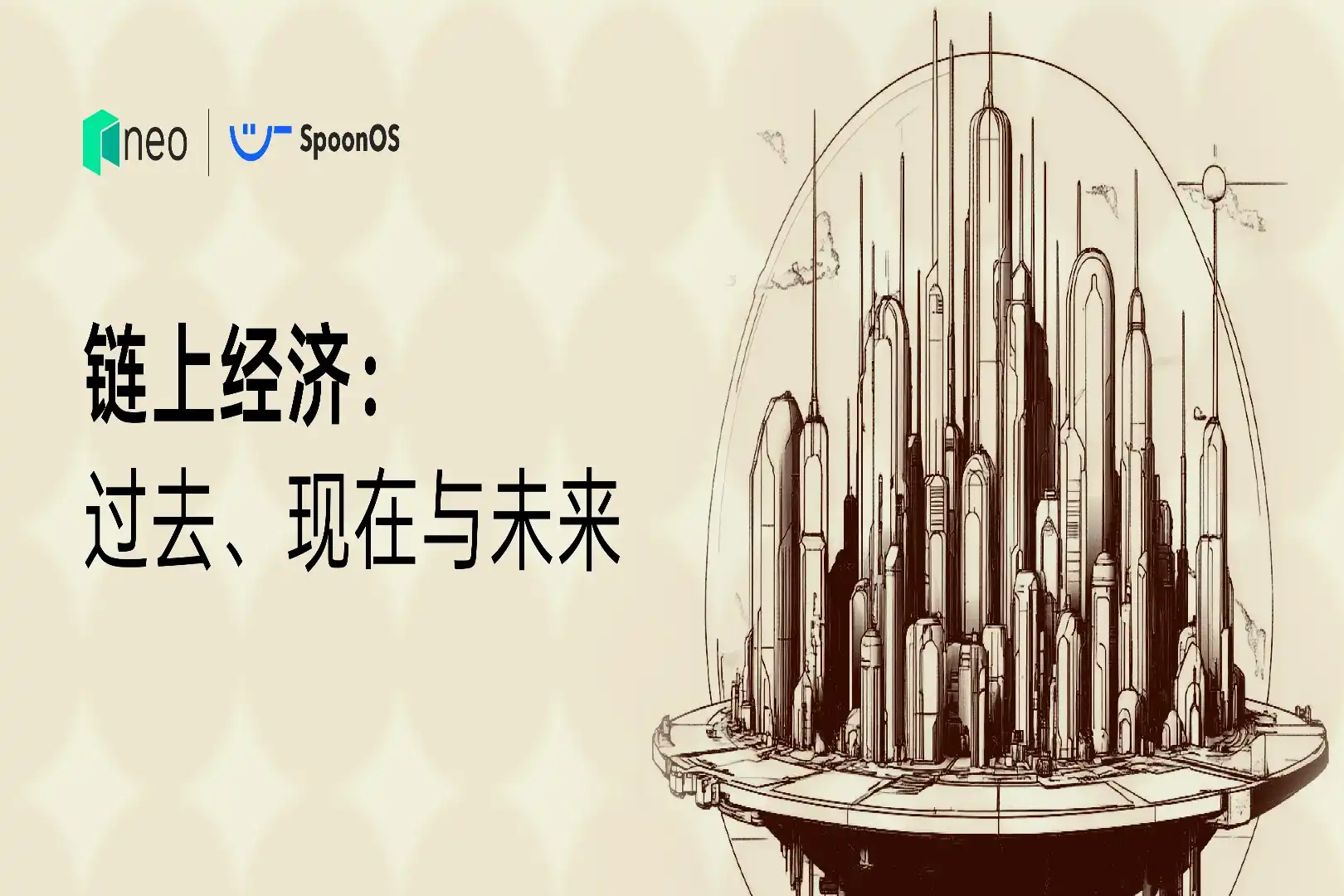
On-Chain Economy: Past, Present, and Future

On-Chain Economy: Past, Present, and Future In 2014, before "Web3" became synonymous with blockchain and crypto assets, the core vision revolved around smart contracts and their potential to enable a self-managing decentralized network. This early idea evolved into the concept of a Smart Economy, where autonomous economic coordination could flourish. Today, Web3 is rapidly growing, largely driven by decentralized finance (DeFi). Stablecoins serve as global settlement tools, and crypto assets have reshaped public understanding of money. Beneath these developments lies a fundamental improvement in financial efficiency. At the same time, AI has moved from abstract concept to daily reality. While many see AI as a productivity tool, its deeper role is that of a new financial efficiency paradigm. By increasing productivity, AI raises the value of attention even during non-working hours, making it a natural core component of the next-generation on-chain economy. The future on-chain economy will be defined by three core features: 1. Minimal human involvement: Humans act as intent providers, while AI handles analysis, execution, and feedback. 2. Complete trustlessness: Systems must be fully secure and trustless. 3. Extreme efficiency: AI will push capital utilization to unprecedented levels. Key enabling technologies include rapidly evolving AI models, intent-based AI agents, agent networks, privacy-preserving tech like ZKP and FHE, enhanced security components, and sustainable monitoring systems. The convergence of AI and blockchain will lead to an organic, self-evolving, and autonomous on-chain economy—what we call the Intelligent Sensible Economy. This is not just a faster system but a structural shift: from human-centered operations to collaboratively intelligent networks. The economy begins to exhibit life-like traits, responding to data, adapting, and self-optimizing. This transformation raises a fundamental question: as systems become self-learning and self-coordinating, are we still building an economy—or a new form of intelligent life?

marsbit03/06 08:23
On-Chain Economy: Past, Present, and Future

marsbit03/06 08:23

Former Twitter Co-founder's Sincere Layoff Letter: AI Can Do Your Job, You Can Go Now

Block, the financial technology company led by Twitter co-founder Jack Dorsey, saw its stock surge 25% after announcing plans to lay off nearly half its workforce—cutting 10,000 employees down to 6,000. The move added approximately $3 billion in market value, equating to about $750,000 per terminated employee. Dorsey attributed the cuts directly to AI, stating that “intelligence tools” enable smaller teams to achieve more with greater efficiency. He emphasized that the decision was intentional and immediate, avoiding prolonged uncertainty. Unlike typical corporate messaging that obscures layoffs with strategic jargon, Dorsey was explicit: AI can now do many jobs better and cheaper. The company had expanded rapidly during the pandemic, tripling in size since 2019. Now, much of that growth is being reversed under the banner of AI-driven efficiency. Dorsey’s approach mirrors actions taken by Elon Musk at Twitter (now X), but with a key difference: Block paired the layoffs with strong financial results and a clear AI transformation narrative, which investors rewarded. Internally, the transition has been turbulent. Employees were recently mandated to use AI tools and required to email Dorsey weekly summaries of their contributions—summaries he processed using AI. Many expressed low morale and job insecurity. Despite offering relatively generous severance, Dorsey’s blunt honesty underscores a harsh new truth: proficiency in AI or proving one’s value may not guarantee job security if companies prioritize cost-cutting through automation. Dorsey predicts most companies will follow suit within a year. For workers, the message is clear: as AI reshapes work, relying solely on a single employer carries increasing risk.

marsbit02/27 03:15

Former Twitter Co-founder's Sincere Layoff Letter: AI Can Do Your Job, You Can Go Now

marsbit02/27 03:15

活动图片