# Earnings Related Articles

HTX News Center provides the latest articles and in-depth analysis on "Earnings", covering market trends, project updates, tech developments, and regulatory policies in the crypto industry.

Wall Street Morning Report: CPI Lands Mildly, U.S. Stocks Stage Deep V-Shaped Reversal, AI Cloud, Storage, and Optical Communications Collectively Surge

Wall Street Morning Report: US stocks staged a deep V-shaped recovery following a mild CPI report, with AI cloud, storage, and optical communication sectors leading the rally. Major indexes were mixed: the Dow dipped slightly, while the S&P 500 and Nasdaq gained, nearing record highs. The July CPI data met expectations, with core inflation hitting its slowest pace since March 2021, further reducing expectations for a September Fed rate hike. Market focus shifted decisively towards AI infrastructure. The Philadelphia Semiconductor Index jumped 2.49%. AI cloud providers NEBIUS and CoreWeave surged 34% and 19% respectively on strong earnings and massive order backlogs. Optical communication stocks like Lumentum and Coherent also posted significant gains. The storage sector rallied broadly, with SK Hynix and Micron among the advancers. Meanwhile, major tech giants saw divergence. Nvidia rose over 3%, while Apple, Microsoft, Amazon, and Meta closed lower. In commodities, gold and silver remained strong, while oil prices retreated as markets awaited developments in the Strait of Hormuz. The US federal budget deficit widened significantly in July, raising long-term concerns. Key upcoming events include US PPI data, Sandisk's investor day, and the SEC's 13F filings deadline, which will reveal institutional holdings.

marsbit08/13 04:46

Wall Street Morning Report: CPI Lands Mildly, U.S. Stocks Stage Deep V-Shaped Reversal, AI Cloud, Storage, and Optical Communications Collectively Surge

marsbit08/13 04:46

Market Trend (Aug 13): Nasdaq Leads Gain as CPI Meets Expectations; Coherent Beats Estimates Then Falls in After-Hours

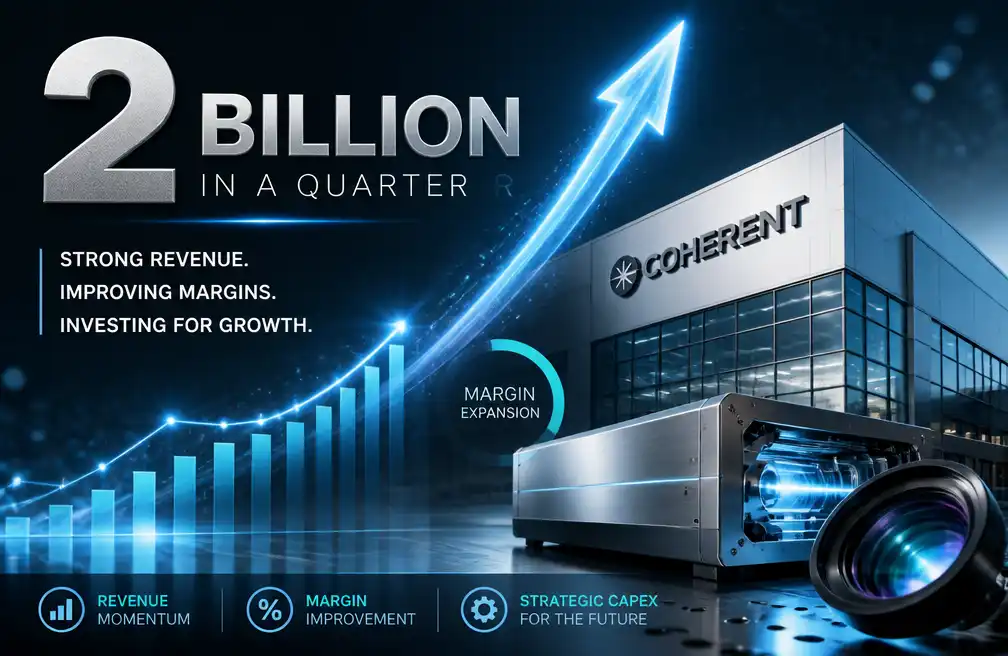
U.S. stock markets were mixed on August 13th. While the S&P 500 and Nasdaq Composite rose, the Dow Jones Industrial Average was essentially flat. The catalyst was the July CPI report, which came in line with expectations across the board, keeping market pricing for a September Federal Reserve rate hike steady near 45%. The trading day's standout was a surge in AI-related sectors following the CPI release. AI cloud service providers Nebius and CoreWeave soared, while companies in the optical communications and memory chip spaces, including Coherent and SK Hynix, also posted significant gains. However, a stark reality check emerged after the closing bell. Despite reporting quarterly results that exceeded expectations, shares of optical communications leader Coherent and AI chipmaker Cerebras plunged in after-hours trading. Cerebras was hit by an unexpected drop in hardware revenue. Similarly, Cisco Systems shares initially rose on strong earnings and news of $4 billion in AI-related orders, only to reverse sharply lower later, highlighting increased investor scrutiny on valuations and growth sustainability in the crowded AI space. In other markets, gold extended its rally, oil prices rose, and Bitcoin rebounded from pre-CPI declines. Market focus now shifts to digesting the latest corporate earnings and upcoming U.S. retail sales data.

marsbit08/13 01:51

Market Trend (Aug 13): Nasdaq Leads Gain as CPI Meets Expectations; Coherent Beats Estimates Then Falls in After-Hours

marsbit08/13 01:51

CoreWeave: The Inflection Point Has Arrived. Has the 'Hard-Working Underdog' Finally Turned Profitable?

CoreWeave, an AI cloud unicorn, released its Q2 2026 earnings on August 12, with shares rising about 15% post-announcement. While overall performance did not significantly exceed expectations, key positive trends emerged. Revenue reached approximately $2.58 billion, up 112% year-over-year, though slightly below the high end of prior guidance. A major highlight was the acceleration in computing power deployment, with Active Power increasing by a record 500 Mw to 1,500 Mw, far surpassing market forecasts and signaling faster future revenue growth. Capital expenditures also hit a new high of $9.4 billion. Importantly, profitability showed signs of inflection. "True" gross margin (after deducting cost of revenue and Tech & Infrastructure expenses) rose to 7.3%, up 3 percentage points from the previous quarter. As revenue scales, depreciation and operating expenses are being diluted. Adjusted operating profit margin improved significantly to 5% from 1% last quarter. The company's guidance points to continued acceleration, with Q3 revenue growth expected at 158% and margins continuing to climb. Management raised full-year 2026 guidance, projecting Q4 revenue growth of around 194% and an adjusted operating margin of approximately 14.6%, suggesting a rapid path toward its 25%-30% long-term target. Recent developments, including a 25% price increase for its services and the launch of higher-margin Managed Inference offerings, support the improving profitability narrative. While long-term competitive challenges remain for new cloud providers, CoreWeave's near-term trajectory of accelerating growth and expanding margins presents a high-risk, high-reward opportunity, especially amid renewed market optimism for cloud stocks.

marsbit08/13 00:21

CoreWeave: The Inflection Point Has Arrived. Has the 'Hard-Working Underdog' Finally Turned Profitable?

marsbit08/13 00:21

The Rise of CoreWeave and SuperMicro Stocks Boosts Artificial Intelligence Company Stocks

Shares of AI infrastructure companies rose on Wednesday following better-than-expected quarterly results from CoreWeave, Super Micro Computer, and Nebius Group. This surge also boosted related sectors like server makers, memory suppliers, and optical component manufacturers. Nebius Group (NBIS) led the gains, jumping roughly 23% after reporting revenue that significantly exceeded analyst forecasts. CoreWeave (CRWV) saw its stock rise about 19%, while Super Micro Computer (SMCI) climbed 13% on strong guidance. CoreWeave disclosed a backlog exceeding $100 billion, up about 50% from the prior quarter, with an additional $25 billion in orders received after the quarter ended. However, financing this growth at a high cost of capital was noted as a key concern. A major constraint highlighted was limited power and cooling capacity, which Supermicro cited as preventing it from fulfilling more orders. This supply-side limitation allows companies to raise prices, boosting profitability beyond expectations. The positive momentum extended to memory and optics. Lumentum's (LITE) stock rose after its quarterly revenue more than doubled, while shares of memory-related firms like Micron (MU) also gained. South Korea's Kospi index tracked its best August performance, linked to AI demand optimism. Investors are now awaiting NVIDIA's (NVDA) earnings report on August 26 for further market direction.

cryptonews.ru08/12 20:49

The Rise of CoreWeave and SuperMicro Stocks Boosts Artificial Intelligence Company Stocks

cryptonews.ru08/12 20:49

Wall Street Begins to Question Tech Giants' AI Narrative

Wall Street Questions the AI Narrative of Tech Giants Wall Street is shifting its focus from the hype surrounding artificial intelligence (AI) to a rigorous financial reality check. Following strong earnings reports from companies like Google and a massive $500 billion financing initiative from Nvidia for AI infrastructure, the market reaction has been mixed and skeptical. The core concern revolves around the massive capital expenditure (CapEx) required for AI development—building data centers and acquiring chips—and whether future cash flows can justify these upfront costs. Investors are now scrutinizing free cash flow (FCF), which measures the cash left after operational expenses and capital investments. A negative FCF, as seen recently with Alphabet (Google's parent company), signals heavy immediate spending, even if profits are growing. The divergent stock reactions highlight this new scrutiny. Microsoft's stock surged after its earnings, supported by strong operating cash flow, growing cloud revenue (Azure), and a large backlog of committed business. In contrast, Alphabet's stock fell despite profit growth because its capital spending caused FCF to turn negative for the first time. Similarly, Nvidia's announcement of a $500 billion financing platform, while potentially expanding its market, raised questions about whether AI build-out has become too expensive for tech companies to fund internally. Analysts are moving beyond simply asking if there is AI demand—which cloud revenue growth confirms—to deeper questions: the speed at which AI investments translate into revenue, profit, and ultimately, cash returns. The market is evaluating the "return on invested capital" (ROIC) over the long term, considering factors like rapid chip obsolescence, energy costs, and future competition. In summary, Wall Street's AI narrative is evolving from grand vision to a detailed financial and operational examination. The key question is no longer if AI is transformative, but whether companies can generate cash returns fast enough to outpace the immense costs of building it. Free cash flow has become a critical first filter in this reassessment.

marsbit08/12 12:31

Wall Street Begins to Question Tech Giants' AI Narrative

marsbit08/12 12:31

活动图片