# Custody Related Articles

HTX News Center provides the latest articles and in-depth analysis on "Custody", covering market trends, project updates, tech developments, and regulatory policies in the crypto industry.

Six Major Crypto IPOs to Watch in 2026

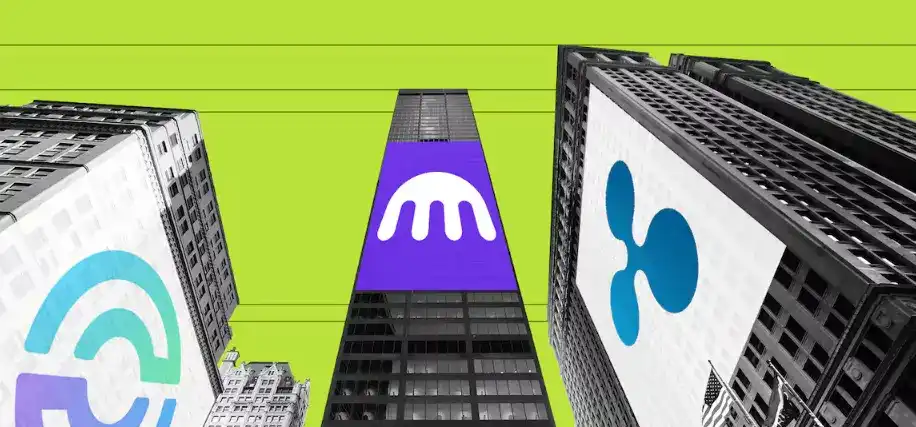
The crypto industry is poised for a significant wave of Initial Public Offerings (IPOs) in 2026, following a strong 2025 that saw $3.4 billion raised. The upcoming listings are characterized by companies with a strong focus on risk management, compliance, and infrastructure that bridges traditional finance with on-chain markets. Key potential IPOs to watch include: 1. **Kraken**: The US-based exchange, which filed confidentially with the SEC, is targeting a first-half 2026 listing. With a $20 billion valuation and a "compliance-first" strategy, it's seen as a major, diversified contender. 2. **Consensys**: The infrastructure giant behind MetaMask and Infura is working with major banks on a mid-2026 IPO. Its valuation is around $7 billion, offering pure-play software exposure. 3. **BitGo**: Backed by Goldman Sachs, this custody specialist aims for a Q1 2026 listing. Its growth is driven by institutional services, and it appeals to investors seeking infrastructure without direct trading volatility. 4. **Animoca Brands**: The Web3 gaming and metaverse investor plans a Nasdaq listing via a SPAC merger, testing investor appetite for digital property rights with a targeted $6 billion valuation. 5. **Ledger**: The hardware wallet maker is positioning itself as a full-stack self-custody platform. Benefiting from a renewed focus on security, it aims to be the "Apple of crypto security." 6. **Bithumb**: The South Korean exchange is planning a late-2025 listing on its domestic exchange, marking a comeback and serving as a key proxy for robust Asian retail crypto demand. This wave signals a maturation of the crypto sector, with public markets offering exposure to its critical infrastructure and compliant operators.

marsbit01/06 01:58

Six Major Crypto IPOs to Watch in 2026

marsbit01/06 01:58

Written at the End of 2025: Code, Power, and Stablecoins

"Stablecoins have firmly established themselves as the foundational infrastructure for the next decade of financial services, with the market surpassing $300 billion in 2025. This growth is driven by a fundamental shift in trust: relying on transparent, verifiable code and math rather than opaque promises from centralized intermediaries, as starkly illustrated by the Synapse bankruptcy. Self-custody models change risk dynamics, eliminating intermediary risk (though not issuer risk) and reducing the necessity for traditional insurance like FDIC. Stablecoins offer inherent global reach, with the main bottleneck being local fiat on/off-ramps rather than rebuilding entire banking stacks per country. The emergence of payment-specific blockchains like Tempo and Arc faces the challenge of building trust from scratch, competing with the established security of networks like Solana and Ethereum. The real potential of 'agentic finance' lies in automating mundane financial tasks through smart contracts with enforced permission boundaries, providing security that traditional systems cannot. However, the rapid growth attracts teams with inadequate security practices, a critical misstep for financial infrastructure. Furthermore, as real business activity moves on-chain, solving for privacy through selective disclosure—not full anonymity—becomes crucial to prevent competitive intelligence leaks. The true opportunity lies not just in rebuilding existing fintech more efficiently but in leveraging programmable money and internet-native capital markets to reimagine financial services entirely."

marsbit12/29 01:35

Written at the End of 2025: Code, Power, and Stablecoins

marsbit12/29 01:35

Written at the End of 2025: Code, Power, and Stablecoins

By the end of 2025, stablecoins have firmly established themselves, with a market cap surpassing $300 billion—a growth of nearly $100 billion in under a year. This growth reflects institutional confidence, with major banks projecting multi-trillion dollar valuations in the coming years. Stablecoins are no longer just a crypto narrative but a fundamental shift in monetary infrastructure, built on code and verifiable trust rather than opaque intermediaries. The failure of Synapse highlighted the risks of traditional fintech: hidden counterparty risk and unverifiable accounting. In contrast, self-custodied stablecoins eliminate intermediary risk, though issuer risk remains—mitigated by transparent reserve proofs and on-chain monitoring. Stablecoins enable global reach from day one, bypassing the need for localized banking infrastructure. The bottleneck remains fiat on/off-ramps, but modular solutions allow for gradual integration. New purpose-built blockchains like Tempo and Arc aim to optimize payments but face trust barriers compared to battle-tested networks like Ethereum and Solana. Agentic finance presents a near-term opportunity in automating mundane financial tasks, with smart contracts enabling secure, permission-bound automation. However, security remains critical: rapid growth must not compromise operational rigor. Privacy is another key challenge, as real-world business adoption requires selective disclosure—proving compliance without exposing sensitive data. The true potential of stablecoins lies beyond replicating existing fintech—it’s in unlocking programmable money, internet-native capital markets, and reimagining financial services through verifiable, autonomous systems.

比推12/26 19:38

Written at the End of 2025: Code, Power, and Stablecoins

比推12/26 19:38

The RWA Narrative is Shifting: Why is Tokenized Gold Being Repeatedly Mentioned?

The narrative around Real World Assets (RWA) is shifting from theoretical discussions about which assets can be tokenized to a more practical focus on which tokenized assets can achieve long-term viability and scale. Tokenized gold is increasingly highlighted as one of the most promising directions in RWA development. Gold possesses inherent advantages: it is a globally recognized store of value with established custodial, auditing, and settlement systems. The primary challenge for its on-chain adoption isn't proving its legitimacy but rather improving its accessibility, lowering transaction costs, and enabling seamless cross-border movement. Tokenization addresses the low liquidity and high friction associated with physical gold, allowing it to circulate like a digital asset within crypto financial systems. This trend is further amplified by the current macro environment marked by geopolitical uncertainty and inflation, which reinforces gold's traditional role as a safe-haven asset. The conversation is moving beyond feasibility to examine practical operational requirements: physical custody, verifiable reserves, data consistency between on-chain and off-chain systems, and compliance across jurisdictions. Early infrastructure platforms, such as Matrixdock's XAUm token, which is backed by LBMA-standard physical gold, are emerging. They emphasize building robust foundational layers—including verifiable reserves and regulatory compliance—rather than merely offering a trading product. Ultimately, the next phase of RWA evolution will be a systemic test of asset selection, operational stability, and sustainability. Tokenized gold represents a clear and verifiable intersection of asset maturity, real-world demand, and on-chain utility.

marsbit12/26 09:16

The RWA Narrative is Shifting: Why is Tokenized Gold Being Repeatedly Mentioned?

marsbit12/26 09:16

RWA Weekly Report|Data: Approximately 50% of Euro Stablecoins Deployed on Ethereum; Potential Policy Adjustments as Trump Prepares for Next November's Midterm Elections May Again Impact Digital Assets (12.18-12.23)

RWA Weekly Report: Data shows approximately 50% of euro-denominated stablecoins are deployed on Ethereum; potential policy shifts as Trump prepares for midterm elections may impact digital asset markets (Dec 18–23, 2025). The on-chain value of Real World Assets (RWA) grew 1.65% to $19.05 billion, while the broader RWA market contracted slightly to $402.57 billion. User adoption continued to rise, with RWA holders increasing to 582,639 and stablecoin holders reaching 212.54 million. U.S. Treasury bonds remained the core asset at $8.7 billion, while commodities and private equity saw notable growth. Key developments include the SEC issuing new guidance for crypto asset custody and ATS operations, Hong Kong proposing new rules for insurer investments in crypto assets, and U.S. lawmakers discussing tax exemptions for small stablecoin transactions. Data from Token Terminal indicates about half of all euro stablecoins are on Ethereum. Political focus remains on potential policy adjustments by Trump ahead of the 2026 midterm elections, which could affect digital asset markets. Projects like Ondo Finance and MSX (STONKS) are advancing tokenized traditional assets, with Ondo expanding to Solana and MSX preparing for Nasdaq’s potential entry into tokenized stocks. Ghana legalized cryptocurrency trading and is exploring gold-backed stablecoins, reflecting global regulatory evolution. Stablecoin supply reached $300 billion in 2025, with significant transaction volume driving growth in related ecosystems.

Odaily星球日报12/23 10:48

RWA Weekly Report|Data: Approximately 50% of Euro Stablecoins Deployed on Ethereum; Potential Policy Adjustments as Trump Prepares for Next November's Midterm Elections May Again Impact Digital Assets (12.18-12.23)

Odaily星球日报12/23 10:48

活动图片