# Automation Related Articles

HTX News Center provides the latest articles and in-depth analysis on "Automation", covering market trends, project updates, tech developments, and regulatory policies in the crypto industry.


Making Money While Laying Off: Where Did Silicon Valley's 170,000 Workers Go?

A significant wave of layoffs is sweeping through the U.S. tech industry, with over 170,000 jobs cut in 2025—surpassing levels seen during both the 2008 financial crisis and the 2020 pandemic. Unlike previous downturns driven by external economic shocks, the current restructuring is characterized by profitable companies proactively reducing headcount despite record revenues. The trend accelerated in early 2026, with more than 30,000 additional layoffs in the first six weeks alone. Major firms like Amazon, Block, Autodesk, and Salesforce announced significant cuts, often citing strategic shifts rather than financial distress. While AI and automation are frequently cited as causes, data shows that only about 28.5% of layoffs are directly attributable to AI adoption. The primary driver appears to be a correction after years of over-hiring during the low-interest, high-growth pandemic era. Companies are now prioritizing efficiency, smaller teams, and AI-integrated workflows in what analysts term a "structural reset"—meaning many eliminated roles may not return. The shift is creating a polarized job market: high demand for AI-specialized talent contrasts with shrinking opportunities in generalist roles like product operations and traditional engineering. Economists warn that continued tech sector contraction could slow U.S. GDP growth to near-recession levels. However, some data suggests the rate of layoffs may be moderating compared to 2024. Ultimately, the industry is undergoing a fundamental reorganization centered on redefining the role of human labor in an AI-driven ecosystem—a transition with no clear endpoint.

比推03/10 13:44

Making Money While Laying Off: Where Did Silicon Valley's 170,000 Workers Go?

比推03/10 13:44

From Understanding Skill to Learning How to Build Crypto Research Skill

This article explores the evolution and application of Agent Skill, a modular framework introduced by Anthropic in late 2025, which has become a foundational design pattern in the AI Agent ecosystem. Initially a tool to improve Claude's performance on specific tasks, it evolved into an open standard due to high developer adoption. Agent Skill functions like a "dynamic instruction manual" that AI can reference to perform tasks consistently without repetitive user prompting. It is built using a `skill.md` file containing metadata (name and description) and detailed instructions. The system operates through an on-demand loading workflow: the AI first scans lightweight skill metadata, matches the user's intent, then loads only the relevant skill's full instructions, optimizing token usage. Two advanced mechanisms enhance its functionality: - **Reference**: Conditionally loads external documents (e.g., a finance handbook) only when triggered by specific keywords, avoiding unnecessary context consumption. - **Script**: Executes external code (e.g., a Python script) without reading its content, enabling actions like file uploads with zero token cost. The article contrasts Agent Skill with Model Context Protocol (MCP), noting that MCP connects AI to data sources, while Skill defines how to process that data. For advanced use cases like crypto research, combining both is recommended: MCP fetches real-time data (e.g., blockchain info, news APIs), while Skill structures the analysis and output format. A practical example demonstrates building a crypto research agent using an `opennews-mcp` server. The Skill automates workflows like due diligence on new tokens (pulling Twitter data, news sentiment, KOL tracking) and real-time event monitoring (e.g., ZK-proof breakthroughs) to generate structured reports or trading alerts. This combination creates a powerful, automated research system tailored for Web3 analytics.

marsbit03/10 10:41

From Understanding Skill to Learning How to Build Crypto Research Skill

marsbit03/10 10:41

The One-Person Company: The Path to Million-Dollar Revenue

Nat Eliason, a writer and entrepreneur, is building a one-person company named Felix with the goal of generating $1 million in revenue using AI agents as his sole employees. Leveraging the OpenClaw framework, Felix has rapidly progressed, achieving nearly $200,000 in revenue in just a few weeks. The venture began when a post about OpenClaw went viral, leading to the creation of a $Felix token. Eliason tasked his AI agent, the "CEO" of this zero-human company, with generating revenue. Felix started by autonomously building a website and selling a $29 OpenClaw setup guide, generating $41,000. It then identified market needs and expanded into two main businesses: Claw Mart, a marketplace for AI skills (generating ~$14,000), and Clawcommerce, a service building custom AI agents for enterprises. The system uses sub-agents for tasks like support and sales, with Discord as its operational hub. Operating costs are minimal at ~$1,500 monthly. A key development is Felix beginning to "hire" a human for affiliate distribution, signaling a shift from replacing humans to employing them. Challenges include AI unpredictability, memory management, and market education. Despite this, Eliason is optimistic. Future plans include optimizing existing services, exploring blockchain integration, and scaling further. He believes this model represents a new era of AI-driven commercialization and a significant wealth creation opportunity.

比推03/10 07:32

The One-Person Company: The Path to Million-Dollar Revenue

比推03/10 07:32

a16z: After AI Grants Humans Superpowers, Where Do We Go From Here?

A new paper titled "The Minimal Economics of AGI" explores the economic implications of AI automation, particularly as AI agents evolve from tools into collaborative partners capable of long-horizon tasks. The authors, Christian Catalini and Eddy Lazzarin, argue that the core economic divide will be between automation (tasks that can be measured and automated) and verification (tasks requiring human oversight, judgment, and contextual understanding). Key themes include: - The "coder’s curse": top experts training AI systems may inadvertently automate their own roles over time. - Three future human roles: directors (setting intent), verifiers (domain experts ensuring quality), and meaning-makers (creating cultural and social value). - Cryptocurrency and blockchain are positioned as critical for identity, provenance, and trust in a world flooded with AI-generated content. - Two potential economic outcomes: a "hollow economy" with systemic risk from under-verification, or an "augmented economy" where AI amplifies human potential and reduces costs for education, healthcare, and innovation. - The importance of small, agile teams leveraging AI for outsized impact, with crypto infrastructure enabling coordination at scale. The authors emphasize that AI acts as a force multiplier, granting individuals "superpowers," and urge a focus on verification, adaptability, and ambitious experimentation.

marsbit03/09 11:31

a16z: After AI Grants Humans Superpowers, Where Do We Go From Here?

marsbit03/09 11:31

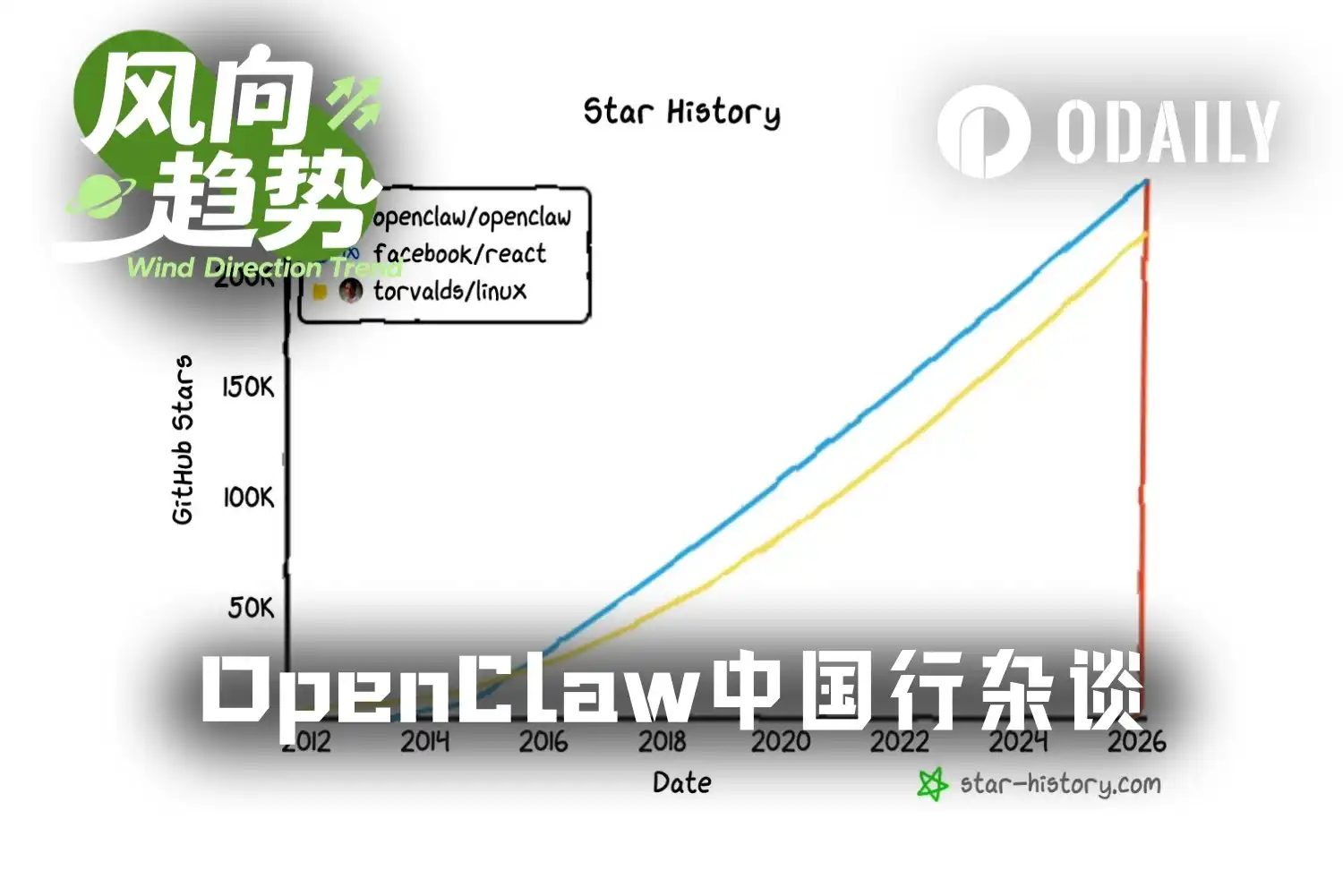
After OpenClaw's China Tour, We Interviewed a Group of 'Lobster Chasers'

"OpenClaw China Tour: Chasing the Lobster in the AI-Driven Era" Following OpenClaw's surpassing of React as GitHub's most-starred project, a wave of "AI anxiety" has swept through China's tech community. This led to the "Web4.0 China Tour," a series of nationwide offline events co-initiated by crypto figures, aiming to demystify the AI agent tool often nicknamed "Lobster." Event observations revealed a diverse, intergenerational audience—from 05ers to 70-year-olds—flocking to these gatherings. Participants were polarized: some were already monetizing OpenClaw, while others struggled with basic setup. A key insight was that AI's primary impact is not necessarily job replacement but a massive restructuring of work, automating standardized tasks and creating new roles, particularly for those who can effectively manage AI agents. Interestingly, fields like programming and creative work are now seen as more vulnerable to AI disruption than manual labor. Despite OpenClaw's founder cautioning against crypto, a strong convergence between AI agents and cryptocurrency was debated on-site. Many believe crypto assets, especially Bitcoin, could become the native currency for AI economies, facilitating machine-to-machine transactions and value exchange. The trend also spawned a paid installation service industry. However, a significant hurdle remains: many users successfully install OpenClaw but lack the knowledge to use it effectively, sometimes leading to unexpected costs and security concerns. The conclusion emphasizes that simply having the tool is less important than practically applying it to solve real problems, cautioning against FOMO and highlighting that in the age of AI, early adoption doesn't guarantee success.

marsbit03/07 03:14

After OpenClaw's China Tour, We Interviewed a Group of 'Lobster Chasers'

marsbit03/07 03:14

活动图片