# Acquisition Related Articles

HTX News Center provides the latest articles and in-depth analysis on "Acquisition", covering market trends, project updates, tech developments, and regulatory policies in the crypto industry.

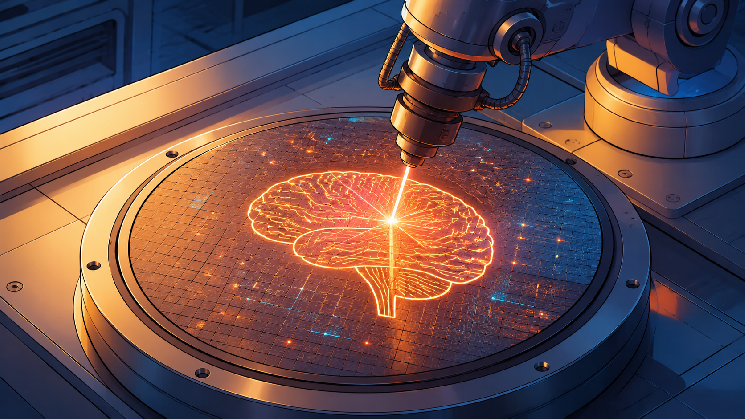
AMD acquires Taalas: hardware AI manages without scarce HBM memory

AMD has agreed to acquire Toronto-based startup Taalas, which tackles a key bottleneck in AI inference: the constant need to transfer model weights from memory to the processor for each generated token. Taalas's chips eliminate this operation by permanently embedding the model weights into the transistors themselves. This data transfer is what currently limits inference speed and has made high-bandwidth memory (HBM) a scarce commodity. Taalas's first test chip, fabricated on TSMC's 6nm process, reportedly generated tokens for Meta's Llama 3.1 8B model at speeds 48 times faster than comparable Nvidia GPUs. Its architecture features a mask ROM section for fixed weights and SRAM for adaptable components. However, this design comes with a significant trade-off: each chip is permanently dedicated to a single model. Switching models requires a partial redesign and fabrication, a process taking about two months. While the acquisition is seen as part of AMD's rivalry with Nvidia in inference, its broader implication lies in challenging the assumption of a permanent HBM memory shortage. The AI memory market is currently booming, with HBM supply sold out through 2026. Yet, Taalas's technology demonstrates that the memory bottleneck is an engineering challenge, not an absolute physical constraint. This aligns with industry-wide efforts from companies like Nvidia (through model compression) and memory makers like Samsung and SK hynix (developing new packaging and storage technologies) to reduce dependency on scarce HBM. AMD's move suggests that the current high prices for memory, driven by AI demand, may not be sustainable. It highlights a growing engineering push against the premise of perpetual memory scarcity, reminding investors that memory has historically been a cyclical business.

cryptonews.ru08/09 14:56

AMD acquires Taalas: hardware AI manages without scarce HBM memory

cryptonews.ru08/09 14:56

MARA Pledges 18,750 BTC to Secure $600 Million in New Bitcoin-Backed Loans

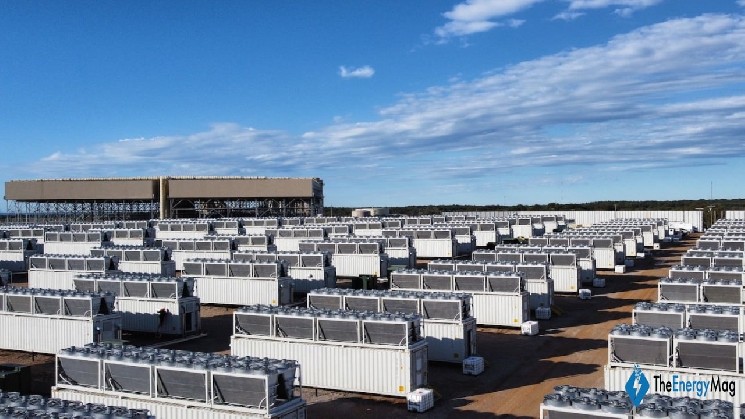
Bitcoin mining company MARA has secured $600 million in new loans by pledging 18,750 BTC as collateral, according to its quarterly report. The financing consists of two term loan agreements with Coinbase Credit and Two Prime Lending. The Coinbase credit line totals $450 million, which includes a $300 million top-up and refinancing of an existing $150 million facility. Two Prime provided a separate $300 million loan. Both credit lines are fully drawn. The Coinbase loan carries a floating interest rate of SOFR plus 3.875%, equating to approximately 7.5% currently, and matures in August 2028. The Two Prime loan has a fixed rate of 7.65% with the same maturity. Combined, these loans are expected to generate roughly $56.7 million in annual interest expenses. The collateral pledged represents nearly 53% of MARA's 35,577 BTC holdings as of June 30. The company is required to maintain a specific collateral ratio; failure to do so could allow the lenders to liquidate the pledged bitcoin. MARA stated it will use the new funds for general corporate purposes, including partially funding its planned $1.5 billion acquisition of power plant operator Long Ridge Energy & Power LLC. This acquisition is intended to support bitcoin mining and potentially an AI and high-performance computing campus. The report also noted MARA sold 23,093 bitcoin in the first half of the year, reducing its holdings. For Q2, the company posted a net loss of $611.3 million, driven by fair value losses on its digital assets due to declining bitcoin prices.

cryptonews.ru08/09 11:18

MARA Pledges 18,750 BTC to Secure $600 Million in New Bitcoin-Backed Loans

cryptonews.ru08/09 11:18

1.65 Billion Yuan: Sichuan Power Semiconductor Company Sells Itself

Sichuan-based power semiconductor company Jingyi Semiconductor is being acquired by its customer, Jiangsu-listed power semiconductor firm Suzhou Kaiweite Semiconductor Co., Ltd. ("Kaiweite"), for 1.65 billion yuan. Following the transaction, Jingyi Semiconductor will become a wholly-owned subsidiary of Kaiweite. Kaiweite will pay for the acquisition partly with new shares (approximately 901 million yuan worth) and partly in cash (approximately 749 million yuan). The deal is considered a major asset restructuring as Jingyi Semiconductor's assets and revenue in 2025 were 176.34% and 137.38% of Kaiweite's, respectively. Financially, Kaiweite has reported losses for 2024 and 2025. In contrast, Jingyi Semiconductor has remained profitable. The acquisition is expected to significantly improve Kaiweite's profitability. Jingyi Semiconductor's controlling shareholder and chairman, Yi Kun, along with employee持股 platforms, will hold a 13.28% stake in Kaiweite post-transaction. Founded in 2015 and listed on Shanghai's STAR Market in 2023, Kaiweite is a national-level "Little Giant" specializing in intelligent power semiconductor devices and power integrated chips. Established in 2019, Jingyi Semiconductor is a fabless power semiconductor company and a national-level专精特新重点"Little Giant." Its products, including Intelligent Power Modules (IPM), are supplied to major domestic appliance makers like Midea, Xiaomi, Gree, TCL, and Hisense-Hitachi. The company holds a leading 53.5% market share in China's IPM半桥 module segment for white goods. The strategic acquisition aims to repair Kaiweite's profitability and expand its power semiconductor product portfolio through integration in technology, products, and customer channels.

marsbit08/07 02:46

1.65 Billion Yuan: Sichuan Power Semiconductor Company Sells Itself

marsbit08/07 02:46

活动图片