Author: Wenser
Original title: Report Card of the 'Crypto President' Trump: One Year into His Term, How Many Promises Has He Fulfilled?
On January 20, 2026, Trump celebrated his first anniversary as the 47th President of the United States. Over the past year, from the crypto market to the global economy, fluctuations and rises and falls often seemed tied to him alone—a single word could ignite market optimism, driving asset prices to surge; a single phrase could also become a trigger for decline, setting off a chain of "liquidation bombs."
Today, he is called the "Crypto President" by many. So, over this past year, what key actions has Trump taken to not only defend this title but also gradually solidify it? Looking back, perhaps the following five major events can reveal the answer.
Major Event 1: Unprecedented—A President Also Launches a Meme Coin
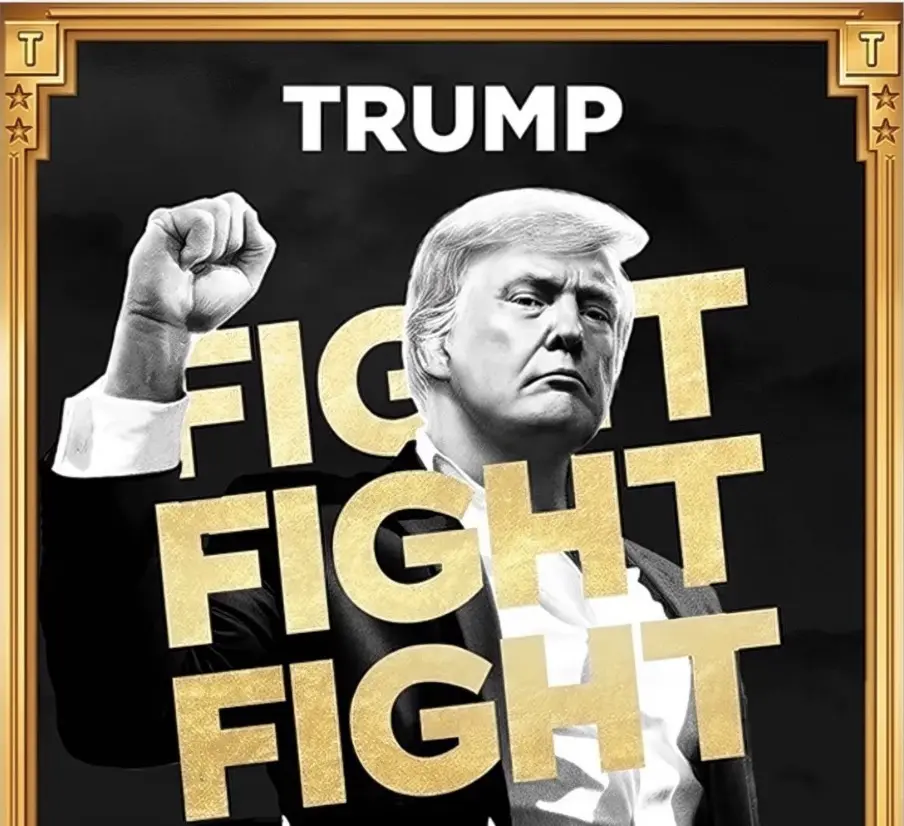
On January 18, 2025, Beijing time, just before assuming the presidency, the official Trump Meme coin TRUMP was officially launched. Within just one day, the price of TRUMP quickly rose from $0.5 to around $28, allowing a large number of cryptocurrency traders to earn unimaginable wealth, with some making profits as high as millions or even tens of millions of dollars.
As the "eye of the storm," Trump saw his net worth skyrocket—driven by the launch of the TRUMP token, Trump's net worth surged by over 400% overnight, reaching an astonishing $28 billion; by comparison, Forbes estimated Trump's net worth at just $5.6 billion in November 2024. Moreover, within less than three days, the fully diluted valuation (FDV) of the TRUMP token once surged to nearly $80 billion, with its price approaching $80.
After the洗礼 of the "Meme Coin Frenzy" in 2024, the crypto market welcomed the heavyweight political figure of the "U.S. President," once again raising the "influence ceiling" of cryptocurrency. Countless people pinned their hopes of overnight wealth on Trump and the TRUMP token.
After all, "a U.S. President launching a Meme coin" was a first in the cryptocurrency industry,堪称 "an unprecedented event."
But the flip side of overnight wealth was无情收割—the追捧 of the "President's Meme coin" could only delay its decline, not propel its continuous rise.
By January 23, most TRUMP token holders were still at break-even or had profits/losses within $1,000; but by early February, as TRUMP trading activity waned and prices plummeted, the number of wallet addresses holding at a loss reached a staggering 200,000.
According to Chainalysis statistics, approximately 810,000 wallets lost money on the TRUMP token, totaling over $2 billion, with an average loss of $2,500 per person. In contrast, as of May 2025, the issuers of the TRUMP token (Fight Fight Fight LLC and CIC Digital) earned over $320 million仅仅 from transaction fees alone; not to mention the hundreds of billions of dollars worth of TRUMP tokens they controlled.
The emergence of TRUMP was堪称 an expensive and costly "crypto elective course," and its subsequent ripple effects extended beyond token price performance:
First, after TRUMP, market enthusiasm for celebrity coins一度 reignited. Countless people争先恐后地 bought into the Trump夫人同名 Meme coin MELANIA, the Argentine President Milei-backed Meme coin LIBRA, and even the President of the Central African Republic wanted a piece of the pie, but ultimately, these also ended in liquidity harvests;
Second, TRUMP became, in the eyes of Democrats, "ironclad evidence of Trump's corruption." This accusation was具体阐释 in a report in the second half of 2025 and also marked the beginning of Trump's展示 of a "crypto-friendly regulatory attitude." The disputes between the two sides have continued to this day;
Third, the TRUMP token became the "best medium" for Trump to engage with figures in the cryptocurrency industry. On one hand, Trump used it to convey his "pro-cryptocurrency political stance" to the outside world; on the other hand, TRUMP became the "monetary载体" for Trump's in-depth exchanges with cryptocurrency industry figures.
In April 2025, registration opened for the "Trump Dinner"面向 the top 220 TRUMP holders. Within a few days, it triggered $2.4 billion in on-chain transfers, the price of TRUMP一度上涨 60%, on-chain activity surged 200%, and many were willing to spend millions of dollars just to meet Trump. Ultimately, TRUMP Meme coin buyers invested a total of approximately $148 million in the holding competition, with an average holding of nearly $4.8 million worth of TRUMP per person. Among them, Justin Sun ranked first with over 1.43 million tokens.
On one side were retail market participants paying for the "President-concept Meme coin"; on the other were the "crypto dinners" with clinking glasses and toasts—a堪称 "crypto version of 'the wine and meat rot behind the poor freeze to death' (朱门酒肉臭)" Trump dinner, revealing the most残酷 yet extremely real众生相 of the crypto market—some rejoice, some worry, but only the house laughs.
Major Event 2: 'A New Broom Sweeps Clean'—Layoffs, Appointments, and Eliminating Dissent
On January 21, 2025, Beijing time, Trump was officially sworn in as the 47th President of the United States, becoming another recipient of the殊荣 of "being elected U.S. President twice" after Washington, Roosevelt, and Obama.
What followed was naturally the political drama of "a new emperor, new ministers." With his experience from his previous term as U.S. President, Trump was quite seasoned in personnel appointments:
Step one, "Kill the chicken to scare the monkey." As Trump had previously stated at the Bitcoin conference, on his first day in office, he swiftly fired the former SEC Chairman Gary Gensler, who had implemented high-pressure crypto regulation, firmly establishing his "pro-cryptocurrency" strong persona.
Step two, "Install confidants." Within just three months, Trump quickly organized his team and placed people who shared his political views highly, owned cryptocurrency assets, or held crypto-friendly attitudes into key government departments. These included White House AI and Crypto Advisor David Sacks, SEC Chairman Paul Atkins, Treasury Secretary Scott Bessent, Commerce Secretary Howard Lutnick, and others.
Step three, "A protracted war." As Trump's appointed Fed Chairman, Powell was一直被视为 the "backbone of Fed policy," but his hawkish fiscal strategy ran counter to Trump's desire to stimulate economic development by cutting interest rates to release liquidity. Thus, the dispute between the two贯穿了整个 2025 年—starting from April 2025, Trump frequently blasted Powell, saying he should cut rates early; by December 2025, the battle over the nomination of the new Fed Chairman remained a major focal point affecting the crypto market and even the U.S. economy.
Looking back at Trump's personnel appointments and management of government departments, it is difficult to see him as a smooth, compromising politician; on the contrary, judging by the final results, Trump always found ways to achieve his political goals, sometimes even at the expense of so-called "broader interests." The 43-day-long government shutdown last year, the "longest shutdown in U.S. government history," was also one of Trump's "political masterpieces."
But on the other hand, all of Trump's actions had extremely clear goals—to清除 the remnants of the previous Biden administration's Democratic Party forces and lay the political foundation for crypto-friendly regulation. With these people in place, a series of "long-standing cases" were subsequently concluded—judicial investigations into crypto platforms such as Coinbase, Gemini, Robinhood, Ripple, Crypto.com, Uniswap, Yuga Labs, Kraken, Polymarket were相继结束, and the U.S. Department of Justice's National Cryptocurrency Enforcement Team, which had一贯实施 high-pressure regulation, was also dissolved. The Biden administration's "crypto suppression actions" were gone for good.
After all, just like cleaning the house before inviting guests,清除一批 old officials and promoting a batch of new "own people" allows government agencies to operate efficiently like a machine, making full preparations for future crypto-friendly regulatory legislation and enforcement work.
Major Event 3: 'Creating History with Decrees'—Establishing a BTC Strategic Reserve, Promoting the Legislation of Three Major Crypto Bills
If the first two major events were "necessary preparations" for crypto-friendly regulation, then the third major event was a "necessary component" of crypto-friendly regulation—that is, implementing crypto-friendly regulation at the legislative and enforcement levels through executive orders and laws. And this series of historic breakthroughs is the biggest reason why Trump is called the "Crypto President."
Issuing a Presidential Executive Order to Establish a U.S. BTC Strategic Reserve Using Seized Assets
In March 2025, Trump issued a presidential executive order promoting the establishment of a U.S. BTC strategic reserve. Since then, as the world's leading economic power, the United States has, for the first time, reserved BTC and other crypto assets in the name of the national government, which also意味着 that BTC has, in a sense, achieved the same strategic reserve status as gold. Although Trump chose a more clever way to promote this (Odaily Planet Daily Note: i.e., establishing the BTC strategic reserve using the nearly 200,000 BTC previously seized by the U.S. government, and stating that national assets would not be used or the burden on citizens increased), its impact cannot be said to be insignificant.
On one hand, the U.S. BTC strategic reserve set an example for many sovereign countries to incorporate BTC and other crypto assets into their own economic systems, further expanding the mainstream adoption and普及化 of BTC and other crypto assets; on the other hand, this move also provided a sample example for more DAT treasury companies and provided national-level endorsement for the fiscal strategies of treasury companies like Strategy and Metaplanet. Subsequently, from July to September 2025, a large number of listed companies效仿 establishing BTC treasuries, ETH treasuries, and SOL treasuries was also influenced by this event to some extent.
Signing the Stablecoin GENIUS Act to Consolidate Dollar Hegemony
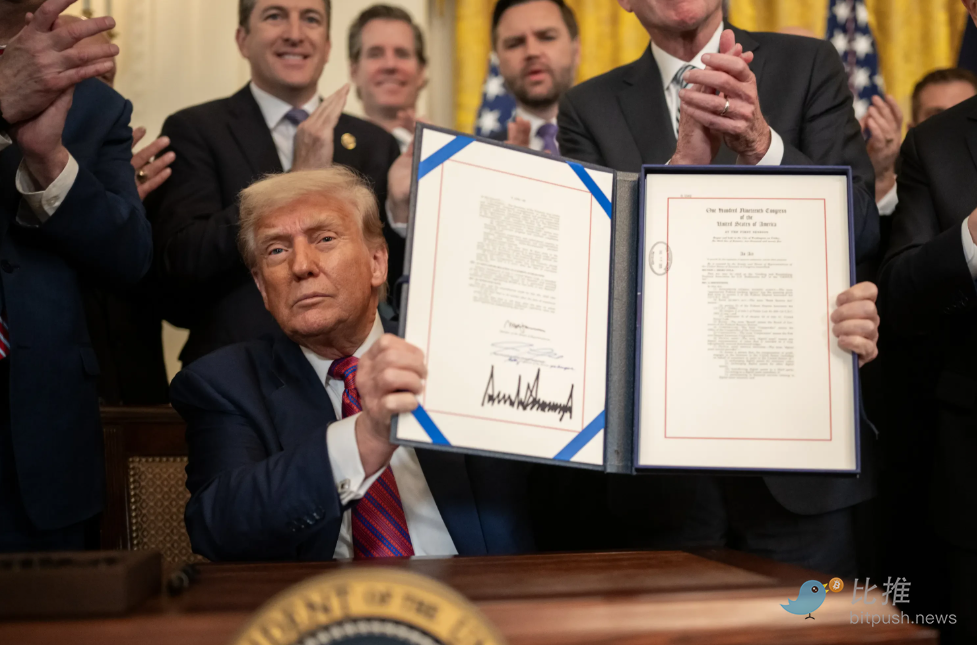
In July 2025, Trump officially signed the stablecoin GENIUS Act,自此, a golden age for stablecoins began.
Specifically, the法案 provided detailed regulatory definitions and rule implementation explanations for stablecoins, which had previously had模糊 boundaries and lacked监管, from aspects such as the definition of payment stablecoins, dual licensing regulation, 100% reserve requirements, mandatory transparency disclosure, anti-money laundering compliance, priority protection of users, and clear regulatory authority.
At the same time, this法案 was both the first federal-level stablecoin bill in U.S. history and the first cryptocurrency bill signed by a U.S. president, making its historical status and industry significance extremely special. Of course, the stablecoin system, deeply bound to the U.S. dollar, also once again aligned with Trump's "America First" political strategy, further strengthening the hegemonic status of the U.S. dollar in the global economic system.
Influenced by the passage of the Stablecoin GENIUS Act and other positive factors, the price of BTC rose突破 to around $110,000, setting a new historical high; on the other hand, the Stablecoin GENIUS Act also added fuel to Circle's crypto IPO, helping its stock price surge 10-fold from around $30 at IPO to nearly $300. Thus, this single major利好 drove the rapid development of the U.S. stock stablecoin sector, the Hong Kong stablecoin track, and even stablecoin, PayFi, and crypto payment tracks worldwide.
Additionally, under Trump's strong promotion, the other two major crypto bills, the CLARITY Act and the Anti-CBDC (Digital Dollar) Act,相继通过众议院投票, and cryptocurrency legislation took a solid step forward. As promised before, Trump once again set an example, clearly defining digital asset classification and regulatory归属, promoting the development of the DeFi industry; refusing to establish a central bank digital dollar, protecting U.S. citizens' right to self-custody digital assets.
To this day, although the CLARITY Act has阶段性陷入僵局 due to Coinbase's opposition and senator审批受阻, compared to the previous "historical空白," the many breakthroughs at the legal level are already historic moments.
Perhaps Trump, having served as U.S. President twice, also understands that compared to various law enforcement activities when taking office, fixing his governance纲领 and political will into law through legislation is a more lasting and effective political means.
Major Event 4: Wielding the Tariff Stick, Market Sharp Rises and Falls, Crypto Market Becomes an Insider Stage
If the above major events show the side of Trump that plays a role and benefits the crypto market, then mentioning the "tariff stick," I believe many in the crypto community, including myself, will find it hard to smile.
The reason is simple: whenever Trump launches a foreign tariff trade war and releases hawkish signals, the crypto market and even traditional financial markets fall in response,血流成河. No wonder everyone sighs that when Trump starts a tariff trade war, it's ultimately our crypto users' wallets that pay the bill.
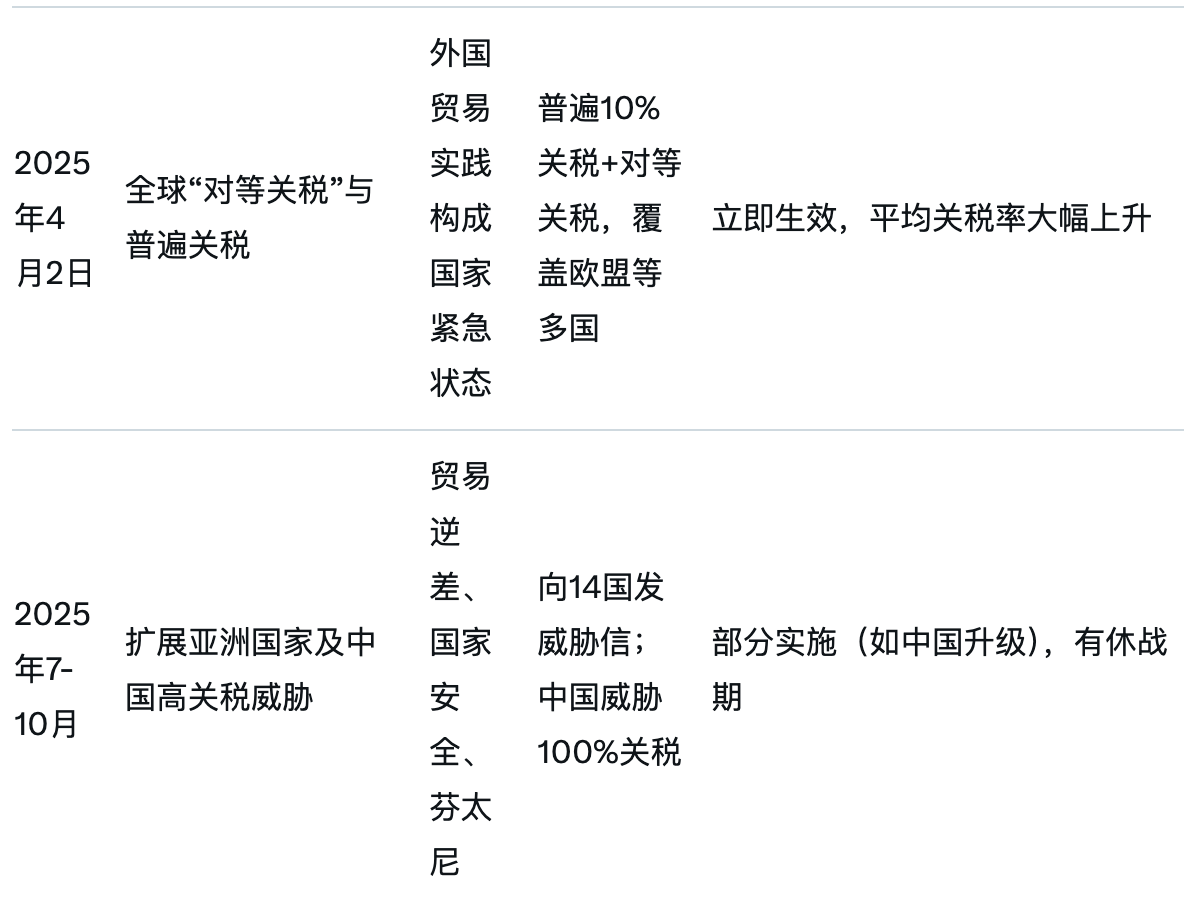
The three large-scale tariff trade wars launched by Trump in April, August, and October 2025 all brought heavy blows to the crypto market—
Last April, Trump launched global reciprocal tariffs and universal tariffs, with tariff levels increasing by over 10%, covering many EU countries; he even proposed raising tariffs on China to 125% and suspending tariffs on friendly countries. Affected by this, the cryptocurrency market capitalization一度单日跌幅高达 10%. The U.S. stock market lost $6 trillion in market capitalization in a few days, with countless individual stocks血流成河;
Last August, Trump signed the latest tariff executive order, deciding to impose tariffs of 15% to 41% on imported goods from 67 trading partners, pushing the overall tax rate to its highest level in over a century. Affected by this, the cryptocurrency market overall受挫, with the three major mainstream coins BTC, ETH, and SOL单日跌幅约 5%, significantly retreating from historical highs; subsequently, this tariff order was告一段落 with a 90-day suspension;
Last October, Trump launched another tariff war, and Sino-U.S. trade relations cooled again. Affected by this news, BTC一度跌超 13%, ETH一度跌超 17%, and countless altcoins even fell by over 30%; combined with factors such as exchange flash crashes and liquidations, the single-day fund liquidation scale in the crypto market reached $20 billion, with the real爆仓资金规模 estimated at $30-40 billion.
According to statistics, in 2025, the U.S. average effective tariff rate rose to 27%, the highest level in nearly 100 years,一度引发政策性报复 from major global economies and supply chain disruptions in the global economic system.
The tariff trade wars, time and again, brought not only panic psychology to the crypto market and traditional financial markets but also连环下跌 caused by panic. Moreover, during the剧烈波动 caused by tariffs, insiders with access to inside information took advantage to trade long and short, obtaining huge financial returns, also casting a shadow over the normal order of the crypto market.
It is worth mentioning that the横行 of insider trading and Trump's capricious tariff policy also contributed the term "TACO-style trading" (Odaily Planet Daily Note: Trump Always Chickens Out, referring to his initial强硬只为利益, followed by a softening of attitude, turning dovish) to the crypto market. Countless crypto whales used this expectation to go long and short on Hyperliquid and CEXs, harvesting their share of wealth returns from the crypto market.
To this day, the "10·11 insider whale" Garrett Jin is still active in the market and is also被视为 an insider of the Trump family or Trump faction. Besides his operations in the contract market, his提前押注 on "Trump pardoning CZ" is also被视为 evidence of "insider trading."
Major Event 5: Family Wealth Soars, Pardoning Binance Founder CZ
Compared to the略显猖獗 insider trading, another much-criticized aspect of Trump is his family's crypto project WLFI and a series of highly controversial crypto business布局.此外, Trump's pardon of CZ in October last year一度引发市场广泛讨论.
Trump's "Wealth Creation Scripture": Family Wealth Increases by $1.4 Billion in One Year
According to Bloomberg, over the past year, crypto assets have added approximately $1.4 billion to the Trump family's wealth. Currently, cryptocurrency accounts for about one-fifth of the Trump family's total net assets of approximately $6.8 billion for the first time.
During Trump's second term, the Trump family obtained significant收益 through the crypto platform World Liberty Financial (WLFI), which he co-founded, the Meme coin named after him (TRUMP), and the bitcoin mining company American Bitcoin Corp. (ABTC), among other new projects. Among them, the platform币 WLFI and stablecoin USD1 business of World Liberty were显著估值.
At the same time, the stock price of Trump Media & Technology Group fell by 66% over the past year, partially offsetting the gains from crypto assets; family members also invested in companies like SpaceX through the venture capital firm 1789 Capital and expanded the global real estate licensing business of the Trump Organization.
As for the Trump夫人同名 Meme coin MELANIA issued after the TRUMP coin, it wasn't even worth mentioning as an添头.此外, according to a personal financial document disclosed by Trump in June 2025, as of January 2025, Trump himself still held about 15.7 billion WLFI tokens, which were still worth about $2.6 billion at current prices.
In one year in office, Trump and his family acquired wealth on the scale of tens of billions of dollars through business expansion, political donations, and various巧立名目的 activities and dinners, making one不禁感叹:不愧是 the U.S. presidential family出身 from real estate developers.
Trump Exercises Presidential Privilege to Pardon CZ: A Handshake and Reconciliation Between Crypto Regulation and Government Power
Another thing worth mentioning separately is Trump's pardon of Binance founder CZ.
On the evening of October 23, 2025, the Wall Street Journal reported that Trump had pardoned Binance founder CZ. He had recently told advisors that he sympathized with the narrative of political persecution related to CZ and others. White House press secretary Caroline Levitt said that Trump "exercised his constitutional power to pardon Mr. Zhao. CZ was prosecuted during the Biden administration." She added: "The Biden administration's war on cryptocurrency is over."自此, CZ's previous 4-month imprisonment and the $4 billion fine imposed on Binance迎来了沉冤昭雪时刻.
Of course, due to the deep business往来 between Binance and WLFI (Odaily Planet Daily Note: Previously, Binance accepted a $2 billion investment from the UAE sovereign wealth fund MGX, in the form of the stablecoin USD1 issued by the Trump family's crypto project WLFI), and Binance's hiring of lobbyist Ches McDowell, who was closely related to Trump's eldest son Trump Jr., to assist in seeking a pardon, the crypto market and even some U.S. Democratic senators questioned whether there was bribery or corruption involved, with widespread external suspicion that pardoning CZ might involve political favors.
To this day, this matter has been告一段落, but speculation and criticism about Trump using power for personal gain and family profiteering仍然甚嚣尘上.
Conclusion: Trump Never Changed, Always a Businessman-Type Politician
Regardless of external voices, as president of a country, Trump remains稳坐钓鱼台, fulfilling his duties and enjoying his power. And in his nearly 80 years of life, his character底色 has perhaps never changed—he has always been a businessman who believes in value exchange and prioritizes利益.
As for the title of "Crypto President" and the vision of "building the United States into the world's crypto capital," they are just byproducts of Trump maximizing the role of crypto assets.
For this purebred American octogenarian, "America First" remains the survival philosophy he信奉.
Twitter:https://twitter.com/BitpushNewsCN
Bitpush TG Discussion Group:https://t.me/BitPushCommunity
Bitpush TG Subscription: https://t.me/bitpush







