Spicy Commentary | Michael Saylor's 'Player Talk'; 60-Year-Old Aunt Liquidated After 'Scamming a Young Man'

Foresight NewsPublished on 2026-06-13Last updated on 2026-06-13

Abstract

**"Spicy Commentary": Three Tales of Crypto's Wild Week** This week's "Spicy Commentary" column highlights three dramatic stories from the cryptocurrency world. First, **MicroStrategy's Michael Saylor** addressed the controversy over his company potentially selling Bitcoin. At the BTC Prague event, he clarified, "I never said the company can't sell Bitcoin. I told *you* never to sell *your* Bitcoin." This "do as I say, not as I do" stance was criticized by netizens as peak linguistic gymnastics, noting a history of him previously stating the company would "never" sell. Second, a **bizarre fraud case** emerged from Beijing. A 60-year-old woman, obsessed with getting rich from crypto but unwilling to risk her own savings, posed online as the 20-something "god-daughter" of a high-ranking official. She catfished a young man, convincing him to give her over 200,000 yuan for fabricated emergencies. She then invested all the stolen money into cryptocurrency with 10x leverage, only to lose everything in a market crash. The woman was sentenced to four years in prison for fraud. Finally, a **sobering trader's tale** surfaced on Reddit. A user posted "Tale of a crypto trader," confessing their net worth had plummeted from a peak of $45 million to roughly $17,200, primarily due to holding meme coins too long. The post, described as a crypto "book of confessions," sparked reactions ranging from sympathy to critique about greed, poor risk management, and the perils of treating meme coi...


Written by: Nicky, Foresight News


Welcome back to Spicy Commentary, where we review the week's notorious scenes in the crypto world involving 'stubborn talk, romance scams, and shaky hands'.


This week features three stories: 'A Big Shot's Stubborn Talk, An Old Lady's Romance Scam, and a Trader's Tearful Tale of Turning 40 Million in Profit to Dust'.


Michael Saylor: I Said 'You' Shouldn't Sell, Of Course the Company Can Sell


MicroStrategy founder Michael Saylor recently addressed the controversy over 'the company selling Bitcoin' at BTC Prague.
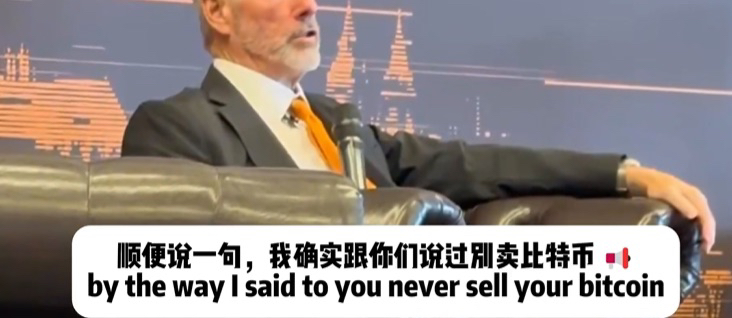


He said: 'I never said the company can't sell Bitcoin. What I said to you was: never sell your own Bitcoin. Anyone who has listened to our earnings calls, read the disclosure documents, or has half a brain knows that. Of course, the company will sell Bitcoin when necessary.'


Netizens' Spicy Comments:


'So the fine print behind 'never sell' is — refers to retail investors.'



I can, but you can't 😅.
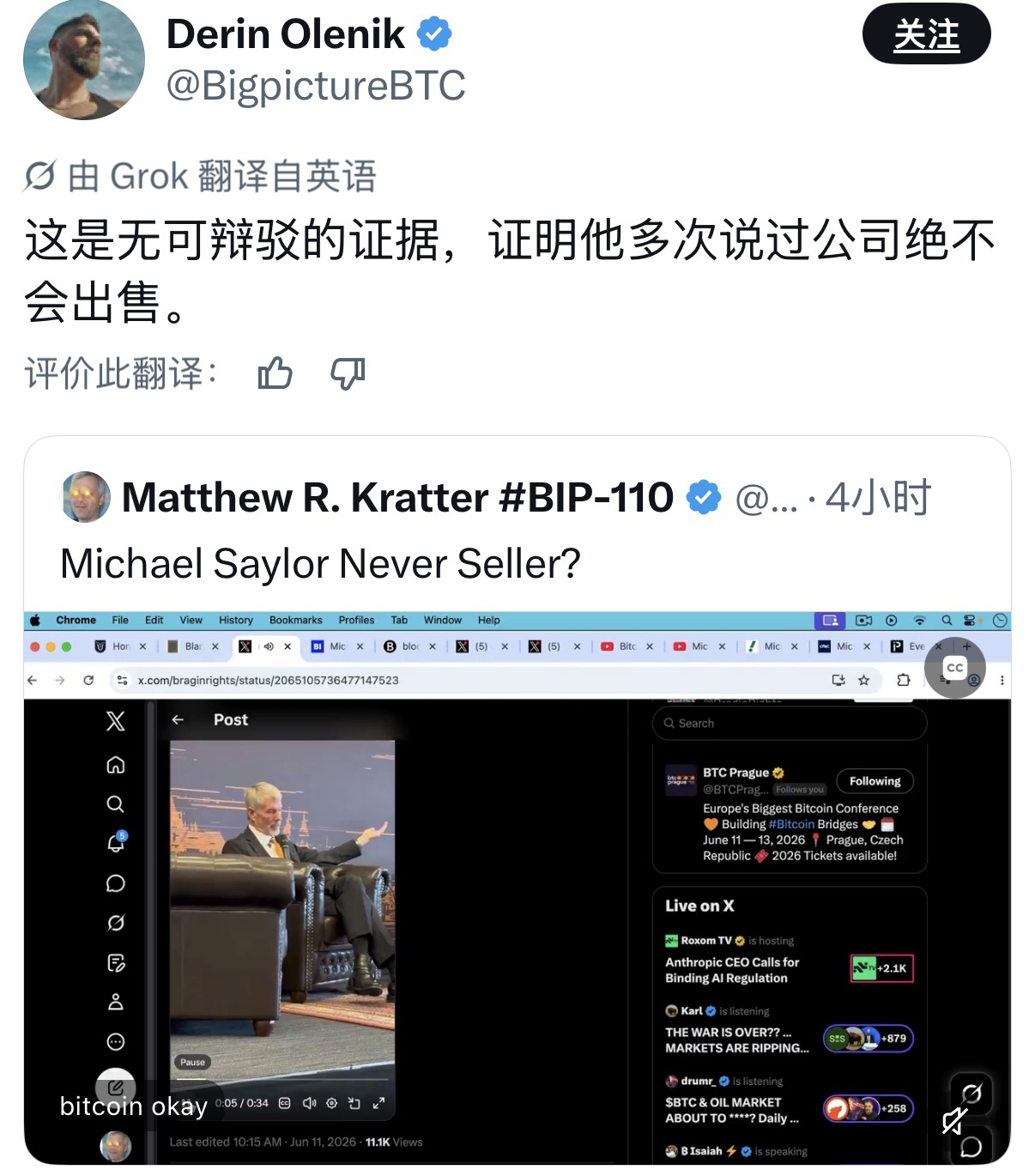


Some netizens dug up old videos proving he had repeatedly said the company would never sell Bitcoin.
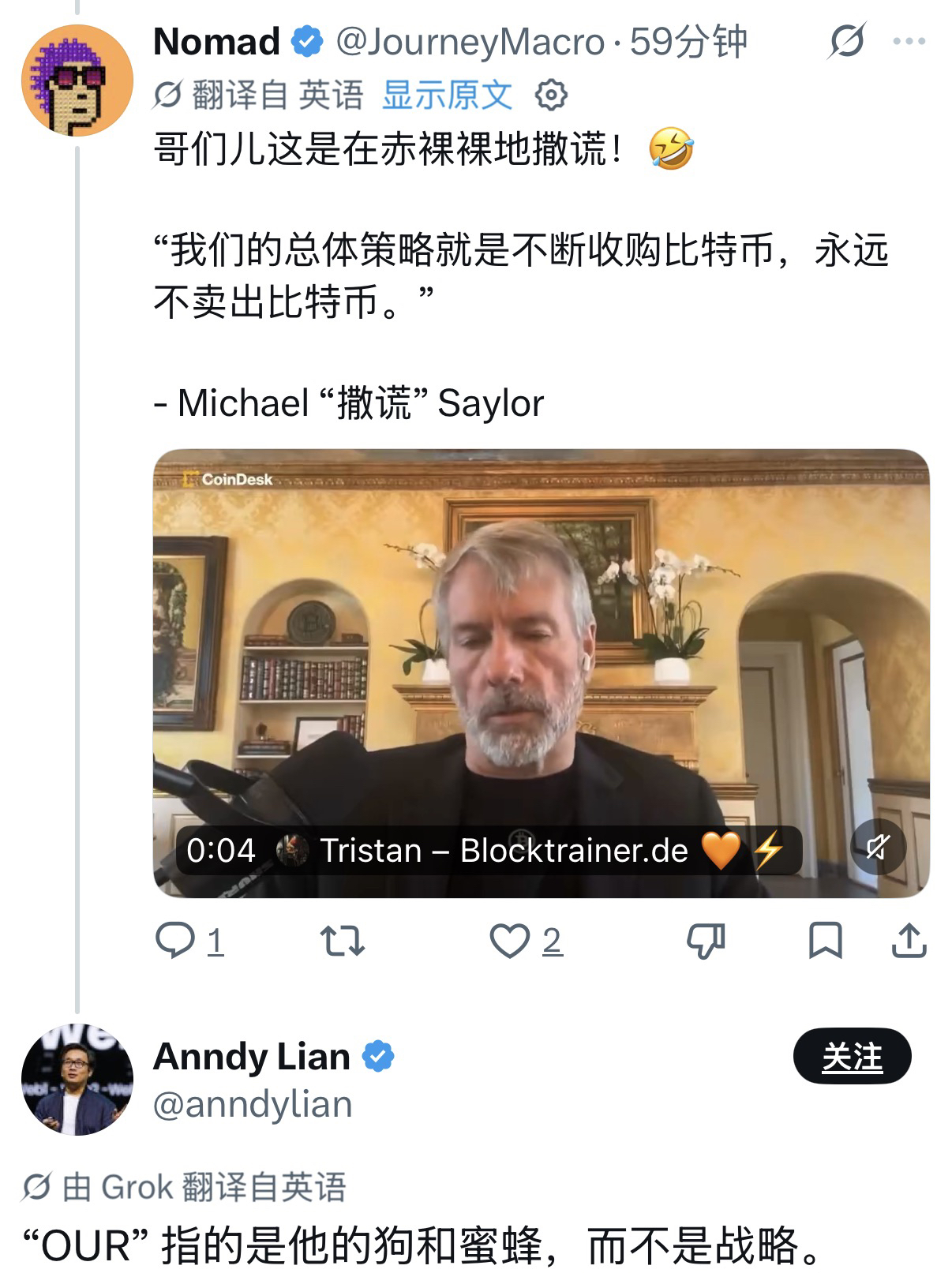


Dog🐶 and bee🐝?
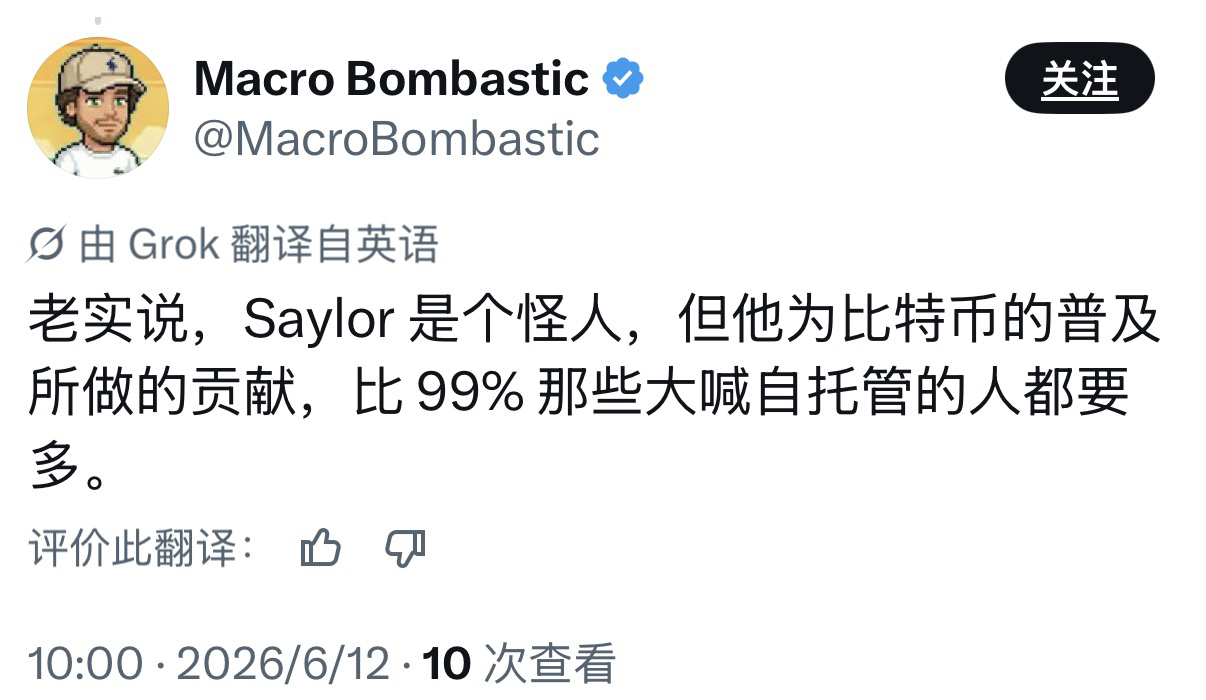


Now it seems to have become a double-edged sword.



It's become brainwashing propaganda 😭.



So 'I' will hold until after MicroStrategy sells, right 🥺.
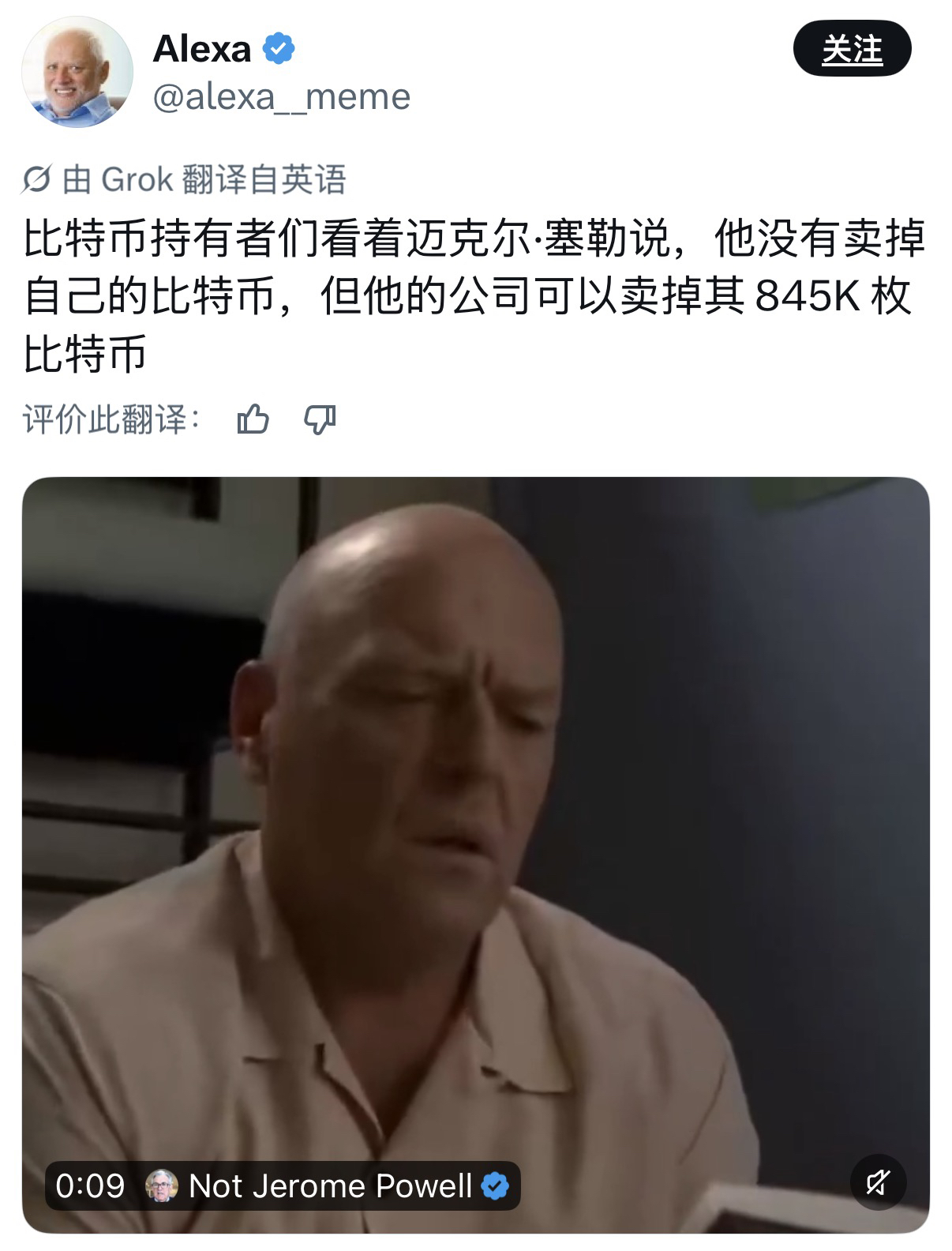


So will everyone's combined holdings exceed 845,000 coins?



Hold until the end of time!



This clarification is the pinnacle of linguistic art: I said 'you' shouldn't sell, I didn't say 'I' wouldn't sell.


Sixty-Year-Old Aunt Impersonates the 'Goddaughter' of a 20-Year-Old Senior Official, Scams Young Man Out of Over 200,000 RMB in Online Romance, Loses It All on 10x Leverage Crypto Trading


On June 5th, Beijing's Haidian District Procuratorate announced a bizarre case.


A sixty-year-old Ms. Meng, after retirement, became obsessed with cryptocurrencies. She dreamed of getting rich quick but was unwilling to risk her own pension money. So she hatched a devious plan: gamble with someone else's money.


She met a mother on a short-video platform who was worried about finding a partner for her honest son. Ms. Meng lied, saying she had a 20-something 'goddaughter' named Xiao Hong who worked for a central ministry, gentle and respectable. In reality, 'Xiao Hong' was an alter ego she created using another WeChat account. She changed her profile picture to a young woman and imitated a girl's tone of voice, starting an online romance with the young man.


The young man repeatedly asked to meet, but was always put off with excuses like 'work is busy, discipline is strict.' He had never seen 'Xiao Hong,' but had met Ms. Meng in person, always considering her a kind-hearted 'godmother.'


As their 'relationship' warmed up, Ms. Meng, using reasons like 'family illness, studying abroad,' swindled over 200,000 RMB from the young man. He gave her all his savings and even borrowed money.


The young man finally sensed something was off: her chat vocabulary was old-fashioned, and the 'photos from abroad' had a backdrop of a domestic KTV. He reported the case.


When apprehended, Ms. Meng tried to argue it was a 'loan,' but with solid evidence, she eventually confessed. All the over 200,000 RMB she swindled went into cryptocurrency, with 10x leverage, all in one go. The result: the market crashed, she got liquidated, and everything turned to zero🫪.


Recently, Haidian Court sentenced Ms. Meng to four years in prison for fraud, fined her, and ordered her to compensate the victim for his losses.



Sixty is the prime of life for hustling!



The old grandma👵 is still ahead of the curve!



After scamming old men, now scamming young men🤯.



The young sister turned out to be a 60-year-old aunt🤪.



So, should people be bolder🤣.



'Forced wealth creation,' huh🫢.



The age seems just right too🫠.



There really could be a fall guy🤔!



Do you want to learn from the aunt?



Take bold risks while you're 'young'!



Gotta work harder💪!


From 45 Million to 17 Thousand, Ask Me Anything
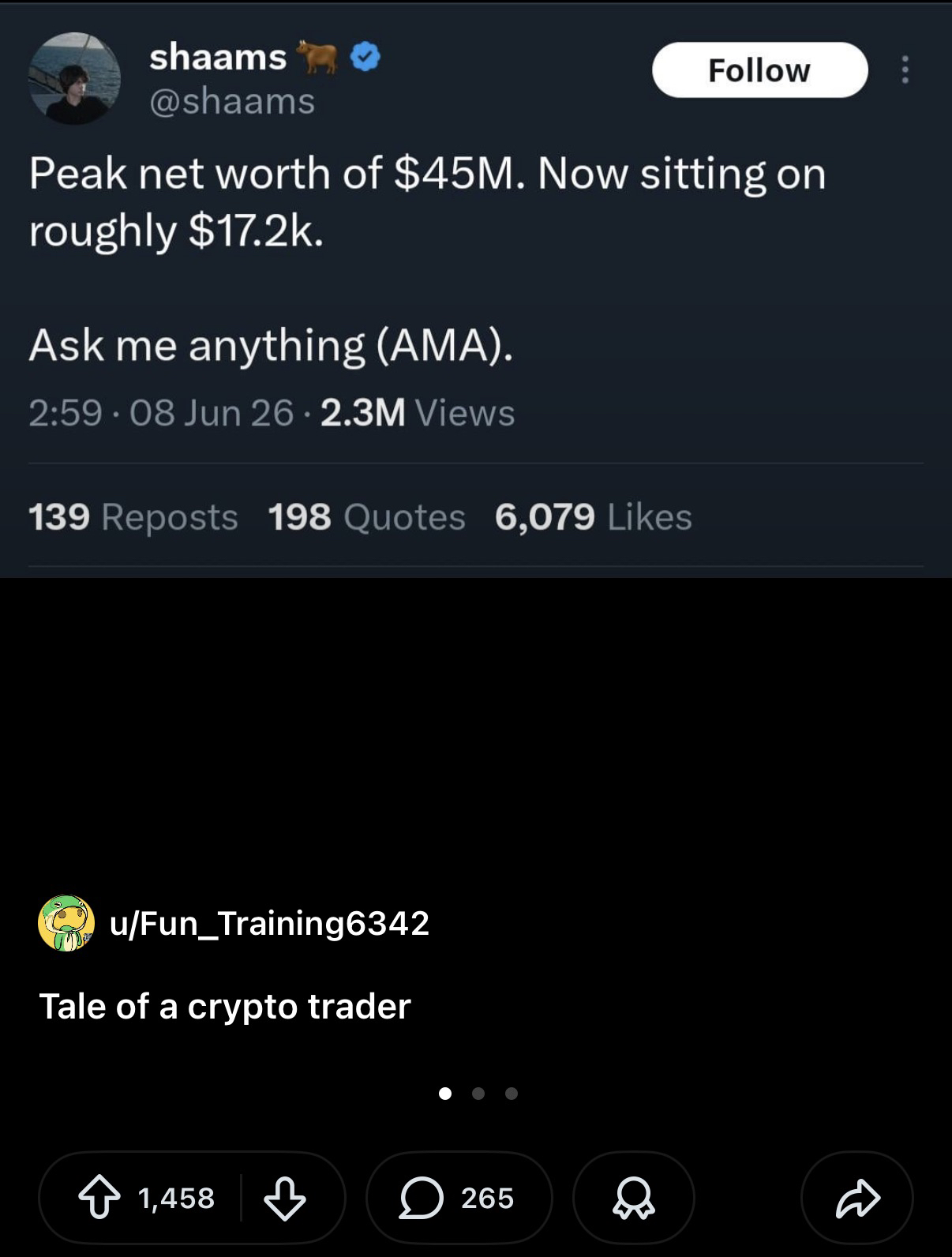


On the Reddit CryptoCurrency subreddit, someone posted:


'Tale of a crypto trader'


With a caption stating: Peak net worth $45 million, now roughly $17,200 left. Ask me anything. This trader had grown his funds to a peak of $45 million through Memecoin holdings.


The comment section was instantly flooded with 'eager' netizens:


'Have you ever thought about if you had bought index funds back then...'


'Bro, you're still alive, right?'


The post sparked massive resonance and gawking, a veritable crypto version of Confessions.
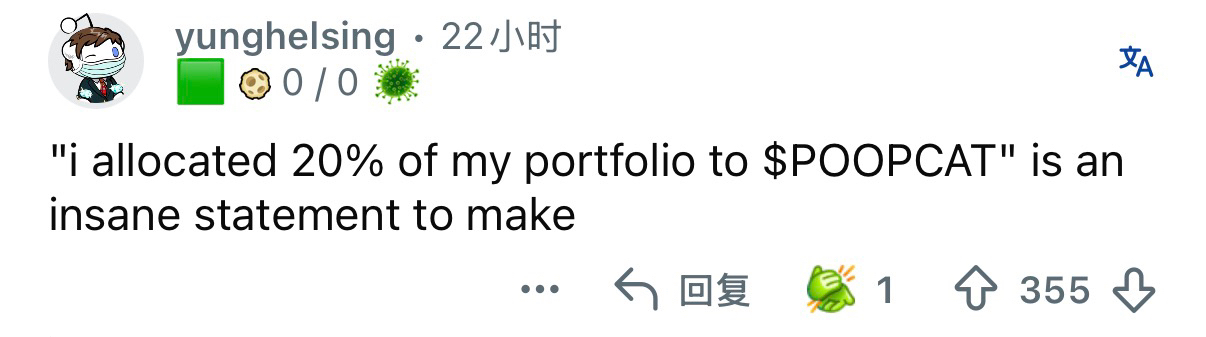


Netizen's Spicy Comment: 'I allocated 20% of my portfolio to POOPCAT' , that's just crazy. (POPCAT is currently trading at $0.041, having peaked at $2 in November 2024.)



Netizen said, he just wanted $100 million? Poor guy. (Looks like he just needed to double, but fell into the abyss.)



Imagine taking profit at $4 million and then enjoying life.
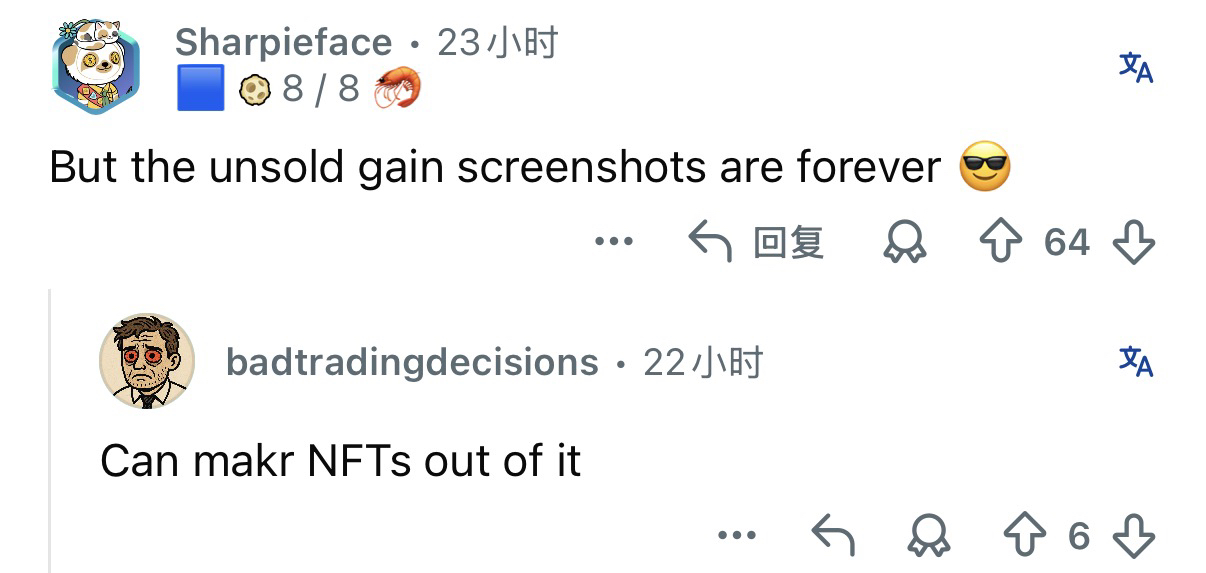


Netizen's Spicy Comment: But those screenshots of unrealized profits are eternal😎.
Comment reply: Could mint it as an NFT.
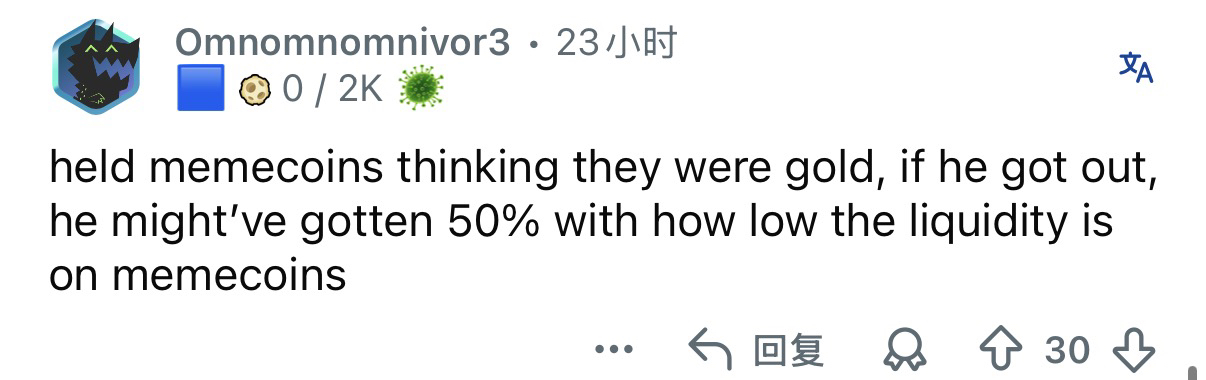


A netizen commented, Holding Memecoins like they were gold, if he had cashed out then, with the low liquidity of Memecoins, maybe he'd only get 50% of the value. (But that's still $20 million!)



I don't see a trader, more like a gambling addict🤑.
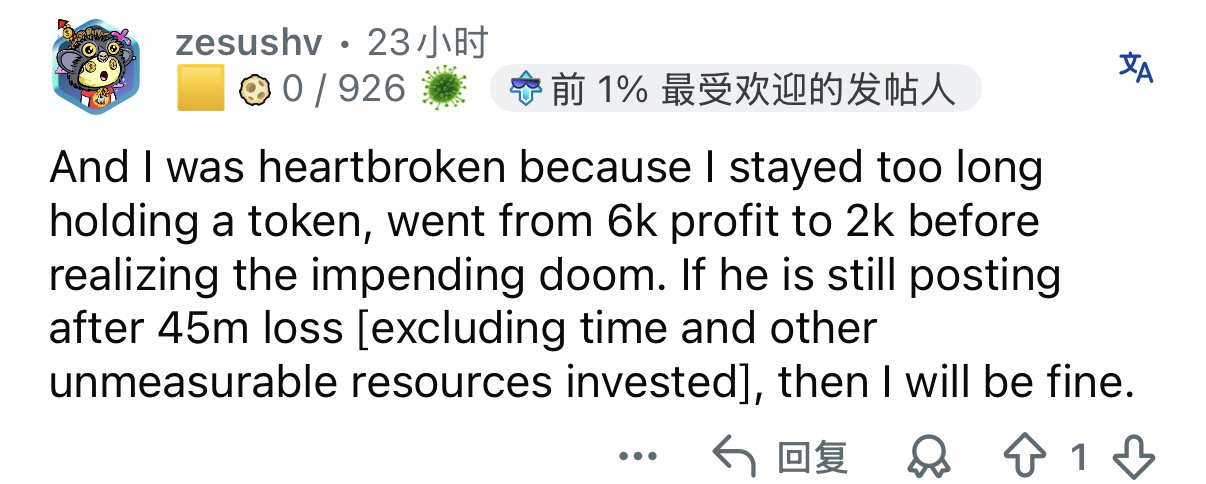


A netizen shared his own story: I was heartbroken at the time for holding a token too long, went from $6000 profit down to $2000 before realizing disaster was coming. If he can still post after losing $45 million (not counting time and other immeasurable resource inputs), then I'm fine too.



When people say you should diversify, they don't mean buying a million dollars worth of Memecoins. Why not buy some gold, silver, stocks, etc.? It had to be Memecoins🤣. It's a real shame.



Interestingly, I also made a lot from WIF and BONK, both dog-related coins, but ever since the TRUMP coin launched, all coins have crashed.


From Saylor's 'word games,' to the aunt's '10x leverage scam,' to the Reddit bro's '$45 million to $17 thousand,' this week had someone playing rhetoric, someone playing psychology, and someone playing heart palpitations.


The world is one big amateur stage, but Spicy Commentary is here to help you clip these brilliant scenes together!


Wishing everyone a happy weekend, see you next week!


(This week's content is based on public information and online discussions, interpreted lightly, for reference only.)


Past Reviews: Spicy Commentary| Three Stories Tell You: In the Crypto World, The Harder You Try, The More 'Miserable' You Become
Spicy Commentary| The 'King of Retail' Got His Account Hacked by His Brother for 'Scamming'? AI 'Archaeological Discovery' Unearths Bitcoin...
Spicy Commentary| Coinbase Layoffs Hit a Vital Artery? Can You Take a Time-Traveling Car Back to Before You Bought...


Trending Cryptos

Related Questions

QWhat did Michael Saylor clarify about MicroStrategy's Bitcoin selling policy at BTC Prague?

AMichael Saylor clarified that his advice 'never sell your bitcoin' was directed at individual investors, not at his company MicroStrategy. He stated that MicroStrategy would sell Bitcoin if necessary, contradicting his previous public stance that the company would never sell its Bitcoin holdings.

QWhat was the method and outcome of the 60-year-old woman's scam in Beijing?

AThe 60-year-old woman pretended to be a 20-year-old 'goddaughter' of a high-ranking official online to scam a young man out of over 200,000 yuan. She then used all the stolen money to trade virtual currencies with 10x leverage, which resulted in a complete loss when the market crashed.

QWhat was the financial journey of the trader who posted on Reddit's CryptoCurrency subreddit?

AThe trader's net worth peaked at $45 million from holding meme coins but subsequently plummeted to approximately $17,200. The post, titled 'Tale of a crypto trader,' served as a cautionary story about significant financial loss in cryptocurrency trading.

QWhat were the public's main reactions to Michael Saylor's 'never sell' clarification?

AThe public reaction was largely critical and mocking. People pointed out the hypocrisy, comparing his statement to 'fine print' for individual investors, called it 'brainwashing propaganda,' and noted it was the 'peak of linguistic artistry' to say 'you' shouldn't sell while 'I' (the company) can.

QWhat lesson does the article imply from the three stories it covers?

AThe article implies that the cryptocurrency world is full of tactics involving wordplay (like Saylor's), deception (like the woman's scam), and extreme risk-taking/gambling (like the Reddit trader's story). It highlights the unpredictable and often perilous nature of the space where people play with 'rhetoric, psychology, and heartbeats.'

Related Reads

HIP-3 Perpetual Futures Arbitrage in Action: SK Hynix ADR Premium Trading Opportunity

HIP-3 Perpetual Futures Arbitrage in Practice: The SK Hynix ADR Premium Trade Following its Nasdaq listing, a significant price gap emerged between SK Hynix's ADR (SKHY) and its underlying share (SKHX). During this period, the HIP-3 builder TradeXYZ launched perpetual futures markets for both on Hyperliquid. The divergent funding rates between these two markets offer a clear case study on the capabilities and limitations of stock perpetuals. The premium, which soared to 51% on July 14th, was primarily driven by closed arbitrage channels. The new ADR issuance did not involve depositing existing shares, and conversion between the underlying share and the ADR is not permitted until after July 29th. With strong US institutional demand facing constrained supply, the price gap widened. On Hyperliquid, the funding rates for SKHX and SKHY moved in opposite directions, revealing traders executing a pairs trade to bet on the premium narrowing—buying SKHX (underlying) and shorting SKHY (ADR). This highlights key insights: 1. **Ability to bypass traditional market friction:** The trade can be executed with USDC on a single platform, avoiding complexities like currency conversion, foreign accounts, and ADR borrowing. 2. **Missing tools to separate funding costs:** The trade inherently carries the cost of funding rate payments/receipts, as perpetuals reflect but do not force convergence between the two underlying indices. Instruments to hedge this variable cost are not yet available for HIP-3 stocks. 3. **Function as a leading indicator:** The SKHY pre-IPO market accurately predicted the Nasdaq opening price, and SKHX trades during KRX closures, providing price discovery. 4. **Inverse relationship with accessibility:** The SKHX perpetual, serving a market with fewer native hedging tools, sees much higher volume and sustained funding rates than the SKHY perpetual, which exists alongside a deep spot and options market. The focus now shifts to July 29th, when share conversion may partially open, though structural limits on creating new ADRs may persist. Regardless of the premium's path, Hyperliquid remains the primary venue to express a view on this spread via perpetual futures.

Foresight News15m ago

HIP-3 Perpetual Futures Arbitrage in Action: SK Hynix ADR Premium Trading Opportunity

Foresight News15m ago

AI Claims Erdős's $100 Bounty, Solves in One Page What a 44-Page Top Journal Paper Couldn't

An AI, in collaboration with a mathematician, has produced a one-page proof for a long-standing Erdős problem (#119), claiming the $100 bounty originally offered by Paul Erdős. The problem concerns the maximum modulus of polynomials with zeros on the unit circle. The new result, generated with the help of GPT-5.6 Sol and posted on the erdosproblems.com forum, is notably simpler than a famous 44-page proof by József Beck published in the Annals of Mathematics in 1991, which addressed a related but distinct part of the problem. Thomas Bloom, a mathematician and the maintainer of the Erdős problems website, stated that the AI's proof uses straightforward harmonic analysis techniques and contains "interesting ideas," suggesting the problem was less inherently difficult than previously believed. This follows other recent AI-assisted proofs, such as for the Cycle Double Cover conjecture. The development has sparked debate within the mathematical community. While some argue AI has hit a wall in pure mathematics, others point to incremental but genuine progress on tough problems, indicating that AI's relentless, non-intuitive exploration can uncover overlooked paths that human mathematicians might dismiss after initial failures. This event highlights a potential shift: some "open" problems may persist not due to sheer difficulty, but due to the limits of human patience in exploring all possible avenues.

marsbit18m ago

AI Claims Erdős's $100 Bounty, Solves in One Page What a 44-Page Top Journal Paper Couldn't

marsbit18m ago

1.2 Million in Line for Margin Calls: The Collapse of South Korea's National "Gamble" by Retail Investors

In July 2026, the South Korean stock market, fueled by a national "all-in" bet on semiconductor stocks, experienced a catastrophic meltdown. The KOSPI index plummeted from record highs, triggering seven market-wide trading halts in the first half of the year—more than half the total since the mechanism's inception in 2000. The crisis stemmed from the market's extreme concentration on two giants: Samsung Electronics and SK Hynix, which accounted for 60% of the KOSPI index. Amid an AI-driven boom, rampant retail speculation, particularly among young investors seeking to overcome high living costs and social immobility, led to a surge in leveraged trading. In a pivotal move, regulators allowed the launch of 2x leveraged ETFs tied solely to these two stocks in May 2026. This set the stage for disaster. When signs of an HBM chip glut emerged in July, prices for Samsung and SK Hynix fell. The leveraged ETFs' mandatory daily rebalancing mechanism forced them to sell shares aggressively to maintain their leverage ratios. This triggered a vicious cycle: ETF selling drove prices down further, which triggered margin calls and forced liquidations of retail investors' leveraged positions, leading to more selling. The market entered a self-reinforcing "death spiral" of cascading liquidations. The aftermath was devastating. Over 1.2 million retail margin accounts faced liquidation warnings, with an estimated 320,000 to 460,000 accounts completely wiped out, many left owing money to their brokers. Approximately 62% of these affected investors were in their 20s and 30s. Total losses from leveraged positions were estimated at around 2.15 trillion won (~$1.6 billion USD). Regulators later expressed regret for approving the high-risk ETFs, highlighting the dangers of financial innovation outpacing proper risk controls and investor protection. The episode serves as a stark warning: when market frenzy, structural fragility, and complex leverage products converge, the outcome can be a rapid and brutal wealth destruction, disproportionately impacting the most vulnerable participants.

marsbit1h ago

1.2 Million in Line for Margin Calls: The Collapse of South Korea's National "Gamble" by Retail Investors

marsbit1h ago

Trading

Spot

Hot Articles

Discussions

Welcome to the HTX Community. Here, you can stay informed about the latest platform developments and gain access to professional market insights. Users' opinions on the price of S (S) are presented below.

活动图片