Solayer Launches Real-Time Stablecoin Payments on Live InfiniSVM Mainnet

TheNewsCrypto发布于2026-03-13更新于2026-03-13

文章摘要

Solayer Labs has launched the public mainnet of its InfiniSVM network, enabling wallets, explorers, and dApps to connect. This infrastructure supports over 330,000 TPS with ~400ms finality, providing high-speed, real-time execution. One of the first products leveraging this is Solayer Pay, a stablecoin payment layer designed for fast, low-fee transactions. It features an incentive model with referral rewards and cashback, redistributing a portion of the 0.5% deposit fee. The platform also announced a $35 million ecosystem fund to support projects in DeFi, payments, and AI-driven onchain systems built on InfiniSVM.

Solayer Labs has announced a major update: InfiniSVM RPC is now live, the public mainnet on-ramp is open for wallets, explorers, indexers, and dApps to plug in today. As explained by the team, this is not just another RPC drop; it is the green light for real-world applications to start running at true hardware-accelerated SVM speed (330k+ TPS, ~400ms finality).

One of the first products ready to take full advantage? Solayer Pay – the fast, incentive-driven stablecoin payment layer built on this exact infrastructure. With the network now publicly accessible, users and builders can finally experience instant, low-friction transfers powered by Solayer’s DAG-based topology and real-time write paths.
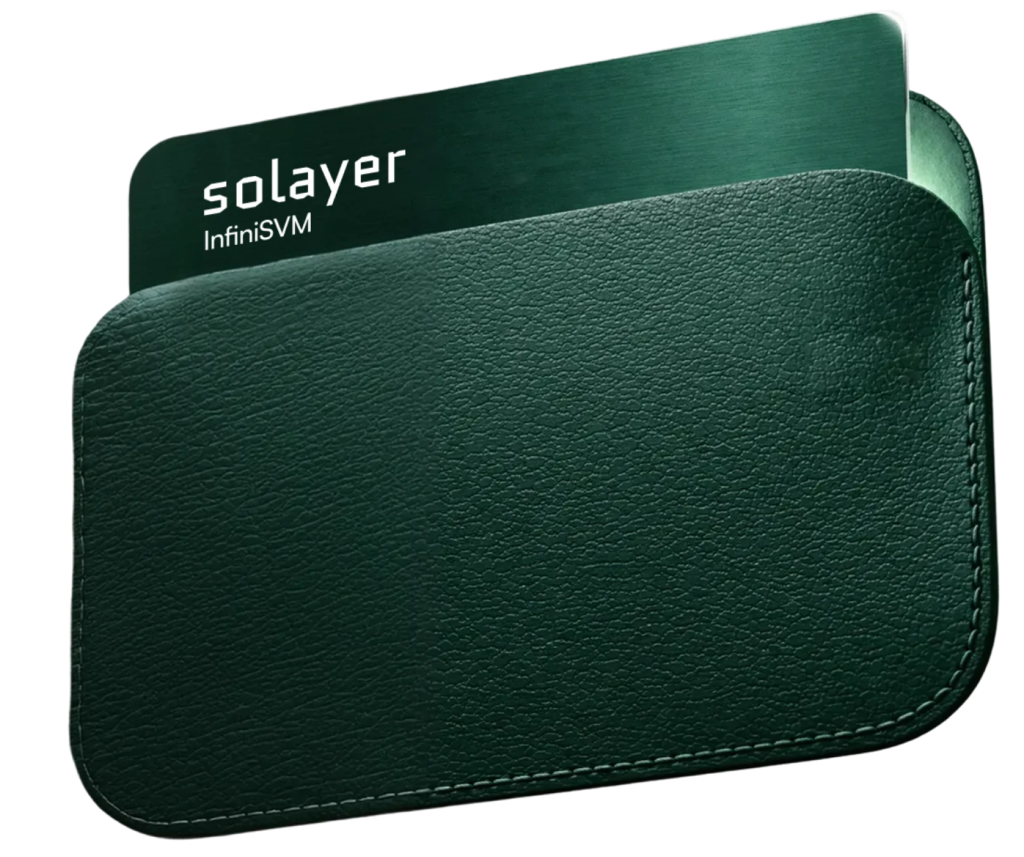
Built by the team behind infiniSVM, Solayer Pay is designed for real-time financial interactions, combining low fees, referral incentives, and fast transaction execution. Here’s a closer look at the platform’s key features and what makes it stand out in the competitive crypto payments landscape.

One of the defining aspects of Solayer Pay is the infrastructure it runs on. As already mentioned, the payment platform is designed to leverage infiniSVM, Solayer’s high-performance blockchain network engineered for real-time execution.

The network has demonstrated over 330,000 transactions per second (TPS) with approximately 400 milliseconds of finality. In practical terms, this means transactions can settle almost instantly, a critical requirement for payments, trading systems, and other financial applications where speed and reliability are essential.

For users, this translates into faster transfers, smoother payment experiences, and the ability to move stablecoins without the delays typically associated with older blockchain networks.

Solayer Pay emphasizes a straightforward and transparent fee structure designed to reduce friction for new users. The platform currently charges $20 annual registration fee and 0.5% deposit fee. Instead of keeping the entire transaction fee, Solayer redistributes a portion of it through referral rewards and cashback incentives. This model encourages organic platform growth while rewarding users who actively participate in the ecosystem.

The deposit fee is divided as follows: 0.125% goes to the referrer; 0.125% is returned to the user as cashback in USDC and 0.25% is retained by the platform. This structure creates a built-in incentive system where users can earn rewards simply by inviting others to the platform.

Solayer Pay is designed to function as a practical payment interface rather than just a wallet. The platform enables users to: transfer stablecoins quickly, manage balances within a unified interface, connect and manage their Solayer Pay Card. The upcoming Solayer Pay app is expected to further streamline the experience by providing a single hub for sending stablecoins and managing payment activity.

Backed by a Growing Ecosystem

Solayer’s ambitions extend beyond payments alone. The company recently announced a $35 million ecosystem fund aimed at supporting projects building on the infiniSVM network. The fund targets applications that benefit from real-time execution and high throughput, with a particular focus on: DeF, consumer applications, payments, AI-driven onchain systems.

By investing directly in developers and infrastructure, Solayer is working to expand the range of applications that can operate on its network, potentially increasing the utility of services like Solayer Pay.


TagsBlockchainCryptocurrencyMainnetSolayer

相关问答

QWhat is the key feature of Solayer's InfiniSVM mainnet that enables real-time applications?

AThe key feature is its hardware-accelerated SVM speed, achieving over 330,000 transactions per second (TPS) with approximately 400 milliseconds finality.

QWhat is the name of the payment product built to take advantage of the InfiniSVM infrastructure?

AThe payment product is called Solayer Pay, which is a fast, incentive-driven stablecoin payment layer.

QHow does Solayer Pay's fee structure work and what incentives does it offer?

ASolayer Pay charges a $20 annual registration fee and a 0.5% deposit fee. This fee is divided with 0.125% going to the referrer, 0.125% returned to the user as USDC cashback, and 0.25% retained by the platform.

QWhat type of network topology does Solayer use to achieve its high performance?

ASolayer uses a DAG-based topology and real-time write paths to achieve its high throughput and low latency.

QWhat is the purpose of the $35 million ecosystem fund announced by Solayer?

AThe $35 million ecosystem fund is aimed at supporting projects building on the infiniSVM network, particularly those in DeFi, consumer applications, payments, and AI-driven onchain systems that benefit from real-time execution and high throughput.

你可能也喜欢

黄仁勋戏剧性“拯救”韩国股市

韩国股市在6月5日和8日遭遇大幅下跌,KOSPI指数暴跌并触发熔断。在此市场动荡之际,英伟达CEO黄仁勋访韩,其与SK集团的合作动向对市场产生了显著影响。 黄仁勋与SK集团会长崔泰源、SK海力士CEO郭鲁正举行晚餐会,并确认英伟达新款Vera CPU将采用SK海力士的DRAM内存,双方正为下半年及明年的“超大规模合作”做准备。随后,英伟达与SK海力士官宣了一份多年期技术合作协议,涉及AI超级计算机、机器人、数字孪生和半导体制造。黄仁勋更公开表示AI公司股价目前“非常低”。 合作核心内容包括:英伟达将首款数据中心CPU Vera的内存供应锁定SK海力士,双方将共同开发下一代内存以支持英伟达的AI基础设施路线图。此外,SK海力士将利用英伟达的CUDA-X库和AI技术来加速其半导体设计和制造流程,例如计算光刻和构建晶圆厂数字孪生,以实现更智能的工厂运营。 此次合作有前期铺垫,早在2025年10月,双方就宣布在韩国合作建设大型AI工厂。值得注意的是,在关键的HBM4内存供应上,英伟达采取了多元策略,同时认证了三星、SK海力士和美光三家供应商。黄仁勋判断,由于AI需求旺盛,从晶圆到封装的整个存储芯片短缺状况将持续数年。 黄仁勋此行还会见了现代、LG、三星等韩国企业,显示出英伟达正系统性地加深与韩国科技产业的联系。其访问及释放的积极合作信号,在韩国股市低迷时起到了提振市场信心的作用。

链捕手6小时前

黄仁勋戏剧性“拯救”韩国股市

链捕手6小时前

当推理成为稀缺资源,价值由谁捕获

当推理成为稀缺资源,价值由谁捕获?本文探讨了AI算力市场中,推理(inference)正取代训练成为核心瓶颈与价值捕获点的趋势。 2023年提出的“2000亿美元问题”指出GPU超前建设可能带来收入缺口,而2024年该问题已扩大为“6000亿美元问题”。市场近期开始意识到,缺口实际上正通过推理侧的需求来填补。推理是持续性的运营成本,伴随每次模型调用而增长,其市场规模可达训练的10至50倍。 英伟达最新财报将业务重组为“数据中心”与“边缘计算”两大平台,凸显推理已成为战略核心。边缘计算虽当前占比小,但代表了推理向终端设备的延伸。同时,Cerebras的IPO获得超额认购,也因市场看好其专注于推理加速的芯片架构。 Anthropic的案例进一步印证了推理资源的紧张:其因使用量远超产能而接管大型数据中心专用于推理,并对高频的agentic使用改为按量计费,说明推理已成为制约应用扩张的关键因素。 在AI算力栈中,价值沉淀点正在转移。大多数公司只占据从芯片制造到API服务中的某一层,而Hyperbolic作为一家不持有GPU的聚合平台,通过整合多来源的碎片化算力供给,提供统一、低成本的GPU租赁与路由服务,形成了“供给聚合-数据洞察-优化路由-吸引更多用户与供给”的飞轮。与之相比,Venice等应用层公司虽直接面向用户,但其利润受限于向底层购买的推理算力成本,凸显了聚合层在产业链中的潜在优势。 最终,随着agentic AI和物理AI推动推理需求爆发,价值可能不会流向持有最多硬件的公司,而是流向能高效聚合、路由并优化算力资源的那一层。Hyperbolic正试图成为这样的关键聚合层,在推理成为稀缺资源的时代捕获核心价值。

链捕手6小时前

当推理成为稀缺资源,价值由谁捕获

链捕手6小时前

交易

现货
合约
活动图片