Silicon Valley Moguls Gather for 'Werewolf' Reality Show, Billionaires Engage in Power Gameplay

marsbitPublished on 2026-06-08Last updated on 2026-06-08

Abstract

Silicon Valley elites, including OpenAI's Sam Altman, Anduril's Palmer Luckey, and Signal's Moxie Marlinspike, gathered not for a tech discussion, but to film a reality show playing "Mafia" (the US version of Werewolf). The show, titled *MAFIA*, is produced by the legendary venture capital firm Founders Fund. Held at the historic Tosca Cafe in San Francisco, the game revealed participants' real-time decision-making and personalities under pressure. Altman applied analytical logic, Luckey's playful style made him an early target, and Marlinspike skillfully shifted the group's thinking. The session quickly devolved into a battle of intuition and accusation after Figma's Dylan Field was eliminated first. More than just entertainment, the show is seen as a public experiment and a rebellion against standard VC narratives. It demonstrates how Silicon Valley's new elite leverages "infotainment" to build influence. As traditional media wanes, figures like Founders Fund are taking control of content creation, understanding that narrative control and public performance are becoming crucial capital in the internet age. The strategic thinking, persuasive communication, and rapid decision-making displayed in the game mirror the very skills that drive their real-world success.

By: Ye Zhen

If you were to imagine a closed-door gathering of Silicon Valley's top power players, you would most likely think of artificial intelligence, the chip war, robotics, defense technology, or the next generation of the internet.

After all, the people seated in the room include OpenAI founder Sam Altman, defense tech unicorn Anduril founder Palmer Luckey, Figma founder Dylan Field, Signal founder Moxie Marlinspike, and a group of investors directing the flow of hundreds of billions of dollars in capital.

But a recent gathering in San Francisco was nothing like that.

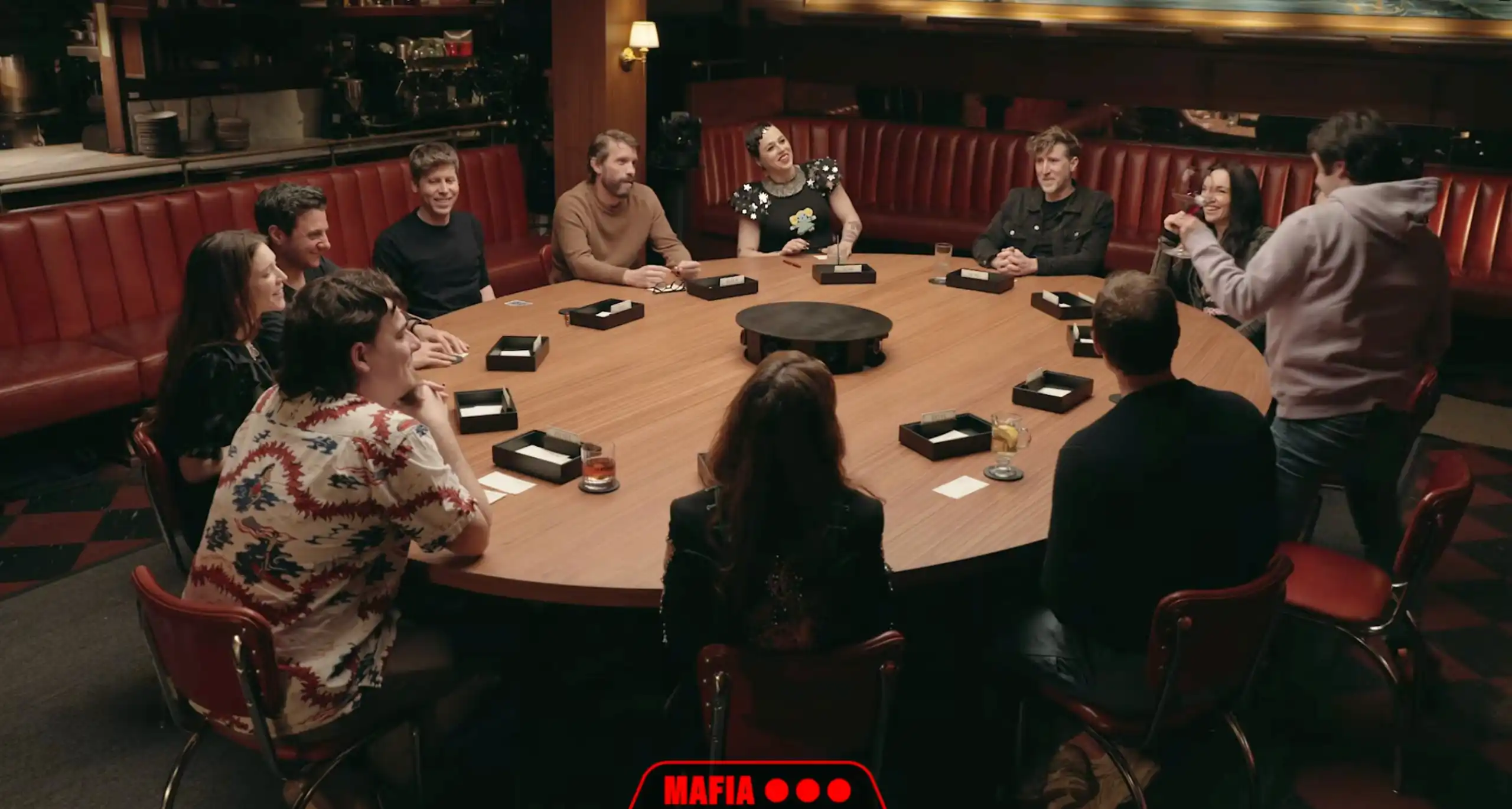
No one discussed AI models, nor did anyone talk about funding rounds and valuations. Instead, this group of Silicon Valley's smartest and most powerful people sat around a circular table and seriously started playing a game of Werewolf.

To be precise, the American version of Werewolf—Mafia.

What's even more interesting is that this was not a private gathering among friends, but a formally filmed and publicly broadcast reality show.

The show is simply called "MAFIA," and the producer is one of Silicon Valley's most legendary and controversial venture capital firms: Founders Fund.
Founders Fund might not be as well-known as Sequoia or Hillhouse, but if you mention the companies it has invested in, its weight becomes immediately apparent: Facebook, SpaceX, Palantir, Stripe, Airbnb, Anduril, and OpenAI have all appeared in its investment portfolio.

This investment firm, founded by Peter Thiel and other members of the "PayPal Mafia," has participated in almost all of Silicon Valley's most important technological waves over the past two decades. And now, it's doing something that seems completely unrelated to investing—making a variety show.

Of course, simply understanding "MAFIA" as a tech circle reality show might underestimate Founders Fund's true intentions.

It resembles more of a public experiment packaged as entertainment.

Why Are These Billionaires Obsessed with Werewolf?

The opening of the show is surreal.

The location is the legendary Tosca Cafe in San Francisco, a place that holds the iconic group photo of the "PayPal Mafia."
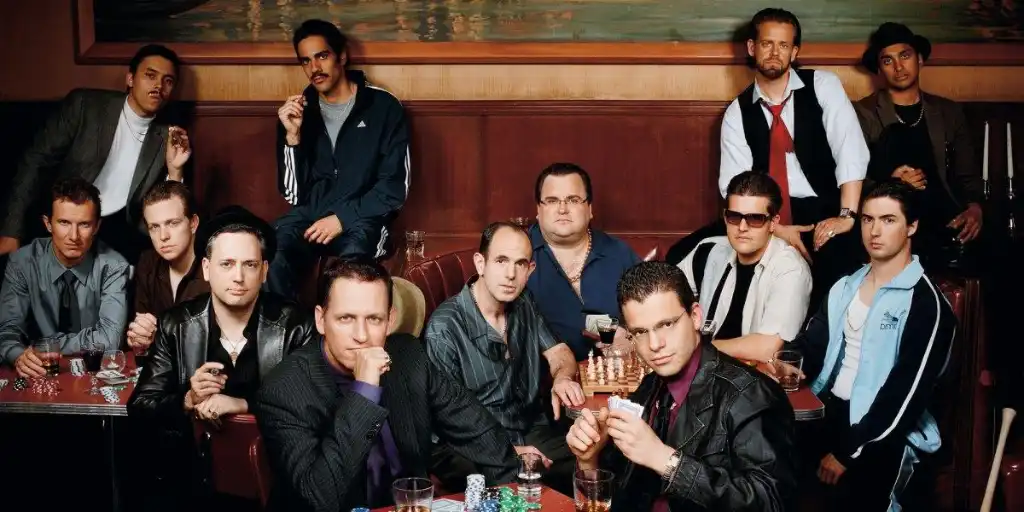
(The iconic "PayPal Mafia" group photo refers to a famous team photo in Silicon Valley's tech history, taken during a gathering of PayPal's early core members. It has been repeatedly referenced to symbolize the enormous influence this group had on the subsequent Silicon Valley entrepreneurial ecosystem.)

And this time, seated around the table is the new generation of Silicon Valley's power core:

  • Sam Altman (OpenAI Founder & CEO)
  • Palmer Luckey (Anduril Industries Founder)
  • Dylan Field (Figma Co-founder & CEO)
  • Moxie Marlinspike (Signal Co-founder)
  • Bryan Johnson ("Don't Die" Project Founder)
  • Trae Stephens (Founders Fund Partner)
  • Ryan Petersen (Flexport Founder & CEO)

If you simply added up the market value and influence of these individuals' companies, this table could almost be seen as a miniature "global tech economy."

But the first thing they did was: close their eyes, commit a murder, and vote.

In the view of Founders Fund's Head of Marketing, Mike Solana, this seemingly absurd arrangement is actually a deliberate rebellion against the traditional VC content format.

Over the past decade-plus, the most common narrative style in the tech world has been founders telling standardized life stories on podcasts: loving programming, failing at a startup, changing the world.

After hearing enough, everyone started to sound similar.

But Werewolf is different.

It doesn't give you time to prepare, nor does it allow you to package your narrative.

You must judge others' intentions in an extremely short time and make decisions under conditions of severe information asymmetry. The behavioral patterns revealed under this kind of pressure are often closer to true personality than any interview.

Thus, this game essentially becomes a "personality development experiment."

Sam Altman dissects everyone's speech logic like he's analyzing an AI model; Palmer Luckey continues his characteristic banter, becoming a target within minutes of the game starting due to his excessive activity; and Signal founder Moxie Marlinspike delivers the most brilliant moment of the entire show—with just one sentence, he successfully changes everyone's frame of thinking.

Silicon Valley Moguls at the Card Table

The game spiraled out of control from the first night.

After Figma founder Dylan Field was executed by the mafia in the first round, the situation quickly plunged into an information vacuum, forcing everyone to rely on intuition and experience for deduction.

AI policy expert Ryan Beiermeister took the lead, questioning Trae Stephens and Bryan Johnson for overreacting upon hearing the news of the death, while biohacker Josie Zayner defended Bryan by saying he "watches too many Korean dramas."

Just as everyone was talking over each other, Sam Altman spoke up. Relying on extremely calm defense and analytical skills, he began analyzing others' statements and defenses.

When Signal founder Moxie confidently accused biohacker Josie Zayner of being in the mafia, Altman sensed something off:

"It's interesting that Moxie, as an experienced player, would take such a big risk to accuse a newbie... This highly certain way of speaking feels very 'mafia.' Moxie, I think you are the most like mafia."

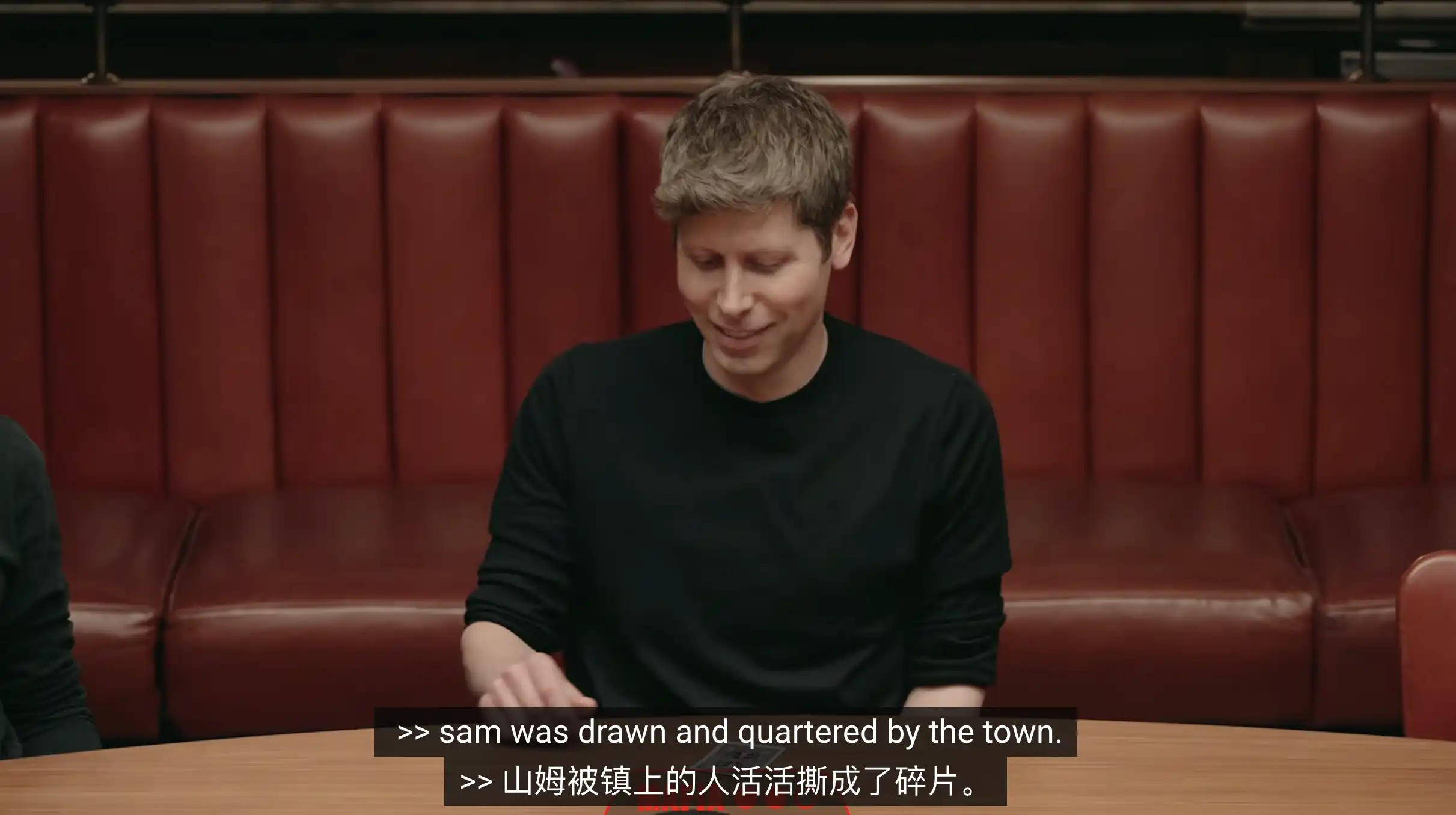
However, this open-play strategy instantly made him a target. In the third night's vote, Altman was regretfully eliminated.

When the host announced he had been "drawn and quartered" by the townspeople, the room erupted in laughter. Someone even added, "At least this proves he's not a super-intelligent AI."
The Silicon Valley "New Wealth Password" in the Age of Infotainment

After the "MAFIA" reality show premiered on YouTube and X, it quickly drew attention within the tech circle, with the first episode easily surpassing ten thousand views in a short time.

Against the backdrop of traditional media's gradual decline and the cancellation of some talk shows, Silicon Valley's VC giants are ostentatiously taking up the baton of content creation. From a16z's heavy investment in its media matrix earlier, to OpenAI's recent acquisition of the tech talk show TBPN, to Founders Fund now personally producing entertainment variety shows, the underlying business logic is highly consistent.

In modern society, reshaped by social media, the path to power and influence is increasingly paved with "Infotainment."

Whether it's Bryan Johnson gaining traffic by showcasing bizarre anti-aging routines online, or Elon Musk bolstering his business empire through his personal influencer network, Silicon Valley's new generation of elites understand better than anyone—in the internet age, controlling traffic, crafting narratives, and even performing skillfully in public are becoming the most crucial forms of business capital.

Although the venture capital moguls were playing a game at this long table, the precise defense, logical deconstruction, highly persuasive eloquence, and decisive actions they demonstrated in the face of insufficient information are precisely the underlying genes that have made them successful in the real business world.


Trending Cryptos

Related Questions

QWhat is the name of the reality TV show featuring Silicon Valley elites playing a version of 'Mafia' (Werewolf) and who produced it?

AThe reality TV show is called 'MAFIA', and it was produced by the venture capital firm Founders Fund.

QAccording to the article, what is the deeper purpose behind the 'MAFIA' show, beyond just being a reality program?

AThe article suggests the show is a 'public experiment packaged as entertainment,' designed to reveal the true personalities of the participants under pressure, acting as a 'personality development experiment' rather than just a game.

QWho are some of the notable Silicon Valley figures mentioned as participants in the 'MAFIA' game?

ANotable participants include Sam Altman (OpenAI), Palmer Luckey (Anduril), Dylan Field (Figma), Moxie Marlinspike (Signal), Bryan Johnson ('Don't Die' project), Trae Stephens (Founders Fund), and Ryan Petersen (Flexport).

QHow did Sam Altman's gameplay style lead to his elimination from the 'MAFIA' game, as described in the article?

ASam Altman used a very analytical, open strategy, calmly dissecting others' arguments. He directly accused Moxie Marlinspike of being Mafia. This 'playing with open cards' made him a target, leading to his elimination by vote in the third round.

QWhat broader trend in Silicon Valley does the article connect the production of shows like 'MAFIA' to?

AThe article connects it to the trend of Silicon Valley elites and VC firms heavily investing in content creation and 'infotainment' to control narratives, generate influence, and attract attention, which is seen as a new form of commercial capital in the internet age.

Related Reads

Cyclical Stock or Growth Stock? Coinbase's Q2 Earnings Report Reveals 'Valuation Disagreement'

Coinbase's Q2 2026 financial results revealed a mixed performance, reigniting debate over whether the company should be valued as a cyclical stock tied to crypto markets or a growth stock with future potential. Total revenue missed expectations at $1.22 billion, down 19% year-over-year. Transaction revenue fell to $599 million, with retail crypto spot trading revenue dropping 30% to $452 million, back to 2023 levels. The company reported a net loss of $359 million, marking its third consecutive quarterly loss. Despite CEO Brian Armstrong's positive commentary on metrics like a 10.3% overall crypto trading market share and 106% growth in prediction markets, the market reacted negatively, with shares dropping over 5% after-hours. A key issue is the decline in core retail trading. While Coinbase touted record market share, this figure includes derivatives and new products. Its traditional crypto spot trading share is likely shrinking. New ventures like prediction markets, while growing, contributed less than $30 million, insufficient to offset the core revenue decline. The valuation debate hinges on perspective. As a cyclical stock, Coinbase remains deeply tied to the crypto bear market, with user attrition and competitive pressures justifying a lower valuation. The company's strategy appears focused on surviving until the next bull cycle. Viewed as a growth stock, however, Coinbase shows promising diversification. Subscription and service revenue reached $555 million, nearly matching transaction revenue. Stablecoin revenue, its second-largest source at $292 million, remains strong through its partnership with Circle. Critically, Coinbase is positioning itself as a leader in the emerging on-chain "agent economy." Over 90% of agent-based stablecoin transactions occur on its Base network, which it believes could handle trillions in future agent transactions. The recent acquisition of Deribit also aims to boost its international derivatives offering. In summary, Coinbase's present struggles are clear, but its future hinges on whether its investments in revenue diversification, stablecoins, and the agent economy can ultimately transform its business model and justify a growth premium.

Odaily星球日报5m ago

Cyclical Stock or Growth Stock? Coinbase's Q2 Earnings Report Reveals 'Valuation Disagreement'

Odaily星球日报5m ago

Global Market Share Survey: Japanese Firms Lead in Semiconductor Materials

Global Market Share Survey: Japanese Firms Lead in Semiconductor Materials According to the 2025 "Major Goods and Services Market Share Survey" by Nikkei, Japanese companies maintain strong positions in semiconductor-related materials. In silicon wafers, Shin-Etsu Chemical ranks first with a 26.3% share, followed by SUMCO at 17.8%. Together, they hold 44.1% of the market, widening their lead over competitors from Taiwan, Germany, and South Korea. In photoresists, Tokyo Ohka Kogyo, JSR, and Shin-Etsu Chemical occupy the top three spots, with a combined share of 60.5%. Despite their strength in materials, Japanese firms have a weaker presence in core semiconductor segments like DRAM and NAND flash memory, where South Korean and U.S. companies dominate. For instance, SK Hynix and Samsung lead in DRAM, while China’s CXMT doubled its share to 6% in 2025. The semiconductor market is projected to grow rapidly, with WSTS forecasting a 90% increase to $1.5112 trillion by 2026. Major players like Samsung, SK Hynix, and Micron are making massive investments to expand capacity. To maintain their edge in materials, Japanese companies must similarly commit to large-scale, risk-taking investments. In contrast, Japan’s automotive sector shows stagnation. Toyota remains the global leader but with only a slight share increase to 12.3%, while Japanese brands are absent from the top five in the EV market. In shipbuilding, Imabari Shipbuilding rose to third place globally with a 7.2% share, benefiting from large container ship deliveries. However, Chinese and South Korean firms dominate the sector, holding the top two positions. Japan aims to revitalize its shipbuilding industry through government and corporate efforts, targeting a near doubling of output by 2035. Addressing labor shortages and adopting advanced technologies like physical AI will be critical for competitiveness.

marsbit29m ago

Global Market Share Survey: Japanese Firms Lead in Semiconductor Materials

marsbit29m ago

STRC Major De-pegging's First Financial Report, How Will Strategy Repair Its Capital Flywheel?

Bitcoin treasury company Strategy released its Q2 2026 earnings report on July 31. Despite a 6.9% year-over-year revenue increase to $122 million, the company recorded a net loss of $8.22 billion, largely due to $8.32 billion in unrealized losses from Bitcoin price fluctuations. As of quarter-end, Strategy holds 843,775 BTC with an average cost of $75,000 per coin, and Bitcoin per share increased. The report highlights a critical shift in Strategy's capital model following the de-pegging of its key financing tool, STRC (Strategic Coin), which fell below its $100 target. Management's top priority is restoring STRC to its target value, aiming for a recovery by September 8. They rule out discounted STRC issuances and plan to maintain its dividend yield at 12%, instead focusing on bolstering its $3.75 billion cash reserve. Strategy has moved from a one-way "buy-and-hold" Bitcoin strategy to active capital management. This new approach, part of its "Digital Credit Capital Framework," involves flexibly managing its balance sheet across four elements: BTC, USD cash, common stock (MSTR), and digital credit securities like STRC. This allows for BTC monetization (having sold $218.4 million in BTC so far), strategic repurchases of discounted securities, and debt optimization, as seen with a $1.5 billion convertible bond buyback. The company's future hinges on two key tests: successfully re-pegging STRC to restore market confidence in its digital credit system, and a long-term recovery in Bitcoin's price to ultimately support its growth thesis.

marsbit1h ago

STRC Major De-pegging's First Financial Report, How Will Strategy Repair Its Capital Flywheel?

marsbit1h ago

Trading

Spot

Hot Articles

Discussions

Welcome to the HTX Community. Here, you can stay informed about the latest platform developments and gain access to professional market insights. Users' opinions on the price of S (S) are presented below.

活动图片