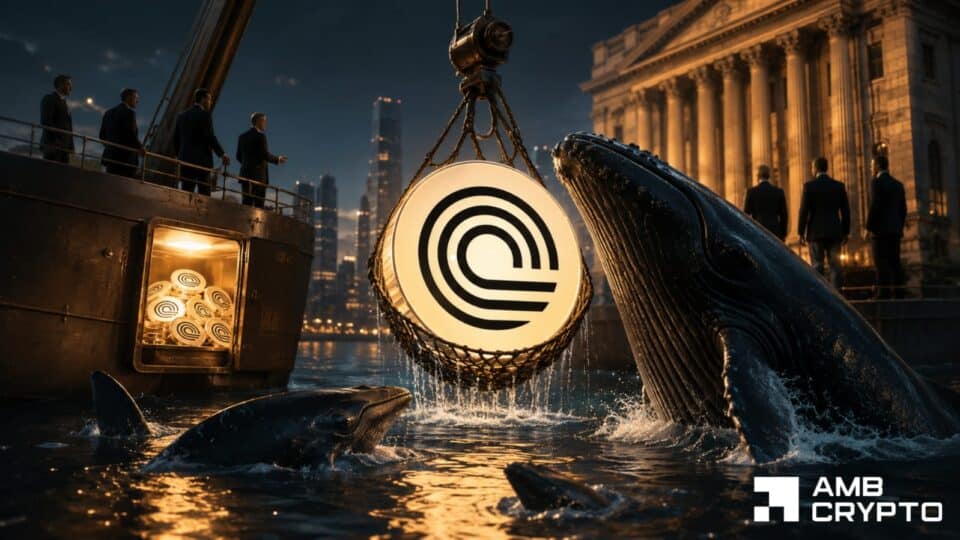
Shiba Inu’s $4M exploit sparks ‘Shib Owes You’ recovery plan – Details

ambcryptoPublished on 2025-12-30Last updated on 2025-12-30

Abstract

Shiba Inu's lead developers have launched the "Shib Owes You" (SOU) recovery plan following a $4 million bridge exploit in September. This initiative converts verified user losses into dynamic, tradable NFTs on the Ethereum blockchain, providing victims with cryptographic proof of their claims. These debt NFTs update in real-time as revenue enters the restitution pool and can be traded on a secondary market. The plan enforces strict austerity measures, directing all SHIB-related revenue to the SOU pool. While the portal is not yet live and security risks remain, the community and institutional buyers have shown resilience, supporting SHIB's price despite recent volatility.

For Shiba Inu [SHIB], 2025 has been a battle between innovation and security.

Following a $4 million bridge exploit in September that rattled investor confidence, the project’s lead developers aren’t just promising a comeback; they’re tokenizing it.

On the 29th of December, OG developer Kaal Dhairya unveiled “Shib Owes You” (SOU). This comprehensive financial restructuring plan represents a radical departure from traditional make-good promises in decentralized finance.

All about “Shib Owes You”

The plan focuses on building secondary market liquidity for distressed debt.

Through the SOU system, verified user losses are transformed into dynamic, tradable NFTs, converting what was once a total loss into a usable financial asset.

For the Shib Army, this means victims don’t have to wait years for repayment; they now receive a cryptographic token they can hold, split, or sell at any time.

Remarking on the same, Dhairya said,

“This isn’t a promise in a database somewhere. It’s cryptographic proof that you own a claim, recorded permanently on the Ethereum blockchain.”

The layout

Instead of storing losses in private databases, each user claim becomes a dynamic NFT on Ethereum [ETH], audited by Hexens.

As revenue enters the restitution pool, each debt NFT updates automatically, giving users real-time on-chain visibility.

The system also enables a secondary market where claims can be merged, split, or sold, helping some users gain fast liquidity while allowing larger supporters to consolidate multiple claims.

However, to keep this recovery model robust, Kaal Dhairya has enforced strict austerity rules.

All SHIB–related revenue must feed into the SOU pool, including contributions from partner platforms, social channels, and ecosystem ventures.

This shift targets “value extractors” and moves the project from a marketing-driven approach to a restitution-first model.

Dhairya added,

“If we’re going to ask the community to be patient while we rebuild, then everyone who has access to ecosystem resources needs to be held to the same standard.”

Associated risks

The recovery still carries notable risks.

While the Plasma Bridge has been stabilized with a seven‐day withdrawal delay and hardware‐based custody, the SOU portal is not yet live. Dhairya has cautioned the Shib Army to beware of fake recovery sites seeking to exploit the situation.

Although the debt tokens exist in code, claims will remain locked until all security tests are complete. This gradual rollout reflects a strict security‐first approach designed to prevent another failure.

Despite the seriousness of the overhaul, the market has responded with strong buy‐side support rather than panic.

SHIB price action and more

At the time of writing, SHIB was trading at $0.057149, down 4.15% over the last 24 hours according to CoinMarketCap data.

However, this localized dip masks a massive institutional repositioning.

On the 10th of December, the ecosystem experienced its most intense whale activity since June. A total of 406 large‐scale transfers moved more than 1.06 trillion SHIB into exchanges.

Ordinarily, such inflows tend to signal an upcoming sell‐off. However, SHIB has held its ground.

This resilience suggests that both the Shib Army and institutional buyers are actively defending key support levels rather than exiting their positions.

Looking ahead, the success of the “Shib Owes You” framework will ultimately depend on execution. Even so, current market data shows a community that remains determined and far from defeated.


Final Thoughts

  • The SOU framework marks a bold experiment in turning losses into tradable, on‐chain financial assets.
  • Shiba Inu’s resilience highlights a community committed to recovery, even amid risks and market uncertainty.


Trending Cryptos

Related Questions

QWhat is the 'Shib Owes You' (SOU) plan and what problem does it aim to solve?

AThe 'Shib Owes You' (SOU) plan is a comprehensive financial restructuring plan created by Shiba Inu's developers to address the $4 million bridge exploit from September. It aims to convert verified user losses into dynamic, tradable NFTs, turning a total loss into a usable financial asset and providing victims with liquidity instead of making them wait years for repayment.

QHow does the SOU system technically work to represent user claims?

AThe SOU system transforms each user's verified loss into a dynamic NFT recorded permanently on the Ethereum blockchain. These NFTs are audited by Hexens and automatically update as revenue enters the restitution pool, providing real-time on-chain visibility. They can also be traded, merged, or split on a secondary market.

QWhat austerity measures has Kaal Dhairya enforced to support the SOU recovery model?

AKaal Dhairya has enforced strict austerity rules where all SHIB-related revenue, including contributions from partner platforms, social channels, and ecosystem ventures, must be fed into the SOU pool. This shifts the project from a marketing-driven model to a restitution-first model and holds everyone with access to ecosystem resources to the same standard.

QWhat are the main risks associated with the SOU recovery plan mentioned in the article?

AThe main risks are that the SOU portal is not yet live, and users are cautioned to beware of fake recovery sites. Although the debt tokens exist in code, the claims will remain locked until all security tests are complete, reflecting a strict security-first approach to prevent another failure.

QHow did the market and the 'Shib Army' react to the exploit and the announced recovery plan?

ADespite the exploit and price dip, the market responded with strong buy-side support rather than panic. There was intense whale activity with large inflows into exchanges, but SHIB held its ground, suggesting the community and institutional buyers are actively defending key support levels and remain committed to recovery.

Related Reads

Global Stock Market's Storm Center: South Korea's Stock Market De-leveraging Is Largely Complete

Storm's Eye: South Korean Market De-leveraging Nears Completion The recent sharp correction in South Korean equities, with the KOSPI index dropping 32% from its June high, has been a key trigger for global tech stock volatility. The core driver was not a fundamental shift but a forced de-leveraging process within the market's unique structure, which is now largely complete. Two main leverage channels amplified the sell-off: 1. **Leveraged ETFs:** Their size, proportionally four times larger than in the U.S., peaked near $50 billion. Their mandatory daily rebalancing mechanism created a vicious cycle of "price drop → forced selling → further drop." Approximately 75% of this excess has been unwound, shrinking to $26 billion, with regulatory curbs now blocking new inflows. 2. **Hedge Fund Leverage:** Using swaps to magnify exposure, hedge funds saw their net long positioning fall by over 50% from peak levels. The most intense phase of this institutional de-leveraging is over. In contrast, **retail margin debt** poses minimal systemic risk. At 0.5% of market cap, it is far lower than in the U.S. or China, lacks automatic triggers, and is concentrated in smaller stocks. The conclusion: the high-leverage structures most prone to "chain-reaction selling" have been substantially cleared. The market is transitioning from a liquidity-driven crash to one priced more on fundamentals. The article argues that the AI trend—centered on Korean memory chips—remains intact. This episode represents a painful but necessary clearing of crowded trades, not the end of the AI revolution. For investors, the key question is conviction in the long-term AI direction; if the trend is real, current volatility is a cost of entry, not a terminal risk.

链捕手38m ago

Global Stock Market's Storm Center: South Korea's Stock Market De-leveraging Is Largely Complete

链捕手38m ago

The Eternal Fragments of Money: Third-Party Payment Has No First Principle

"The Enduring Fragments of Money: Third-Party Payments Lack a First Principle" Stripe is reportedly attempting to acquire PayPal, marking a significant shift reminiscent of PayPal's merger with the original X.com 30 years ago. The article analyzes Stripe's strategic challenges and the broader payments industry landscape. Despite its initial success with a developer-friendly API model, Stripe missed its optimal IPO window during the pandemic and has since seen its valuation decline. Its attempts to expand through acquisitions and new ventures, particularly in stablecoins (like its OUSD project) and Agent-focused payments (ACP/MPP protocols), have faced headwinds. The author argues that the payment industry remains highly fragmented and is ultimately an adjunct to the traditional banking system. This structure limits the potential for any single player, including Stripe, to achieve complete dominance. While stablecoins and the future rise of autonomous Agent economies present potential growth avenues, they are not yet mainstream and still require integration with the existing financial system. For now, Agent-based transactions are largely used for speculative "volume boosting" rather than substantive business applications. Stripe's current move to acquire PayPal is seen as an attempt to bolster its weak consumer-facing (C-side) business after its stablecoin-focused strategies faltered. Meanwhile, PayPal is described as structurally outdated, unable to revive itself through new products like Venmo or PYUSD. The future of payments may lie not in payments themselves but in value-added services like more efficient settlement networks. The author suggests that companies like Stripe and Circle, which are building their own blockchains (Tempo, Arc) and stablecoins, are positioning themselves to eventually profit from high-efficiency settlement systems. These new networks could potentially bypass some traditional banking layers. In conclusion, the article posits that third-party payment is a perpetually fragmented battlefield where scale alone cannot ensure victory. Players must find new models, focusing on efficiency to compete with the entrenched banking system. Stripe's acquisition of PayPal represents a bet on this uncertain future.

链捕手1h ago

The Eternal Fragments of Money: Third-Party Payment Has No First Principle

链捕手1h ago

Trading

Spot

Hot Articles

Discussions

Welcome to the HTX Community. Here, you can stay informed about the latest platform developments and gain access to professional market insights. Users' opinions on the price of S (S) are presented below.

活动图片