Author: Castle Labs Research
Compilation: Deep Tide TechFlow
Deep Tide Introduction: On-chain applications are making huge profits, but the chains themselves are getting poorer; simply selling block space can no longer support valuations. This article breaks down the latest shifts by Arbitrum, Polygon, MegaETH, and Sophon, helping you judge which chains are truly capturing the value generated by their ecosystems.
Selling block space is no longer a defensible business for blockchains.
For any blockchain, the core business is selling "block space." But this service is easily replicable and not a differentiator. Almost every chain offers the same thing; the only remaining differentiator in discussions is "liquidity." Chains with mature ecosystems and liquidity attract more builders, thereby increasing block space usage. This is the simple flywheel of the blockchain business.
As industry technology advances, block space becomes cheaper; even as builders and usage grow, its contribution to chain revenue is minimal. The result is a widening gap between chain revenue and application revenue, making it difficult for chains to support their valuations.
We discussed this topic in detail in our latest report, "The Verticalization Thesis: How Blockchain Revenue Models Are Evolving." The report explored how verticalized chains like Hyperliquid maintain exposure to their entire ecosystem, and also mentioned other chains, such as Arbitrum (Timeboost), MegaETH (USDm buyback flywheel), and CEX chains expanding revenue sources.
This article is a follow-up to that report, focusing on the latest developments in this category: more chains are responding to the growing gap between on-chain fees and application fees, attempting to internalize more of the value generated by their ecosystems.
We categorize the discussed chains into two groups:
Ecosystem Expansion: Includes chains like Arbitrum and Polygon. The Arbitrum Stack has grown significantly and is now used by chains like Robinhood; Polygon is positioning itself as a payment chain.
Product Expansion: Covers chains like MegaETH and Sophon, which are focusing on developing applications internally.
Ecosystem Expansion
One primary way for chains to increase revenue is by expanding their ecosystems.
Chains like Optimism pioneered this model by expanding the ecosystem through the Superchain: it provides the OP Stack to various Layer 2 (L2) networks and charges 15% of the L2's net profit or 2.5% of its revenue, whichever is higher. This model worked quite well and has been adopted by multiple L2s. However, after Base left the Superchain in February this year, Optimism's revenue plummeted. Base had contributed over 90% of Superchain revenue, far exceeding Optimism's own.
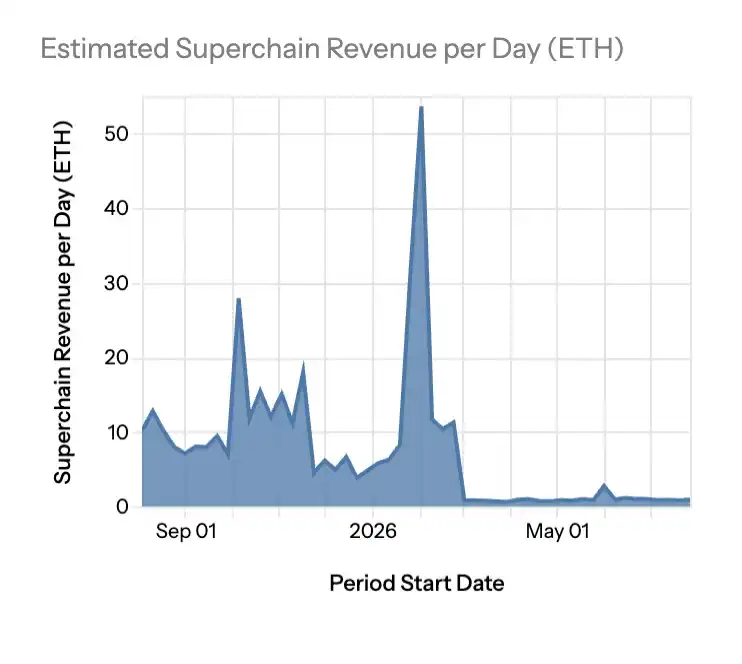
Chart: Source: Hex (Superchain Revenue Dashboard)
Just weeks before Base's departure, OP token holders also approved a proposal: to use 50% of Optimism Superchain revenue for OP buybacks. But after losing most of its revenue in February, these buybacks could no longer accumulate sufficient value for the token.
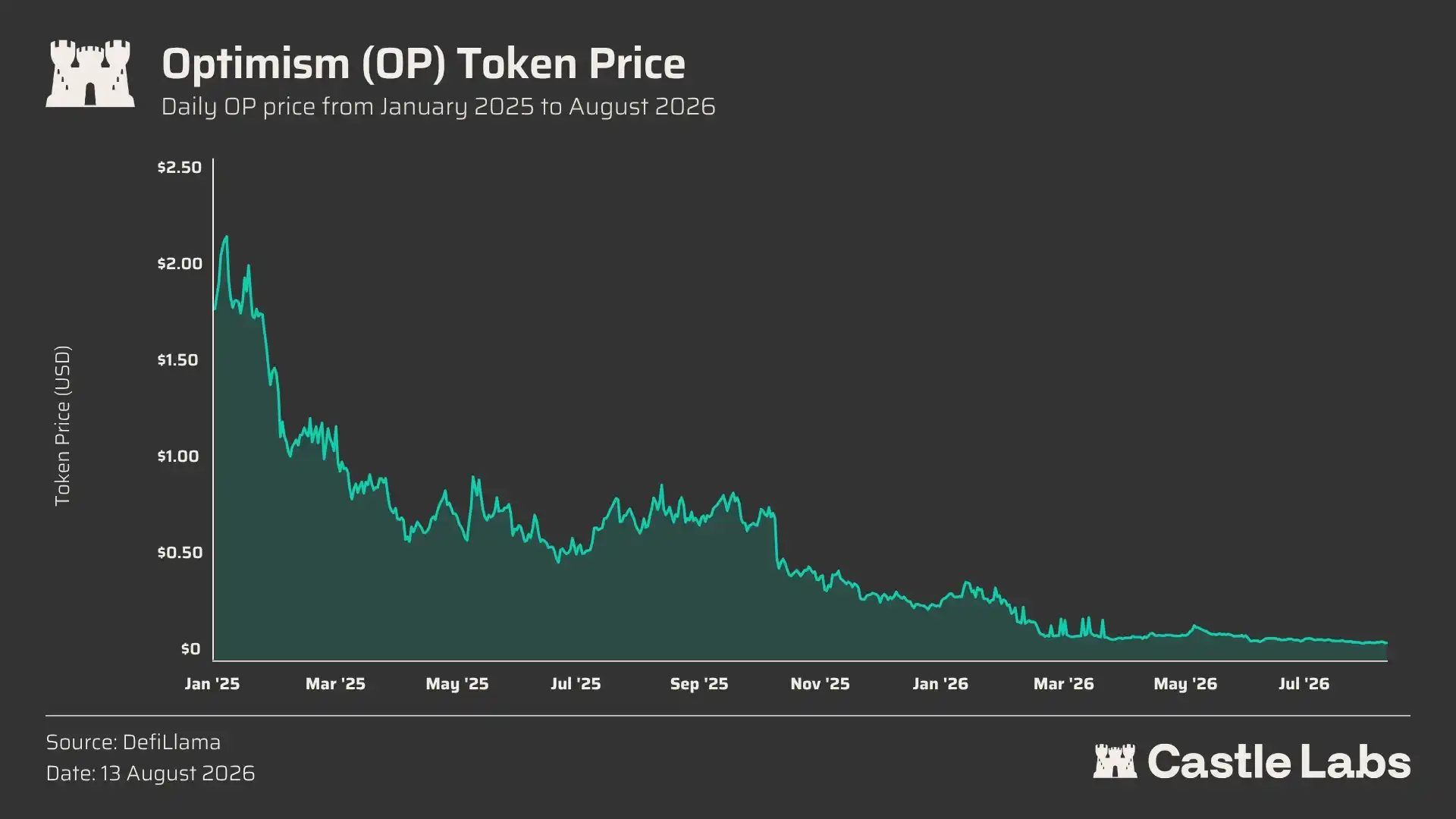
Although cracks have appeared in the Optimism model, this doesn't necessarily mean ecosystem expansion itself is a bad choice. The Superchain is still used by multiple networks and is a growing stack, adopted by chains like Celo, Ink, and Unichain.
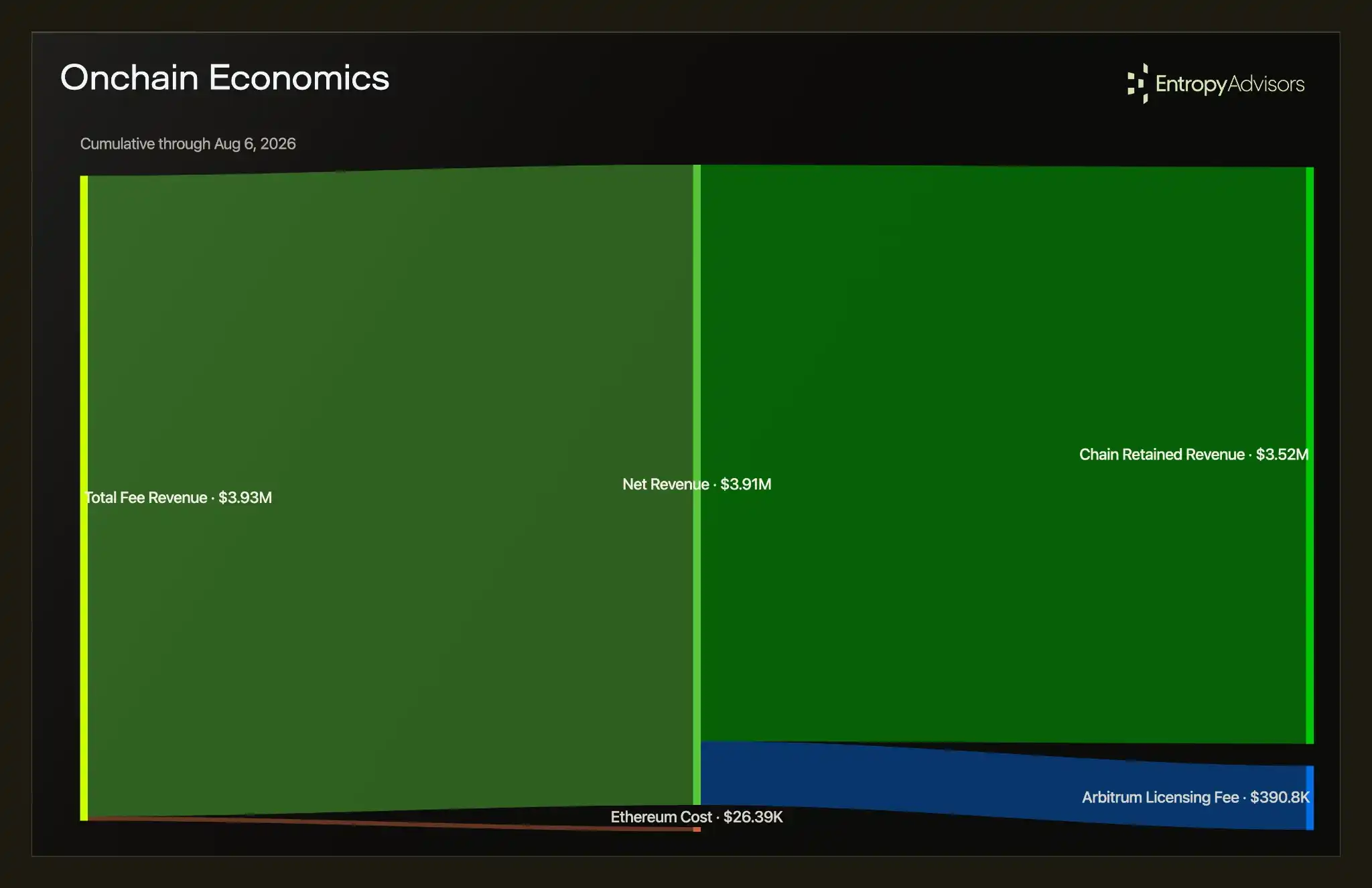
Similar to Optimism, Arbitrum has also built its own stack, called the Arbitrum Stack, a perfect example of betting that a chain stack can yield rich returns. Last month, Robinhood launched its own L2 using the Arbitrum Stack, generating approximately $4 million in revenue so far, with a 90/10 split bringing Arbitrum about $390,000.
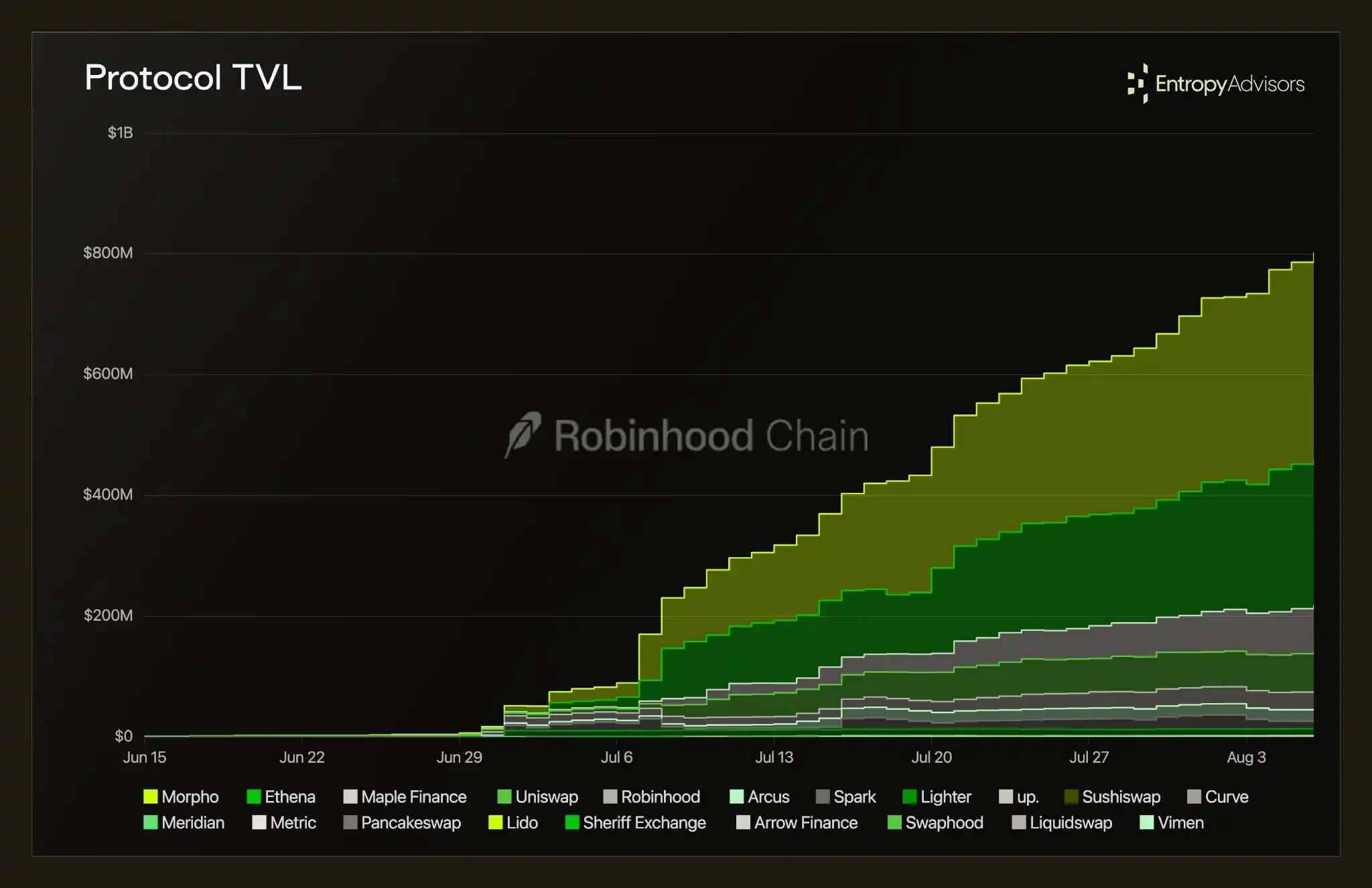
Besides Robinhood, the real-world asset chain Plume Network also uses the Arbitrum Stack, but so far Robinhood is its biggest contributor to stack growth. The total value locked (TVL) in this stack currently exceeds $800 million. Additionally, the Robinhood deployment expands the footprint of tokenized stocks in the Arbitrum ecosystem: this chain focuses on tokenizing stocks on-chain, with a scale of $25 million. Within just a month of launch, Robinhood Chain's TVL is already half of Arbitrum's $1.63 billion.
While expanding its ecosystem, Arbitrum also launched Timeboost: users can pay higher fees for priority transactions. Since its launch in April 2025, Timeboost has contributed over $7.7 million to the treasury.
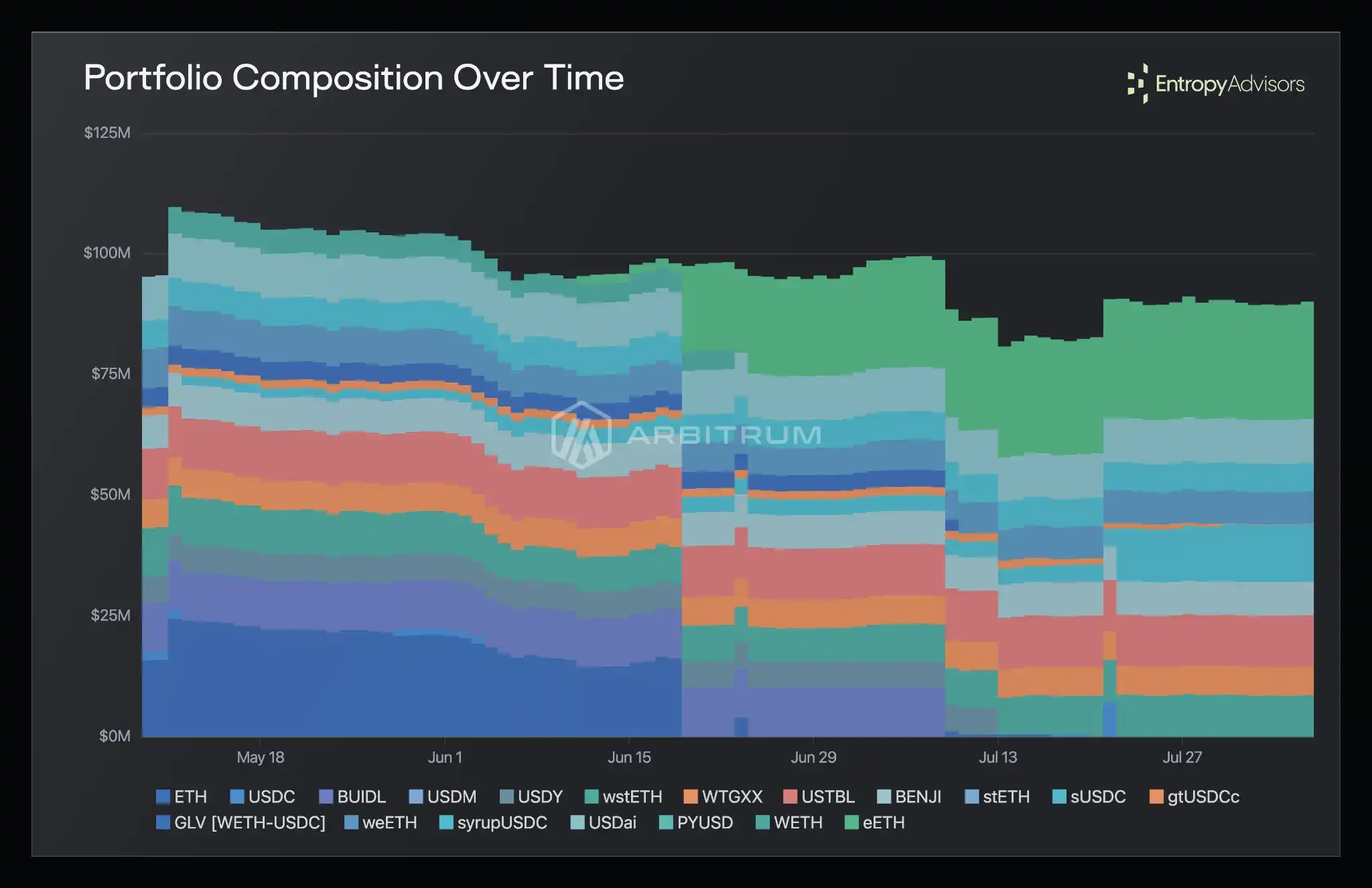
Arbitrum puts its revenue to use. The Arbitrum DAO treasury also has multiple on-chain and off-chain deployments, earning yield. Among its $90 million net deployments, it has generated $4 million in interest. Many DAOs and treasuries could learn from this strategy, as most are stuck holding native tokens, which depreciate over time, affecting treasury sustainability.
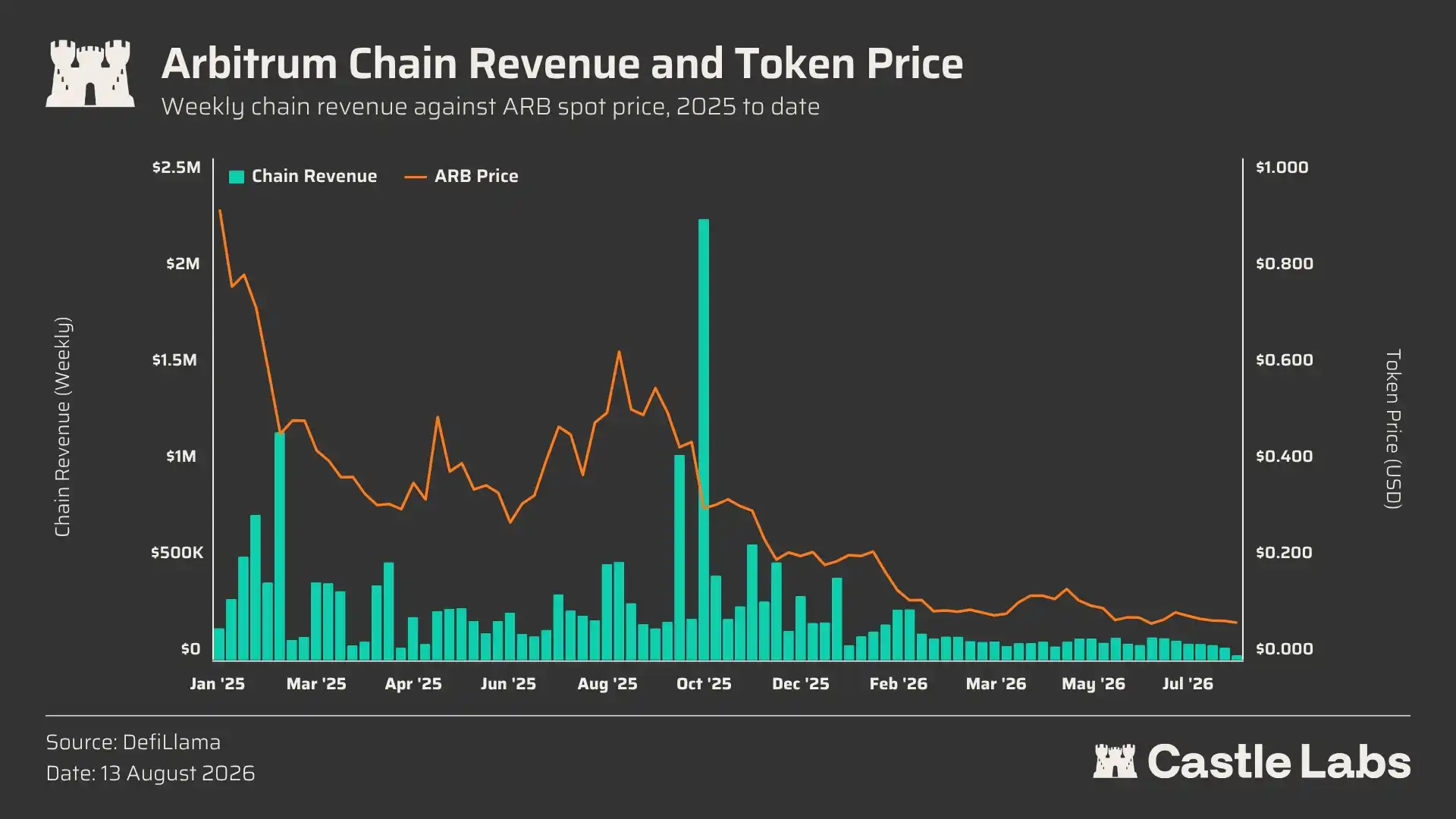
Although the team behind Arbitrum, Offchain Labs, announced a buyback plan last year, we have yet to see a connection established between the success of the Arbitrum Stack and the ARB token. The value of ARB continues to decline due to ongoing token emissions and unlocks.
Another chain focusing on ecosystem expansion is Polygon, aiming to position itself as a payment chain for fintech and general-purpose scenarios.
This positioning makes sense for Polygon because giants like Stripe currently use it to route stablecoin payments, Mastercard uses it to settle merchant payments and supports its Agent Pay product. Products like Revolut, Paxos, and Cash App also use Polygon's infrastructure. They prefer Polygon due to its high throughput and ultra-low fees, making interaction costs minimal. Beyond this, Polygon is advancing enterprise-grade controls, making it an easier choice for large fintech companies.
Polygon has processed approximately $2.9 trillion in stablecoin transaction volume to date, and its stablecoin supply is currently $3 billion, growing over 80% since 2025.
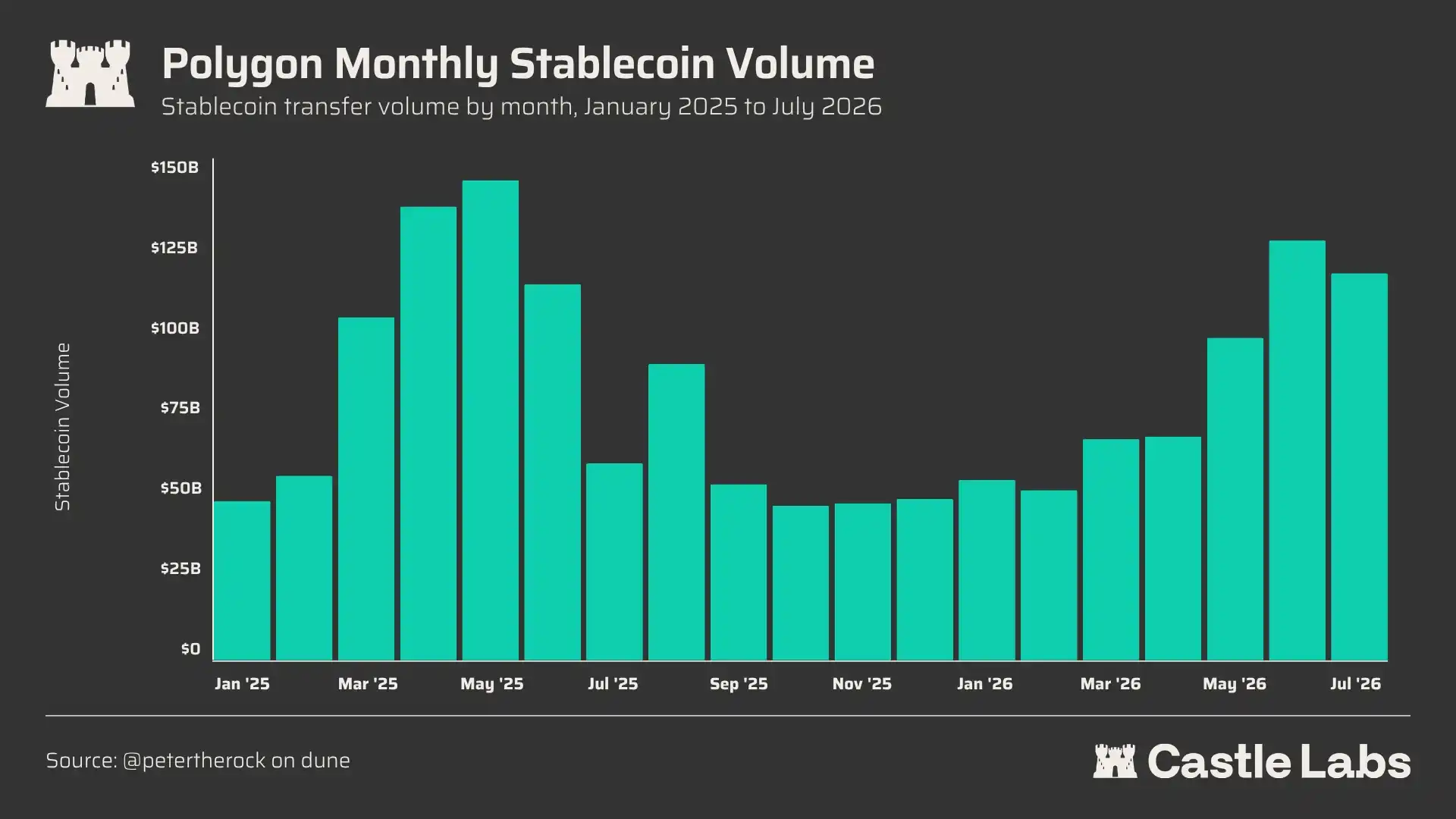
Although the chain's payment usage is growing, most of its revenue still comes from the Polymarket deployment. Facing this concentration and potential single point of failure risk, Polygon has been pushing to expand other revenue sources.
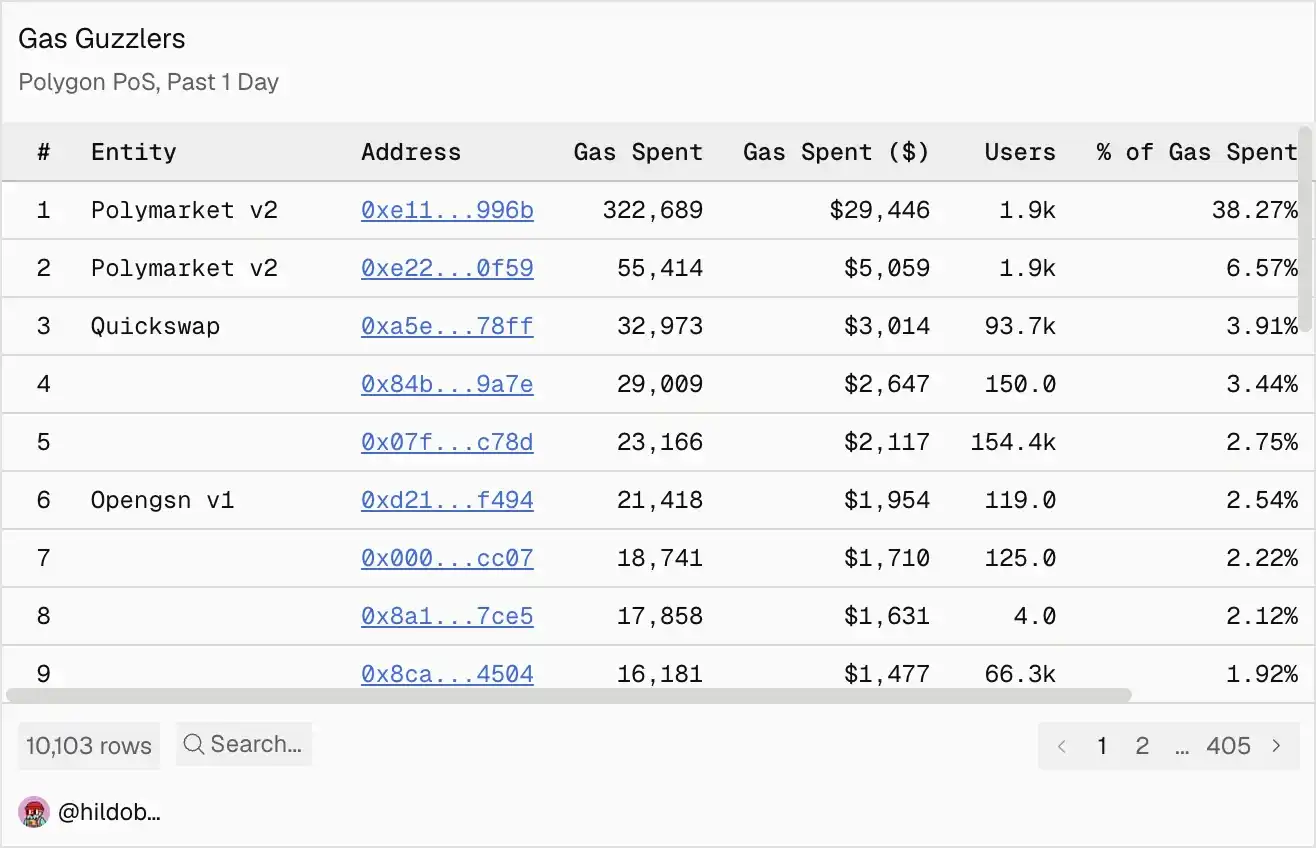
Chart: Source: Dune Analytics (hildobby Gas)
Similar to Arbitrum, Polygon's distribution is not reflected in the accumulation of value for its token. Due to continuous emissions, the token has performed poorly. Despite the chain consistently generating substantial revenue, often ranking in the top three for chain revenue and token buybacks, this cannot offset the ongoing sell pressure the token faces.
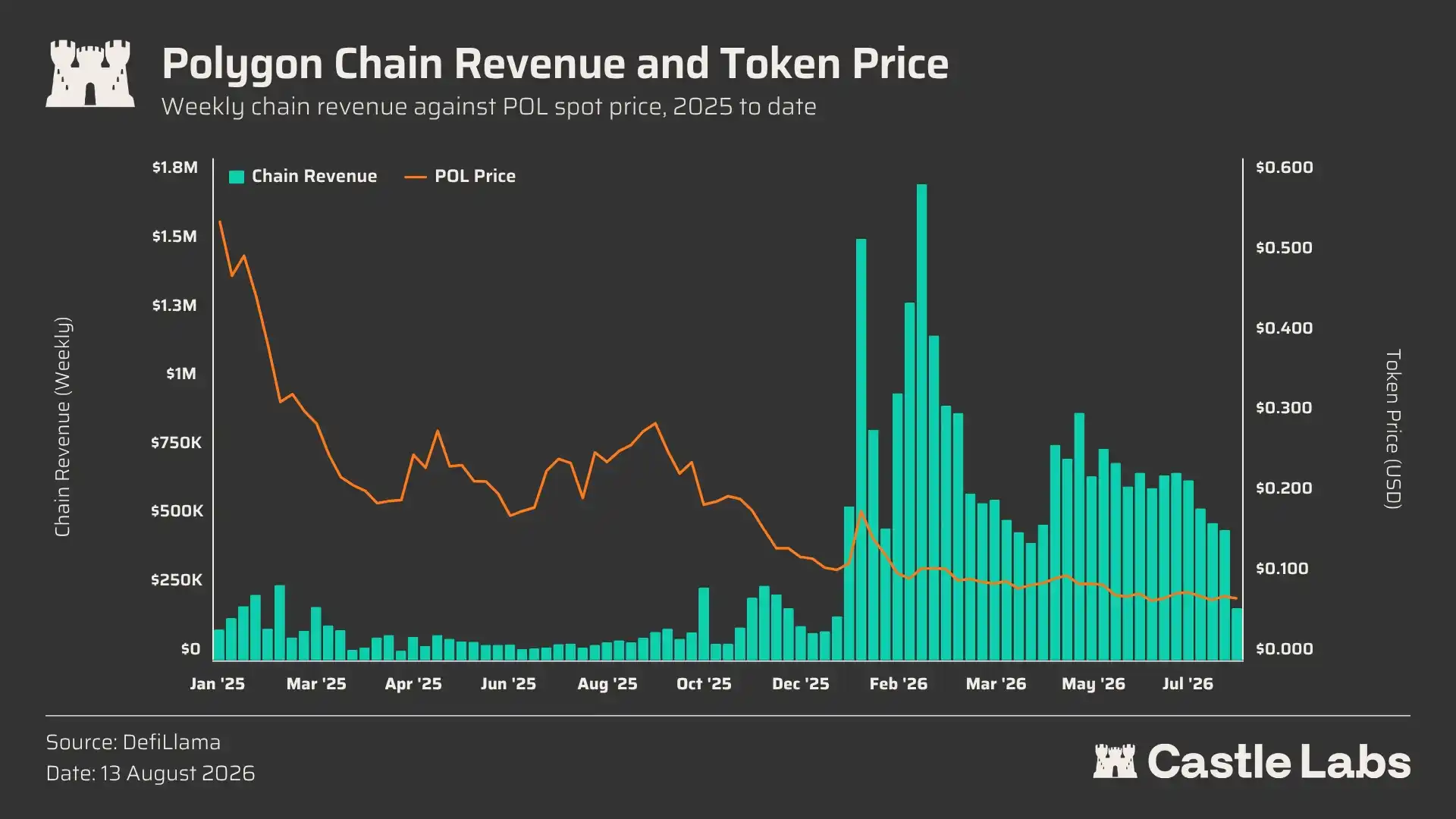
While ecosystem expansion is good, some chains are addressing revenue issues more directly by gaining exposure to value generated on-chain and building products directly on their own infrastructure.
These are the products we will explore in the next section.
Product Expansion
Chains are adopting a newer approach to tackle the disconnect between the growth of application fees and chain fees: verticalization, meaning building applications themselves.
Applications accumulate large amounts of fees, but these are not passed down to the chain level, a problem most chains face.
Look at the comparison of application fees versus chain fees on different chains over the past 30 days: chains accumulate much less value in fees, while their application revenue continues to grow.
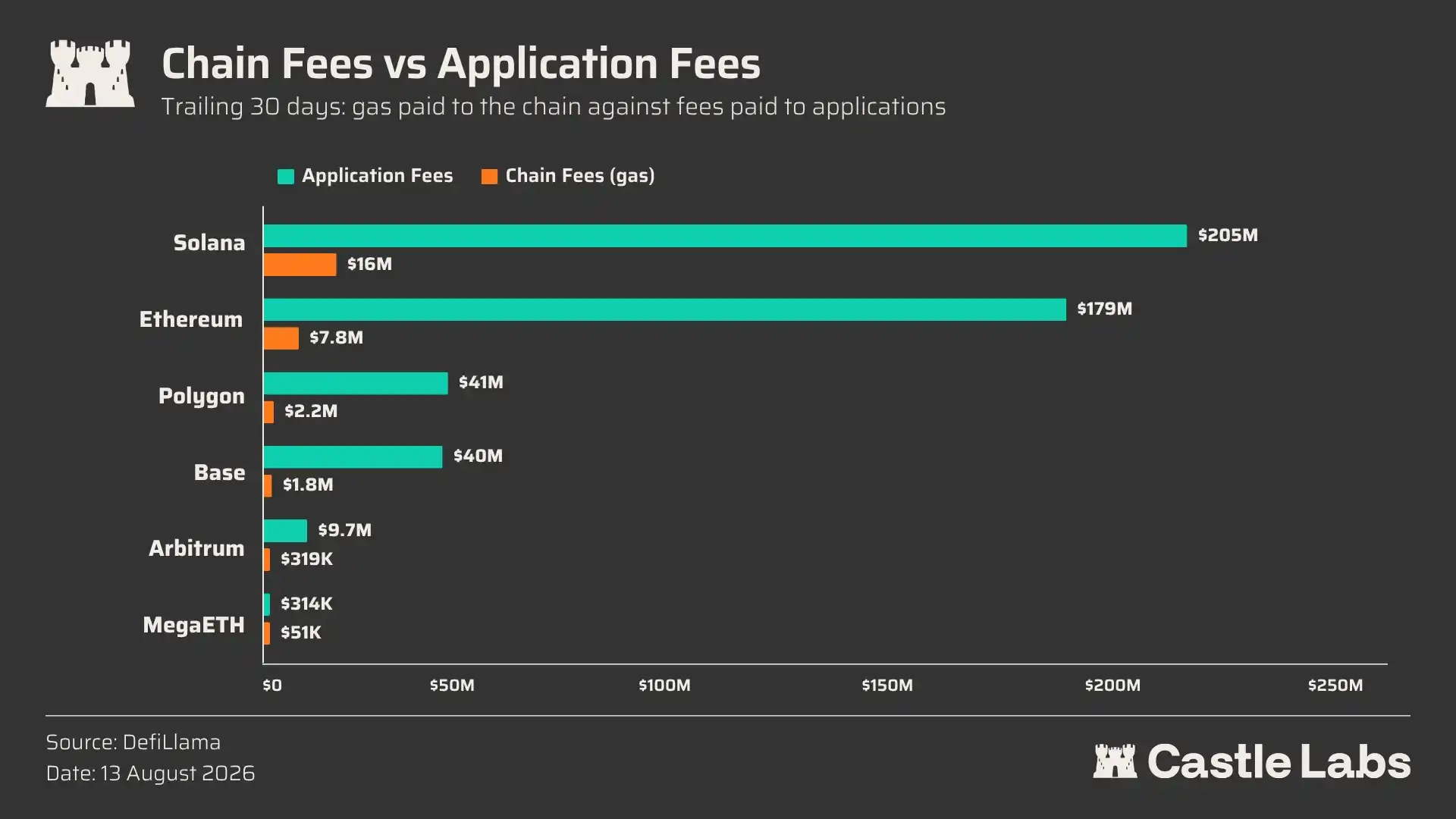
This is expected because, as mentioned at the beginning of this article, chain fees continue to decline over time. Chains were originally envisioned as infrastructure providers: a healthy chain should have high application fees and low chain fees, making it an efficient deployment chain. But at the same time, without fee revenue, it is difficult for chains to sustain valuations, token economic models, and sustainable operations.
This is why newer chains like MegaETH and Sophon, and even older ones like Sei, are beginning to pivot toward becoming application builders themselves, potentially internalizing this revenue rather than letting it flow to third-party applications.
MegaETH hasn't been live for long and has been dealing with the gap between application fees and on-chain exposure. To address this, the team has refocused on building applications on its own chain, while still supporting OMEGA applications (i.e., applications that can only be built on MegaETH due to its ultra-low latency and high throughput). This marks a significant shift from its initial horizontal ecosystem expansion path.
"We are shifting the energy we would have lent to third-party builders towards first-party applications we build ourselves: consumer-facing applications for the audiences we want to serve, built directly by us." – Shuyao Kong of MegaETH
Another effort by the MegaETH team is to capture the value generated by on-chain stablecoins. They launched USDm (MegaETH USD), a white-label stablecoin developed in partnership with Ethena, with funds deposited in BlackRock's BUIDL fund, bringing yields close to SOFR for on-chain stablecoin supply.
Based on the current supply of $18 million, at a SOFR rate of approximately 3.6%, it could generate $650,000 annually, used for MegaETH buybacks and burns. However, this revenue stream heavily depends on ecosystem success; the stablecoin must be actively used. Currently, due to declining on-chain usage, USDm supply has dropped over 95% from its peak of about $600 million in May this year.
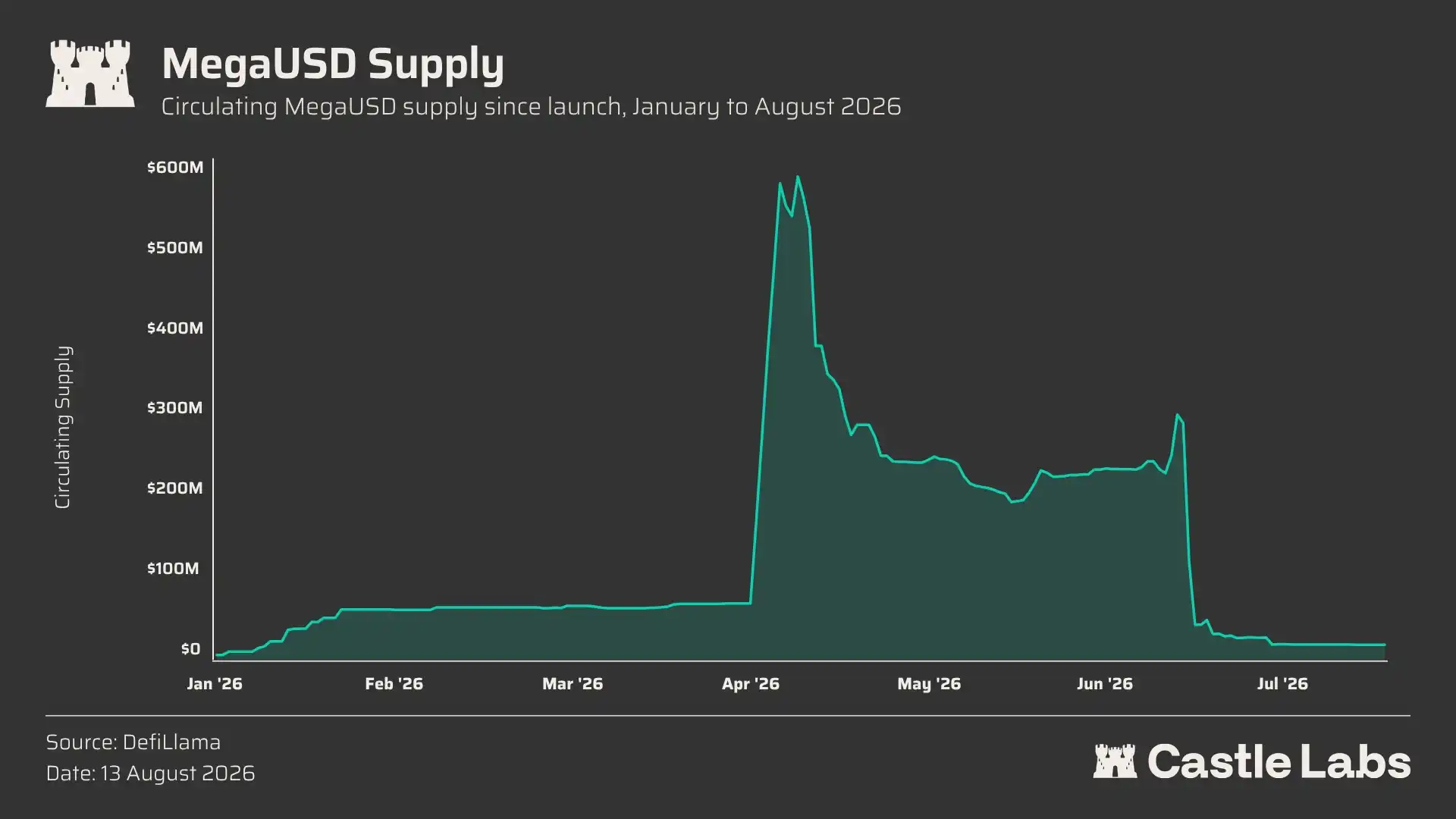
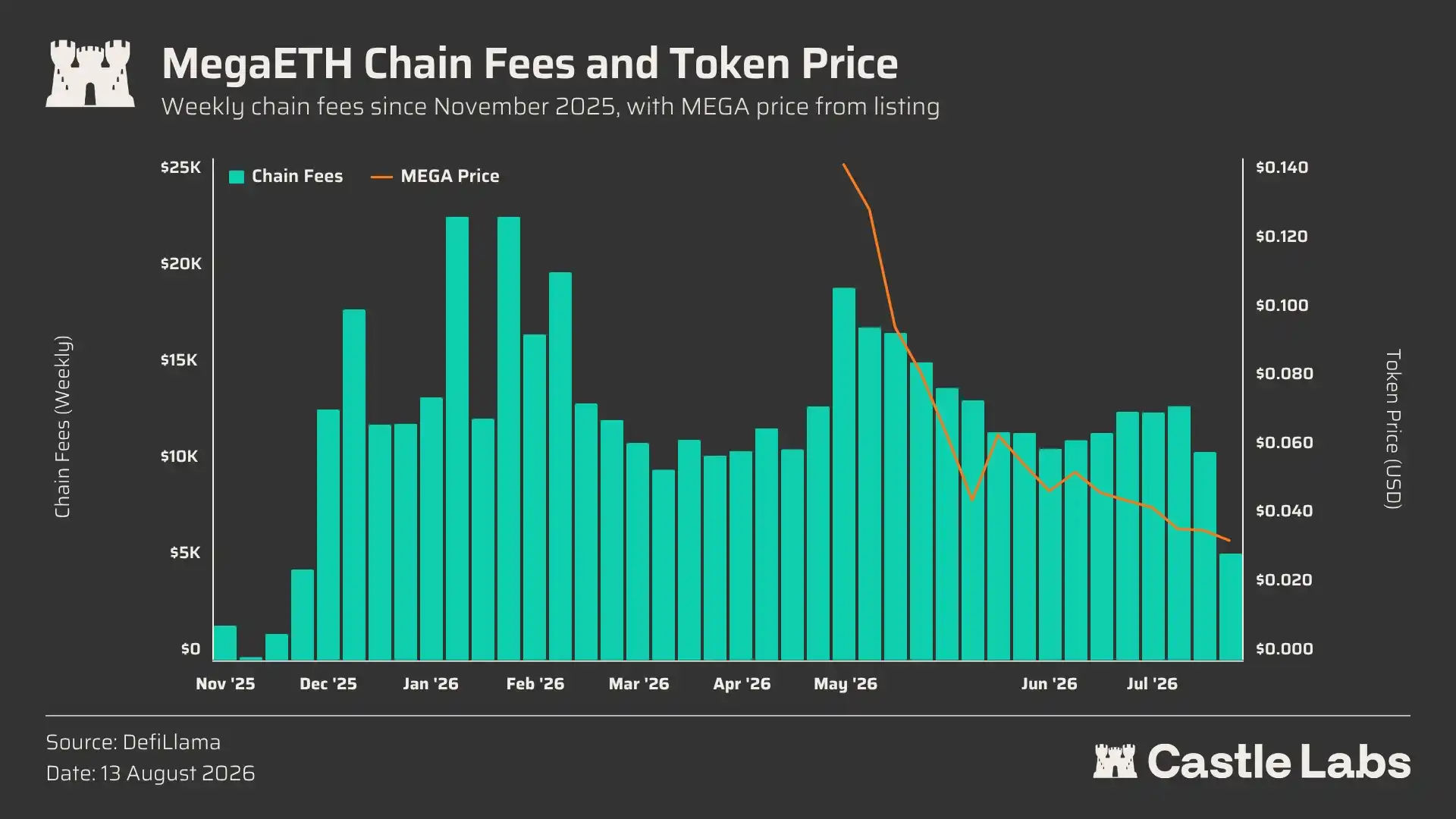
Despite the team's active efforts to increase chain revenue, these initiatives have had limited effect, and the chain faces challenges in both adoption and token price. Besides reasons like poor communication, a limited ecosystem, and hesitation at certain stages of launch, one reason for MegaETH's sharp drop in usage is the lack of proactive incentive programs to attract liquidity. Its competitor Monad is doing this with full force and seeing results, accumulating over $400 million in TVL last month alone.
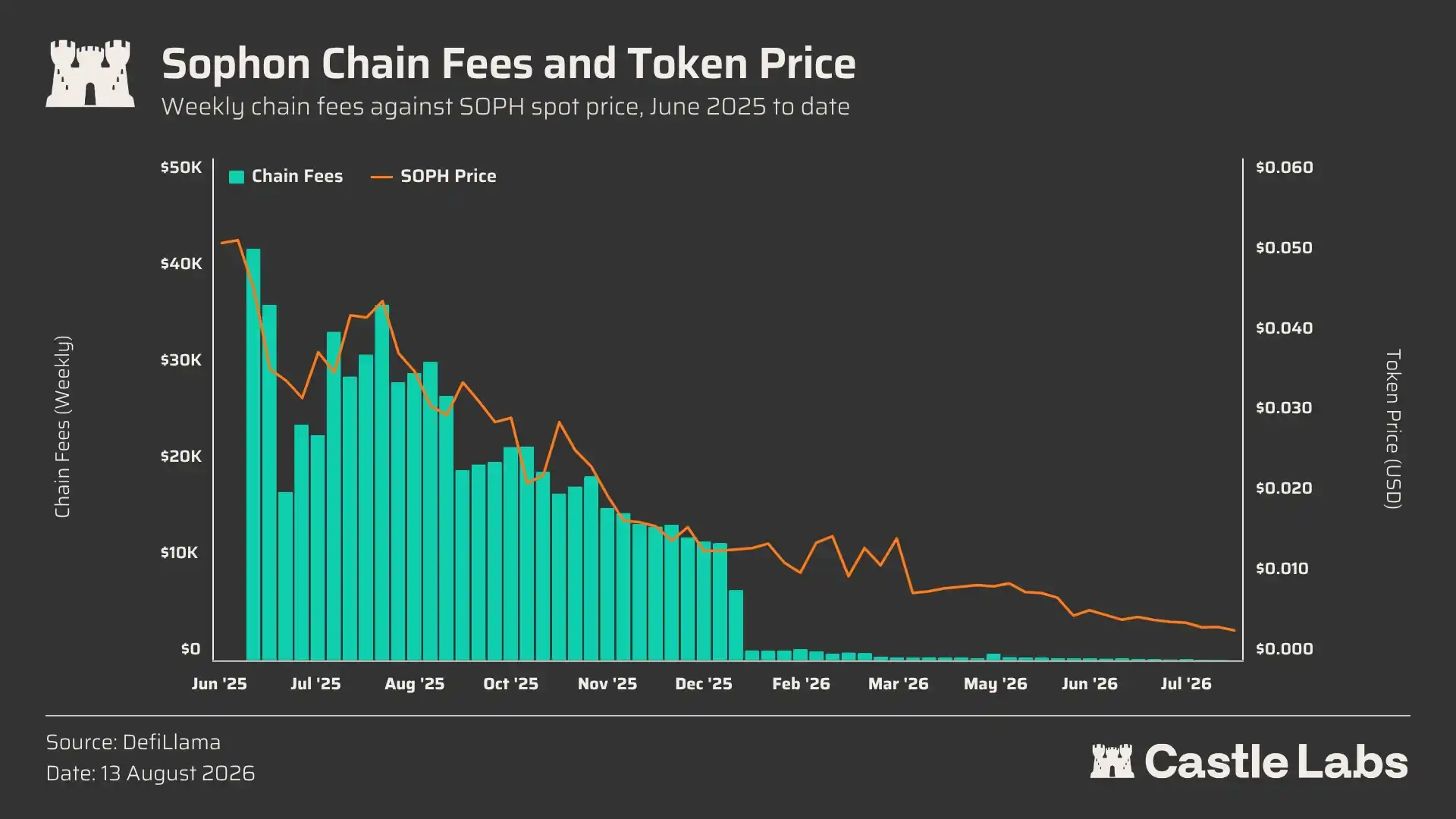
Another chain focusing on building its own applications is Sophon. It shut down its chain operations and pivoted to becoming an active builder on the Base chain. This differs from MegaETH because Sophon found no adoption on its own chain and decided to shut it down and transition to being a builder. The first application they are building is the crypto card Pyre.
Similar to other chains, its token price performance has been disappointing, due to low chain adoption (now shut down) and the failure of its "entertainment and consumer applications" narrative to attract many builders in this space.
The crypto application space is vast, with many building opportunities and a large audience, so these chains' pivots are reasonable. Recent applications like FWA, Fomo, and the most well-known, Pumpfun and Polymarket, are the best-case examples of what this path can yield.
Conclusion
Hundreds of chains offer almost the same thing: block space. Unless liquidity follows, they struggle to differentiate themselves.
This liquidity moat works for existing chains, which continue to attract more builders and accumulate on-chain fees. But for new chains, the dilemma remains. To attract liquidity, they must offer incentives. Once incentives taper off, liquidity may leave, as seen with MegaETH.
Liquidity is a differentiator, but not enough to support the high valuation multiples blockchains have today because they don't earn enough in fees.
Things are changing. Chains are realizing this and actively pushing themselves beyond being mere chains. They are either expanding their ecosystem products or building applications themselves to add value to their own ecosystems. Arbitrum and MegaETH are examples.
This can be seen as a broader return to utility.
The bottom line for any network is having users and usage.
For years, chains have been building around this, benefiting from large incentive programs and buying participants' loyalty. In fact, chains need applications more than the other way around.
Finally, chains are working to solve this principal-agent dilemma through vertical integration and building applications themselves.
Chains are becoming more than just chains.
Will this work?
The competition has begun.