Self-Directed Insider Trading: How He Manipulated Prediction Markets to Pay for His Bugatti?

比推Published on 2026-03-11Last updated on 2026-03-11

Abstract

A prominent X user, @Euanker, has accused former kickboxing champion Andrew Tate of orchestrating an elaborate insider trading scheme on the prediction market platform Polymarket. The allegations claim that Tate controlled at least seven accounts to profit from markets predicting his own weekly tweet activity, earning a total of $52,286. On-chain evidence reveals a consistent funding path: deposits from exchanges like Duelbits and Bybit were bridged via a specific address, then used to place bets on Polymarket. Profits were ultimately funneled to a Gnosis Safe wallet controlled by Tate, which holds over $1.3 million in assets. The betting patterns closely aligned with Tate’s actual tweet activity, indicating manipulation. Andrew Tate, a controversial influencer known for his luxury lifestyle and previous involvement in meme coin promotions, is alleged to have used this scheme to fund expenses like his rented Bugatti. The incident highlights significant regulatory gaps in prediction markets, where outcomes controlled by a single individual create inherent insider risks. Polymarket, which approves all markets on its platform, faces scrutiny over its lack of safeguards against such manipulation.

Author: Ma He, Foresight News

Original Title: Funding a Bugatti with Polymarket? Someone is Playing 'Self-Directed' Insider Trading


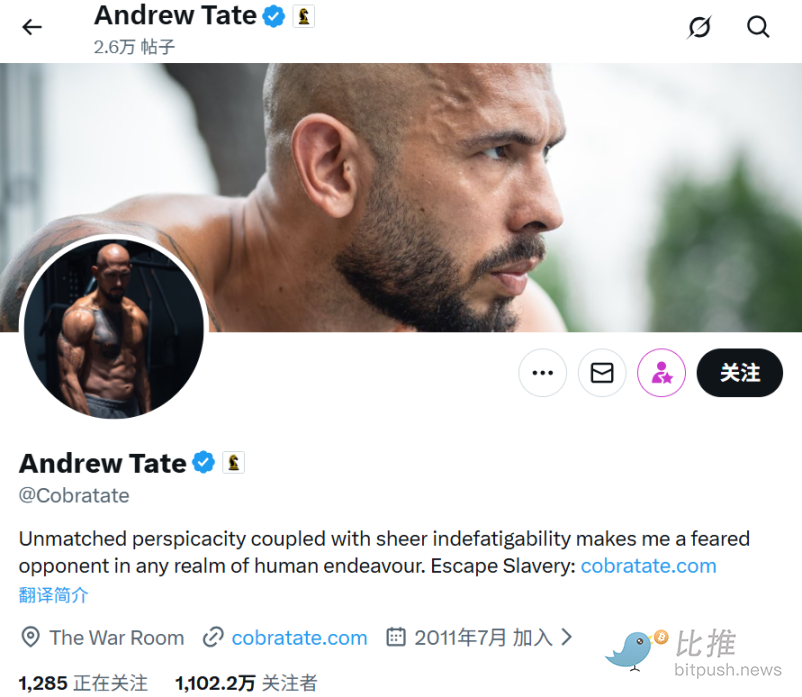
On March 10, X user @Euanker posted an exposé alleging that renowned combat sports champion Andrew Tate was involved in insider trading on Polymarket, profiting by manipulating markets related to the quantity of his personal tweets. Euanker pointed out that Tate created and controlled at least 7 Polymarket accounts, accumulating profits of $52,286 across six 'Weekly Tweet Count Prediction' markets. These markets essentially depend on Tate's own actions, with the exposé bluntly stating his aim was to 'raise funds for a rented Bugatti sports car.'
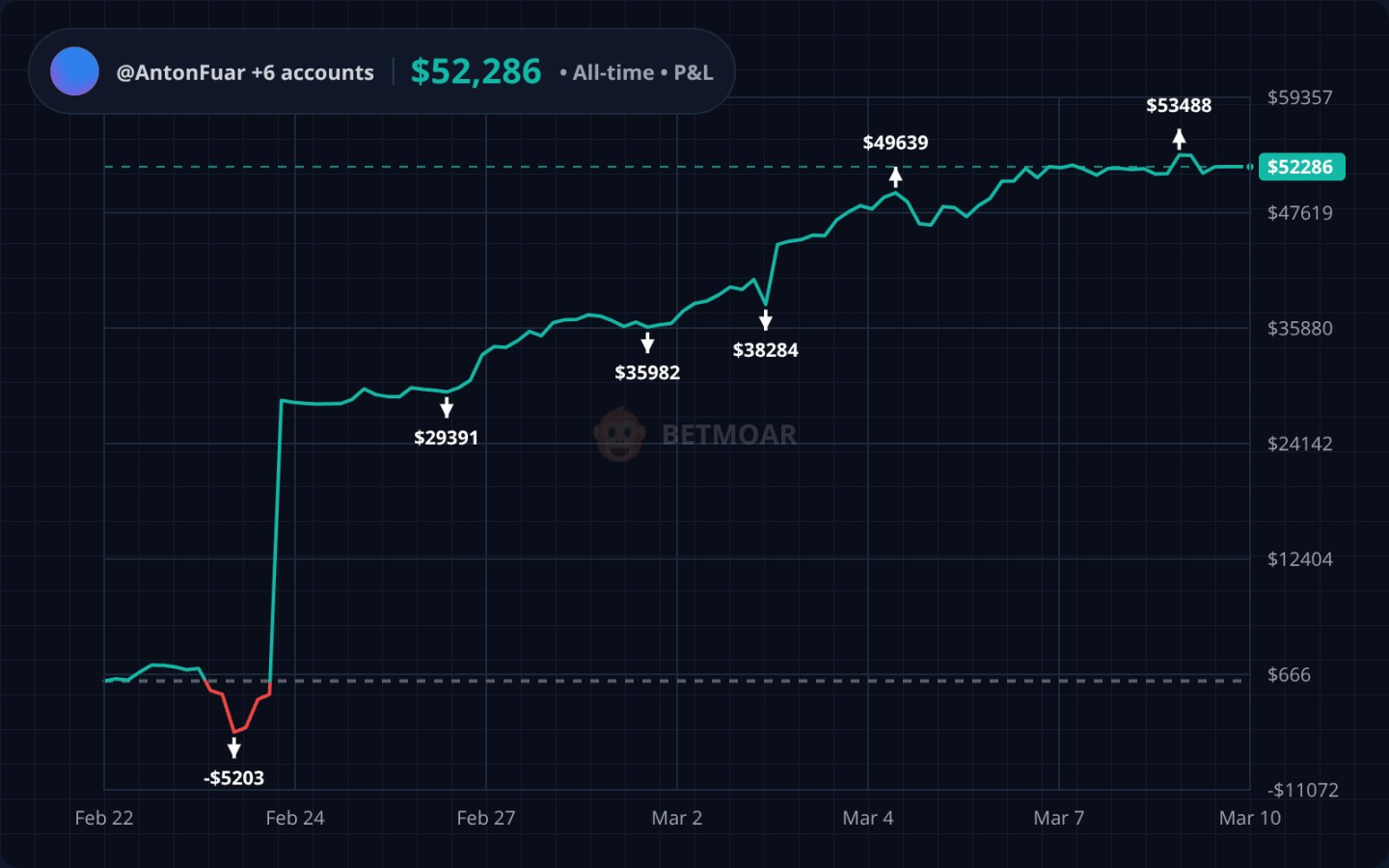
Interestingly, this exposé included detailed on-chain evidence and profit charts, allowing us a glimpse into the specifics of this insider trading.

Detailed Explanation of On-Chain Address Records: Identical Deposit Paths

The evidence provided by Euanker shows that the 7 Polymarket accounts (@Tornados, @eterboh5, @Mellisacars, @AntonFuar, @wondernot, @Lindayko, @Counteryeg) were highly consistent in their deposit exchanges, fund paths, and betting habits. The first 5 accounts have been fully linked through on-chain transactions, with the subsequent 2 also showing the same pattern.

The core tracking starts with the @Counteryeg account.
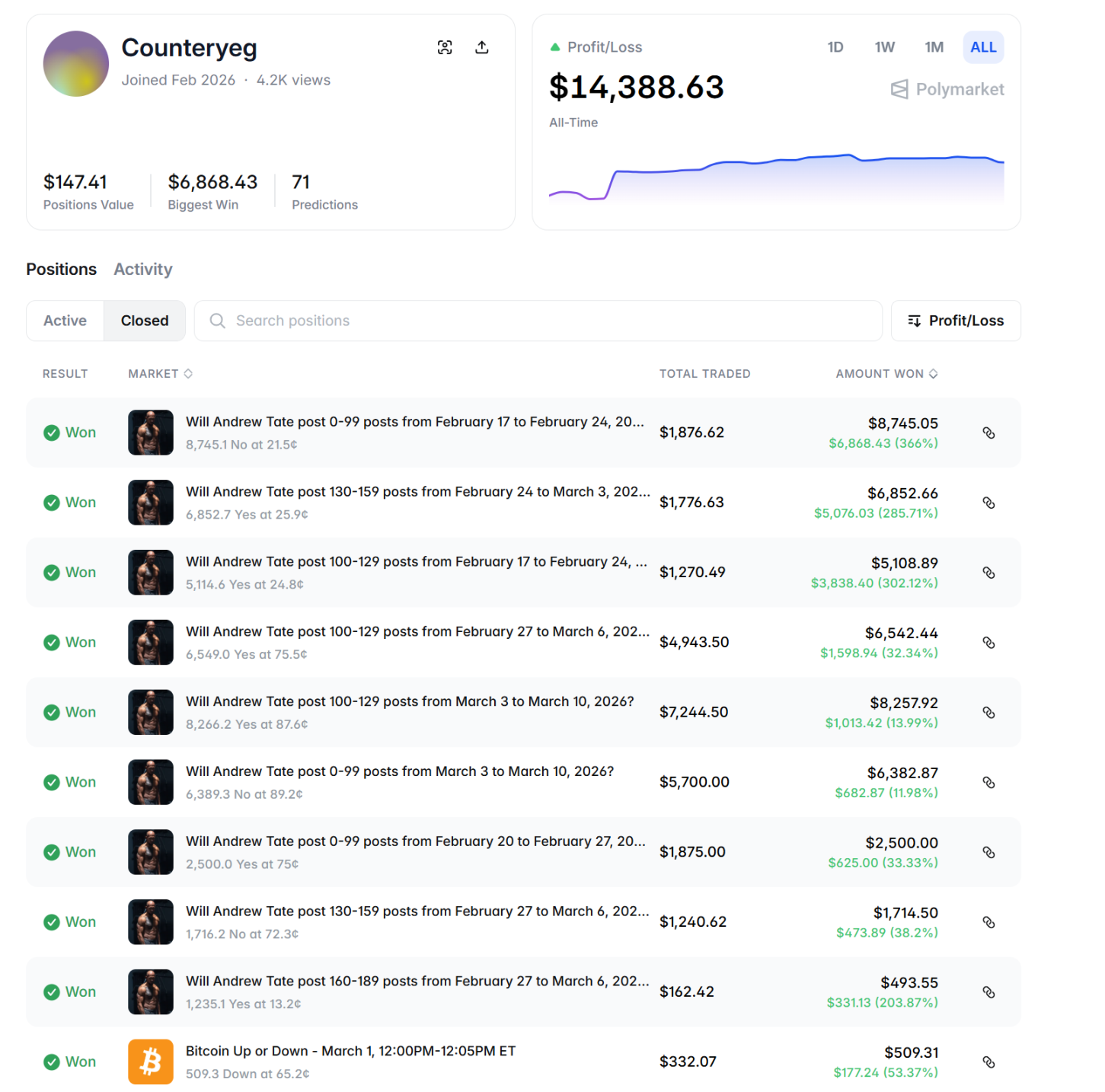

Its fund flow points to the bridging address 0xdae2844d5b3070aafb3638b80fa17e562d840dde. This address frequently conducted cross-chain transfers of USDC and USDC.e in the past week, primarily involving the Polygon and Ethereum networks. These funds were then transferred to the intermediary address 0x9D950Fb9D5F37a128bA0d4B82844DE96697fD83d.

Data from Arkham Intelligence for this address shows that in the past week, it received large USDC deposits from exchanges like Duelbits (a gambling platform), Changelly, and Bybit, accounting for 20%, 42%, and 26% respectively. Typical transactions include a 4000 USDC deposit from Duelbits, a 5700 USDC bridge withdrawal, and multiple transfers of 2500~6000 USDC to the upstream bridging address. The cumulative transaction volume of the address shows that the stablecoin flow rhythm highly coincides with Polymarket betting windows, presenting a unified pattern of 'large deposit first, precise betting second, profit aggregation after'.
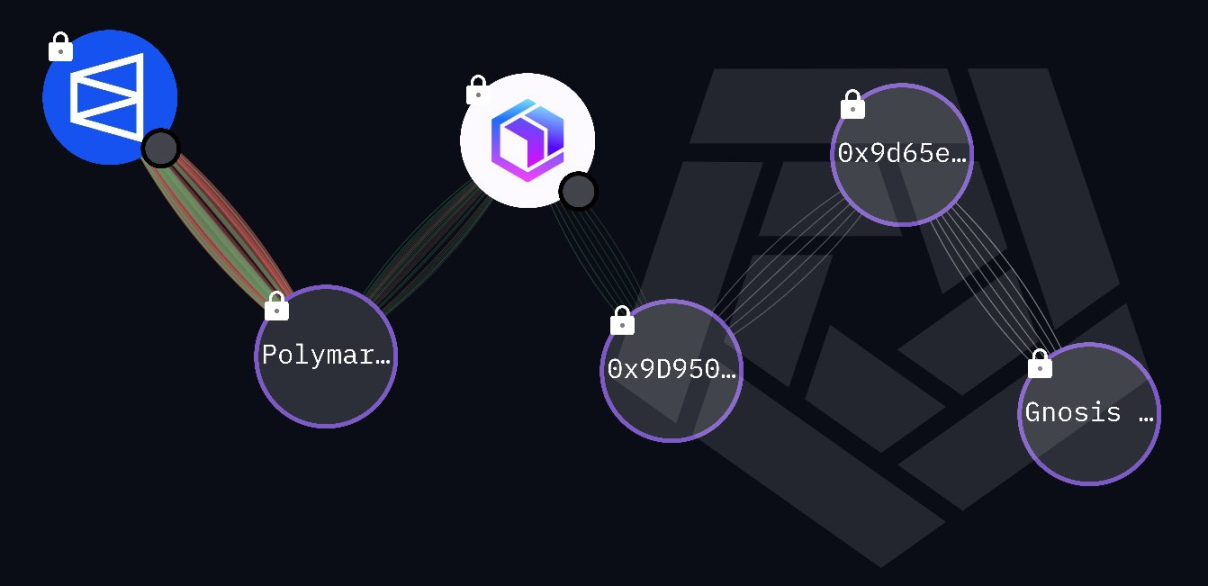
The final fund chain points to a Gnosis Safe multi-signature address (confirmed by the exposé and transaction graph as belonging to Tate). Arkham records show this Safe holds over $1.3 million in assets, with recent large USDT/USDC withdrawal operations.

The entire chain forms a closed loop: exchange deposit → bridging address transfer → Polymarket betting → profit aggregation to Tate's controlled Gnosis Safe.

The fund flow chart attached by Euanker clearly marks the Polymarket icon and the Gnosis Safe endpoint. A profit chart of the 7 accounts further corroborates, showing a rapid climb from an initial loss of $5,203 on February 22 to a cumulative peak of $52,286 on March 10, with multiple instances synchronized with Tate's public tweet timings. This level of consistency far exceeds coincidence. The identical combination of exchanges, same USDC bridging scale, and operational patterns precisely matching market settlement times constitute the core on-chain basis for the exposé's insider trading allegations.

From Luxury Cars and Mansions to Meme Coins, Fans Become Tools for Monetizing Influence

Andrew Tate (full name Emory Andrew Tate III), born in 1986, is a public figure, businessman, and former professional fighter with dual US and UK citizenship. Tate began his professional kickboxing career in 2005, winning multiple championships in the late 2000s to early 2010s, including the ISKA British Full-Contact Cruiserweight Championship (2009) and the ISKA World Championship (2011), claiming to be a four-time world champion. He is about 1.91 meters tall, with the nicknames 'Cobra Tate' or 'Top G'.

Andrew Tate has long presented a luxurious lifestyle; his名下 (owned) or rented multiple Bugatti sports cars and numerous mansions have long been the core of his personal brand. The term 'rented Bugatti' in the exposé恰好吻合 (perfectly matches) Tate's publicly flaunted pattern of luxury consumption.

He has repeatedly showcased high-end assets on social platforms, using this to reinforce his 'alpha male' persona and attract young male fans globally. After retiring, he shifted to online business and content creation, launching paid course platforms (like Hustler's University and War Room), teaching topics like wealth building, entrepreneurship, and mindset training, primarily attracting young male audiences.

Starting in 2022, he and his brother Tristan were arrested in Romania, facing charges of human trafficking, rape, and forming a criminal organization (related to recruiting women using the 'loverboy' method to produce adult content); the case is still ongoing. After the Romanian travel ban was lifted in late 2025, the two returned to the US. Currently, he also faces a UK civil lawsuit (four women alleging sexual violence and coercion), which has been moved up to Summer 2026. He denies all criminal and civil charges, calling them a political witch hunt against him.

Upon entering the crypto space, Tate further monetized his influence. He has issued multiple meme coins, the most representative being the DADDY series directly tied to his personal IP, achieving rapid monetization through fan-driven hype. Bubblemaps exposed that he had promoted over 10 shitcoins within 24 hours; after Bubblemaps revealed the insider information about DADDY token supply, Andrew subsequently blocked Bubblemaps.

These operations form a complete闭环 (closed loop) with this Polymarket incident: first, gather traffic with controversial statements and lifestyle, then directly extract funds from fans' wallets through prediction markets or meme coins. Whether it's luxury cars and mansions or meme coin issuance, the essence is the same monetization logic—converting personal fame into quantifiable cash flow.

This exposé once again reminds the crypto industry that prediction markets and the meme coin ecosystem under celebrity influence still have significant governance gaps. This incident points directly to structural deficiencies in Polymarket's market creation review process. For example, markets like 'Andrew Tate's Weekly Tweet Count' are created without effective门槛 (thresholds) to verify whether the market has objectivity or is susceptible to manipulation risk. The core value of prediction markets lies in aggregating分散 (dispersed) information for price discovery, but when the subject is entirely controlled by a single entity, information asymmetry is放大至极端 (amplified to an extreme). Tate could simply adjust his tweet frequency to influence market outcomes, while retail investors bet based on public information, unaware of the internal manipulation.
Previously, the author wrote an article titled 'He Made $300,000 Counting Musk's Tweets'. The prediction market tracked Elon Musk's tweet count; Musk himself is the world's richest man, a hard tech entrepreneur with no motive to profit from insider trading, while Andrew Tate might not be. Polymarket currently does not allow any individual user to directly create prediction markets. All markets are ultimately created by Polymarket's market team. If Polymarket does not strengthen market审查 (review), similar allegations are likely to continue to发酵 (ferment).


Twitter:https://twitter.com/BitpushNewsCN

Bitpush TG Discussion Group:https://t.me/BitPushCommunity

Bitpush TG Subscription: https://t.me/bitpush

Original article link:https://www.bitpush.news/articles/7618832

Related Questions

QWhat is Andrew Tate accused of doing on Polymarket according to the article?

AAndrew Tate is accused of engaging in insider trading on Polymarket by manipulating prediction markets related to the number of his own tweets. He allegedly controlled at least 7 Polymarket accounts to profit from these markets, earning a total of $52,286.

QHow did the exposé by user @Euanker provide evidence of Tate's alleged manipulation?

A@Euanker provided detailed on-chain evidence and profit charts showing that the 7 Polymarket accounts had identical deposit paths, funding sources from exchanges like Duelbits and Bybit, and a unified pattern of fund flow that ultimately led to a Gnosis Safe wallet controlled by Tate.

QWhat is the significance of the 'weekly tweet count prediction' markets in this case?

AThe 'weekly tweet count prediction' markets were significant because they were based entirely on Andrew Tate's own behavior, allowing him to manipulate the outcome by controlling the number of tweets he posted, thus creating an unfair advantage and profiting from insider knowledge.

QHow does this incident highlight a potential issue with Polymarket's governance?

AThe incident exposes a structural weakness in Polymarket's market creation and review process, as markets dependent on a single individual's actions lack objectivity and are susceptible to manipulation, undermining the platform's core purpose of price discovery through dispersed information.

QWhat other methods has Andrew Tate used to monetize his influence, as mentioned in the article?

AAndrew Tate has monetized his influence through luxury lifestyle branding, paid online courses like Hustler's University, and by promoting and issuing meme coins such as the DADDY series, leveraging his fan base for financial gain.

Related Reads

Only 153 Venture Capital Firms Invested in July: Is the Crypto VC Industry Experiencing a 'Mass Extinction'?

In July 2026, only 153 unique venture capital firms participated in disclosed crypto funding rounds, marking the lowest monthly count since November 2020. This figure represents an 87% decline from the peak of 1,177 firms in 2022. Overall, the first seven months of 2026 saw crypto projects raise approximately $11.78 billion across 481 rounds. This crypto VC contraction contrasts sharply with the broader venture capital landscape, where global VC investment reached a record $560.4 billion in H1 2026, heavily fueled by major AI company financings. This shift in capital allocation has drawn funds away from the crypto sector. Within crypto, funding is highly concentrated. Trading platforms, prediction markets, and payment sectors absorbed 53% of the total capital. While early-stage deals remain frequent, the largest sums flow to a few late-stage rounds and mergers & acquisitions, which surged to $7.23 billion in Q2 2026. The market is consolidating around top funds like a16z crypto and Dragonfly, which successfully raised new multi-billion dollar funds, while many smaller firms have retreated. Analysts describe this as a "great extinction" for crypto VCs, where capital is becoming more selective, favoring proven business models and assets over early-stage speculation. This raises the bar for project quality, funding efficiency, and viable exit paths.

marsbit12m ago

Only 153 Venture Capital Firms Invested in July: Is the Crypto VC Industry Experiencing a 'Mass Extinction'?

marsbit12m ago

Strategy's Loss in the Second Quarter Reaches $8.22 Billion Amid Bitcoin Decline

Strategy, the largest corporate holder of Bitcoin, reported a net loss of $8.22 billion for the second quarter. This loss was primarily driven by an $8.32 billion unrealized loss on its Bitcoin holdings due to a decline in the asset's price during the period. Despite these paper losses, the company increased its Bitcoin holdings to 843,775 BTC, a 25% growth since the start of the year. As part of a new monetization strategy, Strategy sold approximately $218.4 million worth of Bitcoin, mainly to fund dividends for preferred shareholders, with $216 million of that sold after Q2 ended. The company also built a $3.75 billion cash reserve, which it claims is sufficient to cover over two years of dividend and interest payments, aiming to insulate itself from Bitcoin's volatility while meeting obligations. Following the earnings release, Strategy's stock (MSTR) rose 4.7% in regular trading but corrected slightly after-hours. This pattern reflects how the company's accounting results are heavily tied to Bitcoin's price swings, even as its long-term strategy remains unchanged. The report indicates that Strategy is maintaining its core strategy of accumulating Bitcoin while building a financial buffer. This quarterly loss follows a recognizable pattern, with the company posting significant unrealized losses in previous quarters (e.g., $12.4 billion in Q4 2025 and ~$12.5 billion in Q1 2026) due to fair-value accounting. A key technical shift is its new monetization program, which introduces periodic selling pressure on the market, transitioning Strategy from a pure accumulator to a participant that occasionally adds supply. A critical question remains: how long can the cash reserve cover dividend obligations if a Bitcoin price downturn persists beyond two years?

cryptonews.ru32m ago

Strategy's Loss in the Second Quarter Reaches $8.22 Billion Amid Bitcoin Decline

cryptonews.ru32m ago

Will Terrorist Durov Ban Russian Officials?

Telegram founder Pavel Durov publicly reacted to being labeled a "terrorist" by Russian authorities, stating the designation came after he refused demands for mass surveillance and censorship on the platform. In a Telegram post, he highlighted that this status formally bans him from "publishing information online." Durov concluded with a statement widely circulated: Russian officials "clearly don't understand who can ban whom on the internet." This remark suggests Durov could potentially restrict official Russian government and officials' channels on Telegram, which continue to operate on the platform despite its formal blocking in Russia. The situation parallels previous, slow-moving state directives, like switching officials to domestic cars, contrasted with the current push to migrate all government communication to the Russian-made messenger MAX by 2030. However, reports indicate many officials still use Telegram via workarounds, fearing surveillance on MAX, while alternatives like BiP and KakaoTalk recently became inaccessible in Russia without a VPN. Durov has not specified any immediate actions against state channels. His statement is an initial response, with further developments depending on the authorities' reaction. The dynamic differs from 2020 when Russian regulators lifted a block on Telegram; now, Durov implies control from within the platform itself over the official accounts that persisted through that earlier blockade.

cryptonews.ru32m ago

Will Terrorist Durov Ban Russian Officials?

cryptonews.ru32m ago

DeepSeek V4 Official Version Arrives, New Capabilities Emerge, Value-for-Money King Enters the Fray

On July 31st, DeepSeek officially launched the public API beta for its DeepSeek-V4-Flash model. A key highlight is its performance on multiple Agent benchmark tests, reportedly nearing or even surpassing the level of the V4-Pro preview version from three months ago. Notably, the Flash model achieves this with significantly smaller scale (130B active parameters vs. Pro's 490B), suggesting that post-training optimization and data quality may be as crucial as raw model size. DeepSeek emphasized that the V4-Flash-0731 uses the same model architecture and size as its preview version, with improvements attributed solely to "re-trained post-training." The update also marks the official debut of DeepSeek's self-developed Agent framework, "Harness." The move signals DeepSeek's strategic push to position its cost-effective Flash model as a competitive base for Agent applications—scenarios requiring autonomous planning, tool usage, and complex task execution—where inference speed and cost are critical. By natively supporting OpenAI's Responses API format and adapting for code-generation scenarios, DeepSeek aims not just to be a cheaper alternative but to establish its own ecosystem in the Agent era. This release follows DeepSeek's record-breaking ~$50 billion fundraising round roughly two months prior, underscoring market confidence in its technology and commercialization prospects. The company is reportedly preparing for another funding round at a valuation of approximately $71 billion. The Flash model's advancement represents a step in fulfilling the high expectations that come with this valuation, setting the stage for the impending release of the V4-Pro official version and intensifying competition in the global Agent landscape.

marsbit36m ago

DeepSeek V4 Official Version Arrives, New Capabilities Emerge, Value-for-Money King Enters the Fray

marsbit36m ago

Trading

Spot
活动图片