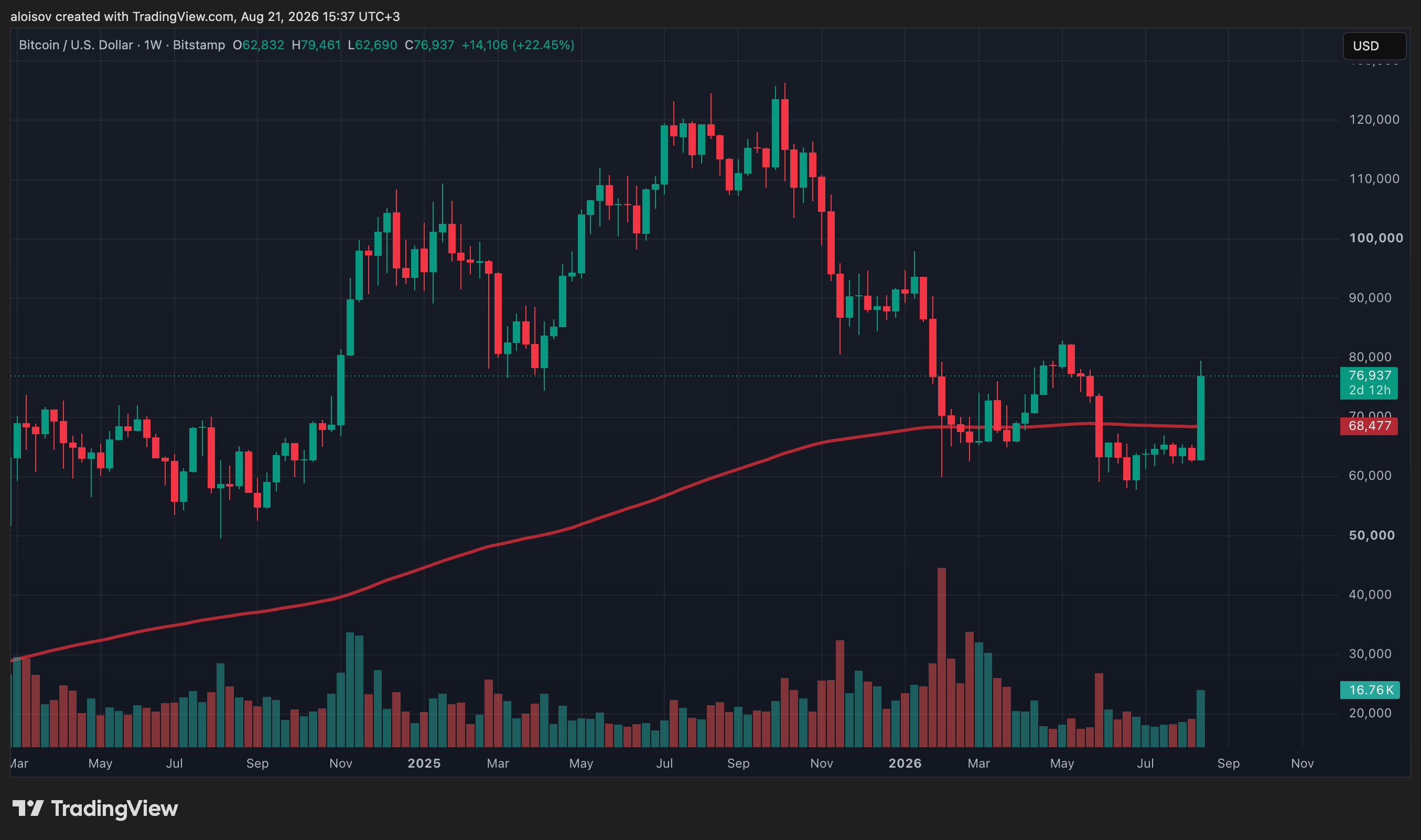
The analytical team of trading firm QCP Capital released a new report titled "Duration Strikes Back," explaining why Bitcoin jumped from around $64,000 to $79,000 over four trading sessions. According to QCP analysts, the surge coincided with an unexpected reversal in the U.S. government debt market—and this connection became the main topic of the report.
Liquidity Support — Not Quantitative Easing
The trigger for the move was a sell-off in the long-term bond market (maturity of 10 years or more), which pushed the yield on U.S. 30-year Treasury bonds to around 5.33%—the highest level since 2007. In response, the U.S. Treasury Department announced an increase in its bond buyback program to support liquidity: the maximum size of a single operation will increase from $2 billion to at least $4 billion starting September 9.
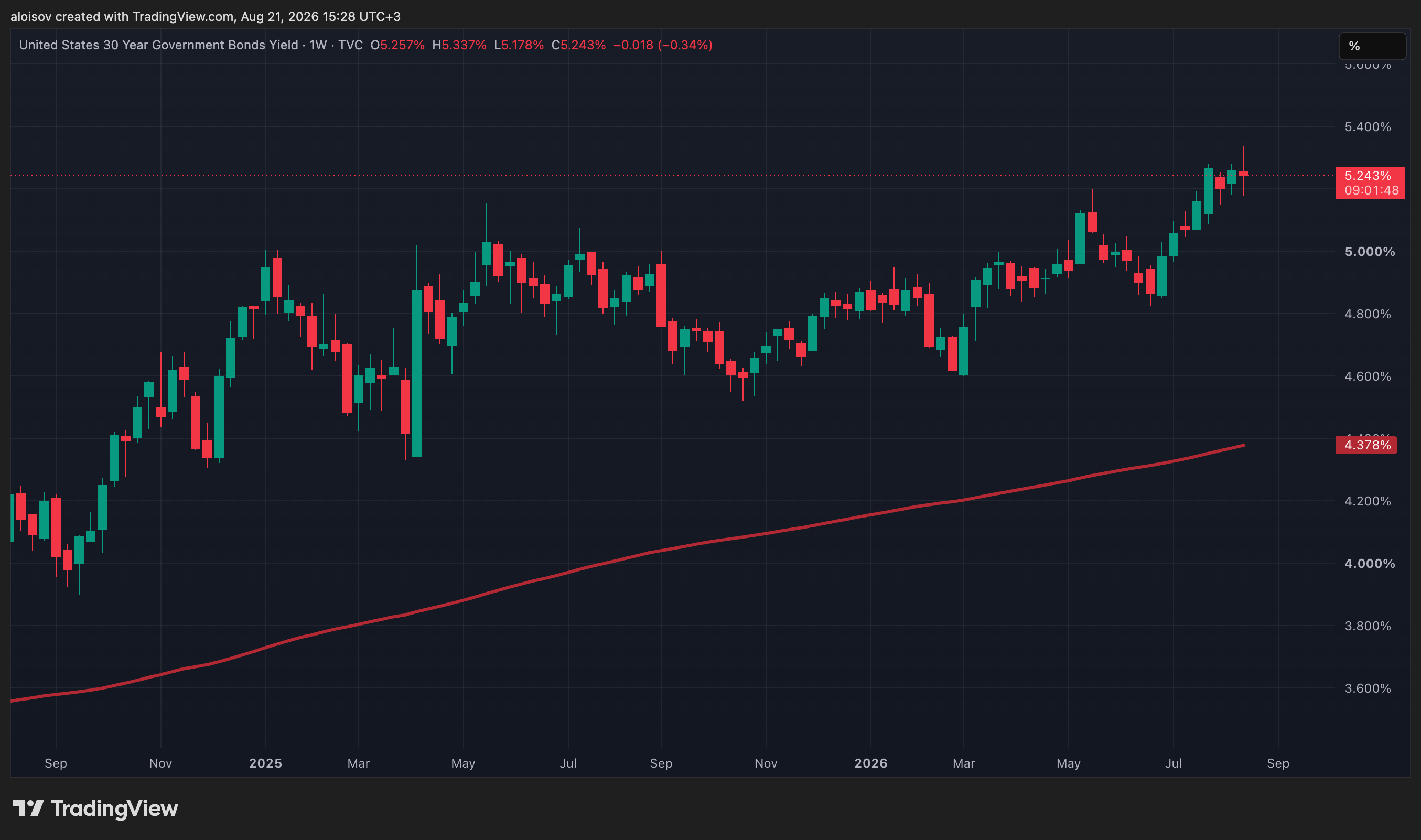
Following this announcement, long-term bond yields fell sharply, the dollar weakened, and Bitcoin and gold began to rise. However, by Thursday, Treasury yields had retraced most of the initial move, while Bitcoin and gold retained almost all of their gains.
QCP emphasizes: it's important not to confuse this measure with quantitative easing. The Treasury is not creating central bank reserves, and the program itself remains small relative to the government's overall financing needs. Analysts describe such operations simply as a tool to support liquidity in less liquid long-term securities. At the same time, the announcement does not solve the fundamental imbalance of supply and demand in the global bond market—it merely adds sovereign debt management to the list of factors that markets now watch alongside Federal Reserve policy.
Pressure on Long Bonds Spreads Worldwide
The report notes that the problem is not limited to the United States. The yield on Japan's 10-year government bonds approached 3%, and long-term bond yields in Europe also approached multi-year highs. Japan, in QCP's view, is particularly important in this context: as domestic yields rise, Japanese bonds become relatively more attractive, which could reduce incentives for Japanese investors to allocate capital to foreign long-term securities.
There is also a second factor—the private sector. According to JPMorgan estimates cited by QCP, capital expenditures related to artificial intelligence will reach about $900 billion in 2026 and could grow to $1.2 trillion in 2027. Major technology companies are increasingly borrowing on debt markets, in addition to their own cash flows, to finance this infrastructure buildout. As a result, government borrowing and AI-related funding are increasingly competing for the same pool of capital, keeping the long end of the global yield curves in focus.
How a Short Squeeze Turned into Sustained Demand
A separate section of the QCP report is devoted to the mechanics of the Bitcoin rally itself. According to QCP's desk data, the initial breakout was driven more by the covering of short positions than by massive cascading liquidations. On August 19, aggressive buying in the perpetual futures market was nearly 15 times greater than spot buying—approximately +32,700 $BTC versus +2,200 $BTC, with open interest barely changing. Such a combination resembles short covering more than the formation of new large long positions.
Liquidations on August 18 were relatively small—about $54.7 million, or roughly 0.035% of open interest. However, on August 20, as Bitcoin's rise continued, market participants began increasing leverage again. The funding rate for perpetual contracts on August 19 and 20 rose to the 100th percentile of its annual range and has since corrected slightly—to around the 68th percentile—even as the spot price remained near highs.
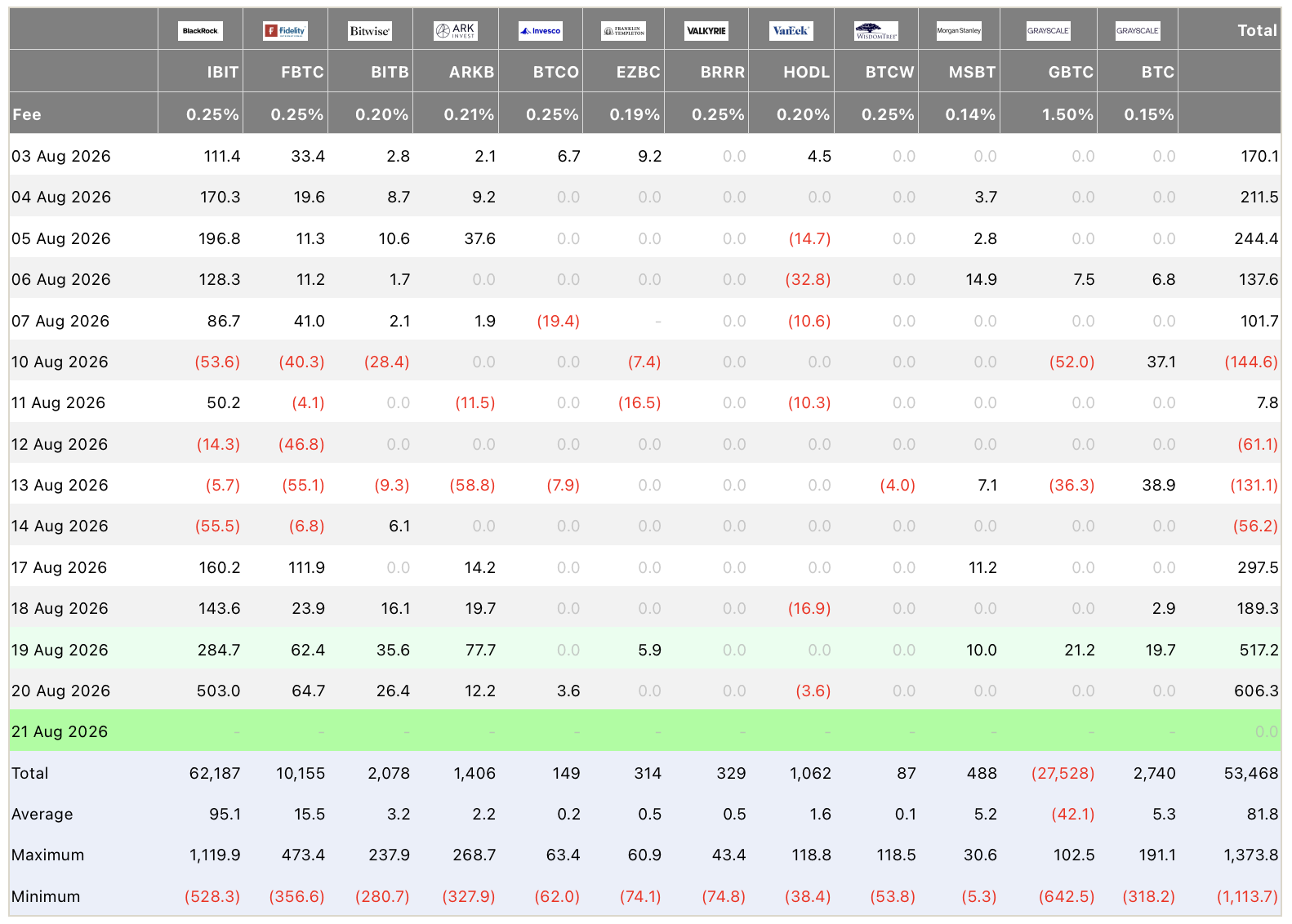
QCP specifically points out: spot demand intensified in parallel with the movement in the derivatives market. U.S. spot Bitcoin ETFs recorded a net inflow of $517 million on August 19—the best result since May. Analysts emphasize that this is a fundamentally important point: positioning in the futures market helped trigger the breakout, but it is precisely the sustained inflow into ETFs that indicates the move has moved beyond a purely derivatives-driven squeeze.
Volatility Awakens
Option markets reacted quickly. According to QCP's desk data, Bitcoin's implied volatility for near-term at-the-money (ATM) options rose from 38.1 on the morning of August 20 to around 42.6, while 30-day implied volatility climbed above 40. Over several sessions, actual price fluctuations exceeded the levels priced in by options—the market had to sharply revise its estimates after a calm summer volatility regime.
At the same time, the volatility skew towards puts (downside protection) remains relatively calm: downside protection near current levels has not become overvalued to the same extent as overall volatility, despite the scale of the rally and a busy macroeconomic calendar next week. In other words, the market is willing to pay more for price movement itself but is not yet pricing in a comparable increase in the risk of a near-term reversal.
The Key Test—Jackson Hole Symposium
The Fed remains caught between persistent inflation and the high cost of long-term borrowing. The July Federal Open Market Committee (FOMC) meeting revealed a noticeable minority of policymakers favoring a more restrictive policy, and the September meeting still carries a non-zero probability of a rate hike.
Next week, markets await:
July Personal Consumption Expenditures (PCE) Index data—a key inflation indicator monitored by the Fed;
The Jackson Hole Economic Symposium, which runs from August 27 to 29.
In QCP's view, market attention will focus less on a specific signal about rates and more on how regulators interpret inflation, financial conditions, and rising long-term bond yields.
What This Means for the Crypto Market
According to QCP analysts, the key cross-market signal of the week was the divergence following the Treasury's announcement. Treasury yields first fell sharply and then retraced most of the move. Bitcoin and gold did not roll back to the same extent. This does not signal the formation of a new liquidity or monetary policy regime, but it highlights the sensitivity of alternative assets to changes in long-term bond yields and the dollar's exchange rate.
For the crypto market, the structure of the move itself is also important: short covering triggered the breakout, then spot ETF demand intensified, and the funding rate for perpetual contracts cooled from local peaks—without a comparable pullback in Bitcoin's price. This is notably different from the range-bound conditions of recent weeks. QCP notes that the key question now is whether spot demand will remain sustainable after the initial positioning correction—especially if market participants begin increasing leverage again.
The size of the $4 billion buyback itself is not the main news, QCP emphasizes. The broader picture is that liquidity at the long end of the yield curve, the volume of sovereign borrowing, and the cost of debt are once again influencing financial conditions across several asset classes simultaneously—and the crypto market is reacting along with them.
Key Dates
August 26—U.S. PCE data for July
August 27–29—Jackson Hole Economic Symposium
September 9—Start of expanded U.S. Treasury long-term bond buyback program
September 15–16—FOMC meeting
The market currently resembles a taut string: the movement of long bonds, the dollar, and Bitcoin synchronized within just a few days, and any of these links could set the tone for the next week. QCP Capital's report captures this moment—and the sustainability will need to be confirmed or refuted by the upcoming PCE data and speeches at Jackson Hole.
AI Perspective
From a machine data analysis perspective, the current episode is not the first instance where rising long-term bond yields have coincided with Bitcoin records. On May 22, 2025, the yield on U.S. 30-year bonds reached 5.15%—which also coincided with Bitcoin setting a new all-time high then, although classical theory suggests an inverse relationship between yields and risky assets. A similar anomaly is repeating now, hinting at a structural shift in Bitcoin's perception—from a speculative asset to a kind of hedge against debt instability.
A technical risk not covered in QCP's report concerns Bitcoin's correlation with gold. Data shows that the $BTC-to-gold ratio fell by 50% in 2025, and high bond yields made holding Bitcoin less attractive specifically in the context of its strong correlation with equities. If this linkage resumes upon a shift in sentiment at Jackson Hole, the crypto market's reaction could be more abrupt than the options market expects. Whether Bitcoin remains a hedge against debt instability or begins moving in sync with stocks again will be shown in the coming weeks.