OpenAI's Misfire, Scaling Law's Original Paper Reveals Bug, Trillions of Compute Power Wasted in Vain

marsbitPublished on 2026-07-05Last updated on 2026-07-05

Abstract

Recent revelations by a former OpenAI researcher, Diogo Almeida, and subsequent discussion highlighted by DeepMind's Sander Dieleman suggest a critical bug in OpenAI's seminal 2020 "Scaling Laws" paper. The analysis claims the original research contained a flawed experimental setup, leading to a misinterpretation of how to optimally scale large language models (LLMs). The core issue involves two key methodological choices in the OpenAI paper: first, training all models (small and large) on the same fixed dataset size (~130 billion tokens), which underfed larger models; and second, using a cosine learning rate decay that prematurely flattened loss curves, creating the false impression that models had reached performance saturation with more data. This combination allegedly biased the conclusion that, for a fixed compute budget, scaling model parameters was vastly more important than scaling training data—a principle that drove the creation of "over-parameterized, under-trained" models like GPT-3. This was later corrected by DeepMind's 2022 Chinchilla paper, which advocated for a more balanced scaling of parameters and data. Further scrutiny revealed that even the Chinchilla analysis itself had an optimization bug. The critique extends beyond the bug, questioning whether current scaling laws are inherently biased, as they are primarily derived from English data, a morphologically poor language that may be inefficient to learn compared to others like French. The implication i...

DeepMind researcher reveals late at night: There's a critical bug in OpenAI's original Scaling Law paper! The global AI community has wasted trillions in compute power for nothing. GPT-3 was actually severely "overinflated".

OpenAI misled the entire AI field for years!

Over the past five years, the entire AI industry has been driven forward by the Scaling Law.

Sam Altman's confidence in AGI stems from this curve.

Now, someone has stepped forward to say: This curve was wrong from the very beginning.

This is not hindsight. The speaker is a researcher who was optimizing large models at OpenAI back then - Diogo Almeida.

Just now, he published a blog post with a chillingly straightforward title - "Scaling Laws, Honestly".

The opening sentence leaves no room for doubt: The original version of the scaling law is wrong because it contains a bug.
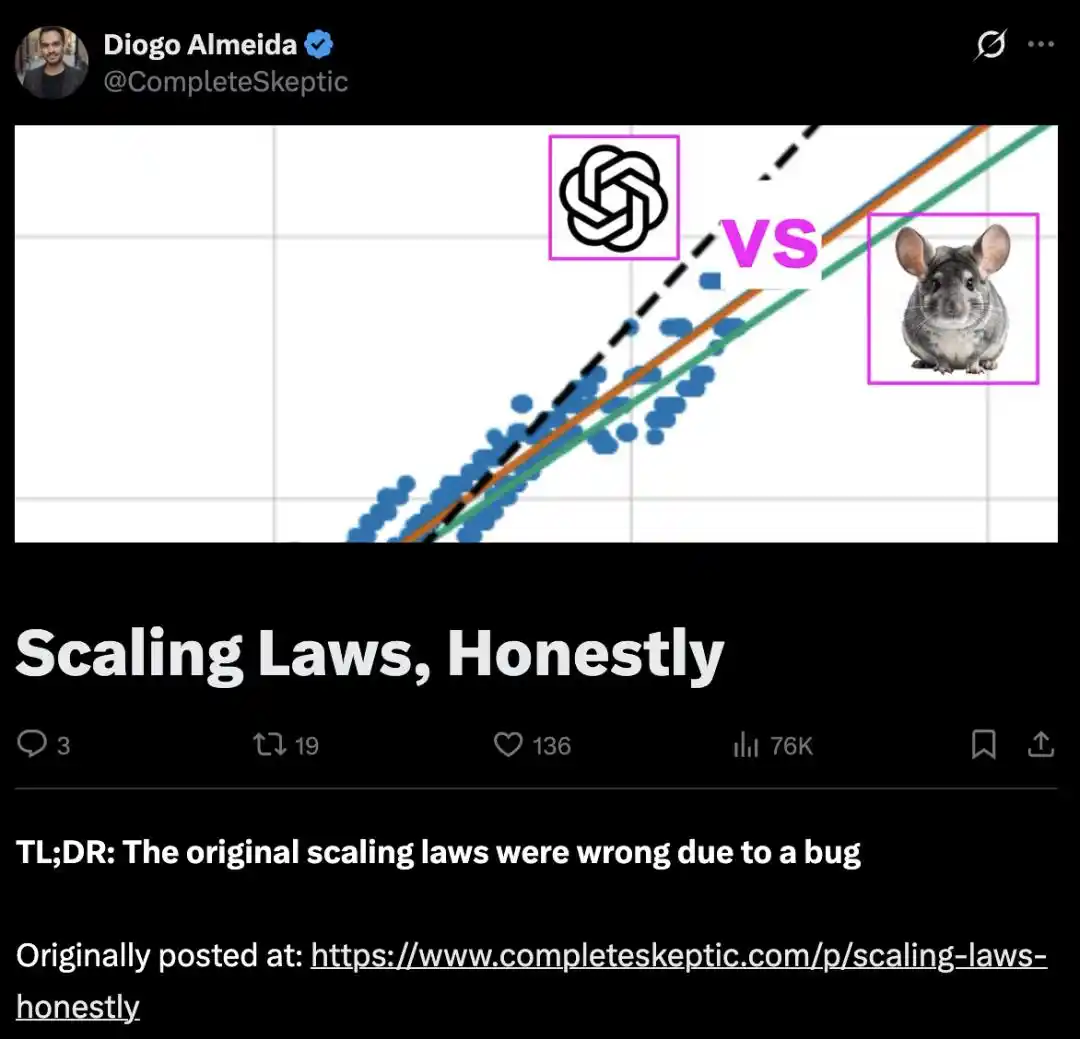
Portal: https://www.completeskeptic.com/p/scaling-laws-honestly

Sander Dieleman from DeepMind, famous for diffusion models, promptly boosted it on Twitter, calling it an interesting piece of LLM history:

The original scaling law was wrong due to a bug, likely causing the industry to waste massive compute power on a bunch of "overly large, undertrained" models.
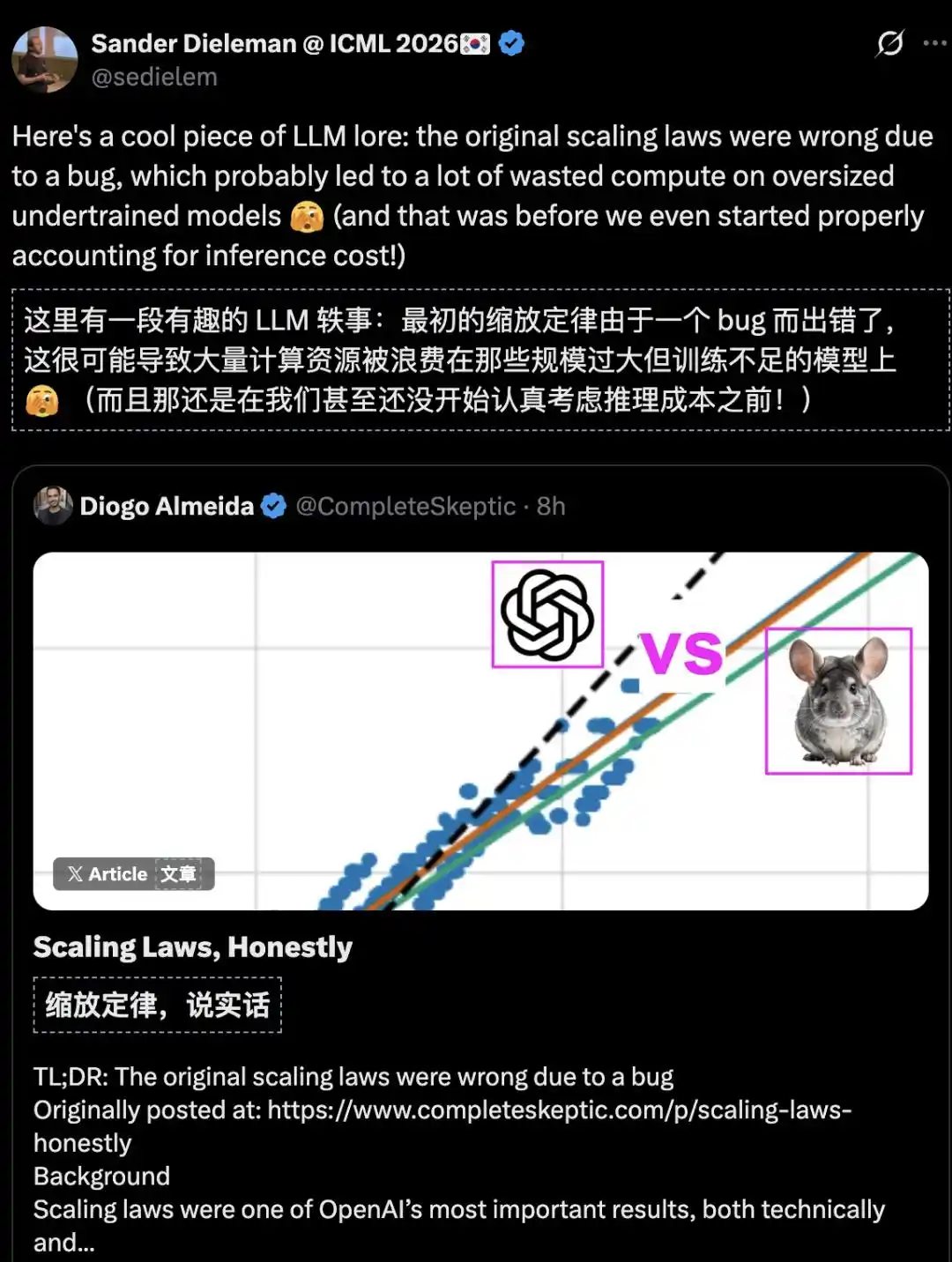
One bug, burning two years.

When the bug is exposed, what we see is not just a black hole of compute power, but also a boundary of intelligence reshaped by language itself, far deeper than imagined.

Scaling Law Turns Out to Be the LLM Version of "Geocentric Theory"

In 2020, OpenAI concluded: Under a fixed compute budget, you should prioritize making the model larger, rather than feeding it more data.

In formula terms, the optimal parameter count is proportional to compute raised to the power of 0.73—parameters were the variable to aggressively scale.
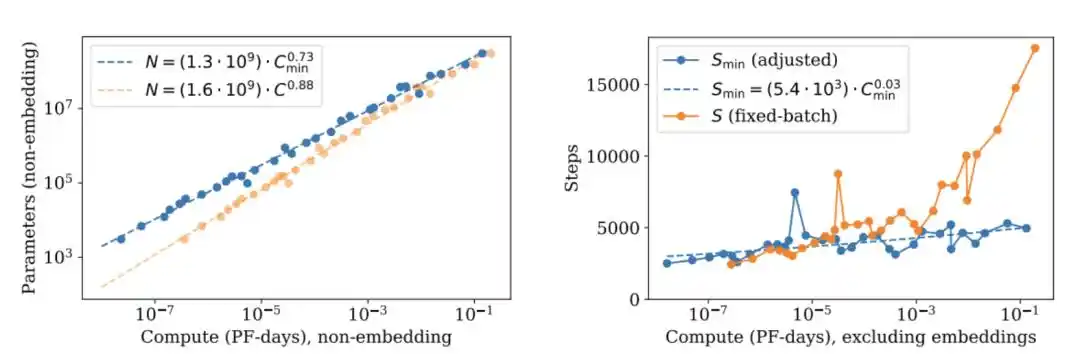
This statement directly defined the shape of the GPT-3 generation. Pile on parameters. Pile them on relentlessly. 175 billion.

It told developers worldwide: Don't ask, just scale parameters; as long as you make the model big enough, miracles will happen.

Two years later, DeepMind threw down Chinchilla, overturning this conclusion: model and data should be scaled up with roughly equal importance, with about 20 tokens per parameter being cost-effective.
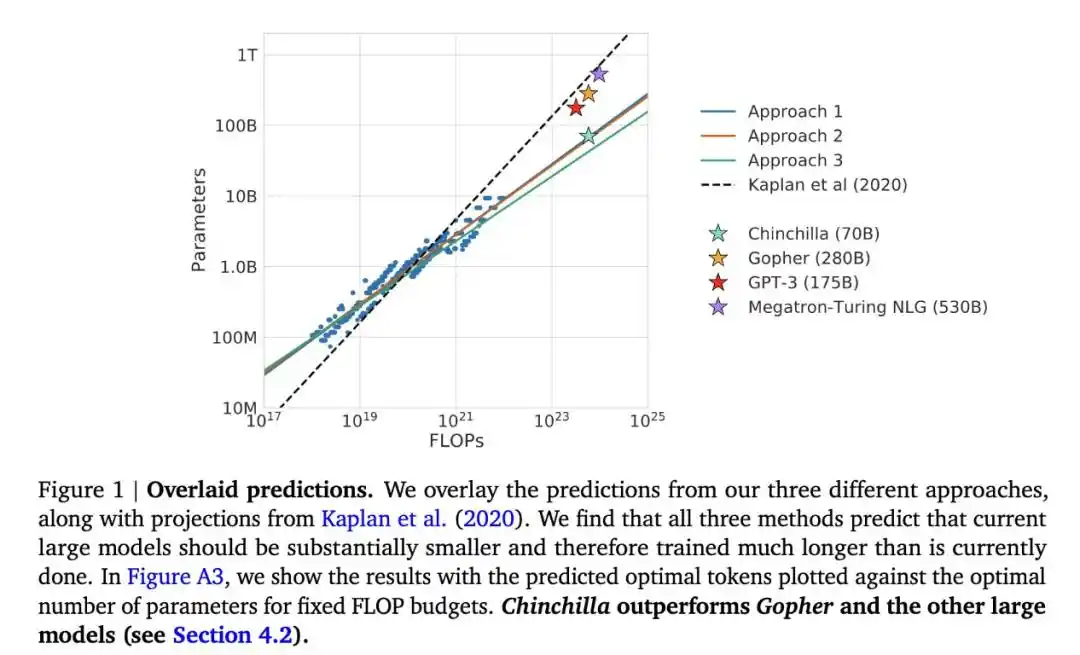
They trained a 70-billion parameter Chinchilla, fed it 1.4 trillion tokens—half the size of GPT-3 but with over four times its data.

The result? With the same compute budget, it comprehensively outperformed Gopher with 280 billion parameters but fed only 300 billion tokens.

In plain language: With the same money, one raised a "flabby" strongman, the other trained a lean boxer.

After a three-year delay, Beida alumna Weng Li delved into mainstream explanations for the subsequent differences, attributing the variance to their methods of calculating total parameters.
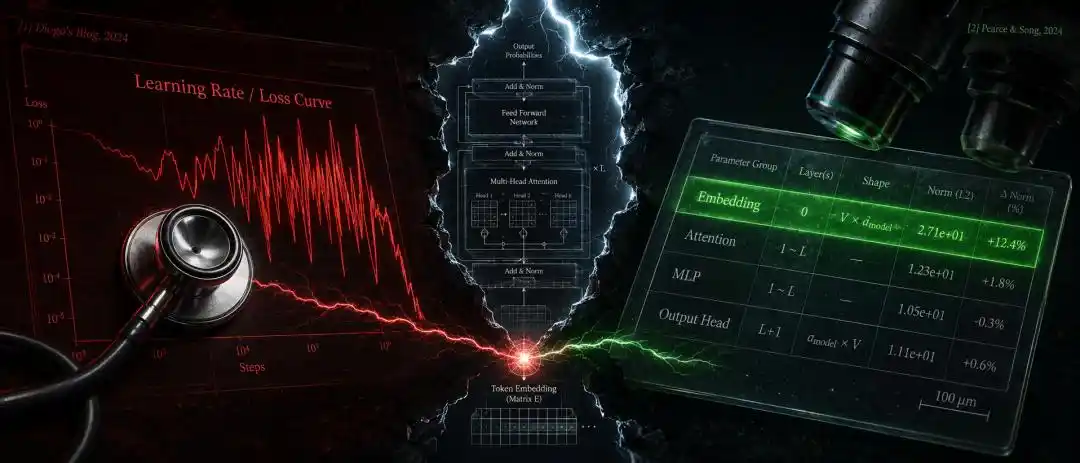
And that's not all. Even the "correct" Chinchilla itself isn't clean.

In 2024, Besiroglu et al. extracted and reran the data points from the Chinchilla paper, discovering another bug hidden in its own fitting:

The loss scale in the optimizer was set too high, applying the Huber loss per sample average instead of sum, causing premature termination of fitting.
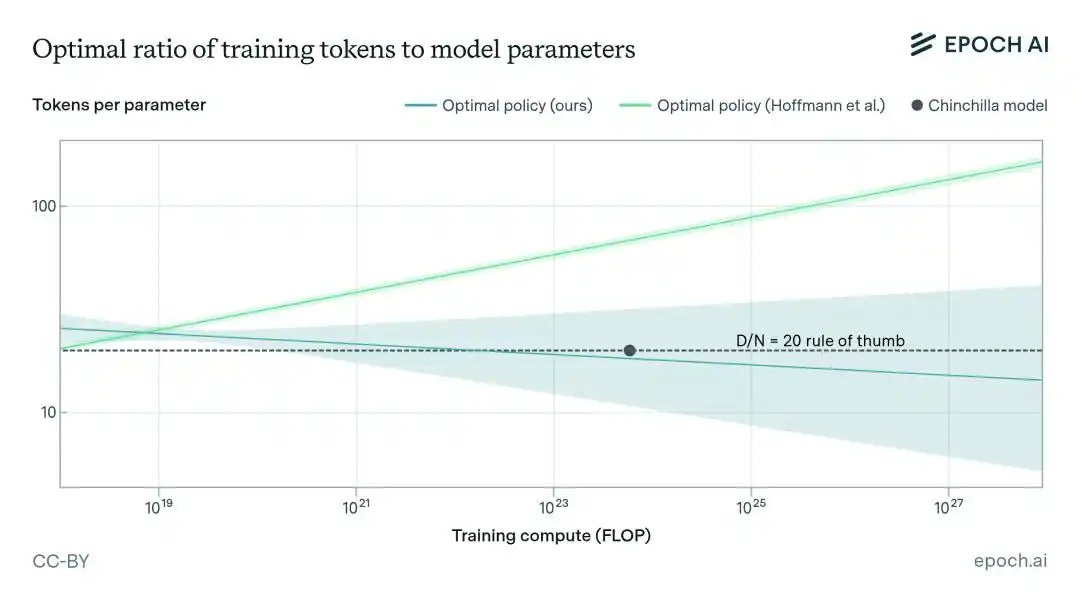
The paper correcting a bug, itself carried another bug.

At this point, that phrase "first principles" repeated by countless people suddenly seems less solid.

So-called Scaling Law has never been an ironclad physical law like Newton's three laws; it's just an empirically fitted curve.
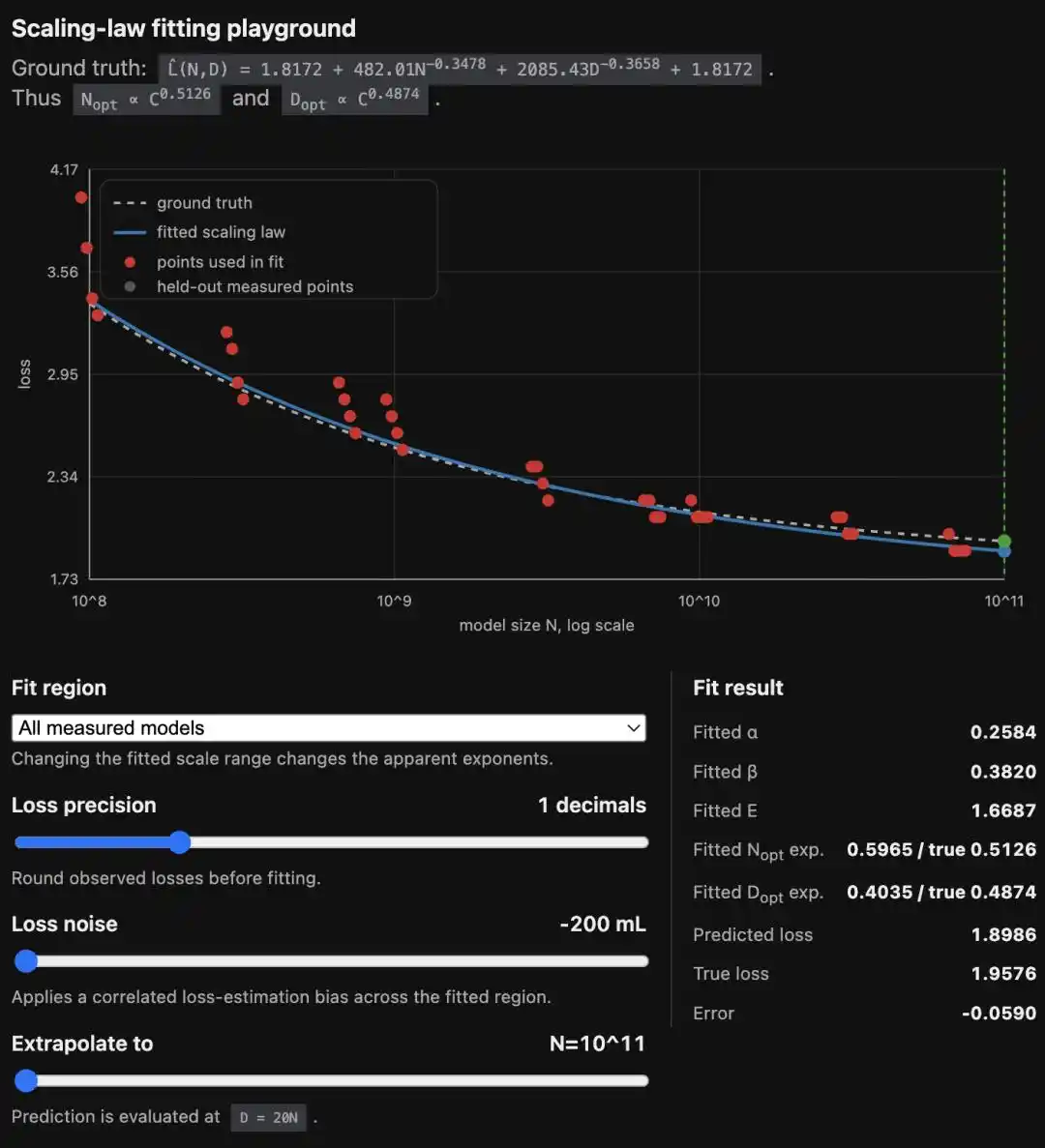
When Diogo Almeida believes the truth isn't so, it's not a matter of different methods, "the original scaling law itself had a bug."

Did OpenAI Deceive Global AI Peers with Three Tricks?

To create a lie believed by the global AI community, only three steps are needed.

Step One: Imprisoning Data.

OpenAI's paper fed all models—whether they were toddlers learning to walk (small models) or already giants—the exact same "meal size." Approximately 130B tokens of data.

Small models were thus "well-fed" or even "overfed," while the large models that truly needed massive data to fill their capacity were severely malnourished under the same token budget.
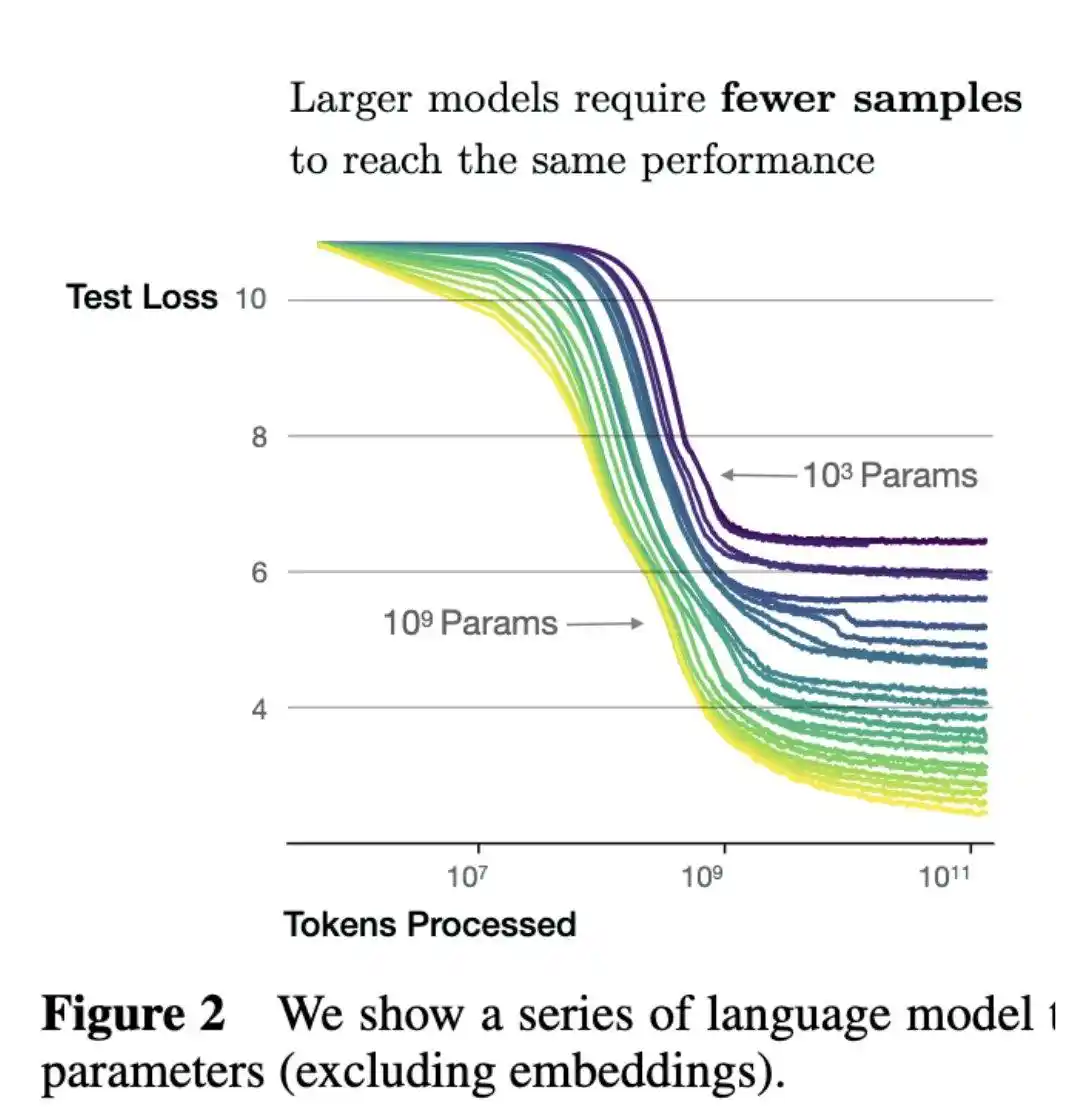
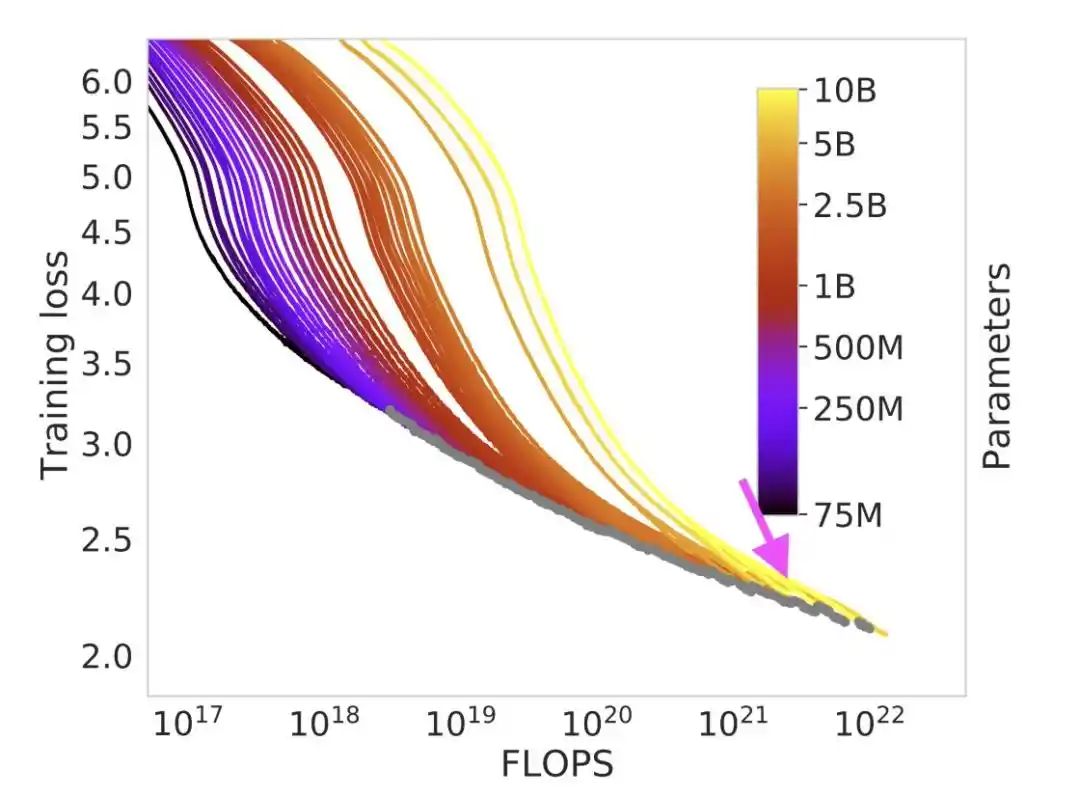
The Chinchilla paper later pinpointed the issue: They "used a fixed number of training tokens and learning rate schedule for all models."
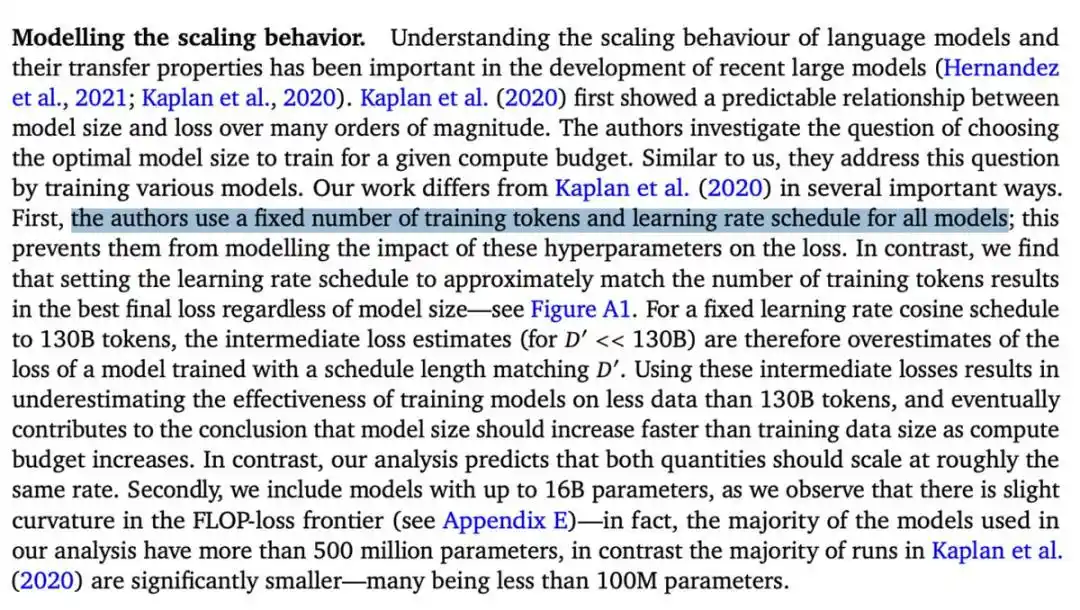
This is like having kindergarteners and PhD students take the same exam with the same time limit, then claiming "performance depends only on talent."

Step Two: Deceiving LR Decay.

They used Cosine Learning Rate Decay, allowing the learning rate to smoothly approach zero as training neared its endpoint.
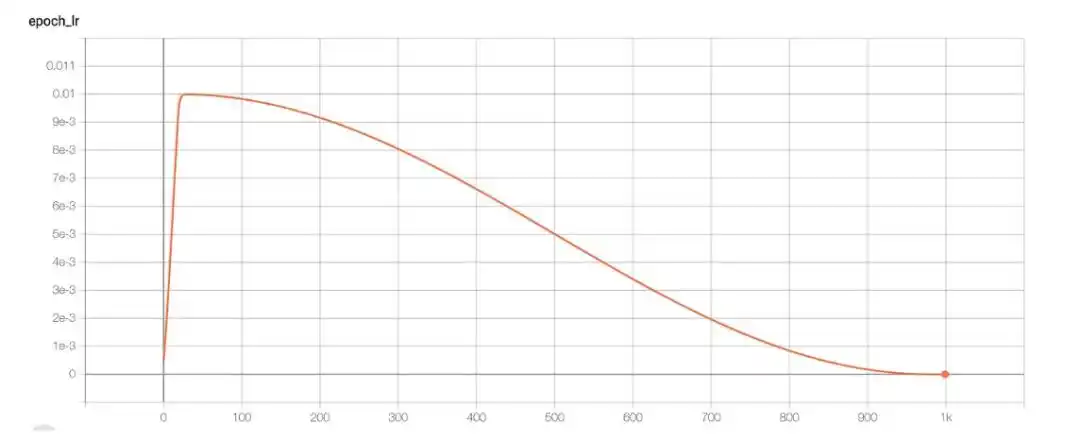
As training approached the preset endpoint, the learning rate was artificially pressed down to zero step by step, naturally causing the model's progress to "flatten."

Once the curve flattens, it looks like: This model has already learned all it can, feeding it more is useless.

The researchers thus concluded: "Adding more data is useless, the model has saturated."

This wasn't the model's limit; it was the learning rate artificially severing the model's growth path. It created a perfect illusion: performance has hit the ceiling, more data is futile.

But we now know those large models were nowhere near their limit.

Step Three: The Arrogance of Authority.

The third step, and the most insidious: The paper stated that the results were "largely independent of learning rate schedule."
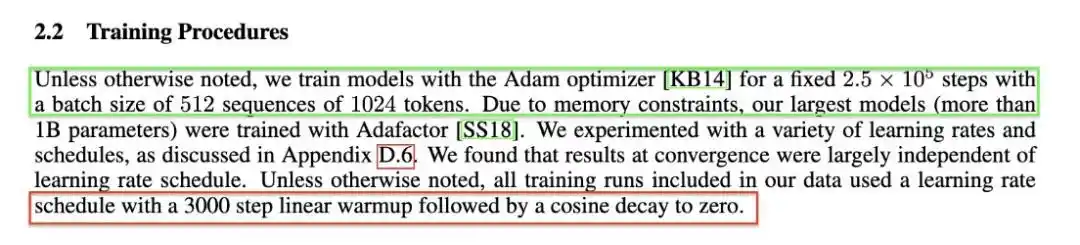
Although many, including Diogo Almeida who was at OpenAI at the time, vaguely sensed something was off, technically this conclusion was correct under a fixed token limit.

But it simply didn't apply to the ideal "infinite data" world that the scaling law truly aimed to describe.

They mistook a localized truth under limited conditions for a universal cosmic law.

With these three steps combined, you get a law that is both wrong and extremely difficult to debug.

Even Diogo himself admits: Back then, he was also doing optimization at OpenAI and didn't spot this bug—that learning rate curve looked too much like it was "carefully set," who would have doubted it?

GPUs Wasted in Vain

Severe Compute Mismatch

Guided by OpenAI's erroneous formula, the AI industry entered the era of "brute force yields miracles."

This means that in recent years, the world's brightest minds and scarcest compute power were wasted on ineffective scale expansion.

This isn't just a matter of money; it's humanity collectively sprinting thousands of kilometers down the wrong track in the race against time towards AGI, all due to a learning rate setting.

If the discovery of the bug is heartbreaking, the ensuing deep reflection is chilling.

Researcher Adam Zachary Wasserman pointed out a blind spot overlooked by everyone: Even if the formula is corrected, the current Scaling Law is merely an "English Scaling Law."
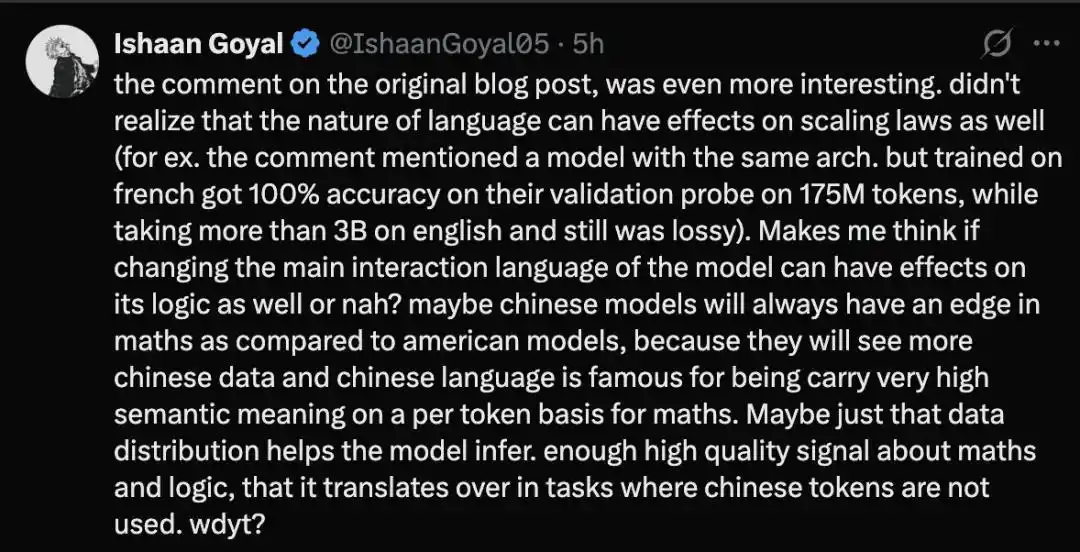
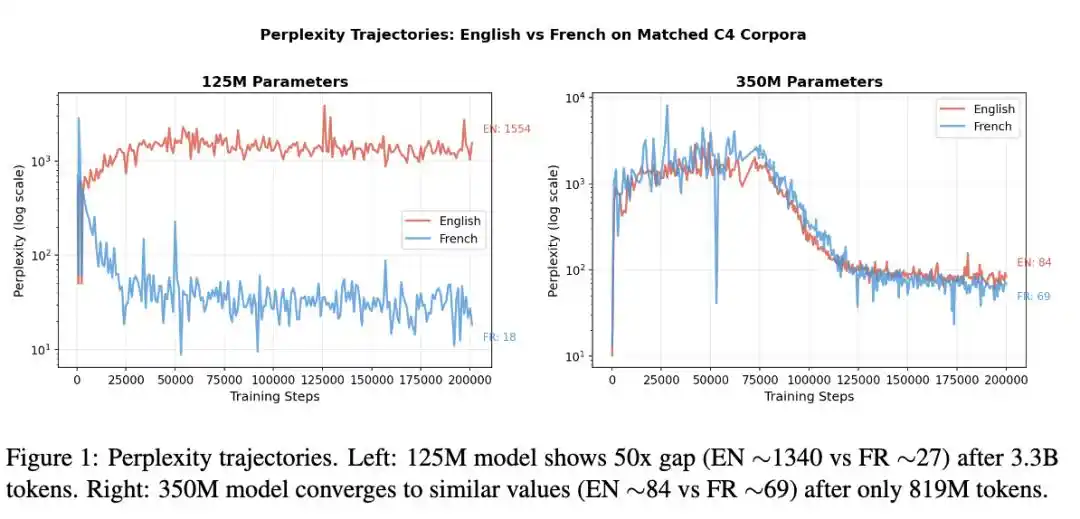
He conducted a counterintuitive experiment: training models with the same architecture and compute power.

The result showed that a French model achieved a certain grammatical capability with efficiency 50 to 100 times higher than an English model.
Why? Because English is a "morphologically poor" language.

It relies too much on distributional patterns, requiring models to guess word meanings from massive data; whereas languages like French or Chinese, which are morphologically rich or structurally strict, carry a lot of explicit information in the words themselves.
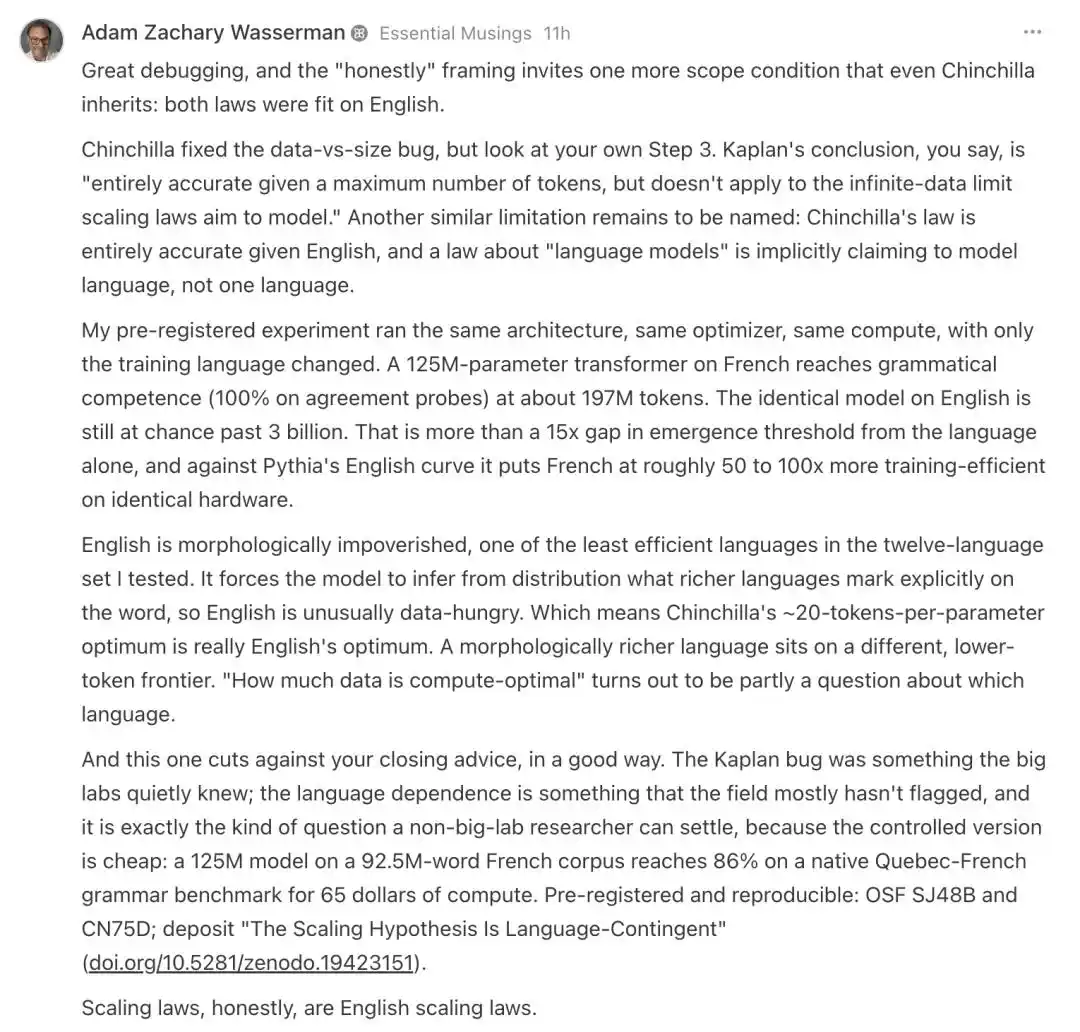
This means all our current compute allocation plans are based on the most "data-hungry," least efficient language.

When you think you're exploring the physical laws of "general intelligence," you're actually just measuring "how wasteful English is with compute."

It's like trying to establish nutritional standards for all living creatures in the universe by studying a pig's appetite—this is not just bias, but a cognitive limitation.

We could have achieved stronger performance with smaller models and more high-quality data.

We could have saved tens of thousands of H100 runtime hours worth of electricity and heat.

We could have entered the "Efficient AI" era two years earlier.

References:

https://www.completeskeptic.com/p/scaling-laws-honestly

https://lilianweng.github.io/posts/2026-06-24-scaling-laws/

This article comes from the WeChat public account "New Zhiyuan," author: ASI Apocalypse, editor: David


Trending Cryptos

Related Questions

QWhat is the main claim made by Diogo Almeida in his blog post regarding OpenAI's original scaling law paper?

ADiogo Almeida claims that the original scaling law paper from OpenAI was fundamentally wrong due to a bug. This bug, involving the use of a fixed token budget and a cosine learning rate decay for all model sizes, allegedly led to the incorrect conclusion that model parameters should be prioritized over data, resulting in the industry wasting vast computational resources on overtrained and oversized models like GPT-3.

QAccording to the article, how did DeepMind's Chinchilla paper challenge OpenAI's original scaling law findings?

ADeepMind's Chinchilla paper challenged OpenAI's findings by demonstrating that model parameters and training data should be scaled up roughly equally for optimal performance. It showed that a 70-billion parameter model trained on 1.4 trillion tokens outperformed a much larger 280-billion parameter model trained on only 300 billion tokens, suggesting that OpenAI's guidance led to inefficient, 'overweight' models.

QWhat were the three key methodological issues the article identifies in OpenAI's original scaling law research?

AThe article identifies three key issues: 1) 'Imprisoning Data' - Using a fixed token budget (~130B tokens) for all model sizes, starving larger models. 2) 'Deceptive LR Decay' - Using cosine learning rate decay, which artificially flattens the loss curve, creating a false impression of performance saturation. 3) 'Authoritative Arrogance' - Presenting a conclusion that was only valid under their limited experimental conditions (fixed token budget) as a universal law for an ideal world with infinite data.

QWhat broader implication about language and AI efficiency does researcher Adam Zachary Wasserman's experiment suggest?

AAdam Zachary Wasserman's experiment suggests that current scaling laws are effectively 'English Scaling Laws.' He found that models trained on French achieve certain grammatical capabilities 50 to 100 times more efficiently than those trained on English. This implies that English, being a morphologically poor language, is exceptionally data-inefficient. Therefore, our entire computational allocation strategy might be biased and inefficient, based on studying one of the most computationally wasteful languages.

QWhat is the ultimate consequence of the bug in the scaling law, as described in the article?

AThe ultimate consequence is that the global AI industry, guided by the flawed scaling law, wasted years of research, development, and trillions of FLOPs of computational power on training oversized and undertrained models. This represents a massive misallocation of稀缺的算力, potentially delaying progress towards more efficient AI and AGI by years, as resources were not optimally directed towards scaling both model size and data volume in balance.

Related Reads

DeepMind's Classic Masterpiece Crowned Again, ICML 2026 Awards Announced

ICML 2026 has announced its annual awards, with diffusion models and AI safety ethics taking center stage. The Outstanding Paper Award was shared by two diffusion model studies. One challenges a core assumption of diffusion language models (DLMs), arguing that their touted "arbitrary order generation" is a "flexibility trap" that harms performance. The other provides a high-accuracy sampling method, pushing the technical ceiling for diffusion models and log-concave distributions. A position paper winning the Outstanding Award raises a critical ethical concern: AI alignment research is unintentionally building a "censor's toolkit," where safety tools like RLHF can be repurposed for content control. Several papers received Honorable Mentions, spanning key areas: mapping where honesty emerges in RLHF-trained models, motion attribution in video generation, quantifying how much language models memorize, analyzing diffusion model consistency via random matrix theory, and providing a mathematical proof for the "grokking" phenomenon in a simple model. The Test of Time Award was given to DeepMind's 2016 seminal work "Asynchronous Methods for Deep Reinforcement Learning," recognizing the enduring impact of the A3C algorithm. Overall, the awards signal a shift in AI research from rapid expansion to deeper scrutiny—validating diffusion models as a major architectural contender while prompting serious ethical reflection within the safety community.

marsbit14m ago

DeepMind's Classic Masterpiece Crowned Again, ICML 2026 Awards Announced

marsbit14m ago

ARK's Massive Buying Spree in Crypto-Linked Stocks: Lower Risk, or Double the Pressure?

ARK Invest, led by Cathie Wood, significantly increased its holdings in crypto-related public stocks in June, purchasing $77 million worth of shares in Coinbase, Circle, and Bullish during Bitcoin's worst monthly performance in four years. The investment thesis is that these stocks offer regulated exposure to the crypto cycle without direct Bitcoin ownership. However, data analysis reveals significant downsides: these stocks exhibit nearly double the volatility of Bitcoin (68%-90% vs. 37.6% 30-day annualized volatility) and carry substantial company-specific risks like earnings, competition, and equity dilution, which account for much of their price movement. Only MicroStrategy closely tracks Bitcoin, acting as a leveraged proxy. Coinbase shows moderate correlation, while Circle and Robinhood have low correlation, being more influenced by stablecoin competition and diversified brokerage operations, respectively. Mining companies like RIOT and MARA have surged due to AI-related ventures, decoupling from Bitcoin's price. The case of Strategy highlights additional equity-structure risks, such as potential value erosion when its market value falls below its net asset value. Ultimately, investing in crypto stocks often means accepting amplified Bitcoin volatility or layering on unrelated business risks, rather than obtaining a safer alternative to direct cryptocurrency ownership.

Foresight News18m ago

ARK's Massive Buying Spree in Crypto-Linked Stocks: Lower Risk, or Double the Pressure?

Foresight News18m ago

Tsinghua University's Special Award Winner, Gu Yuxian, Joins DeepSeek

Tsinghua University's prestigious Graduate Special Scholarship recipient and 2021 Ph.D. candidate, Yuxian Gu, has officially joined DeepSeek. This news coincides with DeepSeek's major recruitment drive and the imminent launch of DeepSeek V4, on whose research paper Gu is listed as an author. A doctoral student in the Conversational AI group under Professor Minlie Huang at Tsinghua, Gu's research focuses on enhancing efficiency throughout the entire lifecycle of large language models. His key contributions span three areas: innovative methods for pre-training data selection (e.g., PDS), advanced knowledge distillation techniques for model compression (notably MiniLLM), and the development of efficient model architectures like Jet-Nemotron. His work has gained significant recognition, with nearly 5,000 citations on Google Scholar. Key publications include the highly cited surveys and papers on pre-trained models and the MiniLLM distillation method. As first author, he has presented at top-tier AI conferences including NeurIPS, ICLR, and ACL. One of his notable achievements is the Jet-Nemotron architecture, which combines Post-Neural Architecture Search (PostNAS) and a novel linear attention module called JetBlock. This model series demonstrates state-of-the-art performance rivaling larger models while achieving substantial efficiency gains in inference. Gu's expertise in creating powerful yet efficient AI systems aligns with industry needs, as evidenced by the adoption of his MiniLLM method by leading tech companies. His move to DeepSeek is anticipated to contribute further advancements in the field.

marsbit43m ago

Tsinghua University's Special Award Winner, Gu Yuxian, Joins DeepSeek

marsbit43m ago

Trading

Spot

Hot Articles

Discussions

Welcome to the HTX Community. Here, you can stay informed about the latest platform developments and gain access to professional market insights. Users' opinions on the price of S (S) are presented below.

活动图片