One Piece of Content Attracts 150 Million Views, Revealing the Monetization Code of the Super Individual Business

比推Published on 2026-01-19Last updated on 2026-01-19

Abstract

Dan Koe, a prominent creator in the "super individual" or one-person business space, gained massive attention with a viral post titled “How to fix your entire life in 1 day,” which reached 150 million views on X. Despite earning only $4,495 in platform revenue from the post, his actual income stems from a diversified business model that includes paid newsletters, books, and an AI tool called Eden. In 2024, he reported earning over $4 million annually. Koe’s content targets individuals seeking financial independence through personal branding and content creation. His success is built on years of consistent content output and a relatable narrative of failure and persistence. While his viral article served as a top-of-funnel audience builder, his real revenue comes from converting followers into paying customers through premium products. The article also discusses how platforms like X are incentivizing long-form content to compete with short-video platforms, offering financial rewards to boost creator engagement. However, the surge in AI-assisted content creation has led to widespread imitation of Koe’s style, though few achieve similar success due to the importance of trust, timing, and existing audience size. Ultimately, the "super individual" economy benefits a small number of established creators, while most followers remain consumers rather than successful practitioners.

Author: Curry, Deep Tide TechFlow

Original Title: 150 Million Views on a Single Post, Dan Koe and His Super Individual Business


What was the hottest article on X last week?

"How to fix your entire life in 1 day". Fix your entire life in one day.

Author Dan Koe, American, creates content about "super individuals", teaching people how to not work a 9-to-5 and support themselves by writing. A week after its release, this article's views had reached 150 million.
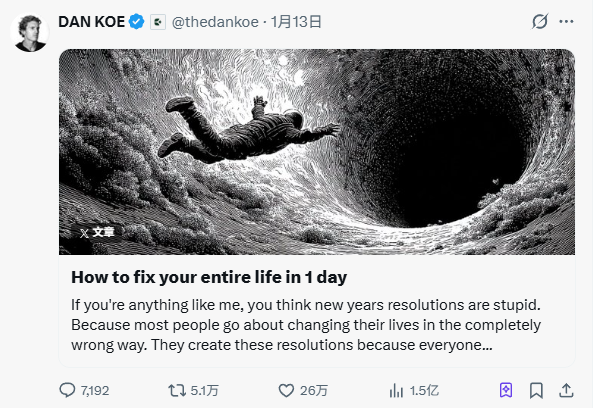
What does 150 million mean? X has just over 600 million monthly active users globally, meaning roughly one in four users has seen this article.

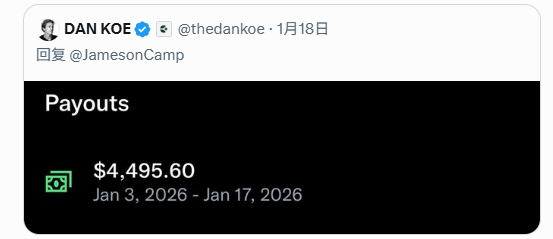
Some wonder how much money this can make. Dan Koe shared a screenshot of his earnings: in 14 days, the X platform shared $4,495 with him.

150 million views, $4,495. But Dan Koe actually earned over $4 million last year.

The money clearly doesn't come from platform revenue sharing.
You've definitely seen the term "super individual".

The general idea is, you don't need a job, you don't need a team, just put your ideas and creativity into content posted online to attract a group of people who identify with you, and then sell courses to them. In the US, this is called a One-Person Business.

Dan Koe is a top player in this field. 750k X followers, 1.2 million YouTube subscribers, 170k email subscribers.

His story is also standard. Studied design in college, became a freelancer after graduation, tried e-commerce, lost money. Started writing on Twitter in 2019, no one read it, persisted for two years before gaining traction.

These experiences are part of the content itself. Failure, struggle, persistence, counterattack—you can see this narrative structure on any successful motivational blogger.

Li Xiaolai talked about it, Luo Zhenyu talked about it, Fan Deng talked about it.

Americans package it as Philosophy and Productivity, Chinese package it as "cognitive upgrade", the skeleton is the same.

How does Dan Koe make money?

Open his official website, you can see several types of products: paid newsletter subscriptions, two books ("The Art of Focus" and "Purpose & Profit"), and an AI tool he co-founded called Eden.
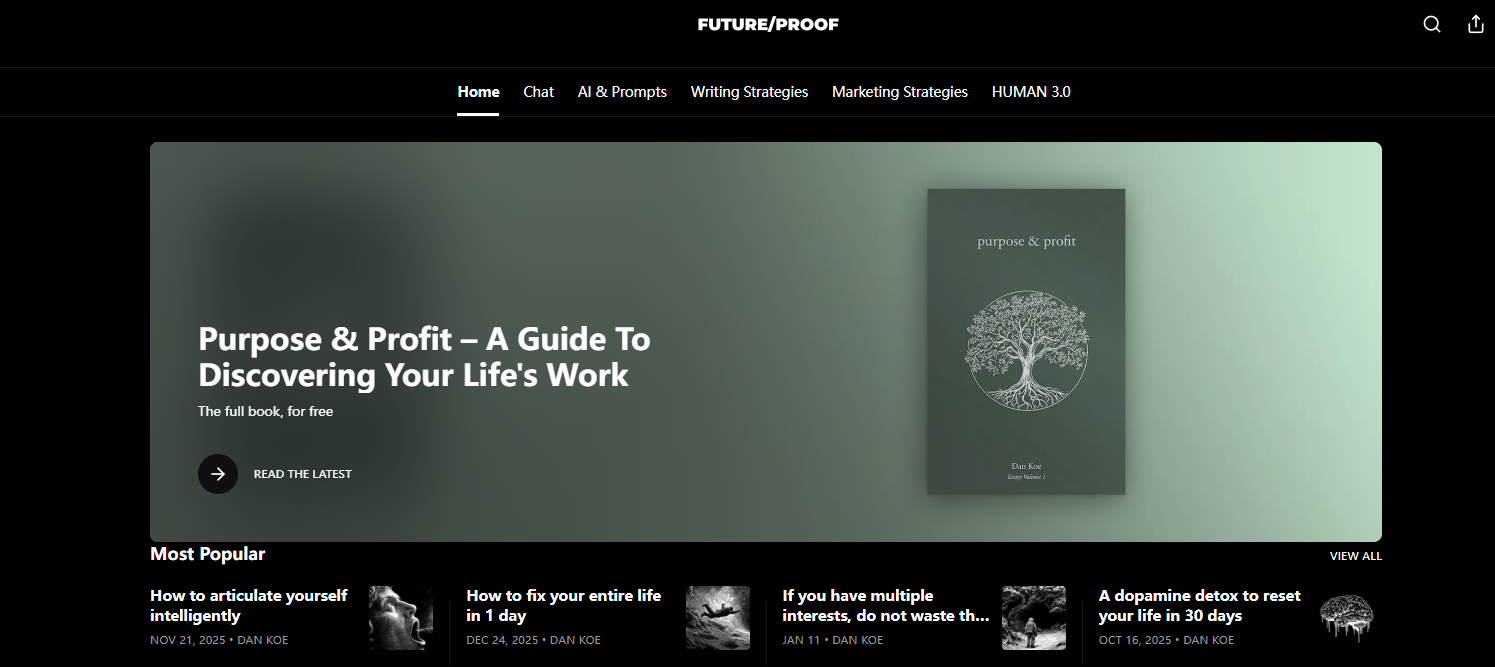
He used to sell writing courses and membership communities, which are no longer visible on the official website, maybe taken down, or merged into the paid subscriptions.

I didn't find official pricing data, but the logic of these products is similar:

Free content filters out people willing to pay, low-priced products filter out people willing to pay more.

How much does he earn? In 2023 he posted on Twitter saying his income that year was $2.5 million. In a 2024 interview with the subscription software beehiiv, Dan also revealed earning over $4 million annually.

But推算 from his follower size, it's not离谱. With nearly 200k email subscribers and millions of YouTube fans,假设 5% have bought paid products, that's nearly fifty thousand paying users.

So what is that 150 million views to him?

The traffic entry point at the top of the funnel. The $4,495 platform share on X is pocket change, more importantly it increases his brand awareness and spread, the real money is with those willing to pay later.

You might ask, who is buying these things?

The answer is definitely people who want to become the next Dan Koe.

The goals of students taking these courses are basically "build a personal brand", "monetize self-media", "escape the 9-to-5". What they are paying to learn is the very thing Dan Koe is doing.

For this model to work, there is one prerequisite: there are always new people wanting to enter the field.

Just like gym memberships always surge at the beginning of the year, the "super individual"赛道 always has people who believe they can become the next top player. Dan Koe published that article on January 12th,刚好是外国人新年决心最旺盛的时候.

The title is "Fix your entire life in one day", what do you think people clicking on it are thinking?

At the same time, X is also placing its bets.

On January 16th, a few days after Dan Koe's article went viral, X announced a new policy: the creator revenue pool doubled, increased weight for long-form articles, and an additional $1 million reward for the best performing original articles.
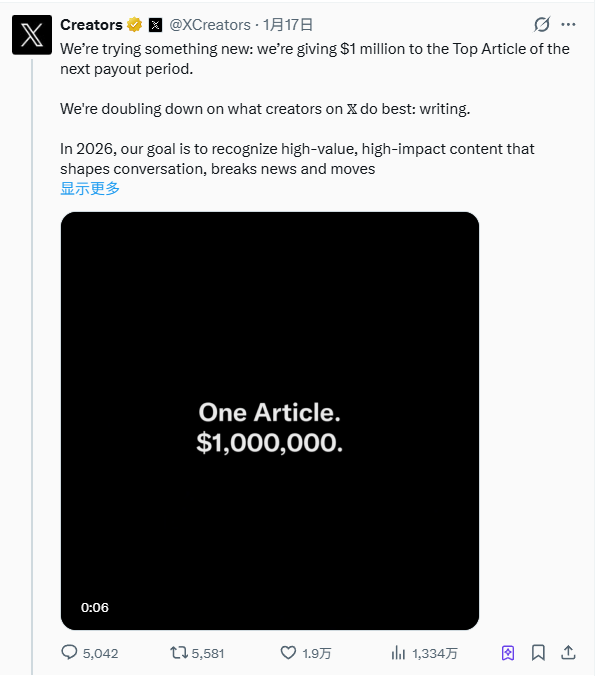
What Musk wants to do is obvious. TikTok has cut everyone's attention into 15-second fragments, X wants to go the opposite way, using long-form content to retain users. Dan Koe wrote a comment大意是短视频刷得太狠了,现在互联网有机会往回摆一摆.

X loves to hear that.

But what can $1 million buy?

Open X and search, there are already a lot of imitators. Various AI skill tutorials and inspirational鸡汤 articles are emerging, like "How to change your life in 2026", "The one skill you need", "Why most people will never succeed"...

The structure is the same, the image style is the same as Dan's viral post, even the "I'm here to tell you the truth" tone is the same.

This style of writing has even become a meme,引得大家争相模仿和尝试.
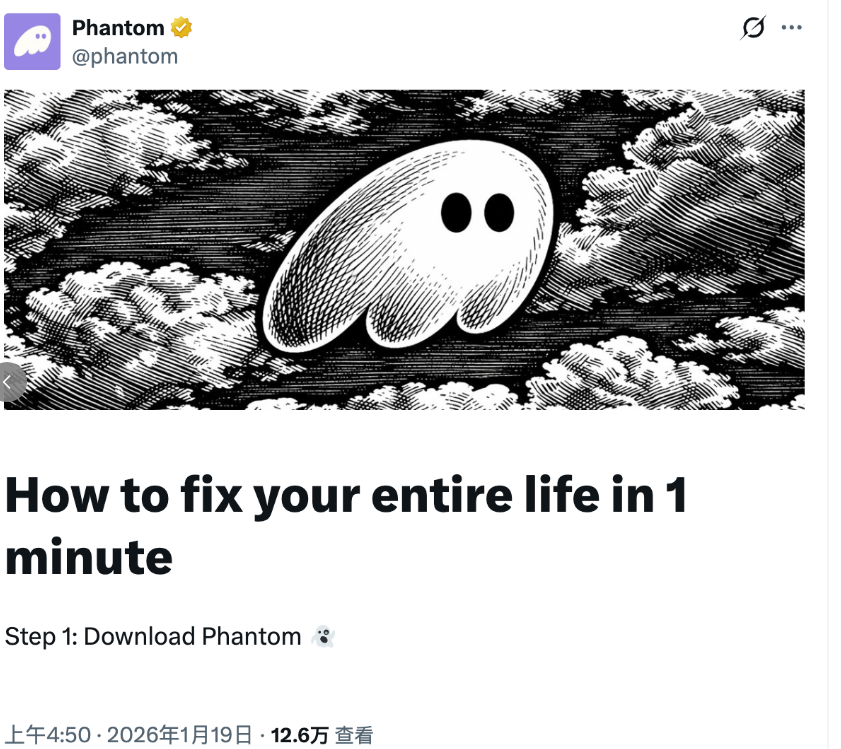
It's not really strange. Dan Koe himself said he uses AI to assist writing, the method is to have AI interview himself, extract ideas, and then format them into a high-spread content structure.

Anyone can learn this method. ChatGPT can generate a "life-changing" long article in ten minutes, grammatically correct, structurally complete,还能自动加上几个心理学术语显得有深度.

But it's Dan Koe who got popular, not the imitators.

Why?

One explanation is that trust takes time. Dan Koe has written for six years, has real failure experiences, has a traceable growth trajectory. AI can imitate his sentence patterns, but cannot复制 these.

Another explanation is, the super individual赛道 is too crowded.

When everyone is teaching "how to become a super individual", whether talking about AI tools, guide to getting started, life fixes or business tips, attention concentrates towards the top. Those who enter early eat meat, those who come later drink soup, and those even later get neither.

Another explanation is luck. Dan Koe hit the window of X adjusting its algorithm, the New Year emotional cycle, and the policy tailwind of Musk wanting to push long-form content. Three things叠加在一起, the 150 million appeared.

Change the person, change the time, the same quality article, might only get 1.5 million views.

An interesting point is, Dan Koe's article was published a few days too early, so it doesn't qualify for X's $1 million content reward selection.

But this doesn't matter to him. His business model doesn't rely on platform revenue sharing, the 150 million views have completed their mission, letting more people know the name Dan Koe, letting more people pour into the top of the funnel.

So who will X's $1 million eventually go to? According to the rules, it must be original long-form articles, at least 1000 words, calculated based on impressions on paying users' homepages.

Translation: you not only have to write well, but you also need to already have a large number of fans.

So most likely it will still be taken by the top players.

This is the structure of this game. The platform needs top creators to prove "long-form content has a future", top creators need platform traffic to feed their funnel, AI allows everyone to mass-produce "life-changing" content, but only a very few can actually make money from this.

What is the role of most people?

Readers.

After reading an article "Fix your entire life in one day", feel inspired to become a super individual, then share, like, bookmark, and then continue scrolling to the next one.


Twitter:https://twitter.com/BitpushNewsCN

Bitpush TG Discussion Group:https://t.me/BitPushCommunity

Bitpush TG Subscription: https://t.me/bitpush

Original link:https://www.bitpush.news/articles/7604151

Trending Cryptos

Related Questions

QWhat was the title of Dan Koe's viral article that garnered 150 million views?

AThe title was 'How to fix your entire life in 1 day'.

QHow much revenue did Dan Koe report from X platform for his viral article, and what was his total annual income in 2024?

AHe reported $4,495 in platform revenue from X for the article, and his total annual income in 2024 was over $4 million.

QWhat is the core business model of a 'super individual' or 'one-person business' as described in the article?

AThe core business model involves creating free content to build an audience and personal brand, then monetizing through selling paid products like newsletters, books, or tools to that audience, rather than relying on platform ad shares.

QWhat key factor does the article suggest contributed to the massive success of Dan Koe's article beyond just the content quality?

AThe article suggests that timing played a crucial role, as it coincided with New Year's resolution periods, X's algorithm changes favoring long-form content, and policy shifts by the platform under Musk's leadership.

QAccording to the article, what role do most people play in the 'super individual' ecosystem, despite many aspiring to become one?

AMost people end up as readers or consumers of the content—clicking, sharing, and engaging—but do not successfully monetize their own efforts, effectively serving as the audience funnel for the top creators.

Related Reads

a16z: From Companies to DAOs, DUNA May Become the Next Generation Organizational Form

This article, "From Companies to DAOs: How DUNA Could Become the Next Organizational Form," traces the 500-year evolution of business collaboration. It begins with medieval structures like the *commenda* and Florentine *compagnia*, which exposed partners to personal risk. The modern corporation, exemplified by the Dutch East India Company (VOC), was a revolutionary leap, enabling large-scale, capital-intensive ventures by offering limited liability and reducing coordination costs. However, corporations introduced new challenges like principal-agent problems and bureaucratic overhead. The piece argues that software and internet-native protocols are now reducing these traditional overheads. Decentralized Autonomous Organizations (DAOs) emerged as a new model for coordination without centralized management. Yet, DAOs face a significant legal vacuum: they lack legal recognition, leaving members exposed to unlimited personal liability, and their tokens are vulnerable to being classified as securities under unclear regulations (e.g., the Howey Test). This has forced projects into suboptimal workarounds like offshore foundations. The article identifies the Decentralized Unincorporated Nonprofit Association (DUNA) as a potential solution. Recently legalized in states like Wyoming, the DUNA provides a legal wrapper for decentralized networks. It grants key protections—legal personality, limited liability, and perpetual existence—to a group without imposing a traditional hierarchical management structure. This allows token-holder communities to govern, hold assets, and contract as a single legal entity, aligning with their decentralized nature. While DUNA doesn't solve all governance challenges or magically resolve securities law questions, it represents a crucial step. It fills the legal recognition gap, offering a native legal form for internet-scale, decentralized collaboration and extending the separation of personal risk from organizational venture into a new domain.

marsbit28m ago

a16z: From Companies to DAOs, DUNA May Become the Next Generation Organizational Form

marsbit28m ago

2026 Mid-Year Report On-Chain RWA: Tokenized Stock Market Cap Doubles in a Year, But 90% of Rights Are Hollow Shells

The 2026 Mid-Year Report on On-Chain RWA highlights a significant growth in tokenized stock market capitalization, which nearly doubled from $951 million in March to $1.89 billion by July. However, the report reveals a fundamental contradiction in this "layer 2.5" ecosystem: products with the strongest legal foundation (like regulated U.S. infrastructure) lack liquidity and distribution, while freely tradable offshored wrapper products often lack substantive ownership rights. The increase is driven largely by a few products (SECZ, FGRS, STRCx) and platforms (Ondo, xStocks, Securitize collectively hold over 85% share). While distributed value across networks like Ethereum, Solana, and BNB Chain has grown, the market remains fragmented. Products referencing the same underlying asset (e.g., Apple stock) are distinct legal liabilities with different intermediaries and jurisdictional rules, offering varying degrees of legal claim. The report cautions that headline numbers are misleading, as they reflect changes in distributed token value—driven by issuance, conversions, and price movements—not pure investor inflows. True "canonical shares" with legal ownership, wide wallet distribution, institutional liquidity, and independent on-chain price discovery do not yet exist at scale. Tokenized treasuries show stronger product-market fit, and ETFs may be easier to scale than single stocks. The core takeaway is a trade-off: legal certainty versus liquidity and composability.

marsbit1h ago

2026 Mid-Year Report On-Chain RWA: Tokenized Stock Market Cap Doubles in a Year, But 90% of Rights Are Hollow Shells

marsbit1h ago

Coldcard Hardware Wallet Hacked: 594 Bitcoin Withdrawn in 25 Minutes

The Coldcard hardware wallet has been compromised, with hackers stealing approximately 594.5 Bitcoin (~$40 million) from 500 addresses in just 25 minutes. The root cause was a critical software bug, undetected for five years, which disabled the device's secure chip for generating true random numbers. This led to the creation of private keys based on predictable data like the processor's serial number, drastically reducing cryptographic security. The attackers exploited this offline by brute-forcing possible seed phrases, finding active addresses on the public ledger, and signing transactions. Initially, Coinkite (Coldcard's maker) claimed only older models were at risk but later admitted all devices running the compromised firmware were vulnerable. CEO Rodolphe Novak (NVK) apologized but ruled out financial compensation for affected users. To secure funds, owners must urgently update their firmware to specific safe versions, generate a completely new seed phrase on the updated device, and transfer all assets to new addresses created with that new seed. While a BIP-39 passphrase can help, it does not replace this migration process. Other Coinkite products like TAPSIGNER were not affected. This incident underscores that even specialized hardware requires rigorous, independent code audits, especially for cryptographic functions. It parallels past failures, like a 2006 OpenSSL bug in Debian, and raises questions about whether automated code analysis can ever fully replace human scrutiny in critical security areas.

cryptonews.ru3h ago

Coldcard Hardware Wallet Hacked: 594 Bitcoin Withdrawn in 25 Minutes

cryptonews.ru3h ago

Trading

Spot

Hot Articles

How to Buy ONE

Welcome to HTX.com! We've made purchasing Harmony (ONE) simple and convenient. Follow our step-by-step guide to embark on your crypto journey.Step 1: Create Your HTX AccountUse your email or phone number to sign up for a free account on HTX. Experience a hassle-free registration journey and unlock all features.Get My AccountStep 2: Go to Buy Crypto and Choose Your Payment MethodCredit/Debit Card: Use your Visa or Mastercard to buy Harmony (ONE) instantly.Balance: Use funds from your HTX account balance to trade seamlessly.Third Parties: We've added popular payment methods such as Google Pay and Apple Pay to enhance convenience.P2P: Trade directly with other users on HTX.Over-the-Counter (OTC): We offer tailor-made services and competitive exchange rates for traders.Step 3: Store Your Harmony (ONE)After purchasing your Harmony (ONE), store it in your HTX account. Alternatively, you can send it elsewhere via blockchain transfer or use it to trade other cryptocurrencies.Step 4: Trade Harmony (ONE)Easily trade Harmony (ONE) on HTX's spot market. Simply access your account, select your trading pair, execute your trades, and monitor in real-time. We offer a user-friendly experience for both beginners and seasoned traders.

4.6k Total ViewsPublished 2024.03.29Updated 2026.06.02

How to Buy ONE

Discussions

Welcome to the HTX Community. Here, you can stay informed about the latest platform developments and gain access to professional market insights. Users' opinions on the price of ONE (ONE) are presented below.

活动图片