Native Privacy Features: Ethereum's Lifesaver?

marsbitPublished on 2026-05-29Last updated on 2026-05-29

Abstract

"The Native Privacy Function: Ethereum's Lifeline?" While Ethereum's ETH price struggles, privacy coins like Zcash (ZEC) are rallying, highlighting growing market demand for financial privacy. Ethereum's developers are now racing to implement native privacy features, seen as critical for its future. Currently, all Ethereum asset balances and transaction histories are fully public, deterring institutional adoption and eroding its core value as a settlement layer. Industry experts warn Ethereum must deliver usable privacy within 12 months or risk falling behind competitors like Solana and Tron, which are already gaining market share and revenue. Data shows a significant decline in holdings among mid-sized and large Ethereum wallets, adding pressure. A broader industry shift towards financial privacy is underway, driven by stablecoin adoption, on-chain applications, and sophisticated AI-powered tracking. Privacy is no longer a niche concern but a mainstream need for both individuals and businesses wanting confidential transactions. Ethereum's co-founder Vitalik Buterin is prioritizing privacy, with a roadmap focusing on three key areas: Account Abstraction (improving wallet programmability and obscuring patterns), FOCIL (to combat transaction censorship), and stealth address mechanisms to break linkability between transactions. Additionally, the Ethereum Foundation's Kohaku toolkit aims to solve pre-chain data leaks at the RPC level. For Ethereum, native privacy is crucial ...

Original author: Oluwapelumi Adejumo

Original compilation: Chopper, Foresight News

TL;DR

  • While the current ETH market is sluggish, privacy coins are defying the trend and strengthening, prompting Ethereum developers to expedite the implementation of native privacy features.
  • Ethereum's on-chain asset balances and transaction records are completely public, which not only deters institutional investors but also undermines its core competitiveness as the industry's default settlement layer.
  • Industry insiders state that Ethereum's privacy features must be launched within 12 months; otherwise, they will remain at the research stage, and user traffic and attention will continue to be captured by competitors.

As market funds gradually shift towards privacy-focused assets, coupled with issues like negative publicity and ambiguous development positioning, Ethereum is struggling to retain investor attention. In response, developers are working at full capacity to equip the world's largest smart contract public blockchain with native privacy capabilities.

Year-to-date, ETH price has fallen approximately 30%, recently trading around $2,000; in contrast, Zcash (ZEC) has achieved double-digit gains, creating a stark divergence in their price movements.

This market contrast has turned privacy protection from a long-term vision of the cypherpunk community into a mandatory product goal that Ethereum must deliver on schedule.

Currently, Ethereum still dominates stablecoin settlement, asset tokenization, decentralized finance (DeFi), and Layer-2 ecosystems. However, the completely public nature of on-chain data poses a major pain point for both retail users and institutions, as asset balances, counterparties, and transaction histories are publicly traceable in real-time.

Tom Dunleavy, Head of Venture at Varys Capital, is highly optimistic about Ethereum's privacy upgrade but emphasizes the need to accelerate progress: "I am extremely bullish on Ethereum's implementation of privacy features, but the entire solution must be launched within 12 months, otherwise it will lose all significance. Ethereum is now in a fierce product race, facing competitors with strong funding, execution capabilities, and industry resources that Ethereum currently lacks. Only by delivering on time can it avoid being left behind."

This warning comes as Ethereum's market position is already under pressure. Data from GSR Research shows that blockchain sector revenue is increasingly flowing to competitors like Solana, Tron, and Hyperliquid; the ETH/Bitcoin price ratio has also fallen to its lowest level since mid-2025.
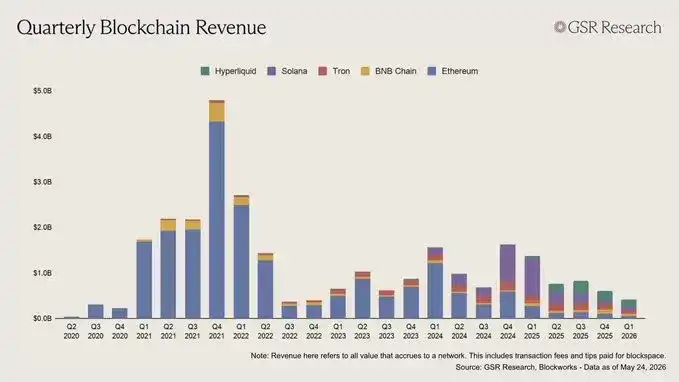
Blockchain Quarterly Revenue, Source: GSR Research

Data from CryptoQuant also reflects the crisis, showing that medium and small Ethereum holders are exiting on a large scale. Over the past three years, wallets holding between 100 and 1,000 ETH have seen their total holdings nearly halve, dropping from a peak of 16.2 million ETH in 2023 to about 8.75 million currently.

Large holders are also reducing their positions. Addresses holding 1,000 to 10,000 ETH, which fueled the 2024 ETH rally, have been gradually decreasing their holdings since late last year.
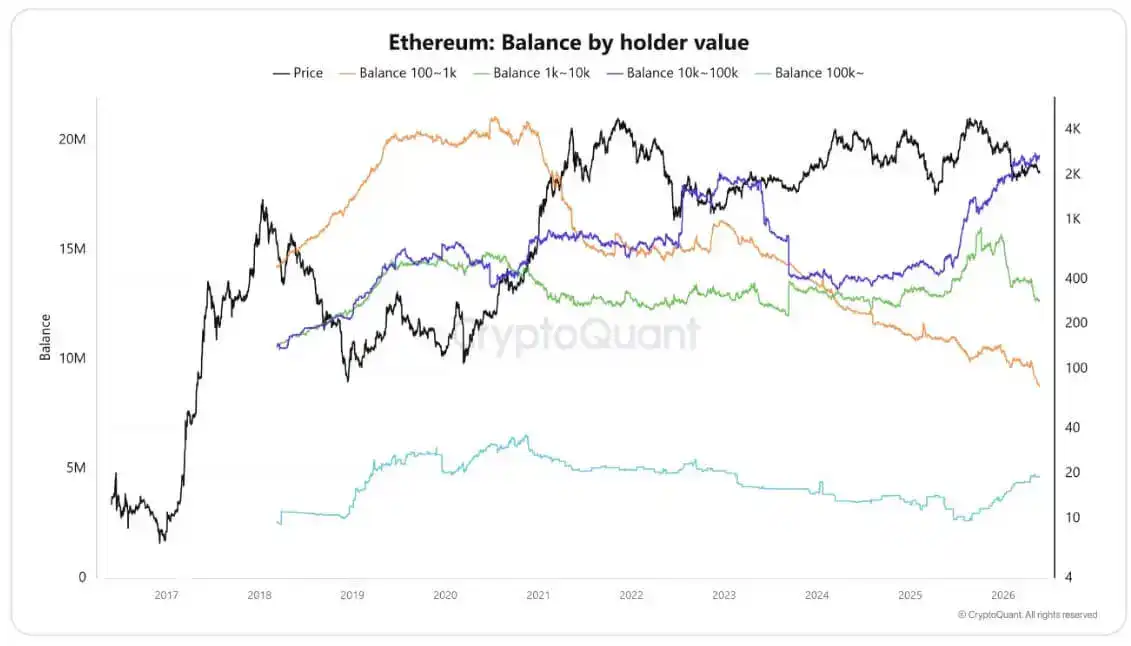
Ethereum Holder Balances

The capital outflow cannot be entirely attributed to the rising demand for privacy, but amidst increasing interest in privacy assets and investors actively seeking catalysts to boost ETH's price, the loss of holdings further intensifies the developmental pressure on Ethereum.

Privacy Has Become the New Main Theme in the Crypto Market

While Ethereum focuses on privacy features, a consensus is forming across the industry: financial privacy will dominate the next major crypto market cycle.

A recent Grayscale Research analysis points out that the digital asset industry is on the verge of a third wave of widespread focus on financial privacy.
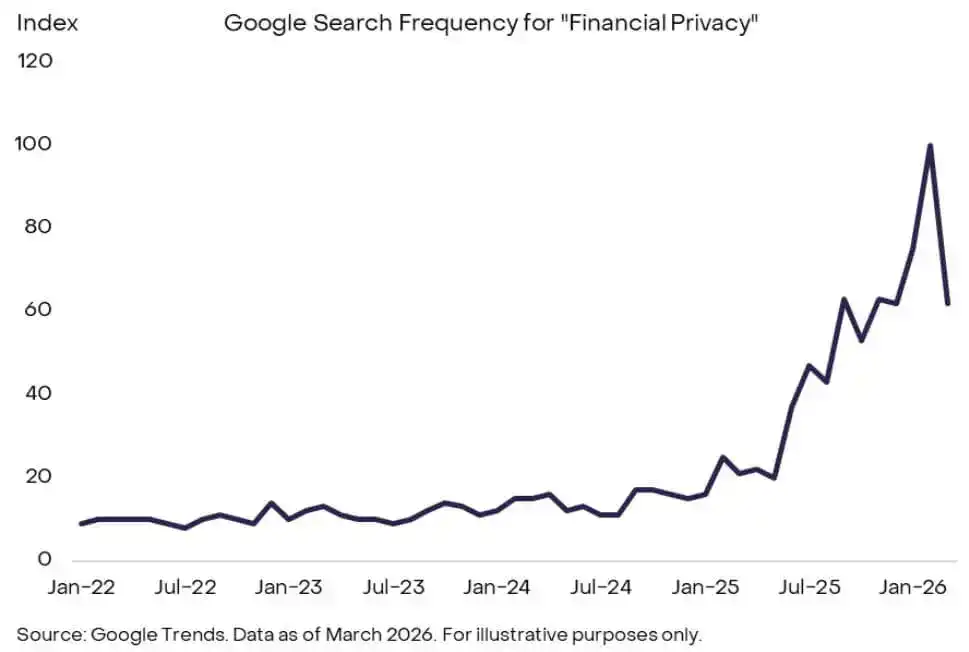
Search Volume for Financial Privacy on Google, Source: Grayscale

This trend is driven by the widespread adoption of stablecoins, the implementation of on-chain applications, and the rapid development of artificial intelligence technology. Grayscale warns that AI tools have given rise to more sophisticated financial tracking methods, while on traditional public blockchains, asset balances, counterparties, and transaction histories are permanently public.

The market's demand for privacy does not come solely from those seeking complete anonymity; it is also a normal desire from the general public and businesses to keep financial information confidential.

Ordinary users do not want their spending records made public; businesses need confidentiality for supplier payments, salary disbursements, and company fund flows; various institutions simply cannot accept having their wallet address structures analyzed in real-time.

However, implementing privacy features also requires weighing commercial trade-offs. Historical experience shows that strong privacy attributes often reduce asset liquidity and create obstacles for exchange listings, regulatory compliance, and wallet integration.

Despite these challenges, Barry Silbert, Chairman of Grayscale Investments, has stated that the era of privacy in the digital asset industry has officially arrived.
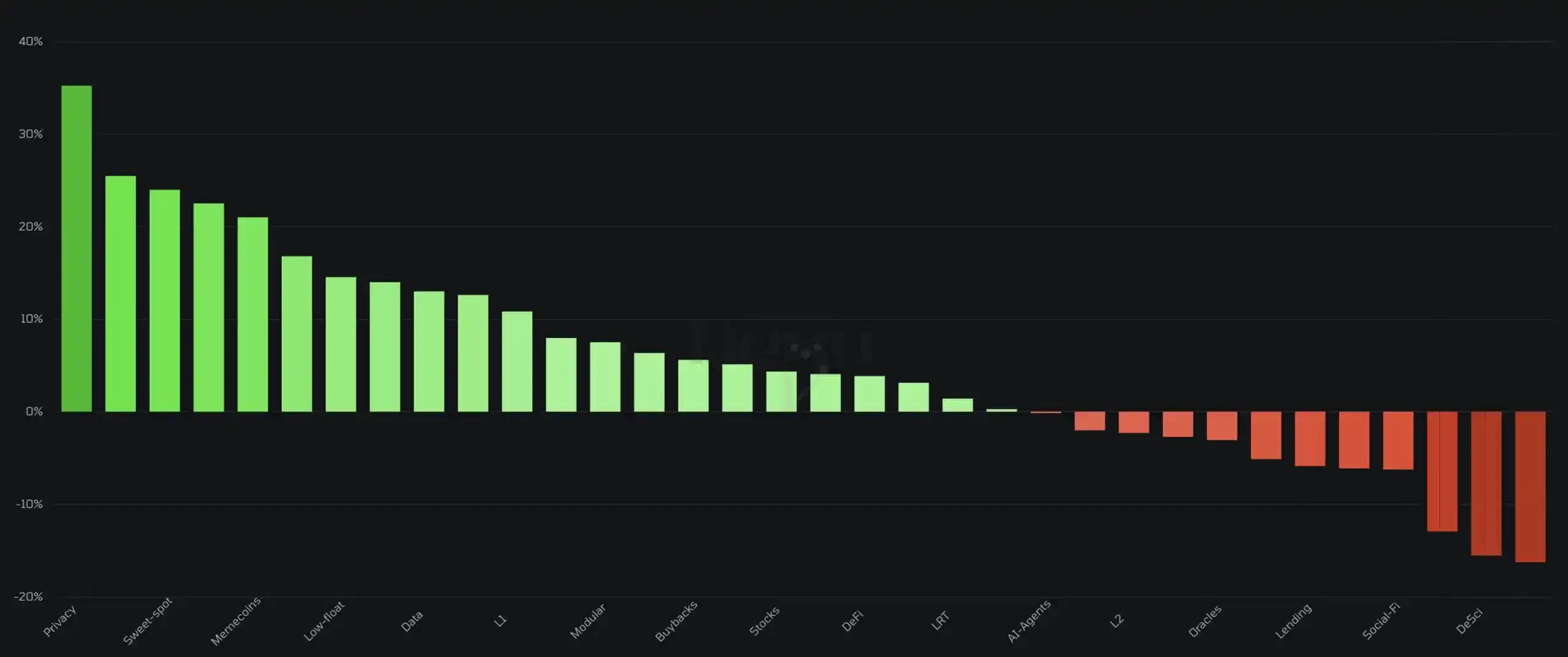
Privacy Coins Begin to Dominate the Crypto Industry

The shift in market focus is vividly reflected in price performance: over the past year, ZEC's market cap has skyrocketed over 900%, nearing $10 billion; Monero (XMR), long troubled by regulatory controversies, has also doubled in price.

Ethereum Co-Founder Advocates for Privacy Upgrade

Recently, Ethereum co-founder Vitalik Buterin has once again placed privacy development at the top of the technical agenda. After years of research and discussion, he is urging developers to accelerate the realization of the privacy vision pursued by cypherpunks.

Ethereum's short-term privacy roadmap primarily focuses on three directions: Account Abstraction and FOCIL, Key Randomization, and Access Layer Privacy Overhaul. The entire set of proposals aims to enhance the censorship resistance of on-chain transactions, sever address correlations, and reduce reliance on trusted third-party infrastructure.

FOCIL, or Forcefully Opened Censorship-Inclusion List, aims to address transaction censorship issues.

Currently, transactions enter a public mempool before being included in a block, allowing block builders and intermediaries to view pending transactions, enabling interception, front-running, and data monitoring. The FOCIL mechanism allows a committee of validators to propose a transaction list, which block builders are forced to include. Blocks that violate this rule are rejected by the network, reducing the risk of privacy-centric transactions being censored at the source.

Account Abstraction addresses another flaw in Ethereum's current design, where most users still rely on externally owned accounts controlled by a single private key. Account Abstraction makes accounts behave more like programmable smart contracts, supporting social recovery, multi-signature authorization, third-party fee payment, and other features.

From a privacy perspective, this feature can optimize wallet behavior patterns, preventing all activities from being exposed through a single account, and also facilitates third-party fee payment.

Key Randomization aims to solve a narrower but crucial metadata leakage problem. Ethereum relies on a nonce to prevent transaction replay; this value increments sequentially, allowing external observers to link seemingly unrelated transactions and trace them back to the same account. The new proposal splits the account counter into multiple independent domains, with different types of transactions using different key randomizations, significantly increasing the difficulty of address tracing.

Additionally, the Ethereum Foundation has launched the Kohaku open-source toolkit, which is the most ambitious part of this privacy upgrade. This project is not solely focused on transaction privacy but also addresses the data leakage issue at the access layer before transactions are submitted to the chain.

Even if transactions themselves are made private, when users query on-chain balances, call contracts, or initiate transactions, their wallets still leak information like IP addresses and wallet identities to the Remote Procedure Call (RPC) node. Kohaku provides wallet developers with privacy and security components that can be directly integrated into existing products. Its features cover private transactions, secure key management, private on-chain queries, and include a reference wallet. The toolkit can also interface with Ethereum's existing privacy protocol Railgun and the still-in-development Privacy Pools. Its goal is to allow users to experience private transactions and private DeFi services without switching their commonly used wallets or using niche tools.

Ethereum researcher soispoke.eth stated that if the aforementioned proposals are implemented simultaneously, Ethereum could achieve native, trustless, censorship-resistant private transactions as early as next year.

Why Privacy Features Are Crucial for Ethereum

Crypto lawyer Gabriel Shapiro believes that the privacy upgrade will help Ethereum compete for the institutional asset tokenization market. Businesses have strong confidentiality needs in scenarios like security tokenization, fund management, and DeFi interactions.

This also touches upon Ethereum's core investment thesis. For a long time, Ethereum's advantage has been its comprehensive ecosystem, covering stablecoins, lending, decentralized exchanges, asset tokenization, Layer-2 networks, and various development infrastructures. However, if all financial interactions remain completely public by default, relying solely on ecosystem breadth will be insufficient to sustain its position.

For institutions, settlement without privacy protection is inherently risky: companies do not want competitors to understand their supply chain dealings; asset managers do not want their trading paths tracked; banks cannot let their clients' tokenized security activities be exposed on a public chain.

Ethereum possesses the underlying infrastructure to serve institutional clients, but the market demands a delivered product, not just theoretical research.

This confirms Dunleavy's 12-month countdown warning. Zcash has long established a clear privacy narrative, and Monero remains a mainstream privacy coin despite regulatory pressure. Meanwhile, competitors like Solana, Tron, and Hyperliquid continue to capture market attention, and Bitcoin still firmly holds institutional capital preference.

Currently, the scale of tokenized assets on Ethereum exceeds $350 billion, and its application ecosystem remains the deepest in the industry, but this leading advantage is not permanently secure.

If Ethereum can launch a mature, usable privacy product within a year, it will further solidify its position as settlement infrastructure for both individuals and institutions. Conversely, if the privacy upgrade remains stuck at the technical planning stage, market funds will continue to flow towards projects that have made privacy their core positioning from the outset.


Trending Cryptos

Related Questions

QAccording to the article, why is there an urgent need for Ethereum to implement native privacy features within the next 12 months?

AThere is an urgent need because Ethereum is facing intense competition from other blockchains with strong execution and resources. If privacy features are not delivered within 12 months, the momentum and relevance will shift to competitors who already offer or prioritize privacy, turning Ethereum's efforts into mere technical research without real-world impact.

QWhat are the three main short-term privacy roadmap directions mentioned for Ethereum's development?

AThe three main short-term privacy roadmap directions are: 1) Account abstraction and FOCIL (Enforced Branch Selection Inclusion Lists), 2) Key nonce separation, and 3) Improvements to the access layer for privacy.

QWhat major problem does the FOCIL mechanism aim to solve for Ethereum transactions?

AThe FOCIL mechanism aims to solve the problem of transaction censorship. It allows a committee of validators to propose lists of transactions that block builders must include, preventing them from intercepting, front-running, or monitoring transactions before they are confirmed on-chain.

QHow does the article characterize the current performance of privacy-focused cryptocurrencies like Zcash (ZEC) compared to Ethereum (ETH)?

AThe article notes a stark divergence in performance. While ETH's price has fallen by approximately 30% year-to-date, Zcash (ZEC) has seen double-digit gains, with its market capitalization soaring over 900% in the past year, indicating strong market interest in the privacy asset category.

QWhat is the primary goal of the Ethereum Foundation's Kohaku toolkit, as described in the article?

AThe primary goal of the Kohaku toolkit is to solve access-layer data leakage problems. It provides wallet developers with components to integrate privacy and security features directly into existing products, enabling private transactions, key management, and private on-chain queries without requiring users to switch to niche or specialized wallets.

Related Reads

After Three Consecutive Quarters of Decline, Can the Crypto Market Find a Window for Stabilization in Q3?

The cryptocurrency market has just concluded its worst-performing quarter since 2022, with total capitalization dropping 12.6% to $2.1 trillion. All core metrics indicate capital is leaving the sector, not just rotating within it. Bitcoin fell 14.2% and Ethereum dropped 25.4% in Q2, breaking their previous correlation with US tech stocks. A key driver is the reversal in US spot Bitcoin ETF flows, which saw a net outflow of approximately $4.67 billion in Q2, including a record monthly outflow near $4.5 billion in June. While recent data suggests long-term holders are accumulating again, sustained ETF outflows mean continued selling pressure. Market focus is now singularly on the Federal Reserve. The upcoming July FOMC meeting is seen as the most critical event for Q3. A dovish signal could support Bitcoin reclaiming a $68,000-$84,000 range, while a hawkish stance might establish a new trading band around $50,000-$56,000. Additionally, regulatory uncertainty persists, with the progress of the crucial *CLARITY Act* stalling in the Senate, reducing its perceived 2026 passage probability to 40-45%. Despite the broad downturn, a few sectors showed growth. Prediction markets saw nominal volume surge 48.7% year-over-year to $113.8 billion, and tokenized collectibles transaction volume rose 143% quarterly to $1.4 billion. The Real-World Asset (RWA) tokenization sector also continued steady growth, now representing ~$28.1 billion in on-chain value. The market's foundation for an extreme crash appears limited, with Bitcoin price hovering near its 200-week moving average. However, the trading paradigm has shifted from narrative-driven speculation to decisions based on price action, policy developments, and interest rate expectations, making a broad sentiment-driven rally unlikely in the near term.

marsbit2h ago

After Three Consecutive Quarters of Decline, Can the Crypto Market Find a Window for Stabilization in Q3?

marsbit2h ago

BIT Trading Moment: BTC Still Suppressed by Weekly 200 EMA, Rejection May Restart Decline; Storage and Semiconductors that Surged Last Night Begin Falling in Evening Trading

**Crypto & Stock Market Wrap: Bitcoin Tests Resistance, Stocks Retreat After AI Surge** Bitcoin consolidates around $66,000, facing key resistance near $68,000—an area seen as a major psychological and technical hurdle where previous rallies have failed. Analysts note the cryptocurrency is caught between its 200-week moving average (~$63,333) and 200-week EMA (~$68,328). A clear break above $68k is needed to signal a stronger bullish trend, while a rejection could lead to a retest of $63k support. Market sentiment remains cautious, with low futures open interest pointing to a low-liquidity rebound rather than a full bull market. Bitcoin spot ETFs saw another $203 million inflow. US stock futures pointed lower after a strong Tuesday session led by a massive rebound in semiconductors and memory stocks. The rally was fueled by renewed optimism about AI-driven hardware demand, with Micron, SanDisk, and SK Hynix surging. However, those gains reversed in pre-market trading. Super Micro Computer (SMCI) soared over 20% after hours on strong guidance and a record backlog. Other standouts included Rocket Lab and nuclear energy plays Oklo and X-Energy. Rising oil prices (Brent above $91) and climbing Treasury yields (10-year near 4.64%), however, are reigniting inflation concerns and acting as a headwind for equities. In Asia, markets were mixed. South Korea's KOSPI pared early gains to close slightly higher as semiconductor stocks like SK Hynix gave back initial surges. Japan's Nikkei edged lower as the yen hit a fresh 38-year low against the dollar, raising fears of potential market intervention. Key events to watch include the Samsung Galaxy launch, AMD's AI event, and a slew of major tech earnings from Alphabet, Tesla, and IBM after the close on Wednesday, followed by the ECB meeting and Intel's earnings on Thursday.

marsbit2h ago

BIT Trading Moment: BTC Still Suppressed by Weekly 200 EMA, Rejection May Restart Decline; Storage and Semiconductors that Surged Last Night Begin Falling in Evening Trading

marsbit2h ago

Former CFTC Chairman, Circle President Tarbert: Preaching Long-Termism While Cashing Out $30 Million Himself

Former CFTC Chairman and Circle President Heath Tarbert has consistently advocated for a long-term vision in public, urging patience from investors as Circle’s stock price has fallen significantly from its peak. However, it has been revealed that since Circle’s IPO, Tarbert has continuously sold his CRCL shares through pre-arranged trading plans, cashing out approximately $30 million, without making any public market purchases. This contrast between his public messaging and personal actions has drawn criticism. Tarbert joined Circle in July 2023 as Chief Legal Officer, leveraging his regulatory experience to help guide the company through its IPO and expansion. Despite promoting stablecoins as long-term infrastructure, he established a 10b5-1 trading plan just before Circle went public, leading to substantial stock sales over the following year. In March 2026, he initiated another plan to sell more shares. His career trajectory highlights a pattern of moving between high-level regulatory roles and influential positions in the financial sector. After resigning as CFTC Chairman in early 2021, he joined Citadel Securities as Chief Legal Officer just 27 days later, during a period of intense regulatory scrutiny for the firm. He later joined Circle, aiding its efforts to navigate regulatory challenges for its public listing. While Tarbert's expertise in policy and compliance is valuable to companies like Circle, his actions—advocating long-term confidence while personally divesting—raise questions about the alignment between his public statements and his private financial decisions, leaving investors who followed his advice to bear the market risks.

marsbit2h ago

Former CFTC Chairman, Circle President Tarbert: Preaching Long-Termism While Cashing Out $30 Million Himself

marsbit2h ago

Gate Research Institute: The 'Wall Street-ization' Wave of Crypto Financial Products – Competition or Integration?

The article titled "Gate Research Institute: Are Crypto Financial Products Sparking a 'Wall Street' Wave—Competition or Convergence?" explores the evolving relationship between the crypto ecosystem and traditional finance (TradFi). The piece begins by reflecting on Bitcoin's original 2009 vision of decentralization, disintermediation, and moving away from banks. It then contrasts this with the 2024 landscape, where key crypto assets like Bitcoin are increasingly held through Wall Street products like ETFs issued by giants like BlackRock. The article questions whether this signifies that TradFi is systematically taking over the rights to issue, price, custody, and distribute crypto financial assets. The core argument is that this is not a zero-sum takeover but rather a bidirectional convergence where each side addresses the other's weaknesses. Crypto offers 24/7 global markets, programmable settlement, and open access but lacks compliant channels, institutional-grade custody, deep fiat liquidity, and mainstream distribution. TradFi possesses these but is constrained by legacy systems, limited operating hours, and slow settlement. Two primary convergence paths are highlighted: * **Path A (CEX to TradFi):** Exemplified by Gate, which has progressed from offering tokenized stocks and CFDs to providing direct, real stock trading (US, Hong Kong, South Korea) within its platform, using USDT. * **Path B (TradFi to Crypto):** Exemplified by Robinhood, which has integrated crypto trading, acquired exchanges like Bitstamp, and is moving traditional assets like stocks onto the blockchain via tokenization and its own Layer 2. Both paths are ultimately competing to become the next-generation, unified financial account—a "super account" where users can seamlessly trade cryptocurrencies, stocks, ETFs, RWA (Real World Assets), and tokenized treasury products in one interface. The growth of RWA and tokenized treasuries (e.g., BlackRock's BUIDL) is presented as the asset-layer fusion, providing stable, yield-bearing assets on-chain and acting as a bridge between the two worlds. In conclusion, the "Wall Street-ization" of crypto is framed as a mutual transformation. Decentralized ideals persist in the protocol layer, while at the application layer, a more efficient, global, and accessible unified capital market is emerging from this convergence. The future competition lies not between crypto exchanges and stockbrokers, but between platforms vying to offer the most comprehensive asset coverage, liquidity, and user experience within a single account.

marsbit2h ago

Gate Research Institute: The 'Wall Street-ization' Wave of Crypto Financial Products – Competition or Integration?

marsbit2h ago

Trading

Spot

Hot Articles

Discussions

Welcome to the HTX Community. Here, you can stay informed about the latest platform developments and gain access to professional market insights. Users' opinions on the price of S (S) are presented below.

活动图片














