Mapping the New Finance Ecosystem: Nine Major Sectors in a 'Hundred Regiments Battle', with Tokenization, Stablecoins, and Neo-Banks as the Main Battlefields

marsbitPublished on 2026-01-19Last updated on 2026-01-19

Abstract

Andy, founder of The Rollup, outlines the landscape of Neo Finance in 2026, identifying it as the fastest-growing sector in the global financial system. The ecosystem comprises nine major segments, including over 100 projects, with tokenization, stablecoins, and neobanking highlighted as the primary growth areas. Tokenization of real-world assets like bonds and commodities is gaining significant traction. Stablecoins remain the top entry point for new users, with yield-bearing variants growing exponentially. Neobanks are leveraging DeFi infrastructure to offer consumer-friendly banking experiences with superior yields. The article emphasizes that outdated crypto practices are fading, and a new financial era driven by utility and adoption is emerging.

Author: Andy, Founder of The Rollup

Compiled by: Felix, PANews

Andy, the founder of The Rollup, recently published an article discussing the market landscape of Neo Finance in 2026, pointing out that Neo Finance will become the fastest-growing sector in the global financial system. Below are the details.

The Neo Finance sector will give birth to more true 'billion-dollar unicorn' companies than ever before. It is poised to become the fastest-growing sector in the global financial system for years, and even decades, to come.

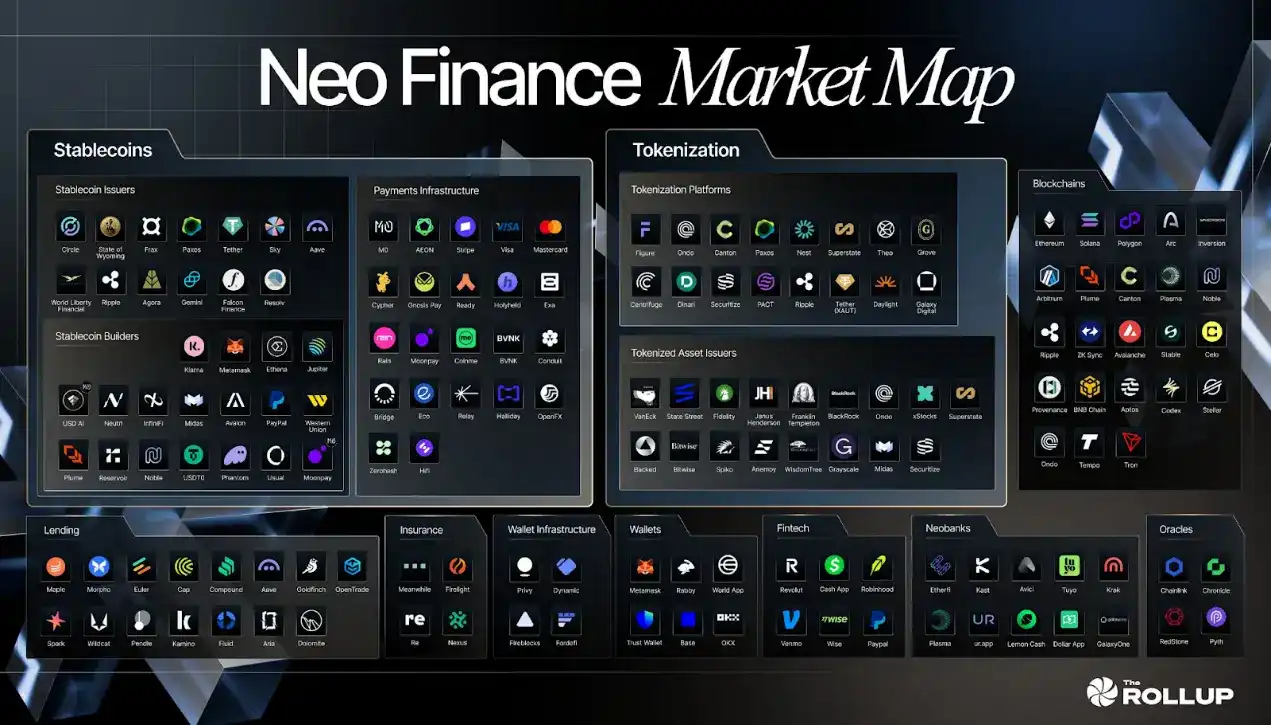
Below is the market landscape for Neo Finance in 2026, covering nine major segments and over 100 ecosystem projects:

The combination of front-end consumer-grade user experience and back-end efficient DeFi infrastructure will provide users with a 'bank-like experience' that is both familiar and far superior to traditional banking.

Users' savings can be traded and transferred globally and are available 24/7. A simple example: a user's 'checking account' could earn a 5% annual interest rate, compared to 0.25% from a traditional bank.

Driven by teams focusing on different parts of the technology stack, the Neo Finance market has the potential to fundamentally change how the world interacts with money.

Let's take a look at some key areas in the market map.

Tokenization

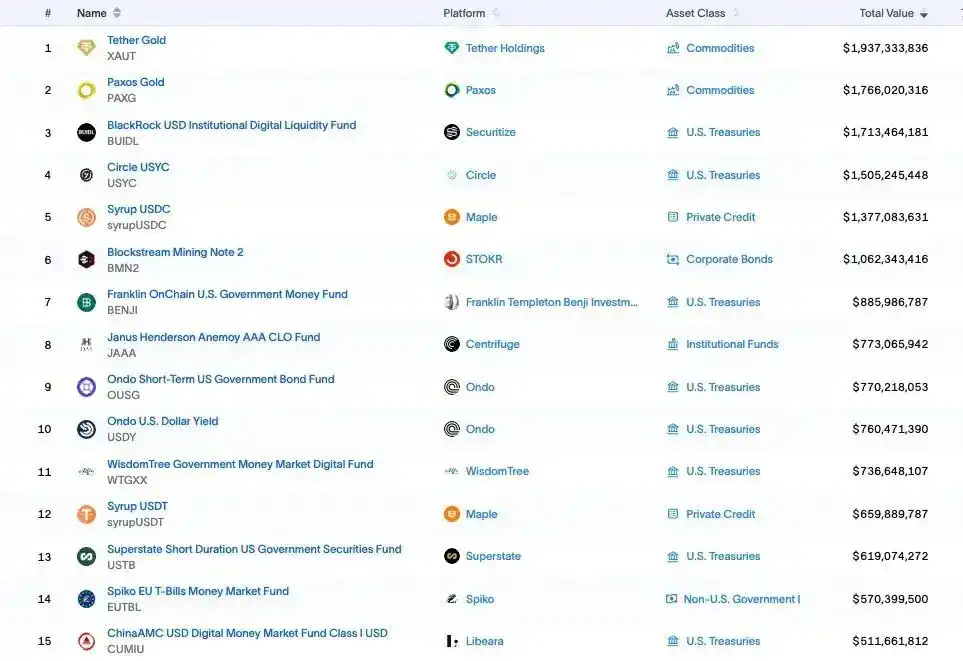
Tokenization is the process of bringing real-world assets (such as treasury bonds, stocks, commodities, credit, money markets, etc.) on-chain.

The infrastructure and tokenization agent layer includes: Figure, Ondo Finance, Paxos, Centrifuge, Superstate Inc, Midas, Grove Finance, Nest, Dinari, Securitize, and other companies.

Tokenization has been discussed for years, but 2025 is the year it truly begins to scale.

Stablecoins

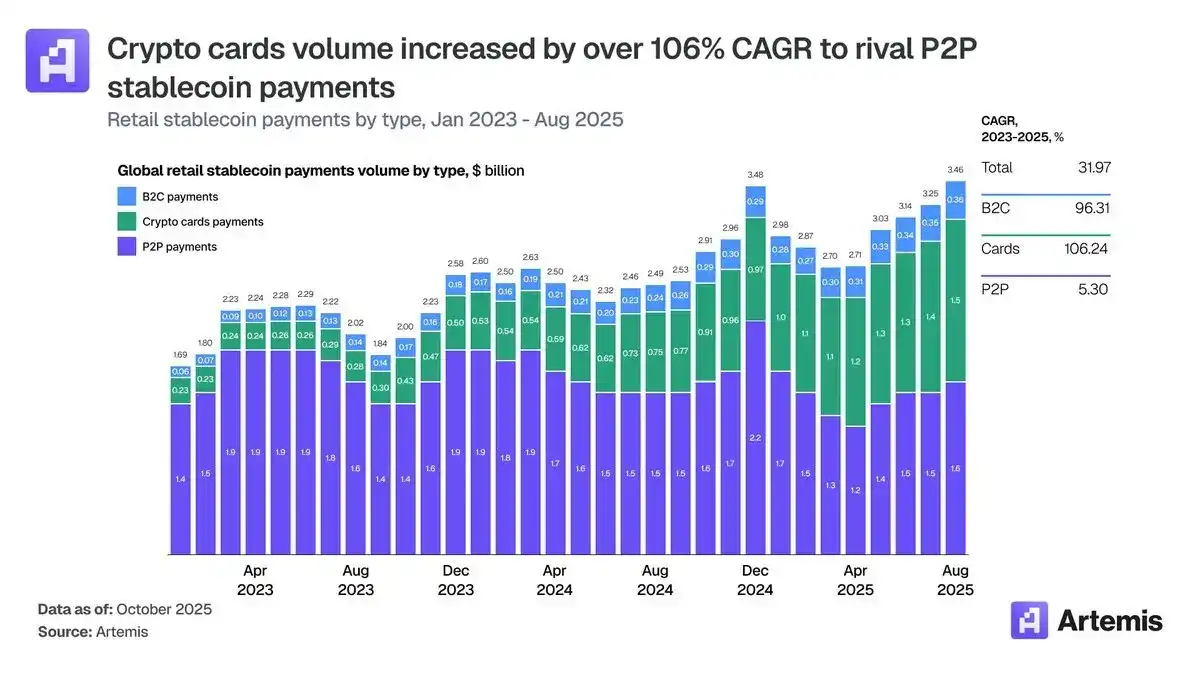
Stablecoins are by far the most successful crypto product, with 90% of new finance customers preferring stablecoins as their first point of contact with cryptocurrency.

The stablecoin issuer sector is booming, with numerous companies emerging, such as: Circle, Paxos, Tether, and Sky.

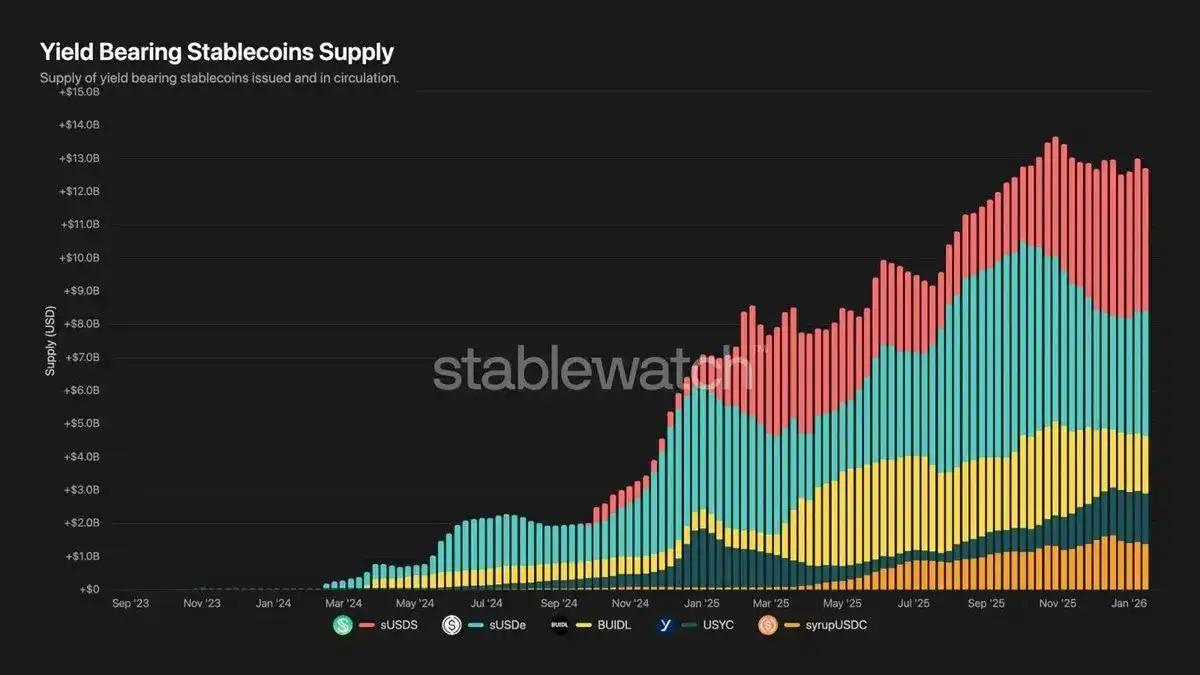
Meanwhile, yield-bearing stablecoins (or 'yield coins') like $sUSDS, $sUSDe, $BUIDL, $USYC, and $syrupUSDC have seen exponential growth over the past 18 months, with a supply exceeding $13 billion.

Users no longer have to choose between stability and yield as they did in the CeDeFi space during 2020-2022; now they can have both.

Neo-Banks

In the neo-bank sector, many teams are emerging, such as ether.fi, KAST, Tuyo, Galaxy, and others. These teams are leveraging DeFi backends to build consumer-facing 'bank-like' experiences from the ground up.

Remember the 'DeFi Mullet'? (PANews Note: Refers to a front-end with a TradFi user-friendly interface and a back-end powered by DeFi underlying technology) It's still here, and the data proves it.

Tokenization, stablecoins, and neo-banks are the three key areas of focus currently, expected to see the most significant growth in 2026 and beyond.

Beyond this, the crypto market is facing a harsh reality: old strategies are failing.

High FDV, low circulating supply launches aimed at dumping on retail; protocols lacking value accrual pathways; alt DEXs on 'ghost' chains; VC-backed projects where founders cash out hundreds of millions before achieving any PMF (Product-Market Fit).

All these plays are outdated, and this trend will continue.

In fact, I got into crypto after reading 'The Truth Machine' in 2017. Back then, I was almost certain this technology would reshape finance. Somehow, it feels like we veered off the original mission. Nine years later, we are closer than ever to that dream becoming a reality.

Everything is in place, the opportunity is here. Welcome to the era of Neo Finance.

Related reading: Nihilism and Vicious Cycles: Why Should We Oppose Over-Financialization?

Related Questions

QWhat are the three main areas of focus in the Neo Finance ecosystem according to the article, and why are they significant?

AThe three main areas are tokenization, stablecoins, and neobanks. They are significant because they are expected to drive the most substantial growth in 2026 and beyond, combining consumer-friendly front-end experiences with efficient DeFi back-end infrastructure to revolutionize how the world interacts with money.

QHow does the article describe the current state and growth of 'yield stablecoins'?

AThe article states that yield stablecoins (or 'yield coins') like $sUSDS, $sUSDe, $BUIDL, $USYC, and $syrupUSDC have experienced exponential growth over the past 18 months, with their supply exceeding $13 billion.

QWhat is the 'DeFi Mullet' concept mentioned in the article, and what does it refer to?

AThe 'DeFi Mullet' refers to a business model where the front-end offers a user-friendly interface familiar to traditional finance (TradFi) users, while the back-end is powered by decentralized finance (DeFi) infrastructure.

QWhat outdated practices in the crypto market does the article claim are no longer effective?

AThe article claims that outdated practices include high Fully Diluted Valuation (FDV) with low circulating supply to sell to retail investors, protocols with no path to value accrual, alt-DEXs on 'ghost' chains, and venture-backed projects where founders cash out millions before achieving any Product-Market Fit (PMF).

QWhat major shift does the article suggest happened in 2025 regarding tokenization?

AThe article suggests that 2025 was the year when tokenization, the process of putting real-world assets like treasuries and stocks on-chain, truly began to scale and see mass adoption after being discussed for many years.

Related Reads

$292 Million KelpDAO Cross-Chain Bridge Hack: Who Should Foot the Bill?

On April 18, 2026, an attacker stole 116,500 rsETH (worth ~$292M) from KelpDAO’s cross-chain bridge in 46 minutes—the largest DeFi exploit of 2026. The stolen assets were deposited into Aave V3 as collateral, causing $177–200M in bad debt and triggering a cascade of losses across nine DeFi protocols. Aave’s TVL dropped by ~$6B overnight. This legal analysis argues that KelpDAO and LayerZero Labs share concurrent liability, with fault apportioned 60%/40%. KelpDAO negligently configured its bridge with a 1-of-1 decentralized verifier network (DVN)—a single point of failure—despite LayerZero’s explicit recommendation of a 2-of-3 setup. LayerZero, which operated the compromised DVN, failed to secure its RPC infrastructure against a known poisoning attack vector. Both protocols’ terms of service cap liability at $200 (KelpDAO) or $50 (LayerZero), but these limits are likely unenforceable due to unconscionability, gross negligence exceptions, and potential securities law invalidation (if rsETH is deemed a security under the Howey test). Aave’s governance also faces fiduciary duty claims for raising rsETH’s loan-to-value ratio to 93%—far above competitors’ 72–75%—without adequately assessing bridge risks, amplifying the systemic fallout. Practical recovery targets include LayerZero Labs (a registered Canadian entity), KelpDAO’s founders, auditors, and identifiable Aave governance delegates. The incident underscores escalating legal risks for DeFi protocols, infrastructure providers, and governance participants.

marsbit31m ago

$292 Million KelpDAO Cross-Chain Bridge Hack: Who Should Foot the Bill?

marsbit31m ago

Insider Trading in War: 5 People Involved, the Highest Earner Was Arrested

On April 24, the U.S. Department of Justice arrested U.S. Army Special Forces Staff Sergeant Gannon Ken Van Dyke for insider trading related to the capture of Venezuelan President Nicolás Maduro on January 3. Van Dyke allegedly profited over $400,000 by placing bets on a prediction market, Polymarket, using insider knowledge of the covert operation. According to the indictment, Van Dyke registered an account (0x31a5) on December 26 and made a series of bets predicting Maduro’s capture and U.S. military involvement in Venezuela. He withdrew most of his funds on the day of the operation and attempted to obscure his tracks by transferring assets through crypto and brokerage accounts. This case marks the first time the DOJ has prosecuted insider trading on Polymarket. PolyBeats had previously identified five suspicious accounts, including Van Dyke’s—the highest earner—in January. The other accounts, with profits ranging from $34,000 to $145,000, remain under unofficial scrutiny but have not been charged. Their lower profits, indirect access to information, and unclear legal boundaries may complicate prosecution. Polymarket has since strengthened its market integrity rules, explicitly prohibiting trading based on confidential or insider information. Van Dyke’s arrest, nearly four months after his trades, signals increased regulatory attention and the persistent traceability of blockchain-based transactions.

marsbit33m ago

Insider Trading in War: 5 People Involved, the Highest Earner Was Arrested

marsbit33m ago

Bitwise: Bullish on Bitcoin's Performance in the Second Half of the Year, AI and Regulation Will Spark a New Altcoin Season

Bitwise CIO Matt Hougan and Research Lead Ryan Rasmussen express strong bullish sentiment on Bitcoin's long-term prospects, suggesting that its $1 million price target may be too conservative. They argue Bitcoin serves a dual role: as digital gold and a potential global settlement asset, especially amid declining trust in traditional monetary systems. Despite a weak Q1 2026 where nearly all crypto assets and prices saw double-digit declines, the analysts remain optimistic due to strong forward-looking catalysts, including institutional adoption via Bitcoin ETFs from major firms like Morgan Stanley and Goldman Sachs. Geopolitical instability, such as Iran’s mention of using Bitcoin for international payments, increases the value of Bitcoin’s “out-of-the-money call option” as a non-political, global settlement currency. This enhances its appeal beyond a mere store of value. . Additionally, Hougan highlights that a clearer regulatory token framework under current SEC leadership, combined with AI efficiency gains and high-performance blockchains, could fuel a new “altseason” by late 2026. This may lead to a wave of legitimate, value-capturing token projects, unlike the earlier ICO boom. . Bitwise also announced an Avalanche ETF, citing its unique architecture and rapid growth in real-world asset (RWA) tokenization, which has surged 10x to nearly $30 billion in two years. The firm believes Layer 1 blockchains are still early in their growth cycle, with significant potential ahead.

marsbit1h ago

Bitwise: Bullish on Bitcoin's Performance in the Second Half of the Year, AI and Regulation Will Spark a New Altcoin Season

marsbit1h ago

Trading

Spot
Futures
活动图片